


Imagine a world where information doesn't just live on your screen but is painted onto the very fabric of your reality. Where directions appear as glowing arrows on the sidewalk, historical figures narrate their stories as you gaze upon ancient ruins, and complex machinery reveals its inner workings through hovering schematics. This is no longer the realm of science fiction; it is the burgeoning reality being built by a new class of technology known as augmented reality devices, and they are poised to revolutionize everything from how we work and learn to how we connect and play.
The Core Technology: How AR Devices Perceive and Overlay the World
At their essence, AR devices are sophisticated systems designed to bridge the digital and physical worlds. Unlike virtual reality, which seeks to replace your environment with a simulated one, AR aims to supplement and enhance your real-world view with contextual, computer-generated information. This feat of technological magic is achieved through a complex interplay of hardware and software components.
The first critical component is a suite of sensors. These typically include advanced cameras for computer vision, depth sensors (like LiDAR or time-of-flight sensors) to map the geometry of a space, accelerometers, gyroscopes, and magnetometers to precisely track the device's position and orientation in real-time. This constant, high-speed data collection allows the device to understand its environment in three dimensions, creating a digital twin of the space you occupy.
The second component is the processing unit. This onboard computer, often powered by specialized chips, takes the sensor data and processes it at lightning speed. It runs simultaneous localization and mapping (SLAM) algorithms to anchor digital content persistently to physical locations. It handles object recognition, identifying surfaces, edges, and specific items to ensure a virtual vase sits convincingly on a real table, for instance.
The final piece is the display technology, which is how the user perceives the augmentation. This varies significantly across different form factors. Some devices use optical see-through displays, where miniature projectors beam light onto waveguides or combiners that reflect the image directly into the user's retina, allowing them to see the real world with digital overlays. Others use video see-through, where cameras capture the real world and then a processor composites the digital elements onto the video feed before displaying it on a screen in front of the user's eyes.
A Spectrum of Form Factors: From Handheld to Hands-Free
The concept of AR is not monolithic, and the devices that deliver it come in various shapes and sizes, each offering a different balance of immersion, convenience, and capability.
Smartphone-Based AR
The most accessible entry point for millions has been the smartphone. By leveraging the camera, GPS, and processing power already in your pocket, mobile AR applications can deliver compelling experiences. From games that have characters scampering across your kitchen floor to furniture retailers allowing you to visualize a new sofa in your living room, this form factor has been crucial for popularizing AR. However, it is limited by its handheld nature, smaller field of view, and dependence on the phone's battery and processing constraints.
Smart Glasses
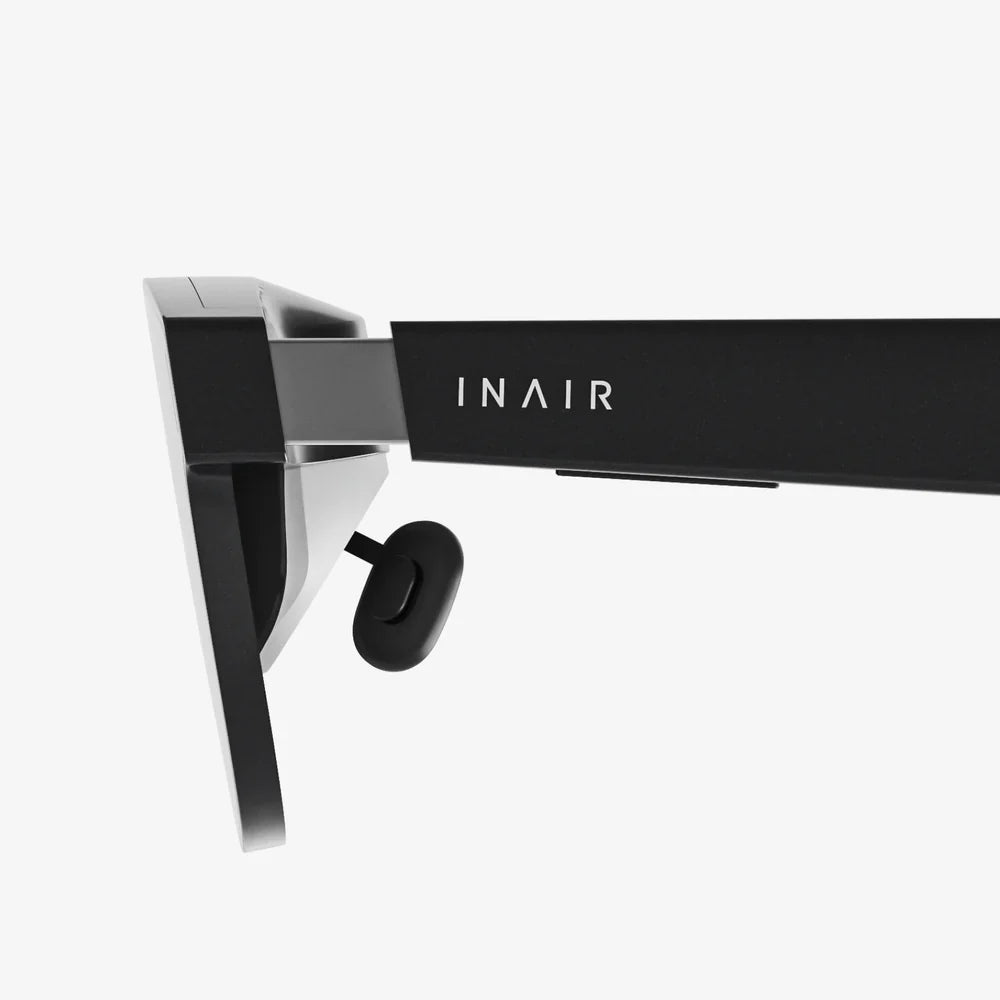
This category represents the ideal form factor for many—a pair of glasses that look relatively normal but can project information onto the lenses. Current iterations often focus on a "monocle" or small display in the upper corner of the vision, providing notifications, directions, or translations without fully obscuring the user's view. These are designed for all-day wear, emphasizing lightweight design, long battery life, and situational awareness. They act as a subtle assistant, enhancing productivity and connectivity without being disruptive.
Augmented Reality Headsets
At the higher end of the spectrum are dedicated AR headsets. These are more immersive, often fully enclosing the user's field of vision with high-resolution, wide-field-of-view displays. They pack more powerful processors, a greater array of sensors, and advanced hand-tracking capabilities that allow users to interact with digital content using natural gestures. While currently bulkier and more expensive, these devices are the workhorses for enterprise, industrial, and advanced design applications, offering unparalleled graphical fidelity and interaction paradigms.
Transforming Industries: The Practical Power of AR
While consumer applications often grab headlines, the most profound impact of AR devices is currently being felt in enterprise and industrial sectors, where they are solving real-world problems and delivering significant returns on investment.
Revolutionizing Manufacturing and Field Service
On factory floors and in the field, AR devices are becoming indispensable tools. Technicians wearing smart glasses can have repair manuals, schematic diagrams, or live video feeds from remote experts superimposed directly onto the equipment they are servicing. This provides hands-free, step-by-step guidance, drastically reducing error rates, shortening training times, and improving first-time fix rates. A novice worker can perform complex tasks with the expertise of a veteran guiding them, all without looking away from the job at hand.
Advancing Healthcare and Medicine
In medicine, the stakes are high, and AR is rising to the challenge. Surgeons can use AR headsets to overlay 3D reconstructions of a patient's anatomy from CT or MRI scans directly onto their body during procedures, essentially giving them "X-ray vision" to navigate more precisely and avoid critical structures. Medical students can practice procedures on detailed holographic patients, and devices can help nurses locate veins more easily for injections. This technology is enhancing precision, improving outcomes, and transforming medical education.
Redefining Retail and Design
The retail sector is leveraging AR to bridge the gap between online and in-store shopping. Customers can use their phones or in-store kiosks to see how clothes might fit, how makeup will look on their skin, or how a new piece of furniture will fit and look in their home before making a purchase. In architecture and interior design, professionals and clients can walk through full-scale, holographic models of buildings before a single foundation is poured, allowing for immersive design reviews and changes in real-time.
Navigating the Obstacles: Challenges on the Path to Ubiquity
Despite the immense potential, the widespread adoption of AR devices faces several significant hurdles that engineers and designers are racing to overcome.
Technical Hurdles: For AR to become truly seamless, the technology needs to become smaller, lighter, and more powerful. Battery life remains a major constraint, especially for all-day glasses. Display technology needs to improve to offer wider fields of view, higher resolution, and the ability to convincingly render both bright and dark virtual objects in any lighting condition. The "holograms" need to be photorealistic and perfectly anchored in space without any lag or jitter, a challenge known as the "vergence-accommodation conflict."
Social and Ethical Considerations: The proliferation of devices with always-on cameras raises serious questions about privacy and surveillance. How do we prevent these devices from being used for unauthorized recording? What does consent look like in a world where anyone could be passively recording? Furthermore, the potential for digital advertising to be sprayed across our physical world could lead to new forms of visual pollution and distraction. Establishing social norms and robust ethical frameworks is as important as developing the technology itself.
Design and Accessibility:
Ultimately, for AR to become a mainstream, all-day technology, the devices must be socially acceptable. This means they need to be fashionable, comfortable, and indistinguishable from regular eyewear for most people. They must also be affordable. Overcoming these design and cost barriers is the final frontier between niche professional tools and a universal computing platform. Looking ahead, the trajectory of AR devices points toward a future where they become as ubiquitous as smartphones are today. We are moving toward contact-lens-based displays and even neural interfaces that could project information directly into our visual cortex. The line between what is "real" and what is "digital" will continue to blur, giving rise to a new paradigm of spatial computing where our environment is the interface. This will enable forms of communication and collaboration that are currently impossible, with colleagues from across the globe appearing as life-like holograms in your living room to collaborate on a 3D model. It will democratize expertise, allowing knowledge to be contextualized and delivered exactly where and when it is needed. It could preserve cultural heritage, allowing ancient sites to be restored to their former glory right before our eyes, and revolutionize education by making abstract concepts tangibly visible. The journey of AR devices is just beginning. From their humble beginnings as novel curiosities on smartphones, they are rapidly evolving into the next fundamental shift in human-computer interaction. They promise to unlock new layers of understanding and capability within our own world, enhancing human potential not by taking us away from reality, but by helping us see it in an entirely new, and infinitely richer, light. The door to a truly augmented world is now open, and stepping through it will change everything.The Future Vision: A World Augmented
Share:
How Augmented Reality App Works: A Deep Dive Into Digital Overlays
How Augmented Reality App Works: A Deep Dive Into Digital Overlays