


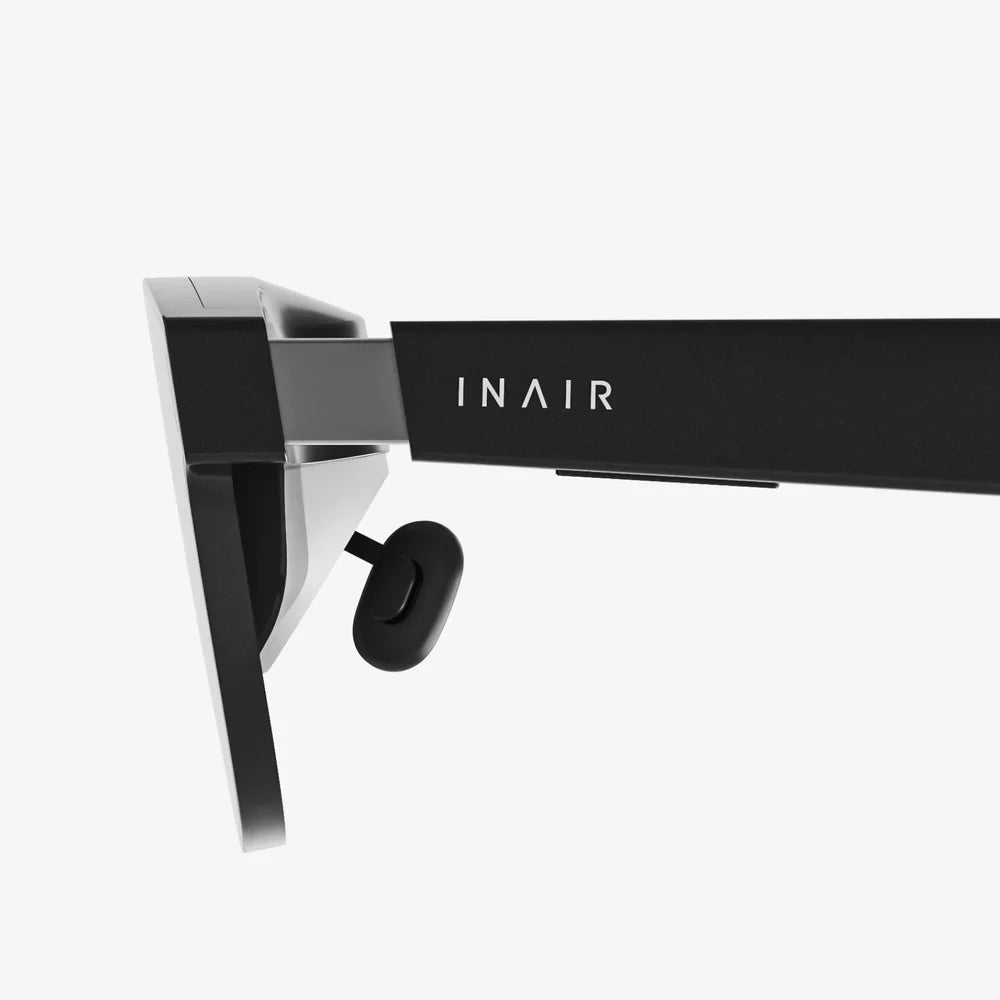
Imagine a world where digital information doesn't just live on a screen but is seamlessly woven into the fabric of your reality, enhancing everything from how you work and learn to how you play and connect. This is the promise of Augmented Reality (AR), a technology rapidly moving from science fiction to tangible reality. The magic of AR, however, is not just in the software; it is profoundly shaped by the hardware that brings it to life. The gateway to this enriched world is through a fascinating and ever-evolving array of AR devices, each designed for a unique purpose and experience. From the sleek glasses you might soon wear every day to the powerful headsets revolutionizing industrial design, the landscape of AR hardware is as diverse as it is revolutionary. This comprehensive guide will take you on a deep dive into the most significant AR devices examples, exploring how they work, who they are for, and how they are quietly building the infrastructure of our mixed-reality future.
Defining the Augmented Reality Experience
Before we explore the hardware, it's crucial to understand what we mean by Augmented Reality. Unlike Virtual Reality (VR), which creates a completely immersive, digital environment that replaces the real world, AR overlays digital content—images, text, 3D models, animations—onto the user's view of their physical surroundings. The goal is to enhance reality, not replace it. This is achieved through a combination of sophisticated technologies:
- Sensors: Cameras, LiDAR scanners, depth sensors, and accelerometers work together to map the physical environment and understand the device's position within it.
- Processing: Powerful onboard processors analyze sensor data in real-time to accurately place and anchor digital objects.
- Displays: Advanced optics, including waveguides and micro-LEDs, project the digital imagery into the user's field of view.
- Tracking: Simultaneous Localization and Mapping (SLAM) technology allows the device to understand and remember the geometry of a space, ensuring digital objects stay locked in place.
The Spectrum of AR Hardware: From Simple to Sophisticated
AR devices are not a monolith; they exist on a broad spectrum defined by their capabilities, form factor, and intended use. We can broadly categorize them into several distinct classes.
1. Smartphone and Tablet-Based AR
The most accessible and widespread entry point into augmented reality is a device already in billions of pockets: the smartphone. Using their built-in cameras, sensors, and screens, modern smartphones are powerful AR platforms.
How it works: The device's camera captures the real world, and the processor uses AR software development kits to overlay digital content onto the live video feed displayed on the screen. Interaction is done through touch.
Key Examples & Use Cases:
- Retail and E-Commerce: Visualizing how a new piece of furniture would look in your living room or trying on virtual sunglasses.
- Gaming and Entertainment: Location-based games that turn parks and cities into playing fields, or interactive filters that add digital elements to selfies and videos.
- Navigation: AR walking directions that superimpose arrows and directions onto a live view of the street.
- Education: Bringing textbooks to life by pointing a device at an image to see a 3D model of a dinosaur or a beating heart.
Advantages: Extreme accessibility, no additional hardware cost for users, and a massive established ecosystem of developers and apps.
Limitations: The experience is confined to the screen, requiring users to hold up their devices, which can be cumbersome. It also lacks the true immersion of see-through displays.
2. Standalone AR Smart Glasses
This category represents the idealized form factor for everyday augmented reality: glasses that look relatively normal but contain a universe of computing power and display technology. These are self-contained devices with their own battery, processor, and wireless connectivity.
How it works: Using transparent waveguides or other optical systems, these glasses project digital images directly into the user's eyes, allowing them to see the real world with digital information overlaid. They often include built-in speakers and microphones for audio interaction.
Key Examples & Use Cases:
- Enterprise and Field Service: Technicians can see schematics, instructions, or remote expert guidance hands-free while repairing equipment.
- Logistics and Warehousing: Workers can see picking and packing instructions directly in their line of sight, dramatically improving efficiency and accuracy.
- Remote Collaboration: Allowing a remote expert to see what a field worker sees and annotate the real world to provide guidance.
- Consumer Information Display: Receiving notifications, translations, or navigation cues without ever looking down at a phone.
Advantages: True hands-free operation, a more natural and integrated experience, and a form factor designed for all-day wear in specific contexts.
Limitations: Balancing battery life, processing power, and thermal management in a small, lightweight form factor is a significant engineering challenge. Field of view for the digital display is often narrower than the human field of view.
3. Tethered AR Headsets
For applications requiring maximum graphical fidelity and processing power, tethered headsets are the solution. These devices are connected via a cable to a powerful external computer or console that handles the heavy computational lifting.
How it works: The headset contains high-resolution displays and sophisticated sensors for tracking. The connected computer runs the complex AR environment and sends the video signal to the headset, often blending pass-through video from the headset's cameras with digital elements.
Key Examples & Use Cases:
- Advanced Design and Engineering: Architects and engineers can visualize and interact with life-size 3D models of buildings or complex machinery, making design changes in real-time.
- Medical Training and Visualization: Superimposing detailed anatomical models onto a medical mannequin or a student's own body for immersive learning.
- High-End Research and Development: Complex data visualization and simulation in fields like automotive and aerospace design.
Advantages: Unmatched processing power and graphical capabilities, enabling highly complex and detailed AR experiences.
Limitations: Lack of mobility due to the tether, higher cost, and a more complex setup make them unsuitable for consumer or mobile enterprise use.
4. Spatial Computing Headsets (Hybrid AR/VR)
A new and powerful category blurs the line between AR and VR. Often called "mixed reality" or "spatial computing" devices, these headsets use high-resolution, passthrough video technology to blend the real and digital worlds seamlessly.
How it works: Instead of transparent optics, these headsets use outward-facing cameras to capture the real world in real-time and display it on high-resolution internal screens. Digital content is then composited onto this video feed with incredibly high fidelity and accurate depth understanding. They can also function as full VR headsets by blocking out the external video feed.
Key Examples & Use Cases:
- Productivity and Creativity: Creating virtual desktops and 3D modeling canvases that exist in your physical space, allowing for entirely new ways to work and create.
- Immersive Training Simulations: Training for dangerous or expensive tasks by placing interactive digital elements into a safe, physical environment.
- Social Connection: Attending meetings or social gatherings as a photorealistic avatar while still being aware of your physical surroundings.
Advantages: Incredibly high-fidelity visuals, the ability to dynamically control the level of immersion (from full AR to full VR), and powerful spatial interaction.
Limitations: Currently the bulkiest and most expensive form factor, with shorter battery life for standalone versions. The video passthrough, while advanced, can still present a slightly laggy or lower-quality view of the real world compared to optical see-through glasses.
5. Niche and Specialized AR Devices
Beyond the mainstream categories, several innovative form factors are emerging to serve specific needs.
- AR HUDs (Heads-Up Displays): Long used in fighter jets and increasingly in automotive windshields, these systems project critical information like speed, navigation, and warnings directly into the driver's line of sight on the windshield.
- AR Contact Lenses: Still largely in the research and development phase, companies are developing smart contact lenses with embedded microelectronics to display information. This represents the ultimate goal for invisible computing.
- Projection-Based AR: Instead of wearing a device, digital content is projected directly onto physical surfaces, turning any wall or table into an interactive display. This is used in museums and for interactive retail experiences.
The Technology Inside: What Makes AR Devices Tick
The user experience of any AR device is dictated by the sophistication of its core components.
Display Technologies: How We See the Digital Layer
- Optical See-Through (OST): Used in most smart glasses, this method allows users to look directly at the real world through transparent lenses (like regular glasses). A projection system, often using waveguides, bends light from a micro-LED display into the user's eye. This provides a very natural view of the real world but can struggle with displaying dark colors.
- Video See-Through (VST): Used in spatial computing headsets. Cameras on the outside of the headset capture the real world, and a processor composites the AR elements before displaying the combined image on internal screens. This allows for richer digital graphics but can suffer from latency and a reduced quality of the real-world view.
Sensing and Tracking: Mapping the Real World
- Cameras: Standard RGB cameras are used for computer vision, reading QR codes, and capturing the environment.
- Depth Sensors: Technologies like LiDAR (Light Detection and Ranging) and time-of-flight sensors actively measure distances by projecting and measuring laser light, creating a precise 3D depth map of the environment. This is crucial for understanding where to place digital objects so they appear behind or in front of real-world objects.
- IMUs (Inertial Measurement Units): These combine accelerometers and gyroscopes to track the precise movement and rotation of the headset with extremely low latency.
- Eye Tracking: Cameras inside the device track where the user is looking. This enables more intuitive interaction (selecting items just by looking) and allows for foveated rendering, where the device renders only the area you are directly looking at in high resolution, saving processing power.
The Future Trajectory of AR Devices
The evolution of AR hardware is moving towards a convergence of several key trends:
- Miniaturization: Components will continue to shrink, leading to devices that are indistinguishable from regular eyeglasses. Advances in nanotechnology and new materials will be key drivers.
- Improved Battery Life: Breakthroughs in battery technology and more power-efficient chipsets will finally enable all-day use.
- Expanded Field of View (FOV): Current devices often have a limited "window" for AR content. Future waveguides and display systems will expand this to fill the entire human visual field for a truly immersive experience.
- Contextual and AI-Powered Awareness: Devices will move beyond simple object recognition to a deep, semantic understanding of environments, predicting user needs and surfacing the right information at the right time without explicit commands.
- The Rise of the AR Platform: As the hardware matures, the real value will shift to the operating systems and cloud-based services that power these devices, creating a new ecosystem akin to the mobile app economy.
The array of AR devices available today is merely the first chapter in a much larger story. From the phone in your hand to the advanced headsets reshaping entire industries, each device serves as a unique lens through which we can perceive and interact with a world enriched by data and digital creation. The boundaries between these categories will continue to blur, driven by relentless innovation, ultimately converging on a future where powerful, comfortable, and socially acceptable AR glasses become as ubiquitous as the smartphone. This hardware is building the bridge to a spatial computing era, and understanding its current forms is the first step toward navigating the incredible future it is creating.
Share:
Glasses That Project TV Screen: The Ultimate Personal Cinema Experience
PC VR Headset with Controller: The Ultimate Guide to Immersive Virtual Reality Gaming and Beyond