


- by wangfred
AR Examples: How Augmented Reality is Reshaping Our World
- by wangfred
Imagine a world where digital information doesn't just live on a screen but is seamlessly woven into the fabric of your reality, enhancing everything from how you learn and work to how you shop and play. This is no longer the realm of science fiction; it's the present and future being built through Augmented Reality (AR). From the subtle overlay of navigation arrows on your windshield to the intricate visualization of a human heart beating in a medical classroom, AR examples are proliferating at an astonishing rate, fundamentally altering our perception of what's possible. The bridge between the digital and the physical is no longer under construction—it's open for traffic, and it's reshaping our world in profound and exciting ways.
At its essence, Augmented Reality is a technology that superimposes computer-generated perceptual information—be it images, sounds, text, or haptic feedback—onto our view of the real world. Unlike Virtual Reality (VR), which creates a completely immersive, digital environment, AR enhances the existing environment by adding a layer of interactive data. This is most commonly experienced through devices like smartphones, tablets, smart glasses, and heads-up displays (HUDs). The magic of AR lies in its ability to contextualize information, placing it directly in the spatial context where it is most relevant and useful. This creates a powerful, intuitive, and often unforgettable user experience that flat screens struggle to match.
One of the most impactful domains for AR is education. Traditional learning methods often rely on abstract concepts and two-dimensional diagrams. AR shatters these limitations, bringing subjects to life in stunning detail.
Consider a history lesson where students can point a device at a textbook image of the Roman Colosseum and watch a complete, animated reconstruction spring up from the page, complete with gladiators and roaring crowds. In a biology class, instead of dissecting a physical frog, students can use an AR application to project a detailed, animated 3D model of amphibian anatomy onto their desk. They can rotate it, zoom in on individual organs, and watch systems like circulation or digestion in motion. This interactive, exploratory method caters to various learning styles and dramatically improves information retention.
Beyond K-12 and higher education, AR is revolutionizing professional training. Mechanics-in-training can see step-by-step repair instructions and part names overlaid directly on the engine they are working on. Surgeons can practice complex procedures on virtual patients superimposed onto physical mannequins, receiving real-time feedback without any risk. For fields like aviation or heavy machinery operation, AR can simulate hazardous scenarios in a completely safe environment, allowing trainees to develop critical muscle memory and decision-making skills before ever touching real, dangerous equipment.
The retail sector has been completely upended by e-commerce, but a significant hurdle remains: the inability to physically interact with a product before purchase. AR is providing an elegant and powerful solution, effectively bridging the gap between online convenience and in-store confidence.
Fashion and apparel retailers now offer applications that allow customers to use their smartphone camera to see how a pair of glasses, a hat, or even makeup will look on their own face. Furniture and home decor stores have pioneered AR tools that let users place true-to-scale 3D models of sofas, tables, and lamps directly into their living space. You can walk around the virtual item, see how the color looks in your lighting, and ensure it fits perfectly before committing to a purchase. This drastically reduces purchase anxiety and the high rate of returns associated with online shopping, creating a more satisfying and efficient customer journey.
Even within physical stores, AR is enhancing the experience. By scanning a product's tag or a display with a smartphone, customers can unlock a wealth of additional information: demonstration videos, customer reviews, details about sustainable sourcing, or suggestions for complementary items. This transforms a simple shopping trip into an engaging, informative, and highly personalized activity, empowering consumers and building brand loyalty.
Perhaps the most mature and financially significant AR examples are found in industrial settings, where the technology is driving unprecedented gains in efficiency, accuracy, and safety.
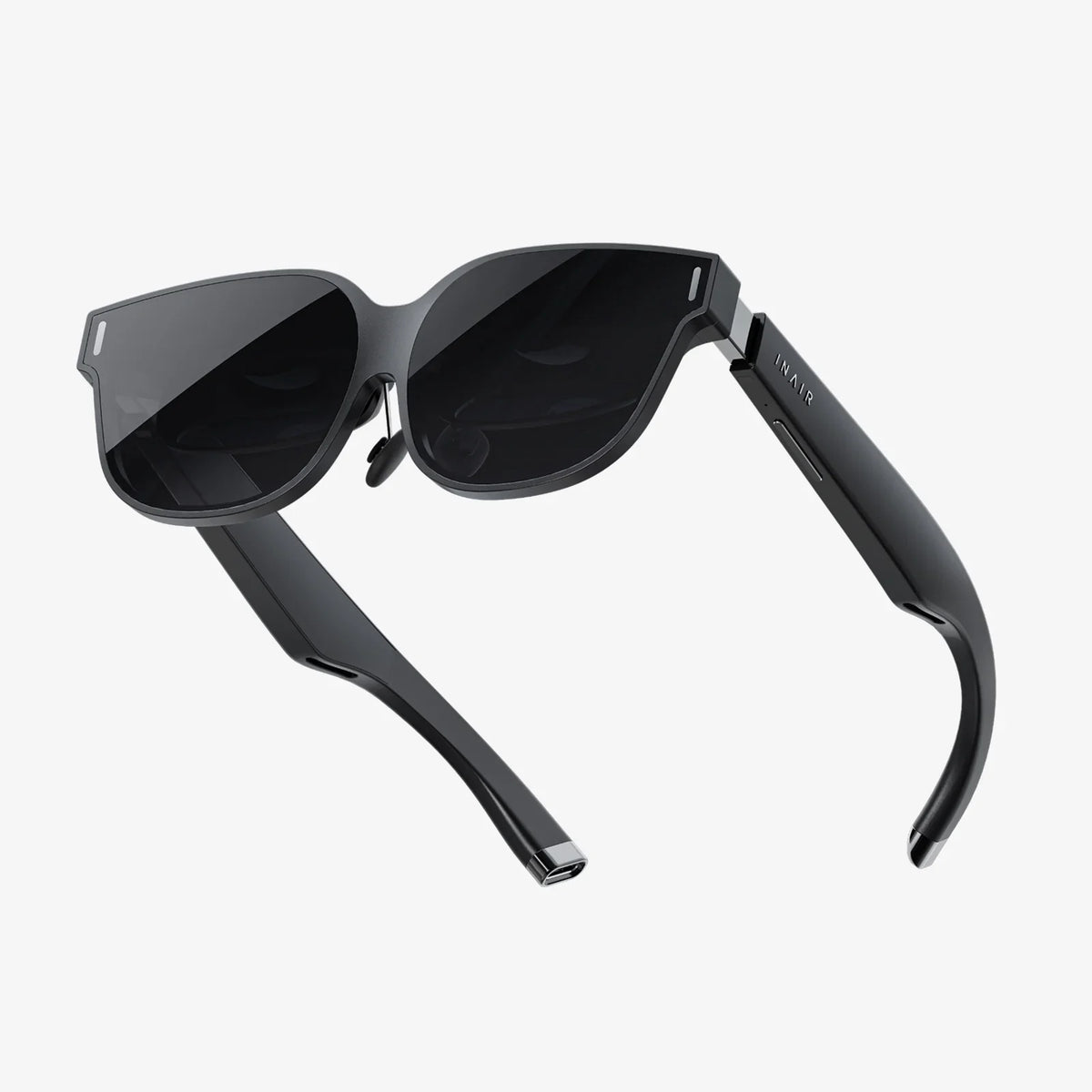
Technicians on a factory floor or in the field can wear AR smart glasses that project crucial information directly into their line of sight. While assembling a complex piece of machinery, digital arrows can point to the exact placement for a component, and warnings can highlight if a part is being installed incorrectly. For maintenance, a technician can look at a malfunctioning pump and see internal schematics, a history of past repairs, and real-time sensor data overlaid on the equipment itself. This allows for faster diagnosis, reduces errors, and empowers less experienced workers to perform tasks that would previously have required a senior expert.
Engineers and designers are using AR to visualize and interact with 3D prototypes at full scale before any physical manufacturing begins. A car designer can project a life-size model of a new vehicle into an empty space, walk around it, and make adjustments to the curves and features in real-time. Architects can walk clients through a full-scale, interactive model of a building, allowing them to experience the flow of space and the play of light long before the foundation is poured. This collaborative, immersive design process saves immense amounts of time and resources.
The applications of AR in healthcare are nothing short of revolutionary, offering new ways to diagnose, treat, and understand the human body.
During surgery, AR can project critical information—such as the location of tumors, major blood vessels, or nerves—directly onto the surgeon's view of the patient. This is like giving them "X-ray vision," enabling incredibly precise incisions and minimizing damage to healthy tissue. For medical students, AR provides an unparalleled tool for learning anatomy. Instead of relying solely on cadavers or textbooks, they can explore and manipulate holographic, layered models of the human body, gaining a deep, intuitive understanding of how systems interconnect.
AR is also improving patient outcomes. A doctor can use an AR model to show a patient exactly what is happening with their condition, making a diagnosis much easier to understand. In physical therapy, AR games and exercises can guide patients through their rehabilitation movements, ensuring they are performed correctly and providing motivating feedback that encourages adherence to recovery programs.
GPS navigation revolutionized how we find our way, but it still requires us to constantly look down at a screen, divorcing us from our surroundings. AR navigation is solving this by integrating directions directly into the real world.
Using the camera on a smartphone or AR glasses, arrows, lines, and markers can be overlaid onto the street view, showing you exactly which way to turn. This is particularly transformative for indoor navigation in complex spaces like airports, shopping malls, or university campuses, where GPS signals are weak. You can simply hold up your device and see a path light up on the floor leading you to your gate, your favorite store, or the nearest restroom.
In modern vehicles, AR heads-up displays project vital information like speed, navigation directions, and collision warnings onto the windshield, aligning them with the road ahead. This allows drivers to keep their eyes on the road while accessing crucial data, significantly enhancing driving safety.
The potential of AR is boundless, and its evolution is rapid. We are already seeing glimpses of its future in social media filters, interactive art installations, and live sports broadcasts where statistics and player information are overlaid on the field during a game. Looking ahead, the convergence of AR with Artificial Intelligence and 5G connectivity will unlock even more powerful examples. Imagine AI-powered AR glasses that can recognize faces and provide conversational prompts with names and context, or real-time translation of street signs and menus in a foreign language. The line between our digital and physical selves will continue to blur, creating a world where information is ambient, contextual, and instantly accessible.
The sheer breadth of these AR examples demonstrates that this is not a niche technology for gamers; it is a foundational shift in human-computer interaction. It’s a tool that empowers us to see the unseen, to learn by doing, and to interact with digital information as naturally as we interact with the world around us. The devices will get smaller, the graphics more photorealistic, and the integration more seamless, but the core promise remains: to enhance human capability and enrich our experience of reality itself. The next time you pick up your phone, look around—you might be surprised at what digital layers are waiting to be unlocked, transforming your ordinary surroundings into an extraordinary canvas of information and imagination.