


Imagine walking into an exhibition hall, not to quietly observe static artifacts behind glass, but to actively converse with history, to peel back layers of digital information from a physical canvas, and to become the protagonist in a story unfolding around you. This is no longer the stuff of science fiction; it is the transformative reality being ushered in by Augmented Reality (AR) exhibition displays. This technological leap is redefining the very essence of how we curate, experience, and interact with collections, turning passive viewership into an dynamic, participatory dialogue between the visitor and the exhibit.
Beyond the Novelty: From Gimmick to Essential Tool
The initial forays of AR into public spaces were often marked by a sense of novelty—a fun, albeit sometimes clunky, addition to a traditional display. Visitors would hold up devices to see a dinosaur roar or a painting animate, a brief moment of delight before moving on. However, the technology has matured at a staggering pace. Today's AR exhibition displays are sophisticated integration platforms that leverage powerful computer vision, cloud computing, and increasingly seamless hardware to serve a much deeper purpose.
The evolution has shifted from what we can do to why we should do it. Curators and experience designers are no longer asking "How can we add AR?" but rather "How can AR help us tell this story more effectively?" This reframing positions AR not as a standalone attraction, but as an integral, purposeful tool within the exhibition ecosystem. It solves fundamental challenges: how to provide immense depth of information without overwhelming wall text, how to make abstract data tangible, and how to create emotional connections with objects that might otherwise feel distant or alien.
The Architect of Experience: Core Components of AR Displays
A successful AR exhibition display is a symphony of interconnected components, each playing a critical role in crafting a seamless and impactful user journey.
The Trigger and Tracking System
This is the unsung hero of the experience. For the digital layer to align perfectly and persistently with the physical world, the AR system must continuously understand its position. Early markers—simple QR codes or image targets—acted as reliable anchors, telling the device, "Start the experience here." Modern systems have grown far more advanced. Simultaneous Localization and Mapping (SLAT) technology allows devices to map the entire environment in real-time, using feature points in the room itself as a reference. This enables markerless AR, where content can be placed on a blank wall or attached to a large, moving object, offering unprecedented freedom for designers.
The Content Delivery Platform
The magic that users see is delivered through a robust software platform. This can be a custom-built application specific to an institution or a particular exhibition, offering a highly tailored and branded journey. Alternatively, web-based AR (WebAR) has emerged as a powerful democratizing force. Accessible through a mobile browser without the need to download an app, WebAR drastically lowers the barrier to entry, allowing visitors to engage instantly simply by scanning a code. The platform manages the digital assets—3D models, animated sequences, audio narrations, data visualizations—and serves them based on the user's trigger and position.
The User Interface (UI)
In a public, often crowded setting, the UI must be intuitive, minimal, and non-intrusive. The best AR experiences often have the least on-screen clutter. Interaction is increasingly gestural and context-aware. A user might be guided to "point your device at the artifact below" or "move closer to reveal a hidden inscription." The goal is to make the technology feel like a natural extension of the user's curiosity, not a complex piece of software they must learn to operate.
The Hardware: From Handheld to Hands-Free
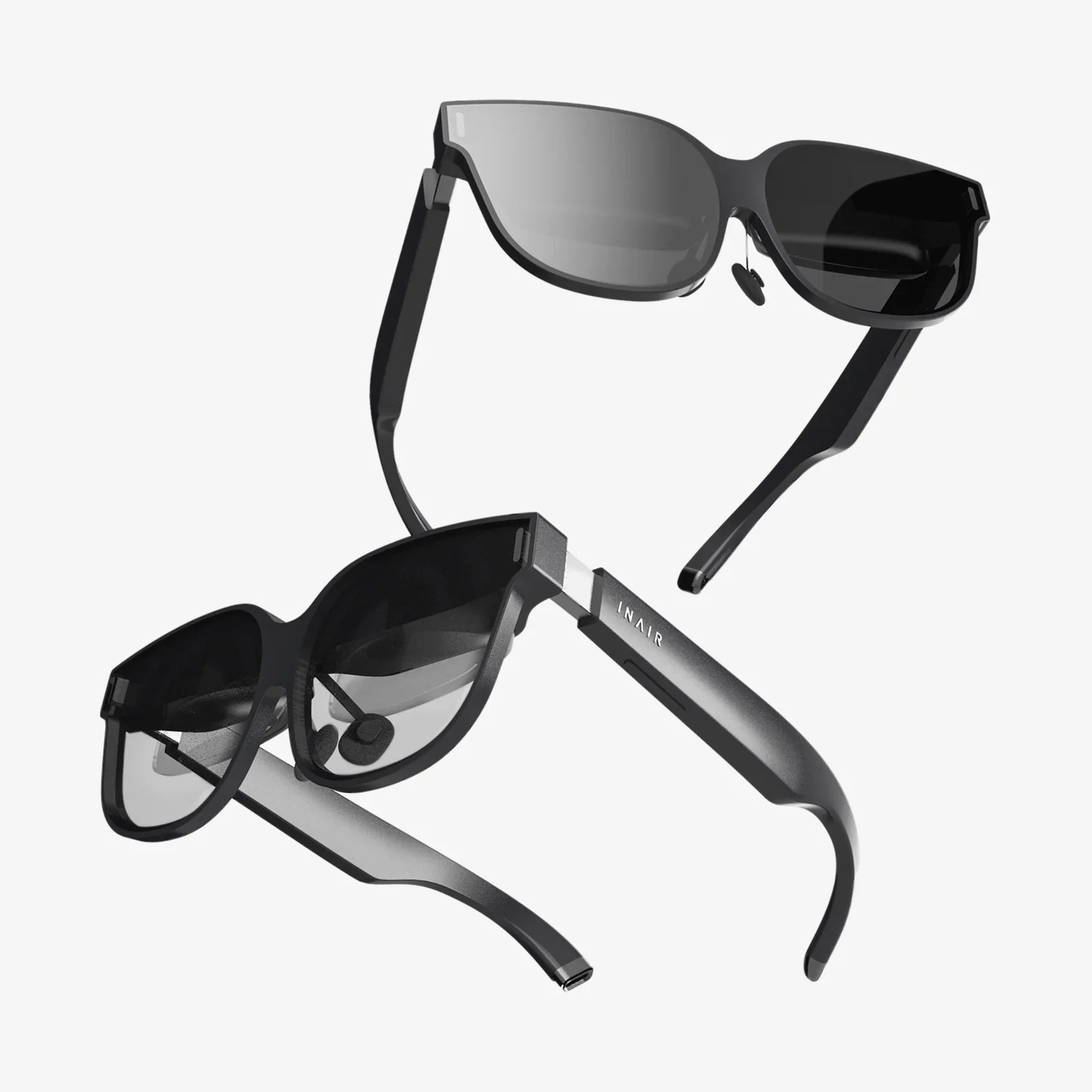
While the vast majority of current AR experiences are powered by visitors' own smartphones and tablets, the hardware landscape is expanding rapidly. Institutions are investing in dedicated tablet fleets to ensure a consistent, high-quality experience for all visitors, regardless of their personal device's capability. The next frontier is wearable AR, particularly smart glasses. Though still emerging, this technology promises a truly hands-free, immersive experience where digital information is seamlessly overlayed onto the user's natural field of vision, freeing them from the isolating "screen-in-front-of-face" paradigm and encouraging more natural social interaction and exploration.
A New Palette for Storytelling: Applications and Use Cases
The theoretical power of AR is best understood through its practical, groundbreaking applications within exhibition spaces.
Contextual Restoration and Reconstruction
One of the most powerful applications is the ability to restore the past. A visitor can point their device at a ancient, crumbled ruin of a column and see it reassemble itself in real-time, growing to its full height and original painted glory. A fragment of a classical statue can be made whole again. For archaeological and historical exhibitions, this is a game-changer, allowing audiences to understand the scale, color, and grandeur of objects and sites that now exist only as shadows of their former selves.
Peeling Back the Layers
AR acts as a digital X-ray machine and a microscope combined. A visitor can explore the layers of a painting, watching the artist's preliminary sketches appear beneath the final brushstrokes or seeing infrared imagery reveal a hidden pentimento. For a complex machine or a biological specimen, users can digitally deconstruct it layer by layer, understanding the relationship between components and systems in a way a static diagram could never convey.
Data Physicalization
Exhibitions dealing with scientific, economic, or social data often struggle to make numbers feel engaging. AR can transform a simple graph into a three-dimensional, interactive data landscape. A visitor could walk around a visualization of global weather patterns, seeing hurricanes form and move, or watch a sculpture grow and change shape in response to real-time data feeds, making abstract concepts viscerally understandable.
Personalized Narrative Pathways
AR enables non-linear storytelling. Different visitors can have completely different experiences within the same physical space. By choosing a profile at the start (e.g., "historian," "design enthusiast," "child"), the AR display can tailor the information it provides. Pointing at the same exhibit, one visitor might get a deep dive into its material provenance, while another hears a story about its cultural impact, and a third engages with a gamified puzzle related to it. This creates a highly personalized and scalable learning environment.
Navigating the Challenges: Implementation and Consideration
For all its potential, integrating AR is not without its hurdles. A successful implementation requires careful strategic planning.
A primary concern is accessibility and inclusion. An experience reliant on expensive personal smartphones risks alienating portions of the audience. The solution lies in providing loaner devices and ensuring that the core narrative of the exhibition is still comprehensible without the AR layer. The technology should enhance, not replace, the physical exhibit.
User onboarding is another critical factor. The instruction to engage with the AR must be crystal clear and immediately visible. If visitors don't know an experience exists or how to activate it, it becomes obsolete. Simple, well-designed signage with clear icons is essential.
Furthermore, institutions must consider digital preservation. Unlike a physical label, digital content requires maintenance. Operating systems update, APIs become deprecated, and hardware evolves. A long-term strategy for maintaining and updating digital assets is crucial to ensure the experience doesn't become a broken relic in a few years.
Finally, there is the challenge of designing for atmosphere. A room full of people staring silently into their phone screens can create an antisocial environment. The best AR designs encourage shared experiences—perhaps by projecting the AR view onto a larger wall for group viewing or creating multi-user interactions where families must work together to solve a problem, thus using technology to foster human connection rather than hinder it.
The Invisible Framework: Measuring Success and ROI
Justifying the investment in AR requires moving beyond anecdotal "wow" moments to concrete metrics. Fortunately, the digital nature of AR provides a wealth of data that traditional exhibitions lack. Experience designers can track engagement metrics: How many visitors activated the experience? How long did they spend with each AR element? Which triggers were most popular? Did they complete the interactive narrative pathway?
This data is invaluable for understanding audience behavior in unprecedented detail. It allows for iterative improvement; if analytics show that visitors are dropping off at a certain point, the content can be tweaked for clarity or engagement. This feedback loop creates a living, breathing exhibition that can evolve and improve over its run, a stark contrast to the "install and forget" model of the past. The return on investment is measured not just in increased ticket sales or longer dwell times, but in deeper educational impact and stronger emotional resonance with the collection.
The Horizon of Interaction: What Lies Ahead
The future of AR exhibition displays is converging with other emerging technologies to create even more profound experiences. The integration of Artificial Intelligence will allow for responsive AR, where the digital content adapts in real-time to the visitor's behavior, answering unspoken questions or following their line of inquiry. The rise of the spatial web—where digital information is persistently anchored to physical locations—will allow for permanent AR layers over cities and institutions, turning the entire world into a potential exhibition space.
Furthermore, the line between AR and Virtual Reality (VR) will blur to create mixed reality (MR) experiences. A visitor might put on a headset not to be transported to a completely virtual world, but to see their physical surroundings saturated with interactive digital characters and objects that they can truly believe are in the room with them, enabling a level of immersion that is currently unimaginable.
The journey of AR in exhibitions is just beginning. It is evolving from a visual aid into a contextual intelligence, from a presentation tool into a collaborative platform. It promises a future where our museums, galleries, and expositions are not repositories of static objects, but dynamic portals to understanding—living conversations between the past, present, and future, waiting for each visitor to step in and add their voice to the story.
This is not merely an upgrade to the audio guide; it is the dawn of a new paradigm for public engagement, one where the walls of the exhibition hall dissolve and every artifact gains a voice, waiting for your curiosity to unlock its deepest secrets and begin a conversation that changes how you see the world, both digital and physical, forever.
Share:
AI Information: Navigating the New Frontier of Data, Intelligence, and Power
Different Artificial Intelligence Tools: A Comprehensive Guide to Navigating the Modern AI Landscape