


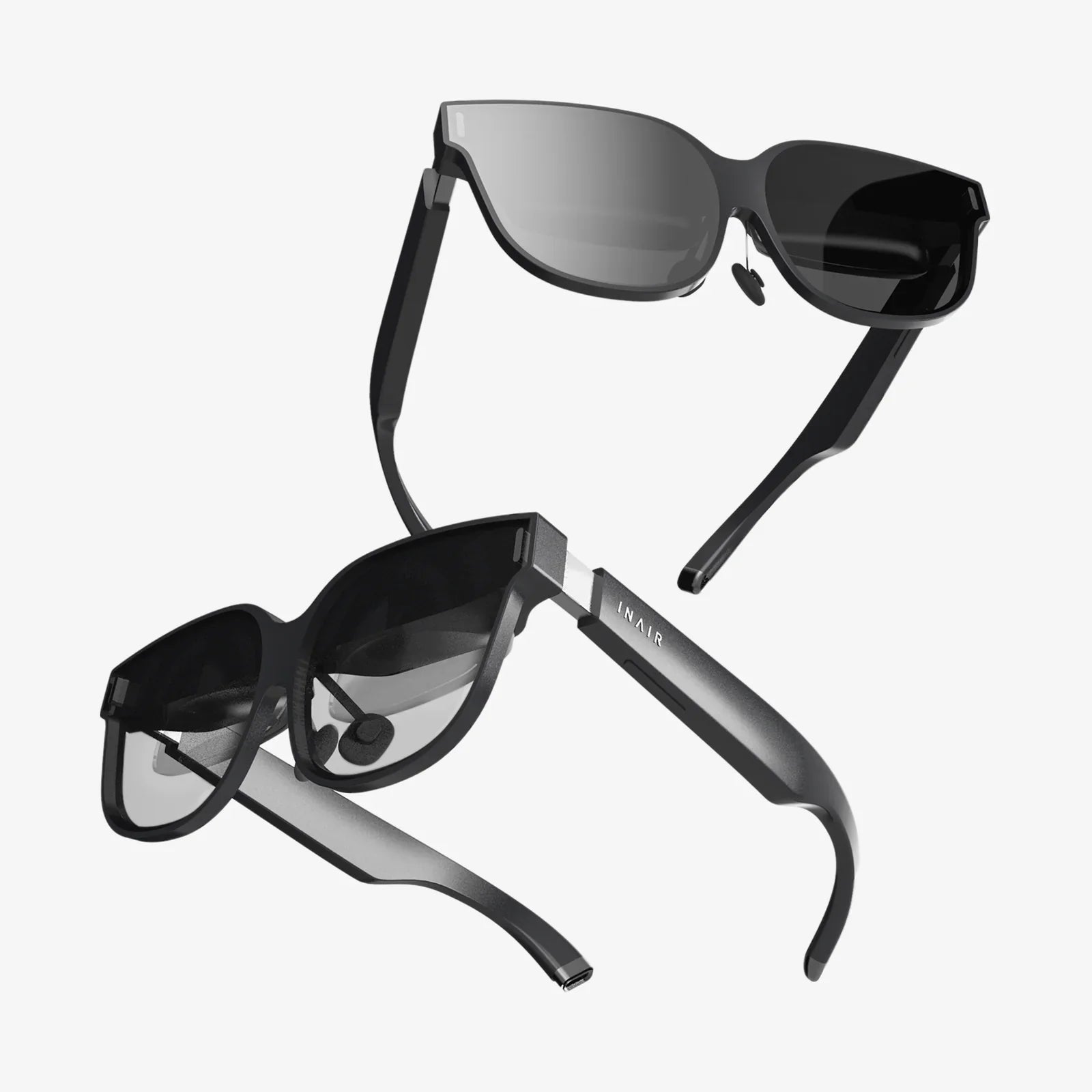
Imagine a world where your marketing doesn't just speak to your audience; it lives and breathes in their world, responding to their environment, their preferences, and their moment in time. This is no longer the stuff of science fiction but the tangible, thrilling reality of combining AR experience custom audience strategies. This powerful convergence is dismantling traditional advertising paradigms, moving beyond simple demographic blasts to forge meaningful, one-to-one connections at a scale previously unimaginable. It’s the ultimate personalization, transforming passive viewers into active participants and creating brand memories that are not just seen but felt and experienced.
The Foundation: Understanding the Two Pillars
To grasp the seismic shift, we must first deconstruct the two core components: the AR experience and the custom audience.
What Truly Defines an Immersive AR Experience?
An Augmented Reality (AR) experience is a dynamic, interactive overlay of digital information—be it 3D models, animations, video, or informational text—onto the user's physical environment, viewed through a device's camera. Unlike Virtual Reality (VR), which creates a completely synthetic world, AR enhances the real world. The magic of a successful AR campaign lies in its ability to blend the digital and physical so seamlessly that the user forgets the technology and focuses on the utility or delight it provides. This could be visualizing a new piece of furniture in their living room before purchase, trying on a pair of sunglasses virtually, or playing an interactive game that unfolds on their kitchen table.
The Evolution of the Custom Audience: Beyond Basic Demographics
The term "custom audience" has evolved far beyond its initial definition of a simple email list upload. Today, it represents a sophisticated data-driven approach to segmentation. A custom audience is a group of users defined by a marketer based on a rich tapestry of first-party data. This can include:
- Customer Data: Purchase history, lifetime value, product preferences, and engagement levels.
- Behavioral Data: Website visits, app usage, content consumed, and items left in a shopping cart.
- Contextual Data: Real-time location, time of day, and even local weather conditions.
- Psychographic Data: Interests, values, and lifestyles inferred from online behavior.
The power of a custom audience lies in its specificity. Instead of targeting "women aged 25-40," you can target "women aged 25-40 who have previously purchased running shoes, recently downloaded a fitness app, and live within 5 miles of a specific park where a sponsored run is happening this weekend." This precision is the critical fuel for a relevant AR experience.
The Synergy: When AR Meets Custom Audience Data
Individually, AR and custom audiences are powerful tools. Combined, they create a marketing superweapon. The custom audience provides the "who" and the "why," while the AR experience delivers the "how." This synergy allows for the creation of deeply contextual and personalized interactions that feel less like advertising and more like a valued service.
The process works in a continuous, virtuous cycle:
- Data Collection & Analysis: First-party data is gathered and analyzed to build a nuanced profile of the custom audience segments.
- Strategic Creative Development: AR experiences are designed specifically to resonate with the identified needs, desires, and contexts of each segment. A campaign for new homeowners will differ drastically from one for avid travelers.
- Precise Activation: The AR experience is delivered directly to the devices of the custom audience, often triggered by a specific action (e.g., scanning a QR code on product packaging, clicking a targeted ad, or entering a geofenced location).
- Engagement & Interaction: The user engages with the hyper-relevant AR content, leading to prolonged interaction and deeper emotional connection.
- New Data Generation: The user's interaction with the AR experience generates a new layer of invaluable behavioral data. How long did they interact? What did they click on? Did they share it? This data is fed back into the system, refining the custom audience profiles for even more precise targeting in the future.
The Tangible Benefits: Why This Fusion is a Game-Changer
The strategic implementation of AR experience custom audience targeting yields a host of significant benefits that directly impact the bottom line.
Exponentially Higher Engagement Rates
Traditional display ads are often ignored. An AR experience, by its very nature, demands interaction. When that experience is personally relevant—like seeing how a specific paint color you've been browsing online would look on your own walls—engagement soars. Users spend minutes, not seconds, with the brand, leading to dramatically higher dwell times and significantly improved brand recall.
Driving Meaningful Conversion and Reducing Returns
AR bridges the gap between online shopping and the tactile confidence of an in-store purchase. For a custom audience identified as "high-intent shoppers" who have viewed a product but not purchased, an AR "try-before-you-buy" experience can be the final nudge needed to convert. This not only increases sales but also drastically reduces return rates, as customers have a much clearer understanding of the product's scale, look, and fit in their personal space.
Generating Invaluable First-Party Data and Insights
Every interaction within an AR experience is a rich source of data. Marketers can learn which products users virtually "tried on" most, which angles they viewed them from, and what features they interacted with. This goes far beyond what a website click can tell you, providing profound insights into consumer preferences and intent that can inform everything from product development to inventory planning.
Forging an Unbreakable Emotional Connection
Marketing that is useful, entertaining, and personal creates positive emotional associations. By delivering a custom AR experience that solves a problem or provides genuine delight, a brand moves from being a mere vendor to a helpful companion. This builds deep-seated loyalty and turns customers into passionate brand advocates.
Implementing Your Strategy: A Practical Framework
Building a successful AR experience custom audience campaign requires careful planning and execution. Here is a framework to guide your approach.
Step 1: Data Auditing and Audience Segmentation
Begin by auditing your available first-party data. What do you know about your customers? Use your Customer Relationship Management (CRM) platform, website analytics, and social insights to build 3-5 distinct custom audience segments. Avoid creating too many segments initially; focus on those with the highest potential value and most defined characteristics.
Step 2: Defining the Objective and Use Case
Align the AR experience with a clear business objective for each audience segment. Is the goal to:
- Drive sales for a specific product category? (Use case: Virtual try-on or placement.)
- Increase event attendance? (Use case: An interactive AR game or scavenger hunt at the event location.)
- Boost brand awareness and engagement? (Use case: A fun, shareable social media filter.)
The experience must be valuable to the user, not just a technological gimmick.
Step 3: Crafting the Seamless User Journey
How will your custom audience discover and access the AR experience? The activation trigger must be frictionless. This could be:
- A QR code on physical product packaging or in a store.
- A targeted social media ad that delivers the AR filter directly in the user's feed.
- A personalized email or notification prompting them to "see this product in your home."
- A geofenced trigger when a user enters a relevant location.
Step 4: Measuring Success with the Right Metrics
Move beyond vanity metrics like impressions. Define Key Performance Indicators (KPIs) that align with your objective:
- For Engagement: Measure average session duration, interaction rate, and social shares.
- For Conversion: Track conversion rate uplift for the targeted audience, attributed sales, and reduction in product return rates.
- For Brand Lift: Conduct surveys to measure changes in brand perception, recall, and favorability.
Navigating the Challenges and Considerations
While the potential is immense, this strategy is not without its challenges. Privacy concerns are paramount. Brands must be transparent about data collection and usage, ensuring full compliance with regulations and building trust through clear value exchange. Furthermore, the quality of the AR experience is critical; a glitchy or poorly designed overlay will do more harm than good. Accessibility is also key—the experience must be designed to work on a range of devices, ensuring the custom audience can actually use it without needing the latest hardware.
The Future is Now: Where This Technology is Headed
The fusion of AR and custom audience data is still in its relative infancy, but the trajectory is clear. We are moving towards a future of always-available, context-aware AR powered by wearable technology like smart glasses. Imagine walking down a street, and your glasses highlight a storefront based on your past purchases and current wish list, allowing you to see exclusive offers or virtually try on items from the sidewalk. The custom audience will evolve into a "custom individual," with marketing becoming a real-time, adaptive dialogue between brand and consumer. AI will play a massive role, dynamically generating and modifying AR experiences in real-time based on user behavior and environmental cues.
The line between the digital and physical worlds is blurring irrevocably. The brands that will thrive are those that embrace this convergence, not as a novelty, but as a core tenet of their customer engagement strategy. They will move from interrupting experiences to creating them, building worlds where their products and services are not just items to be bought but integral parts of their customers' lived reality. The tools are here, the data is available, and the audience is waiting. The only question that remains is: are you ready to step into their world?
Share:
Augmented Reality and Virtual Reality Empowering Human Place and Business: The Next Digital Revolution
How to Make a Virtual Reality Headset at Home: A Comprehensive DIY Guide