


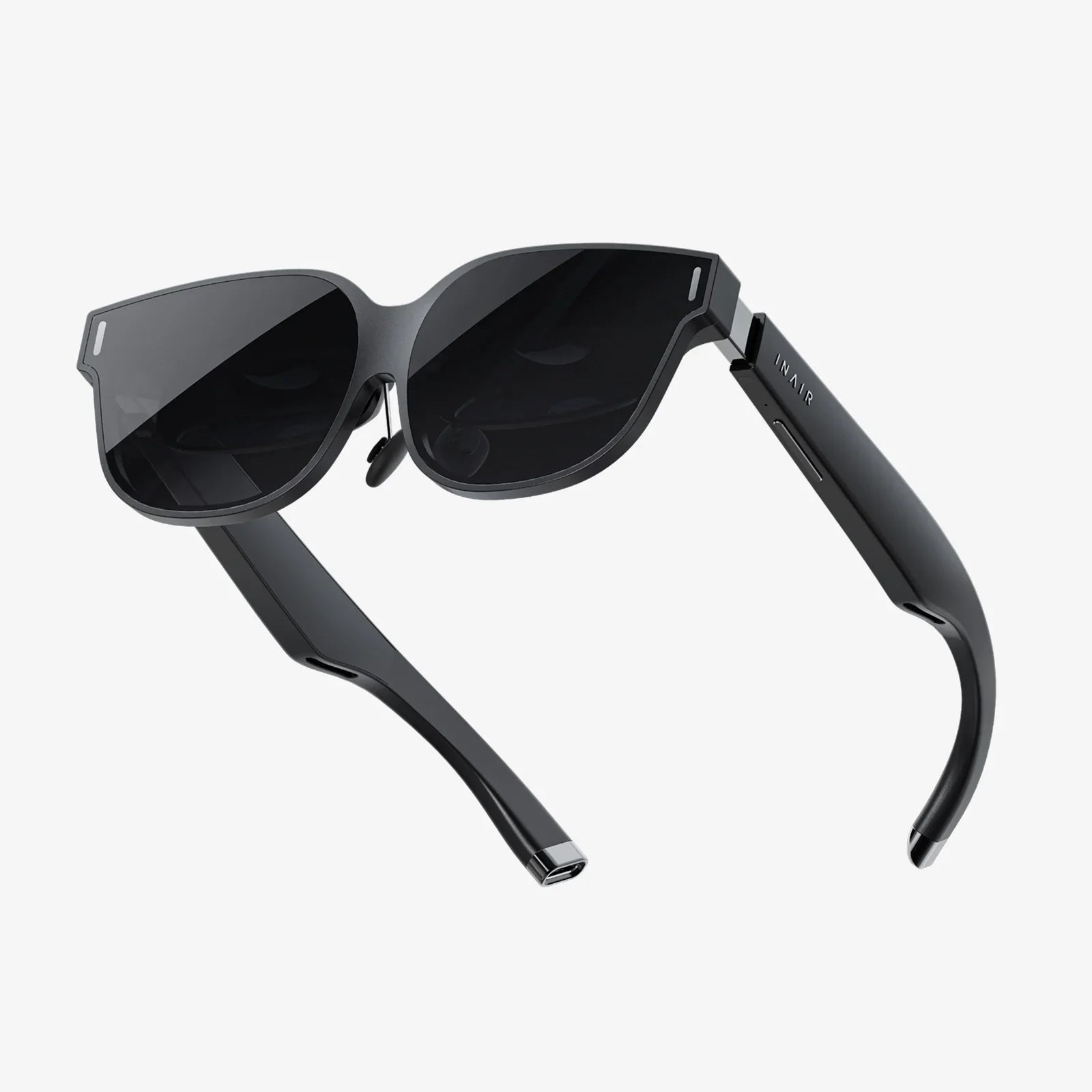
Imagine a world where the line between the digital and the physical doesn't just blur—it disappears. Where information doesn't live on a screen in your hand but is painted onto the world itself, accessible with a glance, a gesture, or a spoken word. This is the promise and the rapidly unfolding reality of the AR experience, a technological leap that is poised to become as fundamental to our daily lives as the smartphone once was. It’s a silent revolution, layering intelligence over our immediate environment, and it’s changing everything, starting right now.
The Essence of Augmentation: More Than a Gimmick
At its core, an AR experience is the real-time, interactive integration of digital information—be it 3D models, text, video, or audio—into a user's perception of the physical environment. Unlike its cousin, Virtual Reality (VR), which seeks to replace the real world with a simulated one, AR aims to supplement and enhance reality. It adds a digital stratum of value and context to the world we already inhabit.
The magic of a compelling AR experience lies in its three fundamental pillars: spatial mapping, persistent anchoring, and seamless interaction. Spatial mapping is the process where a device uses its sensors to understand the geometry of the surrounding space, identifying floors, walls, and surfaces. This allows digital objects to sit convincingly on a table or occlude behind a real-world couch. Persistent anchoring ensures that these digital objects remain in their designated spot, even if the user walks away and returns later. Finally, seamless interaction—through touch, voice, or even eye-tracking—makes the experience feel intuitive and magical, not clunky or forced.
The Engine Room: How AR Works Its Magic
Creating a seamless AR experience is a symphony of advanced hardware and sophisticated software. On the hardware side, it relies on a suite of sensors: cameras to see the world, LiDAR scanners to measure depth with laser precision, inertial measurement units (IMUs) to track movement and orientation, and powerful processors to make sense of it all in milliseconds.
The software is where the true intelligence resides. This involves complex computer vision algorithms that perform simultaneous localization and mapping (SLAM). SLAM allows the device to both understand its environment and pinpoint its own location within it simultaneously, all without pre-loaded data. Machine learning models then identify objects and surfaces—is this a flat wall suitable for a virtual painting, or a human face where we can overlay accessories? This incredible computational dance happens continuously, in real-time, making the digital feel physically present.
Transforming Industries: The Professional Power of AR
While consumer fun often grabs headlines, the most profound impact of AR experience is happening in industrial and professional settings, where it is solving real-world problems and driving efficiency.
Revolutionizing Manufacturing and Design
In manufacturing, AR is a game-changer. Designers and engineers can project full-scale, holographic 3D models of new products into a physical space, allowing them to assess form, function, and ergonomics long before a physical prototype is built. On the factory floor, assembly line workers can receive interactive, hands-free instructions overlaid directly onto the machinery they are assembling or repairing. This reduces errors, slashes training time, and improves safety by providing crucial information exactly where it's needed.
The Future of Healthcare and Medicine
The medical field is embracing AR to enhance both education and patient outcomes. Medical students can explore detailed, interactive holograms of the human anatomy, peeling back layers of muscle, tissue, and organs in a way textbooks could never allow. Surgeons can use AR overlays during procedures to visualize critical information like tumor locations or major blood vessels directly on the patient's body, increasing precision and reducing risk. This technology is creating a new paradigm of visual medicine.
Architecture and Construction in a New Dimension
For architects and clients, AR experience eliminates the imagination gap. Instead of trying to interpret 2D blueprints, clients can don a device and literally walk through a life-size, holographic version of their future home or office, making changes to layouts, materials, and lighting in real-time. On construction sites, workers can see the architect's planned structures—like pipes inside walls or electrical conduits—superimposed onto the unfinished building, ensuring accuracy and preventing costly mistakes.
Enhancing Daily Life: The Consumer AR Landscape
Beyond the factory and the operating room, AR is weaving its way into the fabric of our everyday consumer lives, often in subtle but powerful ways.
A New Canvas for Retail and E-Commerce
Shopping is being utterly transformed. The dreaded "will it fit?" question for furniture is being answered by AR apps that let you place true-to-scale virtual sofas, tables, and lamps in your living room before you buy. The fashion industry is leveraging AR for virtual try-ons, allowing customers to see how glasses, makeup, or even clothes will look on their own reflection. This not only enhances customer confidence but dramatically reduces return rates, creating a more sustainable retail model.
Redefining Navigation and Exploration
Forget looking down at a map on your phone. The next generation of navigation will use AR to overlay directional arrows, street names, and points of interest directly onto the road ahead through your smartphone screen or smart glasses. Exploring a new city? Point your device at a landmark to see its history pop up. Look at a restaurant to instantly see its reviews and menu. This contextual, heads-up information layer will make us more engaged with our surroundings, not less.
The Evolution of Learning and Storytelling
Education becomes immersive with AR. A student studying astronomy can have the solar system swirl above their desk. A history lesson on ancient Rome can see the Colosseum restored to its former glory right in the classroom. This interactive, visual learning promotes deeper understanding and retention. Similarly, storytelling and gaming are moving out of the screen and into our homes, with narratives that unfold around our furniture and games that turn our entire neighborhood into a playground.
The Challenges and The Conversation: The Flip Side of the Coin
For all its potential, the path to a ubiquitous AR experience is not without significant hurdles and serious ethical questions that society must address.
Technical and Social Hurdles
Technologically, we need devices that are socially acceptable, all-day wearable, and possess immense processing power without draining battery life. The current generation of smart glasses often falls short of these ideals. Furthermore, the "digital divide" could be exacerbated, creating a world where AR-enhanced information is available only to those who can afford it. There's also the potential for new forms of digital distraction and addiction, where the augmented layer becomes more engaging than the real people and places around us.
The Privacy Paradox
This is perhaps the most critical issue. AR devices, by their very nature, are equipped with always-on cameras and sensors constantly scanning our environments. This raises monumental privacy concerns. Who has access to this data? How is it stored and used? The potential for persistent surveillance, facial recognition on a massive scale, and the weaponization of personal data is a dystopian threat that must be mitigated through robust, forward-thinking regulation and ethical design principles from the ground up. The world of AR cannot be built on the flawed data-harvesting models of the past.
The Quest for a Shared Reality
As AR allows individuals to customize their perception of reality, we risk fracturing our shared experience of the world. If everyone can choose their own information filters, facts, and even aesthetics overlaid on public spaces, what common ground remains? Navigating this tension between personalized reality and a cohesive societal experience will be one of the great challenges of the coming decades.
Gazing into the Crystal Ball: The Future is Augmented
The ultimate evolution of the AR experience is often described as the "mirrorworld" or the "spatial web"—a perfect, one-to-one digital copy of our physical reality, accessible and interactive through lightweight, elegant eyewear. In this future, physical location will be less important than digital context. Your workspace could be anywhere; a virtual monitor could appear on any café table. Doctors on different continents could collaborate over the same holographic patient scan as if they were in the same room.
This future will be built on a foundation of advanced AI, ever-smaller and more powerful hardware, and high-speed, low-latency connectivity like 5G and eventually 6G. The key to its successful adoption, however, won't just be technological prowess. It will be a human-centered approach that prioritizes privacy, security, accessibility, and ethical design. The goal is not to escape reality, but to make it richer, safer, more efficient, and more understandable.
The invisible layer is already here, and it’s getting smarter, more persistent, and more integrated by the day. The question is no longer if AR will redefine our relationship with technology, but how quickly we will adapt to a world where the digital and physical are forever, and wonderfully, intertwined. The next time you look at an empty space, just imagine what could be there—because soon, anything you can imagine, will be.
Share:
AR Technical: The Invisible Engine Reshaping Our Reality
Wearable Display Market Analysis: A Deep Dive into the Future on Your Wrist