


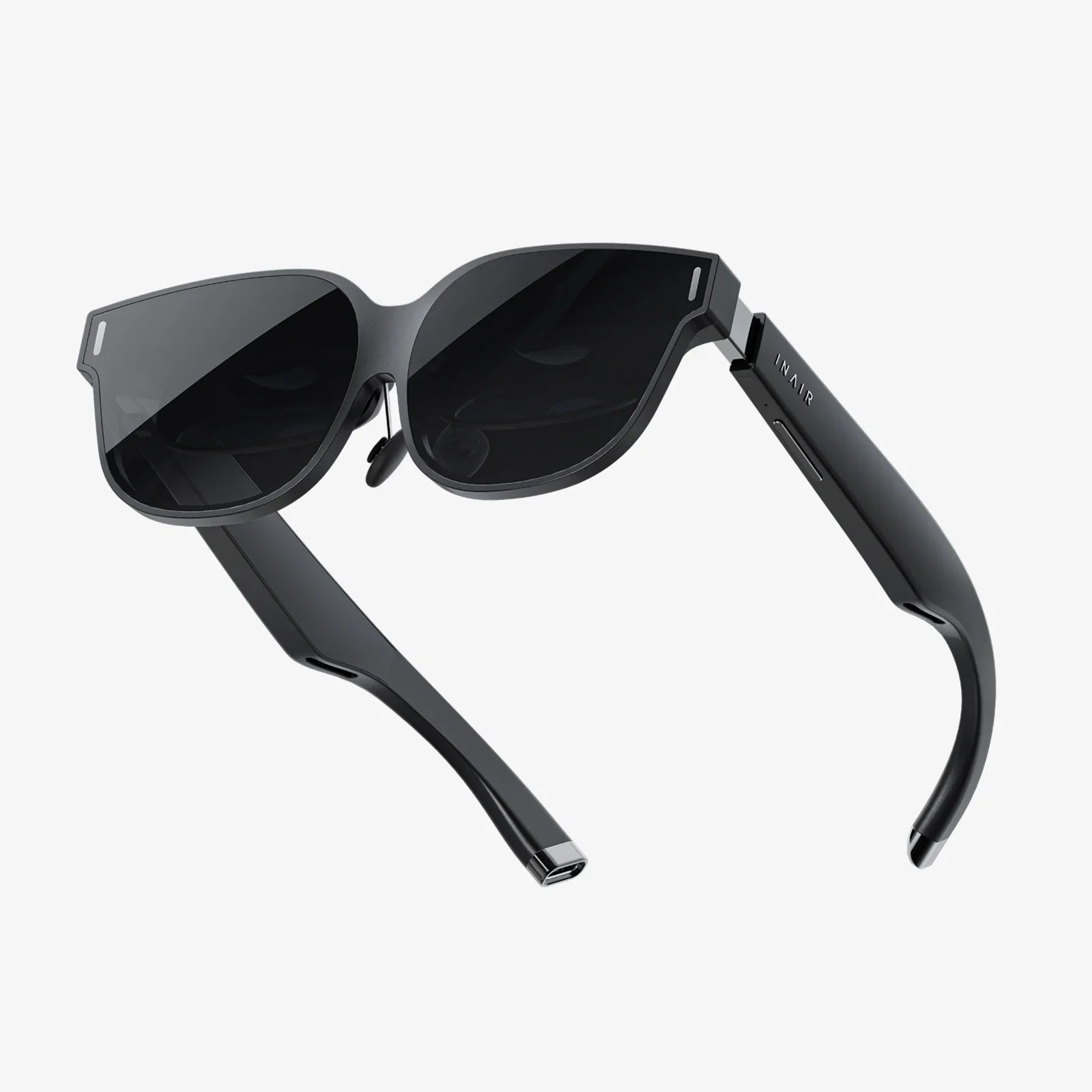
Imagine a world where the line between the digital and the physical doesn't just blur—it vanishes. A world where information isn't something you search for on a screen but is instead layered seamlessly over your immediate reality, waiting to be discovered. This is the promise, and increasingly the reality, of AR Find technology. It’s a silent revolution, moving beyond flashy filters and gaming to become an indispensable tool for navigating, understanding, and interacting with the world around us. The ability to find isn't just about locating a lost set of keys anymore; it's about uncovering a universe of context, data, and possibility hidden in plain sight, accessible with nothing more than the device in your pocket or a pair of sleek glasses on your face.
The Core Mechanics: How AR Find Actually Works
At its heart, AR Find is a sophisticated interplay of hardware and software designed to bridge two worlds. It’s not magic, but the engineering behind it is nothing short of magical. The process typically involves a three-step dance: perception, processing, and projection.
First, the device's sensors—cameras, LiDAR scanners, GPS, accelerometers, and gyroscopes—perceive the environment. They don't just take a picture; they build a live, three-dimensional map of the space, understanding the geometry of surfaces, distances, and the device's own position and orientation within that space. This spatial awareness is the critical foundation. Without it, digital objects would float aimlessly instead of anchoring convincingly to a tabletop or wall.
Next, the onboard processing power takes over. This is where the "find" function truly comes to life. Using advanced computer vision and machine learning algorithms, the system can process the visual data to identify objects. It can recognize a specific sofa model, a historical monument, or the components of a car engine. It can also use visual markers, like QR codes, or more abstract spatial anchors stored in a cloud-based visual positioning system to pinpoint exact locations with centimeter-level accuracy indoors, where GPS fails.
Finally, the system projects the relevant digital information. This could be a label hovering over a product on a shelf, an arrow on the floor guiding you to your gate at an airport, or an animated character hiding behind your couch. The key is that this overlay is rendered in real-time, perspective-correct, and occluded by real-world objects, creating the powerful illusion that the digital and physical are one and the same.
Beyond the Novelty: Practical Applications Reshaping Industries
The true power of AR Find is revealed not in isolated demos but in its practical, scalable applications that are solving real-world problems across diverse sectors.
Revolutionizing Retail and E-Commerce
The shopping experience is being fundamentally reimagined. AR Find allows customers to visualize products in their own space before purchasing. Imagine pointing your phone at your living room wall to see how a new painting would look there, or at your empty driveway to see a life-size model of a car, which you can walk around, open the doors of, and even see how the color looks under different lighting conditions. This drastically reduces purchase hesitation and product returns, creating a more confident consumer. In physical stores, pointing a phone at a product can reveal a wealth of information—customer reviews, detailed specifications, comparable products, or even inventory levels for different sizes and colors—without the need to track down a store associate.
Transforming Industrial Maintenance and Repair
In complex industrial settings, AR Find is a game-changer for efficiency and accuracy. A technician working on a malfunctioning machine can point a tablet or smart glasses at the equipment. The AR system can instantly identify the model and overlay digital schematics, highlight specific components that need inspection, and provide step-by-step animated repair instructions directly onto the machinery. This hands-free guidance reduces errors, slashes training time for new technicians, and minimizes downtime, which is critically expensive in manufacturing, energy, and aviation industries. It effectively gives every field technician the knowledge of a senior expert, instantly.
Redefining Navigation and Wayfinding
GPS got us to the address, but AR Find will get us to the exact seat. Indoor navigation is being solved with AR arrows and directions painted onto the live camera feed, guiding users through sprawling airports, vast hospital complexes, multi-floor university campuses, or large shopping malls. This is profoundly more intuitive than staring at a blinking blue dot on a 2D map. Outdoors, the technology can enhance tourism; pointing a phone at a historic building can overlay its history, architectural details, and significant events, creating a deeply immersive and educational experience.
Advancing Healthcare and Medicine
In medicine, AR Find is moving from science fiction to clinical reality. Surgeons can use AR overlays to visualize a patient's anatomy, such as the precise location of a tumor or major blood vessels, superimposed directly onto the patient during a procedure. This provides a kind of "X-ray vision" that enhances precision and can improve surgical outcomes. Medical students can use AR to practice procedures on hyper-realistic digital holograms of human anatomy, accelerating their learning curve in a risk-free environment.
The Human Factor: Changing How We Learn, Play, and Connect
The impact of AR Find extends beyond commercial and industrial applications, seeping into the very fabric of our daily lives and social interactions.
Interactive Education and Training
Learning becomes an active, engaging discovery process. Instead of reading about the solar system, students can have it orbit around their classroom. History lessons can come alive with reenactments playing out on their desks. Mechanics-in-training can practice disassembling and reassembling a complex engine without needing the physical parts. AR Find transforms abstract concepts into tangible, interactive 3D models, catering to diverse learning styles and dramatically improving knowledge retention.
The Evolution of Social Interaction and Gaming
Gaming was the first mass-market introduction to AR for many, and it continues to evolve. Games now encourage players to explore their real-world neighborhoods, discovering digital creatures, resources, and challenges tied to specific locations. This promotes physical activity and exploration. Socially, AR Find can enable new forms of connection. Imagine leaving a digital note or a virtual piece of art for a friend to find at a specific park bench, creating a layer of shared experience and memory tied to physical locations.
Navigating the Challenges: Privacy, Accessibility, and the Digital Divide
For all its potential, the path to an AR-ubiquitous future is not without significant hurdles that society must thoughtfully address.
The most pressing concern is privacy. AR Find systems, by their very nature, are data-hungry. They constantly capture and analyze our surroundings. This raises critical questions: Who owns this visual data of our homes, offices, and public spaces? How is it stored, processed, and used? Could it be used for pervasive surveillance or targeted advertising based on the physical items it sees in your life? Establishing clear ethical guidelines and robust, transparent data governance frameworks is not an option; it is a prerequisite for public trust and adoption.
Another challenge is accessibility and the digital divide. While smartphone-based AR is widespread, the most immersive experiences require high-end devices or dedicated AR glasses, which can be expensive. There is a risk that this powerful tool for information and efficiency could become a luxury, exacerbating existing inequalities in education and professional opportunities. Ensuring the technology is affordable and its benefits are widely distributed is a crucial task for developers and policymakers alike.
Finally, there is the human factor of perceptual overload and societal etiquette. Constantly overlaying digital information on the world could lead to distraction, a diminished attention span, or even an inability to appreciate the un-augmented beauty of reality. Furthermore, the social norms around using AR in public are yet to be defined. Is it rude to wear AR glasses during a conversation? How do we interact in public spaces when everyone is partially immersed in their own digital layer?
The Future is Layered: What Comes Next for AR Find?
The current state of AR Find, primarily experienced through handheld devices, is merely the prelude. The next evolutionary leap will be towards true ubiquitous computing through always-available, spatially-aware wearable technology like smart glasses and eventually contact lenses. This will move the technology from being an app you open to a constant, ambient layer of reality, seamlessly integrated into our perception.
We are moving towards a world where the internet won't be a place we go to, but something that exists all around us. The very concept of "searching" will be transformed. You won't type a query; you'll look at an object and have the information find you. This will be powered by advances in AI, faster networks like 5G and 6G for real-time data streaming, and even more sophisticated sensor fusion. The physical world will become hyper-linked, every object and location a potential portal to a deeper story, a piece of data, or a connection to someone else.
This isn't about replacing reality with a virtual one; it's about enhancing our natural world with a digital conscience, making us more informed, efficient, and connected. It’s about turning the entire world into a discoverable interface. The revolution isn't coming; it's already here, waiting for you to find it.
The world around you is whispering secrets, and AR Find is the tool that finally lets you listen. From the history embedded in the bricks of an old building to the hidden operational data of the device you're holding right now, a new dimension of reality is waiting to be uncovered. This isn't just a technological shift; it's a fundamental change in the human experience, empowering us to see the unseen and interact with our environment in ways previously confined to our imaginations. The future is not distant—it's layered right on top of the present, and it's inviting you to look closer.
Share:
Best Smart Glasses for Daily Use 2025: The Ultimate Guide to Seamless Wearable Tech
Best Smart Glasses for Daily Use 2025: The Ultimate Guide to Seamless Wearable Tech