


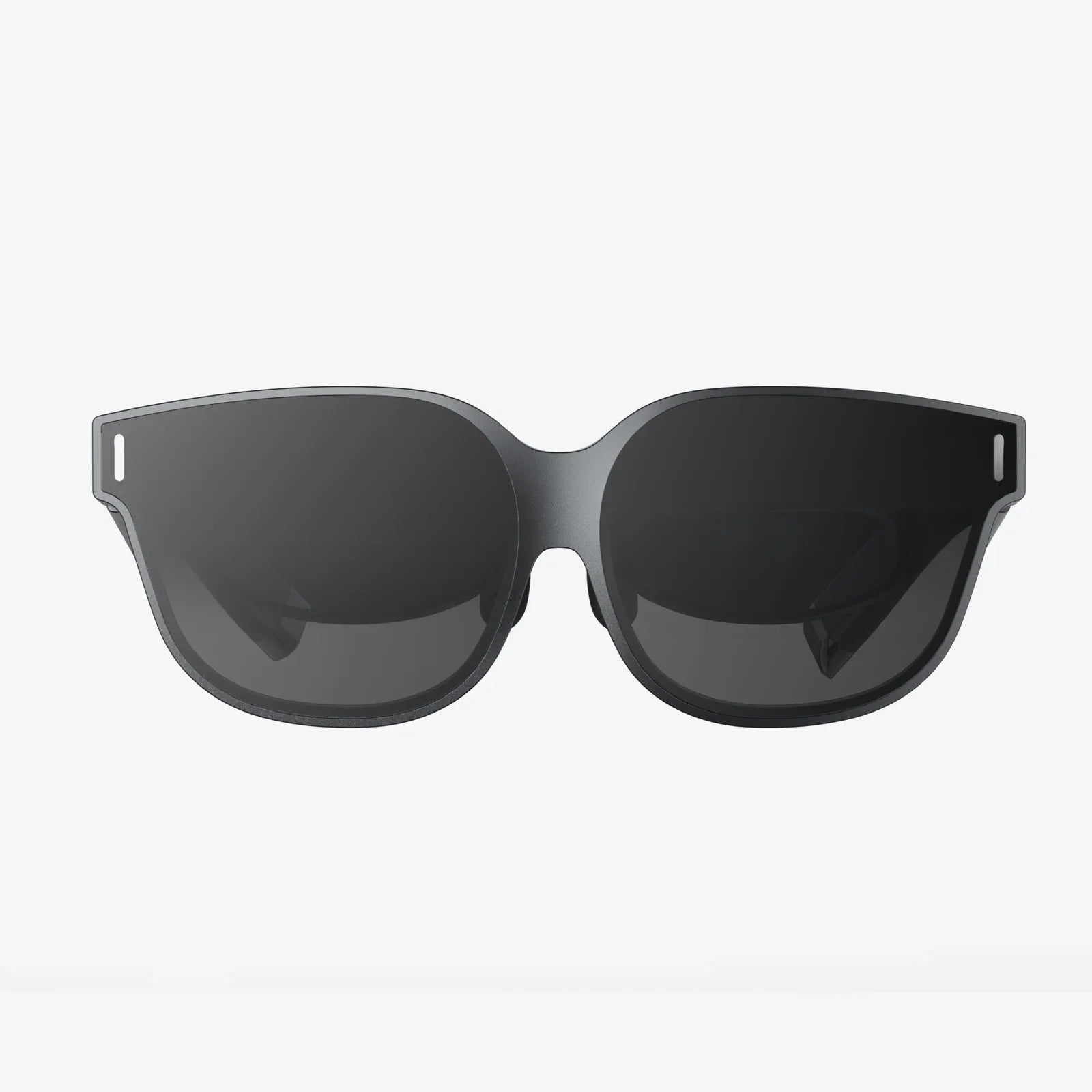
Imagine pointing your device at a city street and seeing not just the static buildings, but a dynamic, interactive tapestry of history, commerce, and social connection—a living layer of information that responds to your gaze, your touch, and even your intent. This is the promise of advanced AR Foundation interactions, a technological leap that is quietly building the bridge to our ubiquitous computing future. It’s no longer about just seeing a digital object in your room; it’s about conversing with it, manipulating it, and letting it understand the world from your perspective. This invisible framework is the bedrock upon which the next generation of human-computer interaction is being built, and it’s poised to revolutionize everything from complex surgical procedures to how a child learns about the solar system.
Beyond the Novelty: From Visual Overlay to Contextual Dialogue
The earliest iterations of augmented reality were often dismissed as a parlor trick—a fun but ultimately shallow overlay of digital content onto a camera feed. The interaction, if it existed at all, was primitive: tap the screen to place an object, pinch to zoom. The digital element was a ghost in the machine, unaware of its surroundings and incapable of a meaningful exchange. AR Foundation interactions shatter this limitation. They represent a fundamental shift from AR as a visual medium to AR as an experiential platform.
At its core, this evolution is powered by a sophisticated suite of technologies working in concert. The AR Foundation framework acts as an abstraction layer, harmonizing the powerful native features of underlying operating systems to provide developers with a unified toolkit for building cross-platform experiences. This toolkit is what enables the digital to comprehend the physical.
The Pillars of Intelligent Interaction
Creating a seamless and intuitive AR experience requires more than just tracking a flat surface. It demands a deep, real-time understanding of the environment and the user within it. This intelligence is built upon several key pillars.
Environmental Understanding and Mesh Reconstruction
Before any meaningful interaction can occur, the system must become a student of its environment. Using data from cameras and sensors, advanced algorithms perform a process known as spatial mapping. This isn't just identifying a horizontal plane like a table or floor; it involves constructing a detailed, three-dimensional mesh of the entire space—understanding the contours of a sofa, the precise dimensions of a room, the uneven texture of a brick wall, and the exact location of windows and doors.
This dense mesh is the canvas upon which interactions are painted. It allows virtual objects to behave like physical ones: a digital ball can realistically roll under a real chair and come to rest against a wall. A virtual character can step off a table and walk around obstacles on the floor. This occlusion and physics-based interaction are foundational to selling the illusion and making the experience feel tangibly real, rather than a flimsy graphic superimposed on the world.
Precise Tracking and Positioning
For the illusion to hold, the digital world must remain locked in place within the physical one, a concept known as persistence. AR Foundations achieve this through a fusion of visual-inertial odometry (using the camera and gyroscope/accelerometer), which tracks the device's position and orientation in space with remarkable accuracy. This precise 6-degrees-of-freedom (6DoF) tracking ensures that a virtual lamp placed on your bedside table stays there, even if you walk to the other side of the room and look back at it from a new angle. This stability is non-negotiable for professional applications where millimeter accuracy is required, such as viewing a holographic engine part aligned with a physical prototype.
Advanced Input Modalities: Beyond the Tap
The touchscreen, while versatile, is a blunt instrument for interacting with a three-dimensional world. AR Foundation interactions embrace a more natural and diverse set of input methods that mirror how we interact with real objects.
- Gesture Recognition: Cameras can now track the user's hands, interpreting pinches, grabs, swipes, and holds. This allows for direct manipulation of 3D models—rotating a molecule by pinching and twisting it, or scaling a piece of virtual furniture by pulling it apart with two hands. This direct, unmediated control is incredibly intuitive and powerful.
- Gaze and Commit: Often used in conjunction with other inputs, this technique involves using the device's front-facing camera to track where the user is looking. A simple glance can select a UI element, which can then be activated with a voice command, a subtle nod, or a hand gesture. This creates a hands-free interface ideal for situations where touch is impractical, like a surgeon guiding a holographic checklist during a procedure.
- Voice Commands: Natural language processing integrated into AR experiences allows for complex, contextual control. A user could look at a virtual chart and simply say, "Rotate 90 degrees" or "Show me the data for Q3." This multimodal interaction—combining gaze, gesture, and voice—creates a fluid and efficient user experience that feels less like operating software and more like collaborating with an intelligent assistant.
- Surface Interaction and Physics: Virtual objects don't just float; they collide, bounce, slide, and rest based on simulated physical properties. An AR experience can allow a user to literally throw a virtual ball against a real wall and watch it bounce back, or to push a digital block across a real table and feel the friction simulated through visual and audio feedback.
The Architect's Blueprint: Designing for Intuitive AR Experiences
Harnessing this technological power requires a new design philosophy. Traditional 2D UI/UX principles often fail in a 3D, spatially-aware context. Designing for AR Foundation interactions demands a focus on ergonomics, context, and user comfort.
Ergonomics and Comfort: Designers must be mindful of "gorilla arm"—the fatigue caused by holding one's arms up for extended periods to interact with mid-air holograms. UI elements are often placed on surfaces or within comfortable reach arcs. Transitions and animations must be smooth to avoid simulator sickness, and text must be legible and stable within the user's field of view.
Contextual and Adaptive UI: The interface must be aware of its environment. A control panel for a complex machine might appear large and detailed in an empty warehouse but could automatically minimize to a subtle icon when the user is in a cluttered space. Information should be presented only when and where it is relevant, reducing cognitive load and visual clutter.
Affordances and Feedback: In the real world, a button looks like it can be pressed, and a handle looks like it can be pulled. Virtual objects need similar visual cues, or affordances, to suggest how they can be interacted with. Furthermore, every interaction must have clear and immediate feedback—visual, auditory, or haptic—to confirm the user's action and build a sense of tactile connection with the digital element.
Transforming Industries Through Interaction
The impact of these sophisticated interactions is already being felt across a wide spectrum of fields, moving far beyond gaming and entertainment.
Revolutionizing Education and Training
Imagine a medical student practicing a complex surgical procedure on a hyper-realistic, interactive hologram of the human heart. They can rotate it, zoom into layers, make incisions with a virtual scalpel (using precise gesture control), and receive immediate haptic feedback. This hands-on, zero-risk training is infinitely more effective than studying textbooks or even watching videos. Similarly, mechanics can train on virtual engine models, seeing internal parts in motion and practicing repairs step-by-step with guided AR instructions overlaid directly onto the physical equipment.
Empowering Industrial Design and Manufacturing
Design and engineering teams scattered across the globe can collaborate around a life-size, interactive 3D model of a new product prototype. Using gesture and voice, they can manipulate the model, test different configurations, annotate specific components directly in 3D space, and identify potential design flaws long before a physical prototype is ever built. This accelerates development cycles, reduces costs, and fosters a more intuitive collaborative process.
Enhancing Retail and E-Commerce
The ability to not just see a virtual piece of furniture in your room, but to physically push it around, open its drawers, and see how light from your window reflects off its material, fundamentally changes the online shopping experience. This level of interaction drastically reduces purchase hesitation and product returns, building consumer confidence by providing a near-tactile understanding of the product.
Creating New Frontiers in Navigation and Accessibility
For individuals with visual impairments, AR interactions can create an auditory map of the world. Using a smartphone or AR glasses, the system can identify obstacles, read signs aloud when looked at, and provide turn-by-step navigation through 3D spatial audio cues. This transforms public spaces into more accessible and navigable environments, granting a new level of independence.
The Future: Towards a Perceptive and Predictive Layer
The trajectory of AR Foundation interactions points toward an even more seamless and intelligent future. We are moving towards systems that are not just aware of the environment, but perceptive of the user's state and intent.
The integration of AI and machine learning will enable predictive interactions. The AR system could learn a user's patterns and anticipate their needs, proactively presenting relevant information or tools. Emotion recognition through facial analysis could allow experiences to adapt their tone and content based on the user's emotional state, creating more empathetic and effective applications in mental health support or personalized learning.
Furthermore, the eventual widespread adoption of consumer-grade AR glasses will untether these interactions from the handheld screen, truly embedding them into our daily lives. The digital layer will become a constant, context-aware companion, responding to our subtle gestures, our voice, and our gaze, making the line between the digital and the physical not just blurred, but functionally irrelevant.
The magic of the next decade won't be found in a more realistic graphic or a faster processor alone; it will be in the subtle, intuitive, and powerful ways we are finally able to reach into the digital layer and shape it with our hands, our voices, and our intentions. The foundation for that future is being laid today, not with bricks and mortar, but with code, algorithms, and a vision of a world where our reality is endlessly extendable, malleable, and interactive.
Share:
AI Powered App Development Platforms: The No-Code Revolution Reshaping the Digital Landscape
Most Selling Digital Products 2025: The Tech That Will Dominate Our Lives