


- by wangfred
AR Glasses 4K China: The Unseen Revolution Reshaping Our Digital World
- by wangfred
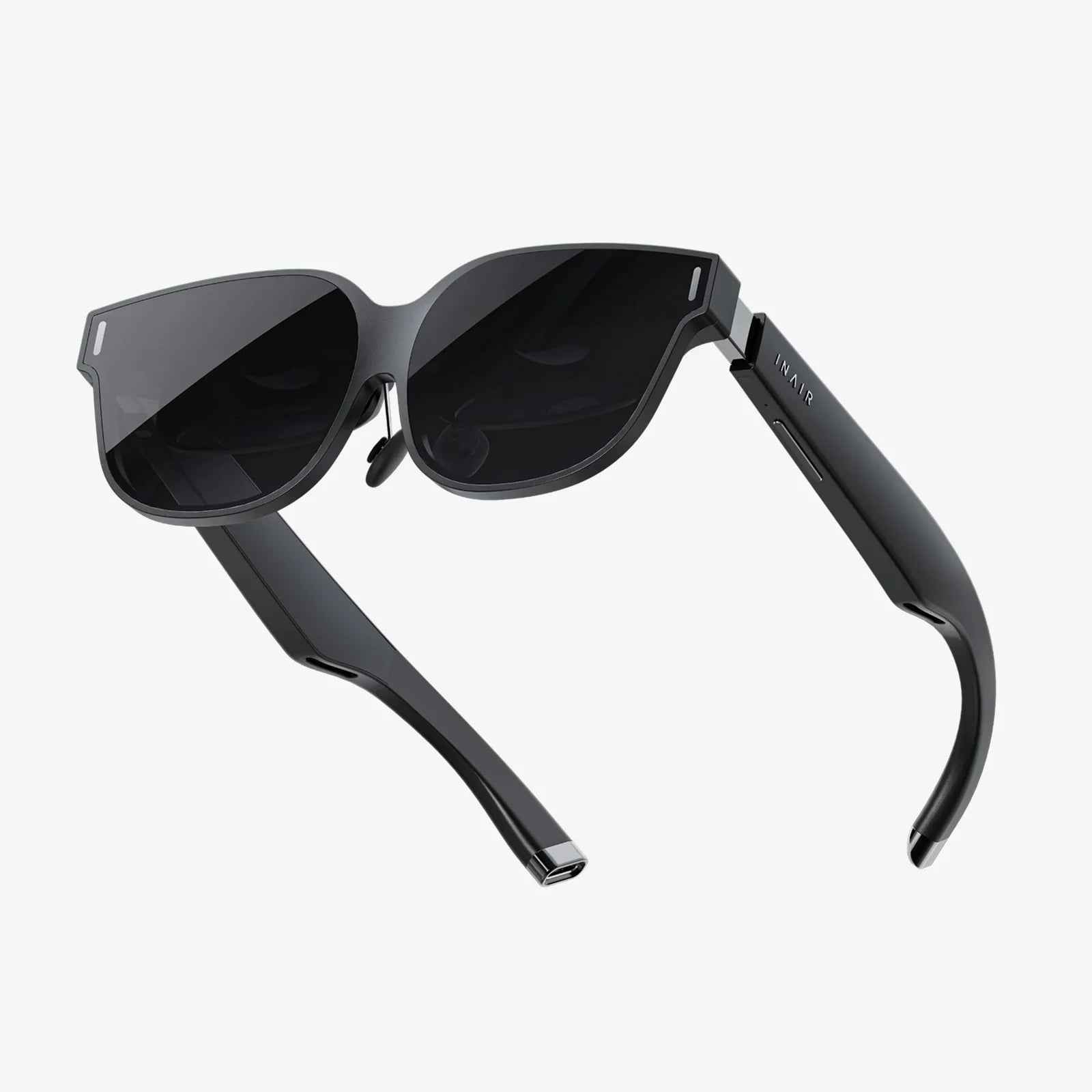
Imagine a world where digital information doesn't just live on a screen but is seamlessly woven into the fabric of your reality—where a recipe hovers over your mixing bowl, a navigational arrow is painted onto the road ahead, and a colleague’s avatar sits across from you at your desk. This is no longer the stuff of science fiction; it is the imminent future being engineered today, and a significant force driving it forward is the groundbreaking development of 4K resolution augmented reality glasses, with a particular epicenter of innovation emerging from China. This convergence of ultra-high-definition visual fidelity and immersive technology represents a pivotal moment, not just for consumer electronics, but for how humanity will perceive and interact with the digital realm.
To appreciate the significance of 4K AR glasses, one must first understand the unique challenges of display technology in augmented reality. Unlike virtual reality, which completely replaces your field of view with a digital environment, AR overlays digital content onto the real world. This demands an extraordinary level of visual clarity. A low-resolution display would make text unreadable, graphics appear pixelated, and virtual objects look glaringly artificial, shattering the illusion of immersion. The jump to 4K—a resolution of approximately 3840 x 2160 pixels—is therefore not a mere incremental upgrade; it is a fundamental necessity for achieving what experts call "visual plausibility."
This high pixel density ensures that the digital elements integrated into your view are sharp, crisp, and believable. It eliminates the "screen door effect"—that faint grid-like pattern seen on earlier headsets—allowing for smooth lines, vibrant colors, and intricate details. For enterprise applications, this means an architect can examine a 3D model of a building with precise detail, identifying potential structural issues before construction begins. For a consumer, it means watching a virtual cinema screen that appears as solid and clear as a physical television. The 4K standard is the key that unlocks the full potential of AR, transforming it from a novel gadget into a truly useful and pervasive tool.
The global race for AR dominance is fierce, but China has rapidly established itself as a critical player, particularly in the hardware domain. This is not a coincidence but the result of a powerful confluence of factors. Firstly, China possesses the world's most sophisticated and integrated electronics supply chain. From the production of micro-displays like LCoS (Liquid Crystal on Silicon) and advanced OLEDoS (OLED on Silicon) panels to the manufacturing of intricate waveguides and miniature sensors, the entire ecosystem is densely concentrated. This allows for rapid prototyping, efficient production, and significant cost advantages, enabling companies to iterate on designs at an astonishing pace.
Secondly, there is immense domestic market demand and strong governmental support. Initiatives like "Made in China 2025" have identified advanced technologies, including AR/VR, as strategic national priorities. This has funneled investment into research and development, fostering a vibrant startup culture alongside established tech giants. Furthermore, Chinese consumers are notoriously tech-savvy and quick to adopt new technologies, creating a fertile testing ground for new AR applications in social media, gaming, e-commerce, and live streaming. This perfect storm of supply chain mastery, policy encouragement, and market appetite has positioned the region as a hotbed for cutting-edge AR hardware development, pushing the boundaries of what's possible with 4K displays.
The creation of a sleek, wearable pair of glasses that can project a stunning 4K image is a monumental feat of engineering. It relies on several core technologies working in perfect harmony.
At the heart of the system is the micro-display, the tiny screen that generates the image. Achieving 4K resolution on a panel often smaller than a postage stamp is incredibly challenging. Chinese manufacturers and researchers have made significant strides in developing high-density micro-OLED displays. These panels offer exceptional contrast ratios, true blacks, and fast response times, all while being incredibly small and power-efficient—a crucial consideration for wearable devices.
How does the image from that tiny display get projected onto your retina? The answer lies in the optical waveguide, a piece of transparent glass or plastic etched with microscopic gratings. This technology acts like a clever mirror system, bouncing light from the micro-display along the waveguide before finally directing it into the eye. This allows for a thin, glasses-like form factor, as opposed to the bulky optics of older headsets. The precision required to manufacture these waveguides for 4K content without distortion or chromatic aberration is immense, representing a significant area of innovation.
A crystal-clear display is useless if the digital content doesn't stay locked in place in the real world. This is where spatial computing comes in. An array of sensors, including high-resolution cameras, inertial measurement units (IMUs), and often LiDAR scanners, constantly map the environment and track the user's head movements. This happens in real-time, with minimal latency, to ensure that a virtual vase placed on a real table doesn't jitter or drift when you move your head. The processing power required to handle 4K rendering alongside complex environmental understanding is substantial, driving advancements in dedicated AI chips and algorithms.
While entertainment is a major driver, the impact of 4K AR glasses will be felt across nearly every industry, revolutionizing professional workflows and daily life.
In the industrial sector, 4K AR is a game-changer. Field service technicians can see schematics and receive guided instructions overlaid directly on the malfunctioning machinery, with the high resolution allowing them to discern tiny part numbers and complex wiring diagrams. Surgeons could have vital signs, 3D scans, and surgical plans projected within their field of view during operations, improving precision and outcomes. Design and manufacturing teams can collaborate on life-size, photorealistic 3D models, making changes in real-time.
The concept of telepresence will be utterly transformed. Instead of staring at a grid of faces on a flat screen, 4K AR glasses could project photorealistic holograms of remote participants into your physical space, sitting around the same conference table. The nuance of body language and the sense of shared presence would be vastly improved, making remote collaboration feel natural and immersive.
On a consumer level, the applications are endless. Navigation arrows painted directly onto the street. Real-time translation of street signs and menus in a foreign language, appearing as if they were originally printed that way. Personalized information about products as you shop. The ability to leave virtual notes and reminders for family members in specific locations around the house. The high resolution ensures all this information is elegant, legible, and integrated rather than intrusive.
Despite the exciting progress, several hurdles remain on the path to mainstream adoption. The first is form factor and comfort. While waveguides have made glasses much thinner, integrating the battery, processing unit, and all necessary sensors into a stylish, lightweight, and all-day wearable design is the ultimate goal. Current prototypes often represent a compromise between performance and aesthetics.
Battery life is another critical challenge. Driving two 4K displays, multiple sensors, and powerful processors is incredibly energy-intensive. Innovations in low-power displays, more efficient processing architectures, and potentially new battery technologies are essential to achieving a full day of use.
Finally, there is the challenge of the digital ecosystem. Hardware is nothing without software. The success of 4K AR glasses hinges on the development of a rich, compelling, and intuitive ecosystem of applications and content. Creating development tools that allow creators to easily build for this new medium is just as important as building the hardware itself.
As with any transformative technology, the rise of pervasive AR raises important questions. Issues of data privacy and security are paramount, as these devices will have an unprecedented ability to see, hear, and understand our environments and behaviors. Who owns the data they collect? How is it used and protected? Furthermore, the concept of attention and reality itself comes into question. Will we become distracted by digital overlays, or will it enhance our engagement with the physical world? Establishing ethical guidelines and societal norms for this new layer of reality will be a crucial parallel journey to the technological one.
The development of 4K AR glasses, particularly the intense innovation flowing from China's tech ecosystem, is more than a specs war. It is the foundational work for the next major computing platform, one that promises to blend our physical and digital lives in ways we are only beginning to imagine. The journey from clunky prototype to seamless everyday wearable is underway, and each breakthrough in pixel density, optical science, and battery efficiency brings us closer to a world where the line between what is real and what is digital finally, and beautifully, disappears. The future is not something we will watch on a screen; it is something we will step into and see all around us, in breathtaking 4K clarity.