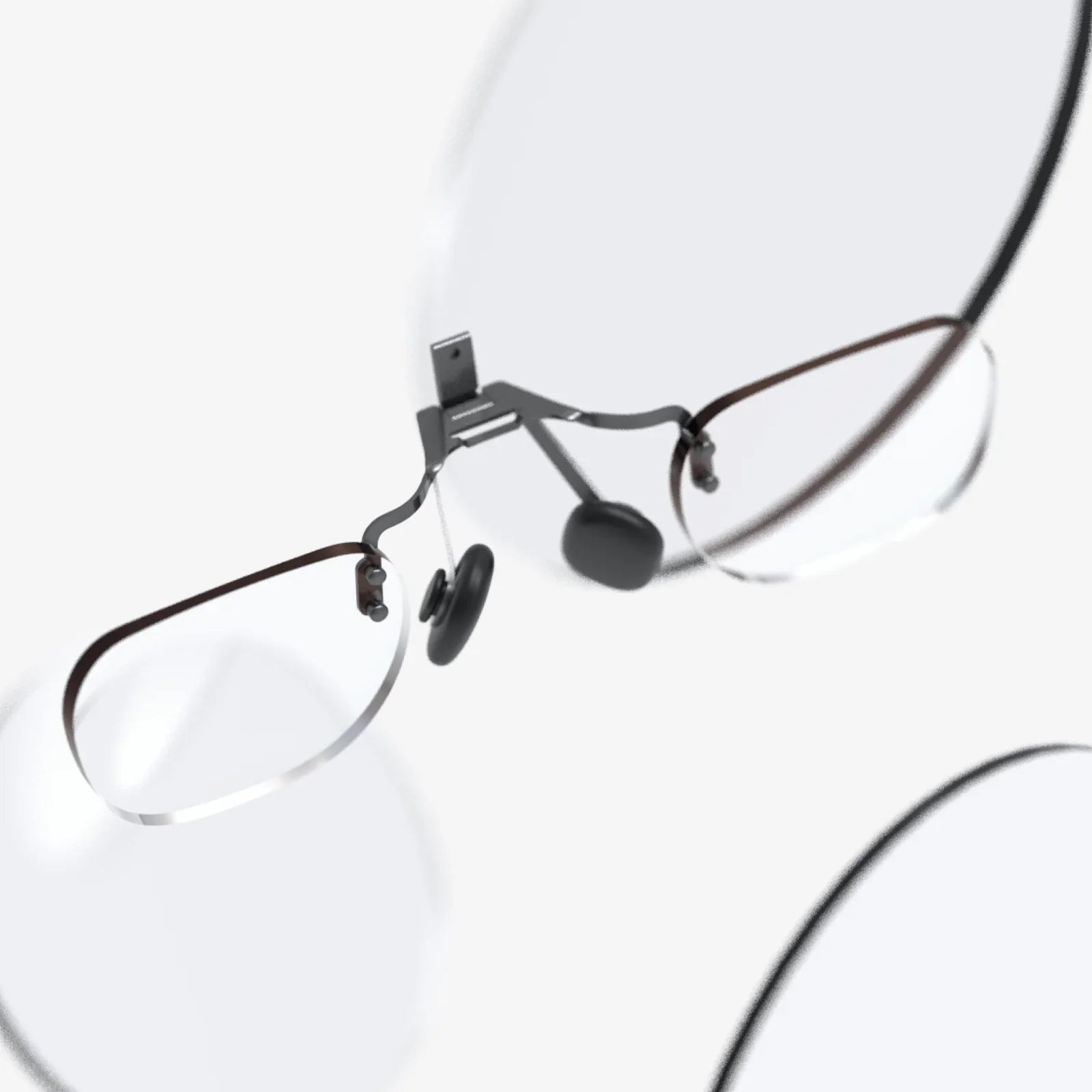
Imagine a world where digital information seamlessly overlays your physical reality, where directions float on the street before you, and a colleague's avatar sits across your real desk for a meeting. This is the promise of augmented reality glasses, a future of unparalleled connectivity and productivity. But this incredible vision has a single, stubborn Achilles' heel: the relentless drain on a small block of chemicals and metals stored in the frame. The quest for all-day AR glasses battery life is the defining battle that will determine whether this technology remains a niche gadget or becomes the next universal computing platform, and the race to solve it is pushing the boundaries of physics and engineering.

The Immense Power Appetite of Augmented Reality

To understand why AR glasses battery life is such a formidable challenge, one must first appreciate the sheer computational and optical horsepower required. Unlike virtual reality headsets that transport you to a fully digital world, AR glasses must perceive, understand, and then augment the real world in real-time. This process is exponentially more demanding.

At the core of any advanced pair of AR glasses are several power-hungry components:

  • High-Resolution Microdisplays: These tiny screens, often using technologies like OLEDoS or LCoS, project images directly onto the lenses. They must be incredibly bright to be visible in daylight conditions, a requirement that consumes a significant amount of power.
  • Advanced Processing Units (APUs): This is the brain of the operation. It's not just rendering graphics; it's simultaneously processing feeds from multiple cameras, running simultaneous localization and mapping (SLAM) algorithms to understand the environment, executing computer vision tasks for hand tracking, and managing spatial audio. This constant, complex computation is a major drain.
  • Sensor Suites: An array of sensors including depth sensors, accelerometers, gyroscopes, magnetometers, and ambient light sensors are always active, feeding data to the APU to build a model of the world around you.
  • Cameras: Multiple high-resolution cameras are used for pass-through video, recording, and environmental mapping. Capturing and processing this video stream is exceptionally power-intensive.
  • Wireless Radios: For untethered operation, Wi-Fi and Bluetooth are constantly active, and some models may also include cellular connectivity for true mobility, further adding to the energy drain.
  • Audio Systems: Spatial audio speakers or bone conduction transducers require power to deliver an immersive and private auditory experience.

When all these systems are running concurrently, the total system power can easily reach 5 to 10 watts or more. Confining the battery for such a system into the slim, lightweight form factor of eyeglasses is the central engineering paradox.

The Form Factor vs. Functionality Conundrum

The ultimate goal for AR glasses is to be as socially acceptable and comfortable as regular eyeglasses. This imposes severe constraints on size, weight, and heat dissipation. A large, heavy battery pack on the temple would make the glasses unwearable for extended periods, causing fatigue and discomfort.

Designers are therefore forced to make difficult trade-offs. They can either:

  1. Prioritize Form Factor: Use a smaller battery for a sleek, lightweight design, but accept a severely limited AR glasses battery life of perhaps one to two hours, relegating the device to short-burst usage.
  2. Prioritize Battery Life: Use a larger, heavier battery to achieve several hours of runtime, but sacrifice the sleek, glasses-like aesthetic, resulting in a bulkier, more intrusive device.
  3. Externalize the Power: Offload the battery and heavy processing to a separate device, like a smartphone or a dedicated compute puck carried in a pocket, connected via a wire or wirelessly. This solves the weight problem on the face but reintroduces a tether, compromising the freedom that makes AR glasses so compelling.

This trilemma is at the heart of every AR product design meeting. Striking the perfect balance is the holy grail.

Beyond Lithium-Ion: The Search for a New Energy Source

The consumer electronics industry has run on lithium-ion battery technology for decades. While it has improved incrementally, its fundamental energy density—the amount of energy stored per unit volume—is reaching its theoretical limits. For AR glasses to breakthrough, new solutions are being aggressively pursued.

  • Solid-State Batteries: This next-generation technology replaces the liquid or gel-form electrolyte with a solid material. This promises significantly higher energy density, faster charging, improved safety, and a longer lifespan. If commercialized at scale and at a low cost, solid-state could be the key to packing more power into a smaller, safer package on your face.
  • New Battery Chemistries: Research into alternatives like lithium-sulfur or lithium-air batteries offers the potential for even greater energy densities than solid-state. However, these technologies are still in earlier stages of development and face significant challenges with cycle life and stability before they can be considered for consumer devices.
  • Strategic Component Placement: Some designs integrate flexible battery cells into the frame itself, wrapping around the user's head to distribute weight more evenly and utilize otherwise dead space. This can increase capacity without adding bulk to the temples.

While a battery breakthrough would be a game-changer, it is only one piece of the puzzle. Perhaps a more immediate impact can be made by reducing the device's power appetite.

The Software and Silicon Revolution: Doing More with Less

Hardware is only half the story. The efficiency of the software and the specialized silicon running it is paramount to extending AR glasses battery life. This is where some of the most exciting innovations are happening.

  • Specialized AI Processors (NPUs): General-purpose processors are inefficient for the specific tasks required by AR. Dedicated Neural Processing Units (NPUs) are designed from the ground up to handle machine learning and computer vision algorithms with extreme efficiency. By offloading tasks like object recognition and spatial mapping from the main APU to a highly efficient NPU, the overall system power can be dramatically reduced.
  • Advanced Software Optimization: Smart power management at the OS level is critical. This includes techniques like:
    - Foveated Rendering: Using eye-tracking to render only the area where the user is looking in high resolution, while the peripheral vision is rendered at a lower resolution and fidelity. This can save massive amounts of GPU power.
    - Context-Aware Power Gating: The system intelligently powers down sensors and components that are not currently in use. For example, the depth sensor might only activate when an app specifically needs it, rather than running continuously.
    - Low-Power States: Implementing deep sleep modes that consume near-zero power when the glasses are idle but can instantly wake when the user puts them on or a notification arrives.
  • Cloud Offloading: For tasks that require immense computational power, the glasses can wirelessly offload processing to a nearby device or the cloud. This saves local battery but requires a strong, low-latency connection, which itself consumes power.

These silicon and software strategies represent the most practical and imminent path to meaningful gains in daily usability.

Alternative and Complementary Power Strategies

While the main battery is the primary energy source, engineers are exploring creative supplementary methods to squeeze out extra minutes or even hours of runtime.

  • Solar Power Integration: Transparent, flexible solar films could be integrated into the lenses or the top of the frame. While they wouldn't power the device fully, they could provide a trickle charge throughout the day, extending usage, especially outdoors.
  • Kinetic Energy Harvesting: Though the movement of one's head is relatively minor, micro-generators could theoretically convert this motion into small amounts of electrical energy, contributing to overall efficiency.
  • Inductive and Reverse Wireless Charging: The ability to place your glasses on a charging pad each time you take them off encourages top-up charging throughout the day. Furthermore, a user's smartphone could act as a power bank, using reverse wireless charging to give the glasses a quick energy boost in a pinch.
  • Hot-Swappable Batteries: A simple yet effective solution. Carrying a small, lightweight spare battery that can be clicked into the frame would allow for a full day of use without ever needing to be plugged into a wall.

These ideas may seem futuristic or niche, but they highlight the breadth of thinking being applied to this critical problem. The solution will likely be a combination of many approaches rather than a single silver bullet.

The User's Role: Managing Expectations and Behavior

Ultimately, the user's experience and behavior will also play a role in perceived battery life. Just as smartphone users learn which settings affect their battery the most, AR glasses users will develop their own habits.

Manufacturers will need to provide clear and intuitive tools for users to manage their power settings. A "power dashboard" could show which apps are the most draining and allow users to set profiles: a high-performance mode for immersive gaming or design work, and a battery-saver mode that limits functionality to core features like notifications and basic AR overlays for all-day use.

This transparency will help set realistic expectations. The first generation of truly wearable AR glasses may not deliver eight hours of continuous, full-fat AR. Instead, they might offer eight hours of standby with periodic interaction, or two hours of intensive use. Educating users on this intermittent usage model will be key to early adoption.

The Horizon: A Future Unplugged

The path forward is clear, albeit challenging. The industry is attacking the AR glasses battery life problem from every conceivable angle: better chemistry, smarter chips, more efficient software, and innovative form factors. Progress will be iterative. We will first see devices that leverage external processing, then gradually more will be integrated on-board as components become more efficient.

The endpoint is a pair of glasses that you forget you're wearing, both physically and energetically. They will last all day on a single charge, perhaps topping up automatically from ambient light or through micro-charging moments. They will intelligently manage their resources based on your activity, providing a seamless blend of the digital and physical without ever reminding you of the complex technology making it all possible.

The day your AR glasses can guide you on a full-day hiking adventure, translate menus at a leisurely dinner, and help you assemble furniture in your garage—all without a single anxious glance at a battery icon—is the day this technology will have truly arrived. It's a future worth striving for, and the intense focus on solving the power puzzle is what will ultimately unlock the transformative potential of augmented reality for everyone.

That moment you stop worrying about the battery percentage and start living seamlessly within an augmented world is the finish line the entire industry is racing toward. It’s not just about longer numbers on a spec sheet; it’s about the freedom to interact with digital content as naturally as we breathe, untethered from outlets and unburdened by anxiety, transforming every walk down the street into a potential adventure and every task into an opportunity for enhanced efficiency. The future of AR isn't just bright; it's destined to be perpetually powered.

Latest Stories

This section doesn’t currently include any content. Add content to this section using the sidebar.