


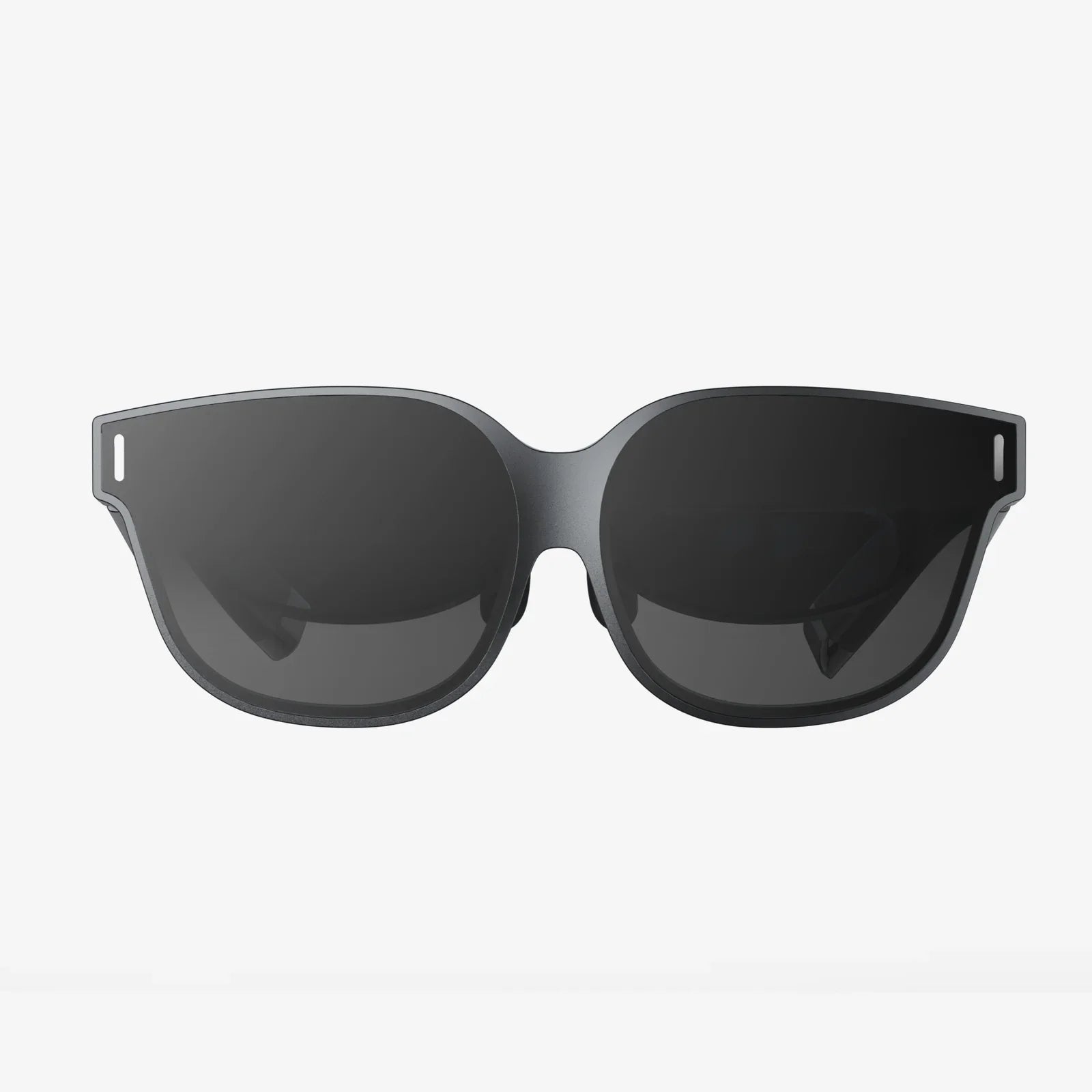
You slip on a pair of sleek, futuristic augmented reality glasses, ready to overlay a digital world onto your own. You see notifications floating in your periphery, a navigational arrow painted onto the sidewalk, and a virtual colleague sitting across from you. For ten glorious minutes, the future is here. Then, a dreaded low-battery icon flickers into view, and the magic evaporates. This scenario, repeated by early adopters worldwide, hinges on a single, unglamorous technical specification: AR glasses battery milliamps. The quest for all-day power is the most significant, and often overlooked, barrier between the niche prototype and the mainstream revolution.
The Heart of the Machine: Demystifying Milliampere-Hours
To understand the power struggle within AR glasses, one must first understand the unit of measurement itself. The term milliampere-hour (mAh) is the universal language of small-device battery capacity. It represents a current of one milliampere flowing for one hour. A 1,000 mAh battery can theoretically supply 1,000 milliamps for one hour, 500 milliamps for two hours, and so on. It is a measure of energy storage, the fuel tank of the device. However, this simple metric becomes incredibly complex when applied to AR glasses, as the energy draw is anything but consistent.
The challenge is that AR glasses are not a single device but a constellation of power-hungry components, each pulling from that finite mAh pool:
- Displays (Waveguides & Micro-LEDs/LCoS): This is the single biggest power drain. Creating bright, vibrant images that are visible over real-world environments, especially in daylight, requires immense luminosity. The optical systems that project these images into the user's eye (waveguides) incur significant light loss, forcing the display engine to work even harder and consume more milliamps to compensate.
- Processing Unit (CPU/GPU/ISP): Whether the processing is housed directly in the glasses frames (standalone) or offloaded to a companion device (tethered), significant computational power is needed. Tasks like spatial mapping, object recognition, rendering complex 3D graphics, and handling computer vision algorithms are profoundly computationally intensive, translating directly to high current draw.
- Sensor Suite: A typical AR system includes high-resolution cameras, depth sensors (LiDAR, time-of-flight), inertial measurement units (IMUs) for tracking head movement, microphones, and more. Continuously capturing and processing data from this array is a constant drain on the mAh budget.
- Wireless Radios: Connectivity via Wi-Fi, Bluetooth, and sometimes 5G is essential for cloud processing, data streaming, and communication. Maintaining a strong wireless connection, particularly for data-intensive tasks like streaming high-definition video, is a silent but steady consumer of battery life.
- Audio System: Bone conduction transducers or small speakers near the ear also require power to operate, adding to the overall load.
Every interaction, from a simple gesture command to a complex environmental scan, triggers a surge in milliampere draw from one or more of these systems. The baseline power consumption to simply keep the glasses "on" is already high, making the goal of all-day battery life a monumental engineering challenge.
The Form Factor Paradox: Style vs. Substance
The ultimate goal for consumer AR glasses is to achieve a form factor indistinguishable from regular eyewear: lightweight, stylish, and comfortable for all-day wear. This aesthetic ambition directly conflicts with the laws of physics and battery chemistry. Battery capacity is intrinsically linked to physical volume; more mAh requires a larger, heavier battery cell.
Engineers are trapped in a vicious triangle between size/weight, battery capacity (mAh), and performance/features. You can only ever prioritize two at the expense of the third:
- Prioritize Size & Performance: This results in a sleek, powerful device with a terrifyingly small battery, perhaps 300-500 mAh, yielding less than an hour of use. This is the realm of most current prototypes.
- Prioritize Performance & Battery Life: To get meaningful runtime (3+ hours) with high-end features, you need a large battery, perhaps 1,500+ mAh. This forces the battery into bulky external packs attached via wires to the glasses, shattering the illusion of normalcy and convenience. This is the current stopgap solution for many professional-grade devices.
- Prioritize Battery Life & Size: To keep the glasses small and the runtime long, you must drastically cut performance. This means dimmer displays, less powerful processors, and fewer sensors, resulting in a limited, less immersive AR experience—essentially, smart glasses with simple notifications rather than true augmented reality.
This paradox is the central design conflict for every AR hardware team on the planet. Where to place the battery is another critical question. Options include thickening the temples, which can affect weight distribution and comfort, or using a separate battery pack that resides in a pocket, which introduces the hassle of a wire and a separate component to charge and carry.
Beyond the mAh Number: The Ecosystem of Efficiency
While the battery's mAh rating is the headline figure, it is only one part of the power story. How efficiently every milliampere is used is equally, if not more, important. A 1,000 mAh battery in an inefficient device may last less time than a 800 mAh battery in a supremely optimized one. This optimization happens at every level of the device's architecture.
- Low-Power Display Technologies: The industry is racing to develop micro-LED displays, which offer superior brightness, contrast, and—crucially—power efficiency compared to existing technologies like LCoS or OLED. Even a 20% reduction in display power consumption translates to a massive gain in overall battery life.
- Advanced Processing Architectures: Using specialized, ultra-low-power co-processors is key. Instead of waking the main, power-hungry CPU for every task, efficient designs use tiny, task-specific chips—a sensor hub for always-on tracking, a low-power DSP for audio processing, a dedicated ISP for camera data. This ensures the big processor only wakes up for complex tasks, saving milliamps constantly.
- Software and Algorithmic Optimization: Smart software can make huge strides. Features like contextual awareness can dim the display indoors or disable non-essential sensors when the user is stationary. Foveated rendering, which only renders the area where the user is looking in high resolution, can drastically reduce the GPU's workload and power draw.
- Thermal Management: Power consumption generates heat. In a device worn on the face, excessive heat is uncomfortable and dangerous. Managing thermals often requires throttling performance (slowing the processor), which impacts the user experience, or designing more efficient components that generate less heat to begin with.
This holistic approach to power management is what will eventually bridge the gap between the clunky prototypes of today and the seamless glasses of tomorrow. It's not just about adding more mAh; it's about making every single milliampere count.
The Future of Power: Innovations Beyond Lithium-Ion
The reliance on traditional lithium-ion and lithium-polymer batteries is a fundamental limitation. Their energy density—the amount of energy stored per unit of volume—is improving only incrementally, at a rate of a few percent per year. To make a true leap, the industry is exploring more radical solutions that could redefine the mAh capacity of a device this small.
- Solid-State Batteries: Promising higher energy density, faster charging, and improved safety over liquid electrolyte batteries, solid-state technology could pack more milliampere-hours into the same tiny space within the glasses' frame, or achieve the same capacity in a smaller, lighter package.
- Alternative Form Factors: Researchers are developing flexible, thin-film batteries that could be molded into the curved shapes of eyeglass frames, utilizing dead space more effectively and increasing overall capacity without adding bulk.
- Energy Harvesting: The concept of supplementing battery power by scavenging energy from the environment is a tantalizing prospect. This could involve using tiny solar cells on the frame to capture light, thermoelectric generators to convert body heat into electricity, or kinetic energy harvesters that generate power from movement. While these methods are unlikely to fully power the device, they could provide a crucial trickle charge, extending the usable life of the onboard battery by thousands of precious milliamps.
- Optical Advancements: Improving the efficiency of the optical chain is a form of indirect battery gain. If waveguide technology can be made twice as efficient at transmitting light, the display engine can be half as powerful to achieve the same brightness, instantly doubling the effective battery life for the display subsystem.
These innovations are still in development, but they represent the path forward. The breakthrough that enables all-day AR will likely be a combination of a slightly better battery, a much more efficient display, and incredibly smart software, all working in concert.
The humble milliampere-hour is the unsung hero and the frustrating villain in the story of augmented reality. It is the cold, hard metric that tethers our sci-fi dreams to physical reality. The relentless pursuit of more mAh and, just as importantly, more efficiency per mAh, is what will determine whether AR glasses remain a fascinating toy for tech enthusiasts or evolve into the next fundamental computing platform, seamlessly integrated into our daily lives from the moment we wake up until we go to sleep. The race isn't just about who has the best display or the most accurate tracking; it's about who can win the silent, draining war against the power budget. The company that solves the battery milliamps puzzle will be the one that finally lets us all see the world in a new light, all day long.
Share:
List of New AI Tools Reshaping the Digital Landscape in 2024
What Are the Components of Virtual Reality - The Essential Building Blocks of Immersive Digital Worlds