


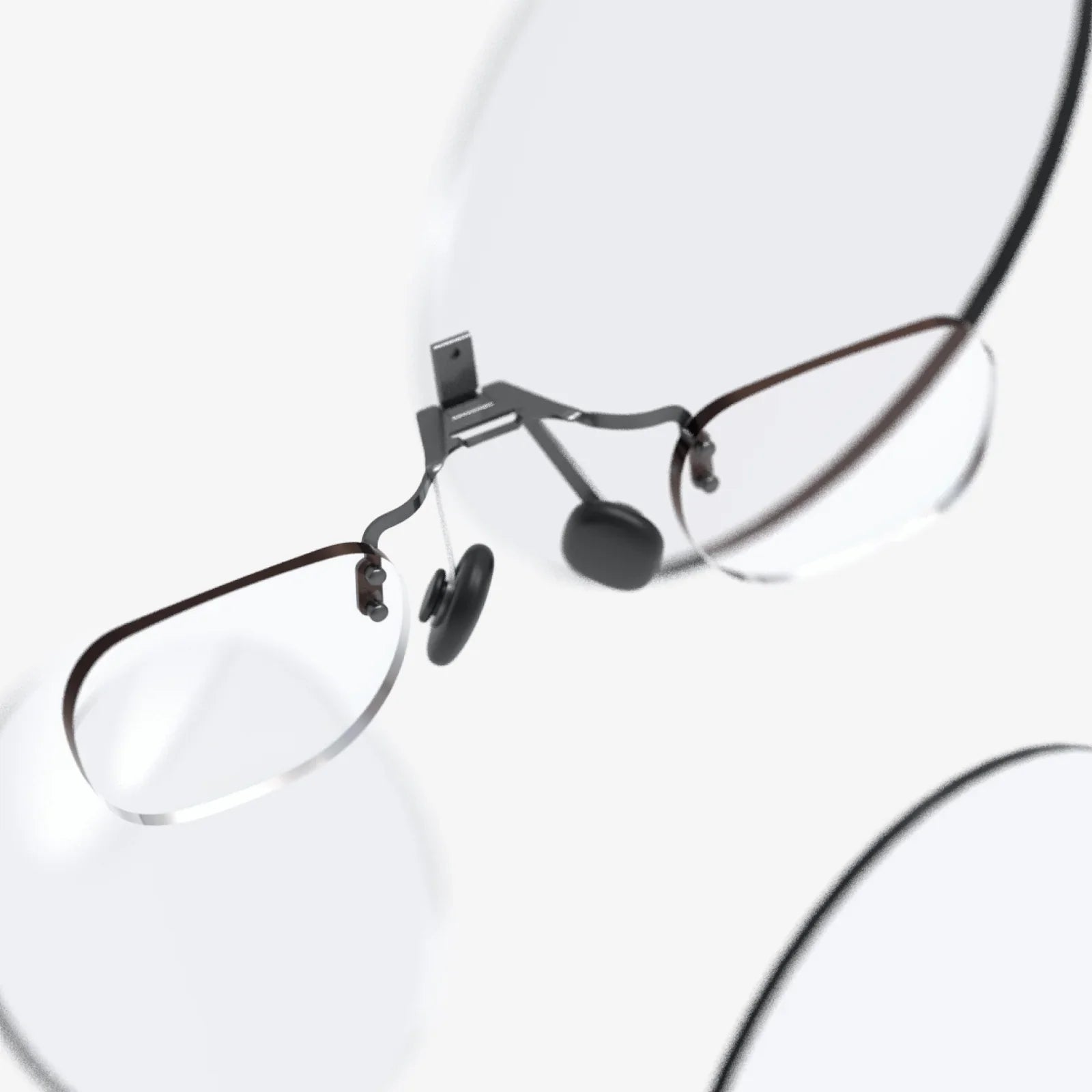
Imagine walking through downtown Toronto, and with a simple voice command, translucent navigation arrows appear on the sidewalk, guiding you to your destination. A passerby glances at you, and a discreet social profile you’ve permitted to be shared hovers near their shoulder. You stop to look at the CN Tower, and historical facts, visitor statistics, and ticket availability materialize in your field of vision. This isn’t a scene from a science fiction film; it’s the imminent future being built today, and for Canadians, the gateway to this augmented world is a rapidly evolving piece of technology: AR glasses. The Canadian market, known for its tech-savvy populace and robust digital infrastructure, is poised to become a significant player in the adoption and development of this transformative technology. The quest to overlay digital information onto our physical reality is no longer a fringe concept—it’s happening here, and it’s reshaping everything from how we work and learn to how we connect and play.
The Core Technology: More Than Just a See-Through Screen
At its heart, Augmented Reality (AR) is the seamless integration of digital information with the user's environment in real time. Unlike Virtual Reality (VR), which creates a completely artificial environment, AR allows users to interact with both the real world and digital elements superimposed upon it. The hardware that makes this possible, AR glasses, is a marvel of modern engineering, combining several sophisticated technologies into a wearable, often stylish, form factor.
The magic begins with the optical display systems. There are primarily two methods used to project images onto the user’s retina. Waveguide technology, often using diffraction gratings, pipes light from a micro-display into the lens, allowing for a sleek design. Alternatively, some systems use micro-projectors to bounce light off the lens itself. The goal is always the same: to create bright, clear, and persistent digital imagery that coexists with the real world without obstructing the user’s view.
This visual experience is powered by a combination of sensors and processors. A typical pair of advanced AR glasses will include:
- Cameras: To understand the environment through computer vision, track hand gestures, and scan objects.
- Inertial Measurement Units (IMUs): Including accelerometers and gyroscopes to track head movement and orientation with precision.
- Depth Sensors: To map the environment in 3D, understanding the distance and spatial relationship between objects.
- On-board Compute: A powerful processor that fuses all this sensor data in real-time, a task known as simultaneous localization and mapping (SLAM), to anchor digital content convincingly in the physical world.
Finally, connectivity and controls round out the experience. Many glasses tether to a smartphone or a dedicated processing unit for heavier computing tasks, leveraging their connectivity and battery life. User input is achieved through intuitive voice commands, touch-sensitive temples, or even advanced gesture recognition, allowing for hands-free interaction that feels natural and effortless.
The Canadian Landscape: Innovation from Coast to Coast
Canada is not merely a consumer in the AR glasses revolution; it is a vibrant hub of research, development, and innovation. The country's strong academic institutions and government support for technology have fostered a fertile ground for AR advancements. Numerous Canadian startups and research labs are pushing the boundaries of what’s possible with spatial computing.
Research hubs at universities like the University of Toronto, Simon Fraser University, and the University of Waterloo are producing groundbreaking work in human-computer interaction, computer vision, and optical engineering—all critical fields for AR development. This academic excellence feeds a growing ecosystem of tech companies, from small agile startups to established tech giants with significant Canadian presences, all investing heavily in AR software and hardware development.
Furthermore, Canada's diverse and vast geography presents unique use cases that drive innovation. From remote assistance in mining operations in Northern Ontario to immersive training for offshore oil rig workers in Newfoundland, Canadian industries are proving to be ideal testing grounds for enterprise AR applications, demonstrating tangible returns on investment through increased efficiency and safety.
Enterprise and Industrial Applications: Where AR is Working Today
While consumer adoption is growing, the most immediate and impactful use of AR glasses is happening within Canadian enterprises. Businesses across the country are leveraging this technology to solve real-world problems, enhance productivity, and improve safety protocols.
- Manufacturing and Field Services: A technician performing maintenance on a complex piece of machinery can have schematics, instruction manuals, and live video feeds from remote experts overlaid directly onto their workspace. This hands-free access to information reduces errors, slashes training time, and minimizes downtime. Companies in Alberta’s energy sector and Ontario’s manufacturing heartland are already deploying these solutions.
- Healthcare and Medicine: Surgeons can visualize patient data, such as MRI scans or vital signs, without looking away from the operating table. Medical students can practice procedures on digital overlays, and complex anatomical structures can be studied in 3D, revolutionizing medical education and surgical planning in teaching hospitals from Vancouver to Halifax.
- Architecture, Engineering, and Construction (AEC): Architects and engineers can walk through full-scale 3D models of their designs before a single foundation is poured. Digital blueprints can be superimposed onto construction sites, allowing workers to verify measurements and placements instantly, reducing costly rework and enhancing project management.
- Logistics and Warehousing: In massive distribution centers, AR glasses can guide warehouse workers to exact inventory locations, display picking lists, and verify items through barcode scanning, dramatically speeding up fulfillment processes and improving accuracy for Canada’ booming e-commerce sector.
The Consumer Horizon: From Niche Gadgets to Mainstream Must-Haves
The journey to everyday consumer AR glasses is well underway. Current consumer-focused models available in Canada often prioritize specific functions, offering a glimpse into a fully augmented future.
Early adopters are using AR glasses for media consumption, enjoying a massive, private screen floating in their space for watching movies, playing games, or browsing the web without isolating themselves from their surroundings. Fitness enthusiasts use them to display performance metrics like heart rate and pace directly in their line of sight during a run or workout, eliminating the need to constantly check a watch or phone.
The potential for social connection and communication is immense. Imagine video calls where participants appear as life-like avatars sitting on your couch, or sharing a immersive AR experience with a friend who is physically thousands of kilometers away. The concept of "presence" is being redefined.
However, the path to mass consumer adoption is paved with challenges that the industry is racing to solve. Battery life remains a constraint, as powerful computing and bright displays are energy-intensive. The quest for the perfect balance of a wide field of view, high resolution, and a lightweight, socially acceptable form factor is the holy grail for designers. Finally, establishing a rich and compelling ecosystem of apps and content is crucial to move beyond novelty and into necessity.
Navigating the Canadian Market: Availability and Considerations
For Canadians interested in exploring AR glasses, the market is accessible but requires careful navigation. Major online retailers and the online stores of specific technology manufacturers are the primary channels for consumer-grade devices. These range from more affordable smart glasses focused on notifications and basic AR to higher-end developer kits aimed at creators and professionals.
For enterprise solutions, the process typically involves working directly with technology providers or specialized Value-Added Resellers (VARs) who can tailor a solution—including hardware, software, and support—to a business's specific needs. These solutions represent a significant investment but are justified by the substantial gains in operational efficiency.
Prospective buyers, whether individual or corporate, should consider several factors: the intended use case, required battery life, display quality, comfort for extended wear, and most importantly, the software compatibility and available applications that will power the device.
A Glimpse into the Future: The Road Ahead for AR in Canada
The evolution of AR glasses is accelerating. In the coming years, we can expect devices to become lighter, more powerful, and indistinguishable from traditional eyewear. The user interfaces will become more intuitive, potentially moving towards neural interfaces or advanced eye-tracking for control.
The true transformation will occur when these devices become a seamless part of our digital lives, a concept often referred to as the "Spatial Web." In this future, digital information will have a permanent place in our physical world. A restaurant’s menu will appear when you look at its facade, a history lesson will unfold around a monument, and your reminders will be pinned to your refrigerator. This persistent digital layer will be as fundamental as the internet is today.
This future also brings to the fore critical conversations around privacy, data security, and digital etiquette. As devices with always-on cameras and sensors become ubiquitous, establishing clear social norms and robust legal frameworks will be paramount. Canada’s existing privacy laws and public discourse will play a crucial role in shaping a responsible and ethical AR future.
The convergence of AI and AR will be particularly potent. AI algorithms will act as intelligent assistants, processing the vast amount of visual and contextual data from the glasses to provide proactive, relevant information exactly when and where it’s needed, making us more capable and informed in our daily tasks.
The potential of AR glasses to redefine reality is not just a technological shift but a human one. For Canadians, this means a future where distance is mitigated by digital presence, where complex tasks are simplified with visual guidance, and where our interaction with the digital world becomes as natural as looking around the room. The lens through which we will view this new reality is being polished and perfected right now, and it’s waiting to be put on.
Share:
2D to 3D Video Converter for Android: Transform Your Viewing Experience
AR Photo Experience: Blending Reality with Digital Imagination