


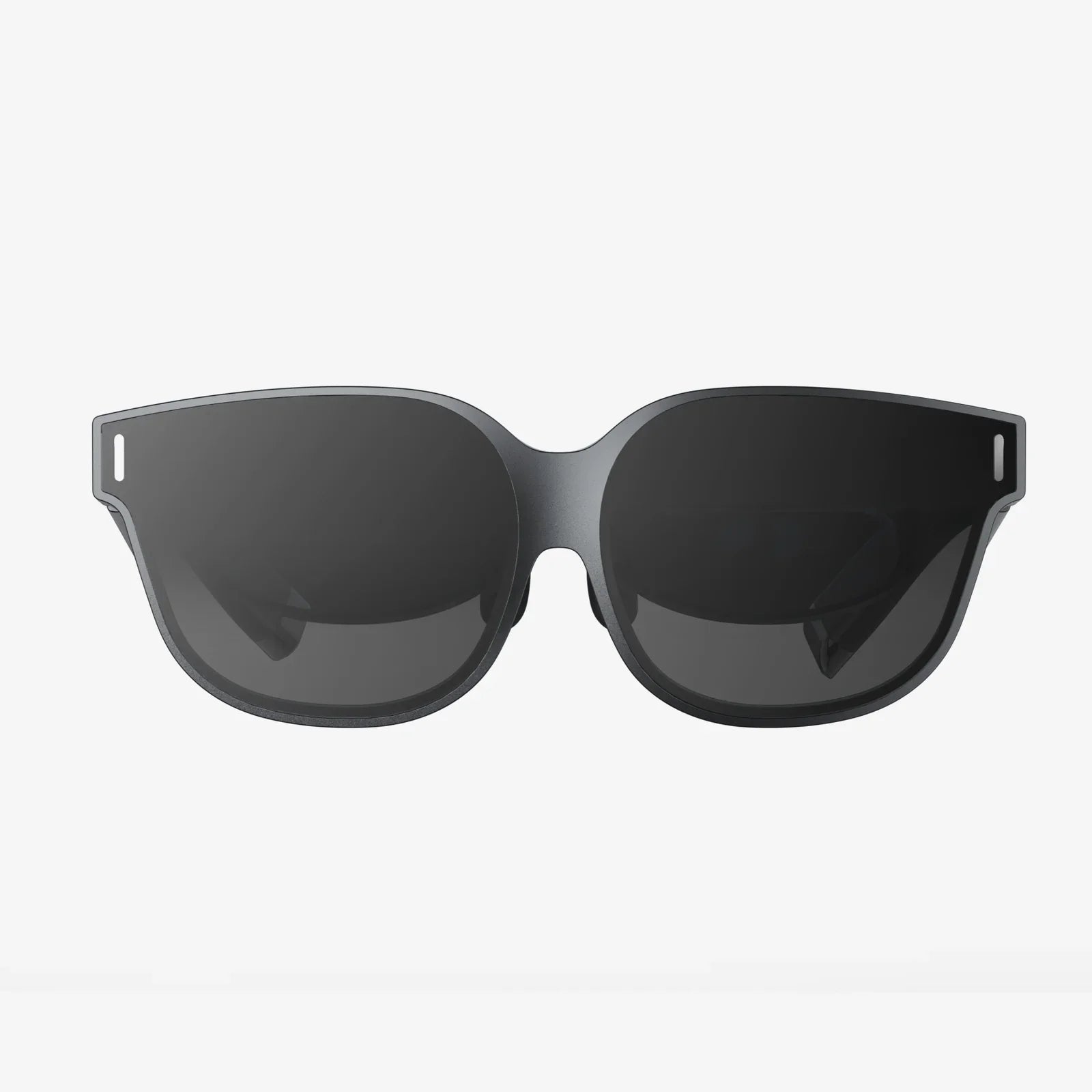
The global tech landscape is shifting, and a new battleground has emerged from the East. While Western tech giants have long been the public face of innovation in augmented and virtual reality, a powerful, coordinated, and well-funded movement within China is quietly positioning itself to not just compete, but to lead the next computing revolution. The latest AR glasses China news reveals a story not of a single product launch, but of a nation-state strategy—a concerted, multi-faceted effort to own the operating system, the hardware, and the very ecosystem of the spatial web. This is a story of immense ambition, cutting-edge research, and a race against time to define how humanity will interact with digital information for decades to come.
The National Blueprint: From Made in China to Imagined in China
The development of AR technology in China cannot be understood without recognizing the central role of government policy. This is not a fragmented series of startups operating in silos; it is a nationally prioritized mission. Central to this effort is the "Made in China 2025" initiative, which explicitly identifies augmented and virtual reality as a strategic emerging industry. This top-down designation unlocks a cascade of benefits: substantial state-backed funding for research and development, tax incentives for companies operating in the sector, and a regulatory environment designed to foster rapid growth and protect domestic champions.
Beyond national policy, local governments are in a fierce competition to become the central hub for AR innovation. Cities like Beijing, Shanghai, and Shenzhen are offering lucrative packages to attract top talent and companies, establishing special economic zones dubbed "VR/AR Industrial Bases" or "Metaverse Innovation Hubs." These zones provide subsidized office space, access to high-speed internet and cloud computing resources, and streamlined bureaucratic processes. This localized support creates a fertile ground for both tech behemoths and agile startups to experiment and scale at a pace that is often challenging elsewhere. The message from the highest levels of power is clear: leadership in AR is not optional; it is a national imperative for technological sovereignty and economic dominance.
The Vanguard of Innovation: Titans, Unicorns, and Surprise Contenders
The Chinese AR landscape is a dynamic ecosystem populated by a diverse array of players, each with a distinct strategy for capturing value.
The Tech Titans' Ecosystem Play
China's internet giants are not merely dabbling in AR; they are building comprehensive ecosystems. They understand that the true value lies not in the glasses alone, but in the software, services, and content that run on them. One major player is aggressively developing its own proprietary AR operating system, aiming to become the Android of the spatial web—a foundational layer upon which all other applications are built. Their strategy involves deep integration with their existing suite of popular apps, from navigation and payments to social media and e-commerce, creating a seamless and sticky user experience that is difficult for foreign competitors to replicate behind the Great Firewall.
Another tech behemoth is focusing its immense cloud computing and AI capabilities on powering the AR space. Their strategy is to become the infrastructure provider, offering AR cloud services, simultaneous localization and mapping (SLAM) tools, and AI-powered object recognition as a service to other hardware manufacturers and developers. This B2B approach allows them to embed their technology into a wide range of devices and applications without necessarily building the end-consumer hardware themselves first.
The Smartphone Manufacturers' Natural Evolution
For China's dominant smartphone makers, AR glasses represent a logical and essential extension of their product portfolio. As smartphone innovation plateaus, these companies see AR wearables as the key to future growth and user engagement. Their advantage is immense: they possess world-class expertise in miniaturization, display technology, battery efficiency, and supply chain management on a colossal scale. They can leverage their global distribution channels and strong brand recognition to bring AR glasses to market effectively. Their latest prototypes, often showcased at major tech events, highlight significant progress in reducing size and weight while improving optical performance, signaling a rapid move towards consumer-ready form factors.
The Specialized Startups and Component Champions
Beneath the giants, a vibrant layer of specialized startups, often called "unicorns," is pushing the boundaries in specific areas. These companies are focused on overcoming the fundamental hardware challenges that have plagued AR for years. Several are making waves with breakthroughs in micro-LED and micro-OLED display technology, which are crucial for achieving the brightness and resolution needed for convincing digital overlays in bright environments. Others are innovating in waveguide and holographic optical elements, which are essential for creating glasses that are both socially acceptable and visually impressive. Furthermore, Chinese manufacturers have become dominant forces in the production of key components like precision lenses, sensors, and miniature actuators, supplying not only domestic brands but also international ones, making them indispensable players in the global supply chain.
Conquering the Core: Breakthroughs in Fundamental Technology
The recent flurry of AR glasses China news is punctuated by genuine technological achievements that are closing the gap with Western research. The holy grail of AR optics—a combination of a wide field of view, high resolution, and a small, lightweight form factor—is being aggressively pursued. Chinese labs and companies are publishing groundbreaking research and filing patents for novel optical architectures at a staggering rate. Innovations in birdbath optics, diffractive waveguides, and free-form optics are moving from academic papers into functional prototypes.
Similarly, progress in underlying enabling technologies is accelerating. The development of ultra-low-power chipsets designed specifically for AR workloads is a key focus area, with several partnerships between tech companies and semiconductor manufacturers bearing fruit. Advancements in AI are also critical, enhancing crucial capabilities like spatial understanding, gesture recognition, and real-time language translation, making AR interactions more intuitive and powerful. This systemic investment across the entire technology stack, from hardware to software to AI, demonstrates a depth of ambition that goes beyond assembling a device; it is about controlling the core intellectual property of the future.
The Domestic Crucible: Forging Strength Through a Massive Market
China's greatest advantage may be its vast and digitally-savvy domestic market. This provides an unparalleled testing ground for AR applications and business models. Chinese consumers have demonstrated a remarkable willingness to adopt new technologies, particularly those that integrate with popular social and payment platforms. This allows companies to iterate rapidly based on real-world user data, refining everything from hardware design to user interface in a rapid feedback loop that is the envy of developers elsewhere.
We are already seeing innovative use cases gaining traction. AR is being used for immersive shopping experiences, allowing users to visualize furniture in their homes or try on makeup and glasses virtually. Live-streaming e-commerce hosts are using AR effects to demonstrate products in engaging new ways. In industrial and enterprise settings, AR is being deployed for complex assembly line guidance, remote expert assistance, and advanced training simulations. This diverse domestic demand provides the revenue and use-case validation needed to fuel further innovation and scale production, ultimately driving down costs for everyone.
The Great Wall of Challenges: Obstacles on the Path to Dominance
Despite the impressive momentum, the path to global AR leadership is fraught with significant obstacles. The most immediate technical challenge remains the balance between performance, form factor, and battery life. Creating glasses that are powerful enough to be truly useful, light enough to wear all day, and affordable enough for mass adoption is a puzzle that no company, East or West, has fully solved. Chinese companies are pouring resources into solving this, but it remains a formidable physics and engineering problem.
On the global stage, Chinese AR companies face a landscape of skepticism and geopolitical tension. Concerns over data privacy and security, often linked to national cybersecurity laws, could create significant headwinds for expansion into Western markets. Furthermore, potential restrictions on the export of certain advanced technologies could limit access to key international components or software, while similar import restrictions in other countries could lock Chinese-made AR glasses out of critical markets. Navigating this complex geopolitical environment will be as important as technological innovation itself.
Finally, there is the challenge of global cultural relevance. While Chinese apps and services are deeply integrated into daily life within China, achieving that level of seamless integration and cultural resonance on a global scale requires a nuanced understanding of diverse markets and consumer habits—a challenge that has tripped up many ambitious tech companies before.
The Looming Horizon: What the Future Holds
The next few years will be decisive. The AR glasses China news cycle will likely shift from prototypes and announcements to actual product launches and user adoption metrics. The battle will move from the laboratory to the marketplace. We can expect to see a wave of more affordable, consumer-focused AR glasses aimed primarily at the domestic market, solidifying China's lead there. Simultaneously, Chinese tech giants will continue their push to establish their AR platforms and services as international standards, particularly in emerging markets and among enterprise clients where geopolitical concerns may be less pronounced.
The development of a truly robust and independent AR ecosystem within China, from chips to OS to apps, will also be a key trend to watch. This drive for technological self-reliance will continue to accelerate, potentially creating a parallel AR universe that operates under a different set of rules and standards than its Western counterpart.
The latest AR glasses China news is more than just tech gossip; it is a dispatch from the frontlines of a new cold war for technological supremacy. China has mobilized its vast resources, its manufacturing prowess, and its protected market to make a decisive play for the next platform. They have the strategy, the funding, and the hunger. While challenges remain immense, one thing is clear: ignoring the rise of Chinese AR innovation is no longer an option for anyone who wants to understand the future of technology. The race is on, and the Eastern Dragon is flying fast.
Forget what you thought you knew about the slow burn of augmented reality; the game has changed entirely. The relentless pace of innovation emerging from Chinese labs and factories suggests a consumer-ready future is arriving sooner than anyone predicted, and it will be shaped by a vision forged in the East. The question is no longer if AR will become mainstream, but whose version of it will dominate the global stage—and the answer to that is being written in headlines coming out of China every single day.
Share:
How Can AI Help Me at Work: A Comprehensive Guide to Boosting Productivity and Innovation
AI Content Creation Tool Market: Reshaping the Digital Landscape and Future of Creativity