


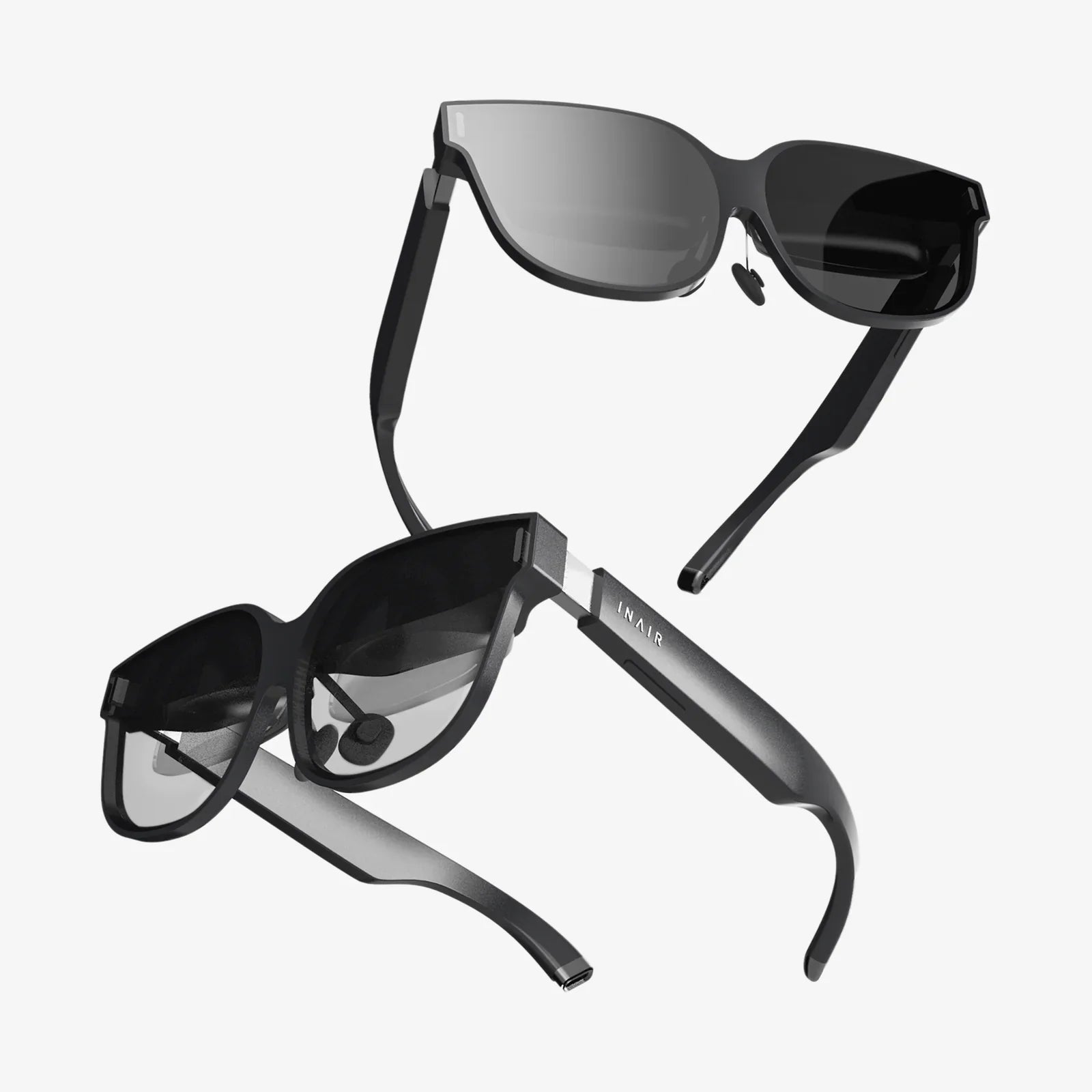
Imagine a world where digital information seamlessly blends with your physical surroundings—where directions float on the street before you, your workout stats hover beside the treadmill, and a virtual colleague sits across your real kitchen table. This is the promise of augmented reality (AR) glasses, a technology poised to revolutionize how we work, play, and connect. But for many, the first and most pressing question isn't about the specs or the software; it's a far more practical one: what will it cost to step into this future? The answer is far more complex than a single price tag, weaving together cutting-edge hardware, nascent software ecosystems, and a future that is still being written.
Deconstructing the Price Tag: More Than Just Lenses and Frames
To understand the cost of AR glasses, one must first look beyond the simple bill of materials. Unlike a standard pair of sunglasses, AR glasses are essentially wearable computers, packed with sophisticated technology that commands a premium.
The Core Hardware: A Symphony of Miniaturized Tech
The single biggest driver of cost is the display technology. High-quality AR experiences require bright, high-resolution, and responsive displays that can overlay digital content onto the real world without obscuring it. The most advanced systems use waveguide optics, micro-LEDs, or laser beam scanning—all incredibly complex and expensive technologies to miniaturize and manufacture at scale. These optical engines are the heart of the device and represent a significant portion of the research, development, and production cost.
Beyond the displays, a capable AR headset requires a suite of sensors to understand its environment and your place within it. This typically includes:
- Cameras: Multiple high-resolution cameras for simultaneous localization and mapping (SLAM), depth sensing, and hand tracking.
- Inertial Measurement Units (IMUs): Accelerometers and gyroscopes to track head movement with precision.
- Microphones and Speakers: For spatial audio and voice assistant interaction.
- Processing Unit: A powerful, miniaturized system-on-a-chip (SoC) to handle the immense computational load of rendering 3D graphics and processing sensor data in real-time, all while managing battery life and thermals.
Each component adds to the bottom line, and fitting them all into a sleek, socially acceptable form factor is a monumental engineering challenge that further inflates development costs.
The Current Cost Spectrum: From Pocket-Friendly to Professional Powerhouse
Today, the AR glasses market is not a monolith. It is sharply divided into distinct tiers, each with its own target audience and corresponding price point.
The Consumer-Curious Tier (Under $500)
This category is defined by devices that offer a taste of AR but often rely on a tethered smartphone for their processing power. They function primarily as external displays, projecting a limited field of view for notifications, basic 3D models, or media consumption. Their cost is lower because they offload the heavy computing to a device you already own. They represent an accessible entry point but offer a constrained experience far from the full immersive potential of AR.
The Enterprise and Prosumer Tier ($500 - $3,000)
This is where true, standalone AR begins. These devices are self-contained computers worn on your face. They boast powerful processors, advanced optics with wider fields of view, robust environment understanding, and enterprise-grade software for fields like manufacturing, logistics, medicine, and design. The cost here is justified by the value proposition: these are tools that can save companies thousands of hours and dollars by improving efficiency, reducing errors, and enabling remote expert guidance. The price reflects the advanced R&D, durable construction, and specialized software required for these mission-critical applications.
The Bleeding-Edge Prototype Tier ($3,000 and Beyond)
At the very top are the devices that are often not commercially available to the general public. These are developer kits, research prototypes, and custom-built solutions for military or specialized industrial use. They feature experimental display tech, the widest possible field of view, and the most advanced sensor suites available. Their astronomical cost is a function of ultra-low-volume production, hand-assembly, and the inclusion of technology that may never become commercially viable. They are less a product and more a statement of what is technically possible.
The Hidden Costs: The Ecosystem Beyond the Hardware
The initial purchase price is only the first part of the financial equation. The true cost of ownership for a powerful AR system can extend into several often-overlooked areas.
Software and Subscriptions
Hardware is useless without software. While app stores may offer casual experiences for free, the professional software that unlocks the real potential of AR glasses often comes with a significant recurring cost. Enterprise-grade applications for CAD visualization, remote assistance platforms, and training simulators typically operate on a per-user, per-month subscription model. For a company deploying dozens of units, this software-as-a-service (SaaS) cost can quickly eclipse the initial hardware investment over time.
Accessories and Upgrades
To tailor the device to specific needs, a host of accessories may be required. This can include:
- Alternative prescription lens inserts for those who wear glasses.
- Extended battery packs or hot-swappable batteries for all-day use.
- Protective cases and durable straps for harsh industrial environments.
- Specialized controllers for precise input.
These add-ons, while optional, are often essential for a complete and functional system, adding hundreds of dollars to the total cost.
The Computational Burden
For tethered devices, the cost is partially deferred to the smartphone or computer they connect to. To run demanding AR experiences smoothly, you may need a flagship-level phone or a powerful PC with a high-end graphics card, representing a multi-hundred or multi-thousand dollar investment that must be factored in.
The Road to Affordability: When Will AR Glasses Be for Everyone?
The dream of affordable, high-quality AR glasses for the mass market hinges on overcoming several key technological and economic hurdles.
Economies of Scale and Manufacturing Innovation
Currently, AR glasses are produced in relatively low volumes. As the market grows and demand increases, manufacturers can order components in larger quantities, driving down the per-unit cost through bulk discounts. Furthermore, the processes for creating waveguides and micro-displays are continually improving. New methods like wafer-level optics, where components are fabricated like computer chips on silicon wafers, promise to drastically reduce the cost of producing these complex optical systems at scale.
Technological Breakthroughs
Cost reduction is not just about making existing tech cheaper; it's about inventing new, more efficient tech. Breakthroughs in areas like metasurfaces—ultra-thin optical components that can manipulate light in novel ways—could eventually replace bulky and expensive lens assemblies. Similarly, advancements in low-power processors and battery technology will allow for smaller, lighter, and less expensive form factors without sacrificing performance.
The Killer App and Network Effects
Ultimately, consumer adoption requires a compelling reason to buy. The smartphone exploded in popularity not because of the hardware itself, but because of the ecosystem of apps and services it enabled—the "killer apps" like the web browser, maps, and social media. AR is still searching for its defining killer app. Once a must-have application emerges—be it in social connection, gaming, fitness, or something entirely new—it will create a surge in demand, fueling the cycle of investment, innovation, and cost reduction that will make powerful AR glasses as commonplace and affordable as smartphones are today.
The journey to mainstream AR is a marathon, not a sprint. We are likely to see a gradual decline in prices for capable hardware, with the enterprise market leading the way and eventually subsidizing the development of more affordable consumer models. The first wave of true consumer AR may not be a single all-powerful device, but rather a constellation of purpose-built glasses—for gaming, for communication, for navigation—each with a price point tailored to its specific function.
So, while the upfront cost of a premium AR experience today can be daunting, it's a reflection of the immense complexity and potential of this technology. That price is not static; it's a snapshot in time, on a rapid downward trajectory. The question is no longer if immersive, affordable AR will become a reality, but how soon we will all be able to look up and see a new layer of the world, without first having to check our bank balance.
Share:
Make Virtual Reality Glasses: A Comprehensive DIY Guide to Building Your Own Immersive Headset
Portable Notebook Computer: The Ultimate Guide to Unleashing Your Mobile Productivity