


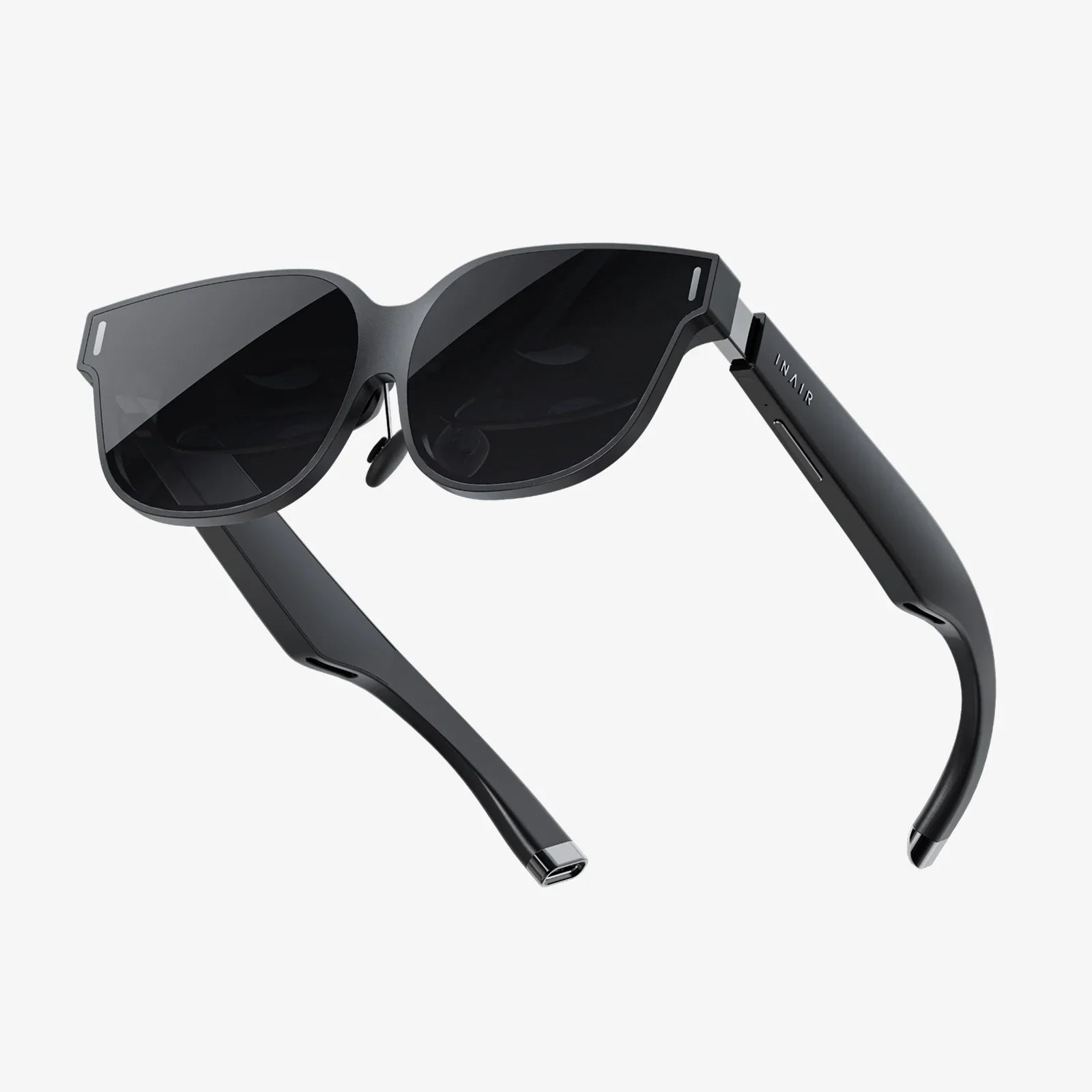
Imagine a world where digital information doesn't just live on a screen but is seamlessly woven into the fabric of your reality, accessible with a glance and interactive with a gesture. This is the promise of augmented reality, and the key to unlocking this potential for developers, creators, and innovators lies not in a finished consumer product, but in a powerful toolbox: the AR glasses development kit. These kits are the crucibles where the future is being forged, offering a tantalizing glimpse into a world where our physical and digital lives finally converge.
The Engine Room of Innovation: What Exactly is an AR Glasses Development Kit?
An AR glasses development kit is a specialized package designed for software developers, hardware engineers, and researchers to create, test, and refine applications for augmented reality eyewear. Unlike sleek, final consumer products, these kits are often bulkier, bristling with sensors, and designed for functionality and experimentation over aesthetics. They are the raw, unrefined instruments that allow pioneers to push the boundaries of what's possible before the technology is distilled into a form factor for the mass market.
Think of it as the difference between a race car engine on a test bench and the finished vehicle on the showroom floor. The development kit is the test bench—it provides direct access to the core technologies, extensive debugging capabilities, and the flexibility to experiment with novel interactions that will define the next generation of AR experiences.
Deconstructing the Toolkit: Core Components and Technologies
To understand the power of a development kit, one must look under the hood. A comprehensive AR glasses development kit is a symphony of advanced hardware and software components working in concert.
The Hardware Foundation
At its heart are the core hardware elements that enable AR perception and interaction:
- Optical Display Systems: This is the magic window through which digital content is projected into the user's field of view. Kits often feature either Waveguide-based optics or Birdbath designs, each with trade-offs in field of view (FOV), brightness, and form factor. The development kit allows creators to understand the constraints and opportunities of these optical systems firsthand.
- Processing Unit: AR involves immense computational loads—tracking the user's head and hands, understanding the environment, and rendering complex 3D graphics. This requires significant processing power, which may be housed directly on the glasses (on-device) or offloaded to a companion device or computer via a tether.
-
Sensing Suite: This is the kit's "eyes and ears." A robust array of sensors is critical for spatial awareness and interaction:
- Cameras: Multiple cameras serve different purposes, including monochrome cameras for positional tracking, RGB cameras for capturing the real world, and depth sensors (like time-of-flight cameras) for creating a 3D map of the environment.
- Inertial Measurement Unit (IMU): A combination of accelerometers, gyroscopes, and magnetometers that provides high-frequency data on the headset's movement and orientation, crucial for stable tracking.
- Microphones and Speakers: For voice input and spatial audio output, enabling immersive and hands-free interaction.
- Input Modalities: Kits provide various ways to interact with the digital world, from simple handheld controllers to more advanced and intuitive hand-tracking cameras that allow users to manipulate virtual objects with their fingers.
The Software Ecosystem
Hardware is nothing without the software to bring it to life. The software component of a development kit is arguably its most valuable asset.
- Software Development Kit (SDK): This is the core software package that provides the APIs, libraries, documentation, and sample code needed to build AR applications. It handles the complex tasks like simultaneous localization and mapping (SLAM), plane detection (finding floors and tables), and gesture recognition, allowing developers to focus on their application's unique experience.
- Game Engine Plugins: Seamless integration with popular game engines like Unity and Unreal Engine is essential. These plugins allow artists and developers to work within familiar environments to create stunning 3D content and logic for their AR experiences.
- Calibration and Debugging Tools: Development kits come with specialized software tools for calibrating the displays and sensors, profiling application performance, and visualizing how the device perceives the world, which is invaluable for troubleshooting.
The Developer's Journey: From Unboxing to Deployment
Embarking on a project with an AR glasses development kit is a journey of discovery and problem-solving. The process typically unfolds in several key stages.
1. Setup and Familiarization
The first step is unboxing and setting up the hardware, which involves connecting sensors, installing the software SDK, and running through initial calibration procedures. Developers then immerse themselves in the provided documentation and sample projects. This phase is about understanding the capabilities and limitations of the specific kit—its FOV, tracking accuracy, and input methods.
2. Prototyping and Iteration
With the basics down, developers begin prototyping their ideas. This is an iterative loop of coding, testing on the actual device, and refining. They might start with simple object placement, experiment with UI elements that are locked to the user's view or a physical surface, and gradually introduce more complex interactions like hand tracking or spatial anchors that persist digital content in a specific location across sessions.
3. Overcoming Spatial Challenges
This is where the real magic and difficulty of AR development emerge. Developers must grapple with challenges like:
- Environmental Understanding: Ensuring the application works reliably in different lighting conditions and on various surfaces.
- Occlusion: Correctly rendering digital objects behind real-world ones to maintain the illusion of reality.
- User Experience (UX): Designing interfaces that feel natural in 3D space and don't cause fatigue, a discipline often referred to as spatial computing design.
4. Optimization and Deployment
Finally, the application must be optimized for performance and battery life, two constant challenges in mobile AR. Once polished, the application can be deployed for internal testing, user studies, or, in some cases, distributed through companion app stores specifically for AR content.
Transforming Industries: The Practical Applications of Development Kits
The work done with these kits is not just theoretical; it's driving tangible innovation across numerous sectors.
Enterprise and Manufacturing
This is currently the most fertile ground for AR development. Enterprises are using development kits to build applications for:
- Remote Assistance: An expert can see what a field technician sees and annotate their real-world view with arrows, diagrams, and notes to guide complex repairs.
- Assembly and Training: Step-by-step instructions can be overlaid directly onto machinery, reducing errors and training time for new employees.
- Design and Prototyping: Engineers and architects can visualize 3D models at full scale in their intended environment before any physical prototype is built.
Healthcare and Medicine
Surgeons are experimenting with AR to overlay vital signs, 3D scans, and surgical plans directly into their field of view during procedures. Medical students can practice on virtual anatomy models, and physical therapists can guide patients through exercises with virtual cues.
Education and Training
From interactive historical recreations to complex scientific visualizations, AR development kits are enabling a new form of experiential learning. Students can dissect a virtual frog, walk through a ancient Roman city, or understand the solar system by having it orbit around them.
Retail and E-Commerce
Developers are creating virtual try-on experiences for glasses, furniture, and clothing, allowing customers to see how products will look in their home or on their person before making a purchase, fundamentally changing the online shopping experience.
Navigating the Current Landscape: Challenges and Considerations
While powerful, working with AR glasses development kits is not without its hurdles. Developers must consider factors like the high cost of entry for advanced kits, the steep learning curve associated with spatial computing concepts, and the rapid pace of hardware iteration which can make a specific kit obsolete relatively quickly. Furthermore, the industry is still grappling with establishing universal standards for development, leading to fragmentation where apps built for one platform may not work on another. Battery life, thermal management, and achieving a socially acceptable form factor remain significant hardware challenges that developers must design around.
The Horizon of Possibility: What the Future Holds
The evolution of AR glasses development kits is moving at a breathtaking pace. We are rapidly approaching a future where the line between the developer kit and the consumer product will blur. Future iterations will feature dramatically improved display technology with wider fields of view and higher resolution, more powerful and efficient on-device AI processors for better scene understanding, and increasingly sophisticated eye-tracking and gesture recognition for more natural input. The ultimate goal is a pair of glasses that are indistinguishable from regular eyewear yet capable of delivering a rich, persistent AR experience all day long. The kits available today are the essential stepping stones to that future, providing the foundational tools and learnings that will enable the killer apps and transformative experiences of tomorrow.
The true power of an AR glasses development kit is not just in the technology it contains, but in the door it opens. It’s an invitation to participate in the next computing revolution, to move beyond the confines of the screen and begin designing the world itself. For those willing to learn its language and harness its capabilities, it offers a first-class ticket to defining how humanity will work, learn, play, and connect in the spatial era that is already beginning to unfold before our eyes.
Share:
Smart Board Touch Screen Not Working: A Comprehensive Troubleshooting and Prevention Guide
Virtual Reality Gaming Experiences Are Redefining the Future of Interactive Entertainment