


- by wangfred
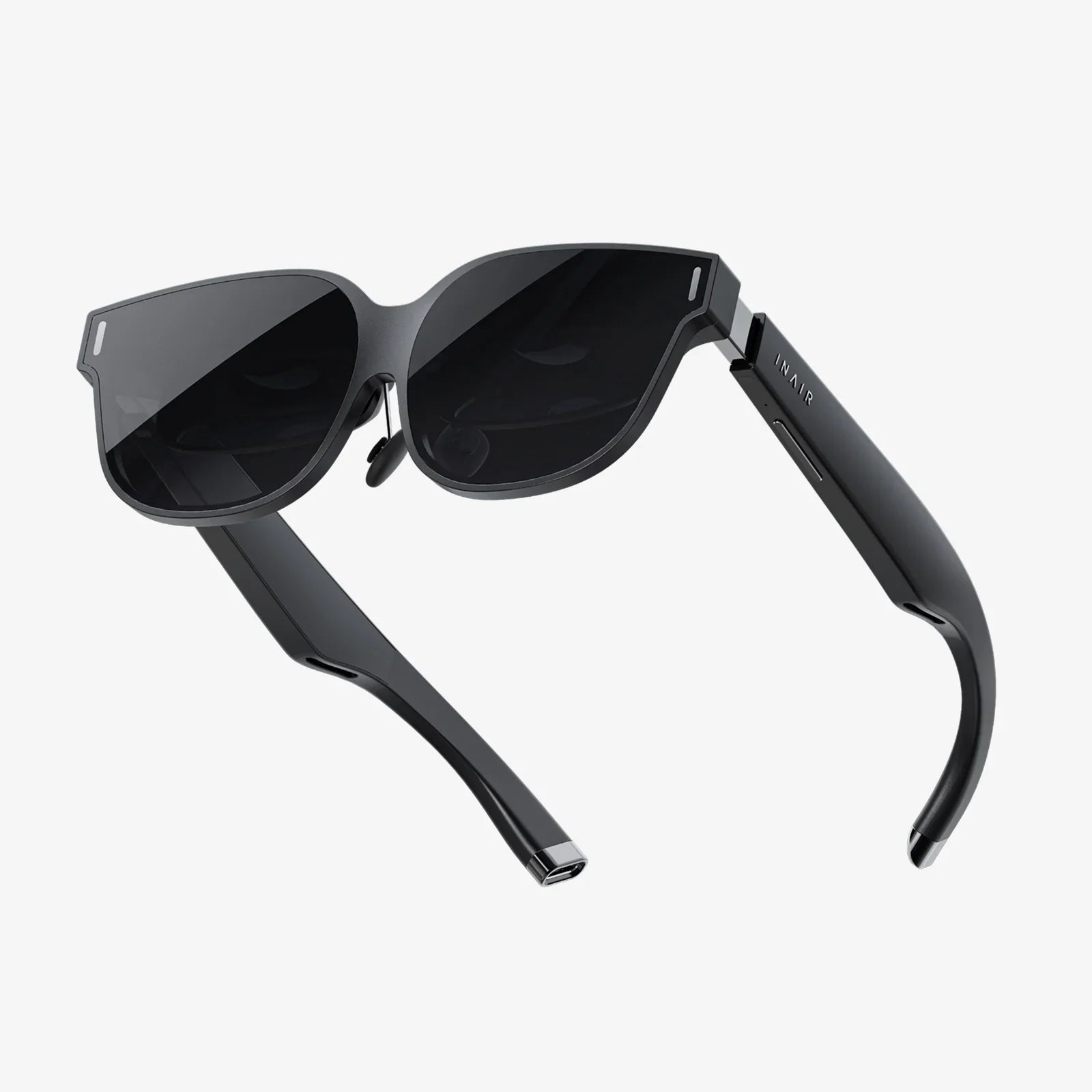
AR Glasses Development Platform: The Unseen Engine Powering the Next Digital Revolution
- by wangfred
Imagine a world where digital information doesn’t just live on a screen but is seamlessly woven into the fabric of your reality, accessible with a glance and interactable with a gesture. This is the promise of augmented reality (AR) glasses, a vision that has captivated technologists and science fiction fans for decades. While the sleek hardware designs often steal the spotlight, the true unsung hero, the critical enabler that will determine whether this technology becomes a ubiquitous tool or a forgotten gadget, is the robust, sophisticated, and powerful AR glasses development platform. The journey from a compelling concept to a functional, user-friendly device is fraught with immense technical challenges, and it is the development platform that provides the essential bridge, the toolkit, and the foundation upon which the future of spatial computing will be built.
An AR glasses development platform is far more than a simple software development kit (SDK). It is a comprehensive ecosystem of tools, services, and APIs designed to abstract away the staggering complexity of AR hardware and empower creators to build immersive experiences. At its heart, several core components work in concert to perceive the world and place digital content within it.
The first and most fundamental task for any AR device is to understand its environment. This is achieved through a suite of advanced computer vision algorithms powered by the platform. The crown jewel of this suite is Simultaneous Localization and Mapping (SLAM). SLAM technology allows the glasses to simultaneously create a map of an unknown environment while tracking the device's position within that map in real-time. This is not a trivial feat; it requires processing a constant stream of data from cameras, inertial measurement units (IMUs), and other sensors to create a persistent, digital understanding of the physical world. The development platform provides the robust, optimized SLAM engine so that developers don't have to build their own from scratch—a task that would be prohibitively complex for all but the largest organizations.
Beyond SLAM, the platform's perceptual stack includes:
A mouse and keyboard are useless in an AR world. A development platform must provide a standardized way for users to interact with digital content. This involves supporting and unifying a variety of input modalities:
The platform's job is to unify these inputs into a coherent interaction model, allowing developers to design experiences that feel natural and intuitive, rather than forcing them to manage the raw data from each individual sensor.
Rendering complex 3D graphics for a head-worn, stereoscopic display presents unique challenges. The images must be rendered at a high frame rate (often 90Hz or higher) to avoid user discomfort and must account for complex optical distortions to present a clear picture. The development platform includes a highly optimized rendering engine, typically built on top of industry standards, that handles these tasks automatically. It manages the stereoscopic viewports, applies the correct lens distortion correction, and ensures that virtual lighting and shadows behave consistently with the real world, a process often referred to as contextual rendering.
Modern AR is not an isolated experience. A robust development platform extends beyond the device itself into the cloud. This enables powerful features that are essential for widespread adoption:
The challenges in building compelling AR experiences are not just difficult; they are orders of magnitude more complex than traditional mobile or desktop development. The development platform exists precisely to solve these monumental problems.
AR glasses are a masterpiece of miniaturization, packing sensors, processors, and displays into an incredibly small and power-constrained form factor. This means developers are working with limited compute power and battery life. The platform provides highly optimized, low-level code for critical tasks like SLAM and rendering, which are fine-tuned for the specific hardware. Without this, developers would be unable to achieve the performance necessary for comfortable and convincing AR, as they would be writing inefficient, generic code.
Very few development teams have the in-house expertise in advanced computer vision, photonics, sensor fusion, and 3D graphics required to build a basic AR system from the ground up. A development platform abstracts this immense complexity behind simple, well-documented APIs. A developer can call a function like PlaceObjectOnFloor() without needing to understand the millions of calculations involving sensor data, plane detection, and world tracking that make it possible. This democratizes development, opening the field to a vast population of creators who can focus on their application's unique value rather than the underlying technology.
Poorly implemented AR can cause cybersickness, eye strain, and even pose physical safety risks if it obscures the user's view of hazards. The platform embeds best practices and hard limits to guard against these issues. It manages critical thresholds for rendering latency, ensures text is always legible, and can provide safety frameworks like warning the user when they are approaching a physical obstacle. This built-in responsibility is crucial for building user trust.
The value of a powerful development platform is realized in the transformative applications it enables across every sector of the economy.
This is where AR glasses are having the most immediate impact. With a robust platform, developers are building applications that:
Medical professionals are using platform-powered AR for:
The consumer potential is equally vast:
None of these use cases would be feasible, scalable, or reliable without the underlying foundation provided by a comprehensive development platform. It is the common language that allows hardware makers, software developers, and businesses to collaborate on building the future.
The evolution of these platforms is moving at a breakneck pace. We are rapidly advancing towards a future where the line between digital and physical is not just blurred but erased. Future iterations of AR development platforms will focus on achieving even greater fidelity and intelligence. We can expect a stronger emphasis on AI-powered scene understanding, where the glasses won't just see surfaces but will comprehend the semantic meaning of an environment—knowing that a flat surface is a desk meant for work or a coffee table meant for social interaction. This will enable contextually aware applications that anticipate user needs.
Furthermore, the push for photorealistic rendering through advanced techniques like ray tracing and the aforementioned cloud rendering will make virtual objects indistinguishable from real ones. The development platform will be responsible for managing this incredible computational load seamlessly. Most importantly, the focus will shift towards creating truly open and interoperable ecosystems. The ultimate success of AR depends on a shared, persistent spatial web, not a series of walled gardens. The platforms that champion open standards for the AR Cloud and cross-device compatibility will be the ones that ultimately empower developers to build for the world, not just for a single device.
The sleek, futuristic design of AR glasses may capture our imagination, but it is the unglamorous, complex, and profoundly powerful development platform that does the heavy lifting. It is the silent orchestrator, the indispensable toolkit, and the true engine of the AR revolution. By lowering the barriers to entry, solving impossible technical challenges, and providing a stable foundation for innovation, these platforms are not just supporting the next generation of computing—they are actively constructing it, one line of code and one digital layer over reality at a time. The race to define our mixed-reality future is not just being fought with lenses and processors; it is being won and lost in the architecture of the software that makes it all make sense.
Share:
Best AI for Social Media: A Strategic Guide to Dominating Your Digital Presence
Affordable AR Glasses 2025: The Year Digital and Physical Worlds Truly Merge for Everyone