


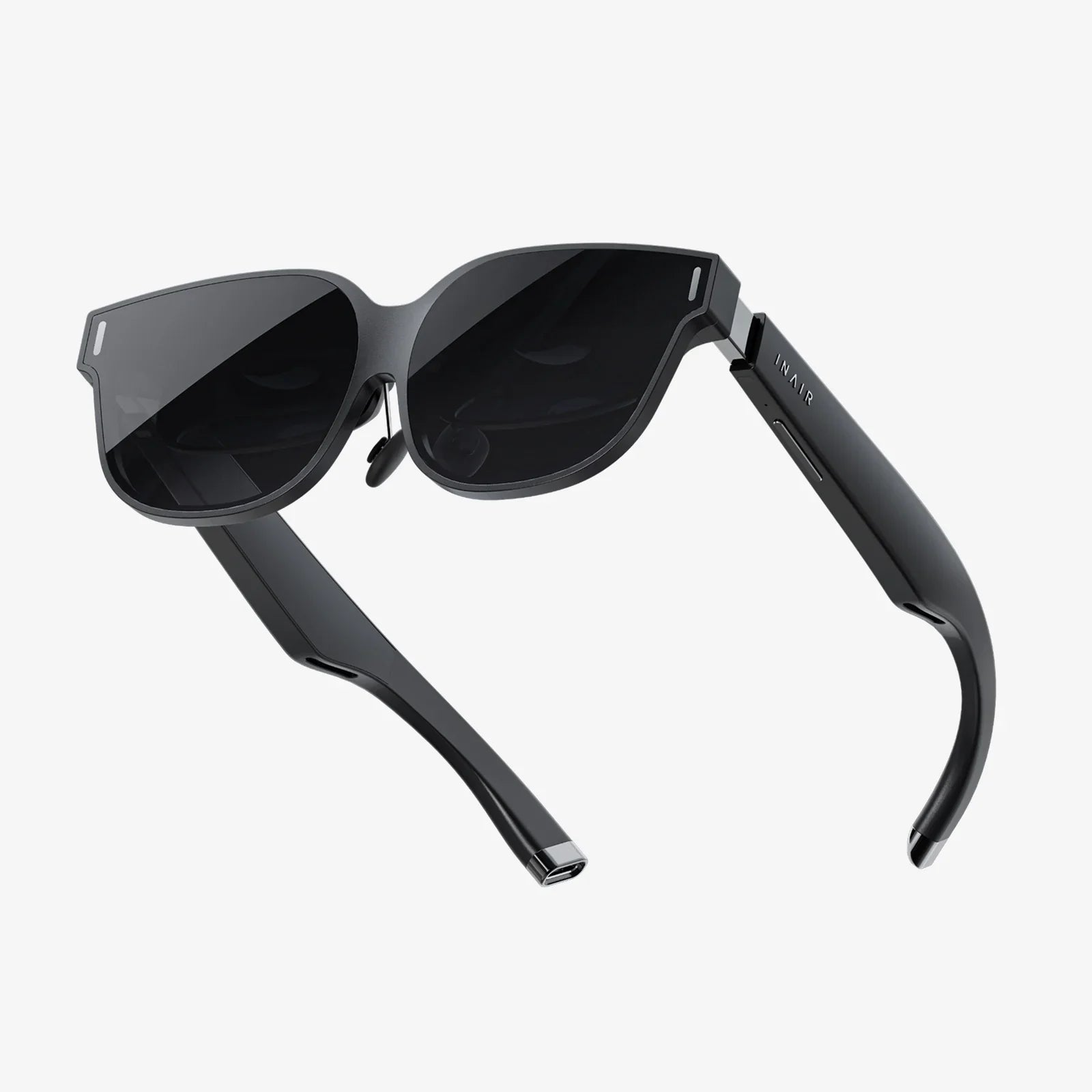
Imagine walking down a bustling city street, your gaze drifting from a historic building to a breaking news alert hovering subtly in the corner of your vision. With a simple voice command or a glance, the headline expands, not into a column of text on a small screen, but into a immersive data visualization showing the global impact of the event, a live video feed from the location, and a contextual timeline of how the story developed—all while you continue to watch the world around you. This is not a distant science fiction fantasy; it is the imminent future of journalism, powered by the silent, seamless revolution of AR glasses displays. This technology promises to unshackle news from the confines of pages and pixels, weaving it directly into the fabric of our daily reality and fundamentally redefining what it means to be informed.
From Print to Pixels to Presence: The Evolution of News Delivery
The journey of news consumption is a story of increasing immediacy and accessibility. For centuries, information was anchored to the printed page, delivered hours or days after events occurred. The 20th century brought radio and television, adding sound and motion, accelerating the news cycle to near real-time. The digital revolution of the late 20th and early 21st centuries exploded this cycle entirely, placing a firehose of global information into our pockets via smartphones. We moved from waiting for the morning paper to receiving push notifications the instant a story broke.
Yet, the smartphone, for all its power, remains a profoundly disruptive tool. To be informed, we must choose to be uninformed of our surroundings. We lower our heads, tunnel our vision, and retreat into a small, glowing rectangle, creating a divide between the digital information we seek and the physical world we inhabit. This act of “second-screening”—watching an event unfold live while simultaneously reading about it on a phone—highlights the cognitive dissonance of our current media age. The information is rich, but the delivery mechanism is isolating and contextually barren. AR glasses displays represent the next logical, yet revolutionary, step in this evolution: the era of contextual, ambient, and continuous news.
Beyond the Screen: How AR Glasses Redefine the “Display”
The term “display” takes on a new meaning within the paradigm of AR eyewear. It is no longer a single device we look at, but a dynamic canvas that exists within our field of view. This is achieved through sophisticated optical systems that project digital imagery onto the lenses, which is then focused by the eye to appear as a stable part of the environment, whether it’s text, video, or complex 3D models.
This capability allows for a multi-layered information experience:
- The Heads-Up Display (HUD): Critical, time-sensitive alerts—a major political development, a severe weather warning, a significant financial market movement—can be displayed unobtrusively in the periphery, much like a smartwatch notification that doesn’t require pulling out a phone.
- Contextual Overlays: This is the true magic of AR news. Looking at a restaurant? See its latest health inspection rating and recent reviews float beside its door. Gazing at a corporate headquarters? A quick financial news summary and stock ticker could materialize above the building. Walking through a historic district? News archives, historical photographs, and timelines related to the buildings can be overlaid directly onto the structures themselves, turning the entire city into a living, interactive newspaper.
- Immersive Storytelling: Complex stories involving data, geography, or intricate sequences of events can be transformed. Instead of reading a paragraph describing the path of a hurricane, you could watch a miniature 3D simulation of the storm system develop and move across a virtual globe hovering over your coffee table. A story about a new architectural marvel could be accompanied by an interactive 3D model you can walk around and examine from all angles.
The Personalized Newsfeed of Reality
The power of AR news displays is deeply intertwined with hyper-personalization. Leveraging artificial intelligence and machine learning, the technology can curate a news experience unique to each individual, filtered through a myriad of factors:
- Explicit Preferences: User-selected topics, trusted publications, and favorite journalists.
- Implicit Behavior: What you glance at, what stories you choose to expand, and how long you engage with certain types of content.
- Environmental Context: Your location, the time of day, and even who you are with. News relevant to your immediate surroundings would be prioritized.
- Biometric Feedback: Sophisticated sensors could, with consent, detect pupil dilation or focus patterns to gauge interest and engagement, further refining the news feed.
This creates a “ambient intelligence” for news—a system that understands what you need to know, when you need to know it, and presents it in the most digestible format for the moment. It’s a shift from actively searching for news to having a trusted, intelligent filter seamlessly integrated into your perception.
The Journalist’s New Toolkit: Crafting Stories for Augmented Reality
This new medium demands a new form of storytelling. The traditional inverted pyramid news article, while still valuable, is just one tool in a much larger arsenal. Newsrooms will need to develop entirely new roles and skillsets:
- AR Narrative Designers: Journalists who specialize in structuring information spatially and temporally within a 3D environment. They will decide how a story unfolds as a user explores it.
- 3D Data Visualization Experts: Specialists who can transform complex datasets into intuitive and interactive 3D charts, graphs, and maps that users can literally reach out and manipulate.
- Ethical Spatial Placement Editors: A crucial role focused on the ethics of where and how digital information is placed in the real world to avoid visual clutter, dangerous distractions, or digital vandalism.
The core principles of journalism—accuracy, fairness, and context—will become more important than ever. In a medium where a biased data visualization or a misleading overlay can be presented as an objective part of reality, the burden on journalists to uphold ethical standards is monumental.
Navigating the Ethical Minefield: Privacy, Misinformation, and Reality Itself
The potential of AR news is breathtaking, but it is accompanied by profound ethical and societal challenges that must be addressed proactively.
The Privacy Paradox: To deliver a contextually relevant experience, AR systems require an unprecedented amount of personal data: what you look at, where you go, what you read, and even how your body responds. Ensuring user control, transparency, and robust data security is not a feature; it is the foundational requirement for public trust. The line between helpful personalization and creepy surveillance is razor-thin.
Misinformation and the Battle for Perceptual Real Estate: If we thought deepfakes were dangerous, consider “deep realities”—maliciously altered AR overlays that change the appearance of a real-world location or person. Imagine seeing a building tagged with false news about a public health crisis or a political opponent surrounded by defamatory headlines. When misinformation is injected directly into your perception of reality, the fight against it becomes exponentially more difficult. Verifying the source of AR content and developing digital “watermarks” for authenticity will be critical.
The Attention and Reality Divide: Will AR news create a more informed citizenry or simply a more distracted one? The constant stream of information could lead to cognitive overload and a inability to be present in the moment. Furthermore, if everyone experiences a personalized reality feed, does our shared sense of objective reality erode? A key challenge will be designing for focus and ensuring that these technologies augment our world without overwhelming it.
The Path to Ubiquity: From Niche to Normal
The adoption of AR glasses for news will not happen overnight. It will follow a familiar technology adoption curve, beginning with early adopters in specific fields. Journalists themselves might use them for field reporting, overlaying notes, source information, and live data feeds onto their view of a news event. Architects, engineers, and historians will be early professional users.
Widespread consumer adoption hinges on overcoming significant hurdles: achieving a socially acceptable form factor (glasses that look like regular eyewear), all-day battery life, robust and pervasive connectivity, and perhaps most importantly, crafting user experiences that are intuitive, valuable, and effortless. The price point must also fall to a mass-market level. Once these barriers are overcome, the transition could be as swift and irreversible as the adoption of the smartphone.
The glow of the smartphone screen that has dominated our attention for two decades is finally beginning to fade, not into darkness, but into a new light that illuminates the world itself. AR glasses displays are the conduit for this transformation, offering a future where staying informed is no longer a scheduled interruption but a continuous, contextual, and enriching dialogue with the world around you. The news will cease to be something you go to find and will instead become a layer of understanding woven into the very fabric of your day, empowering you with knowledge not just about your world, but directly within it. The front page is about to become everything you see.
Share:
Spatial Projection: The Invisible Architecture Reshaping Our Reality
Spatial Projection: The Invisible Architecture Reshaping Our Reality