


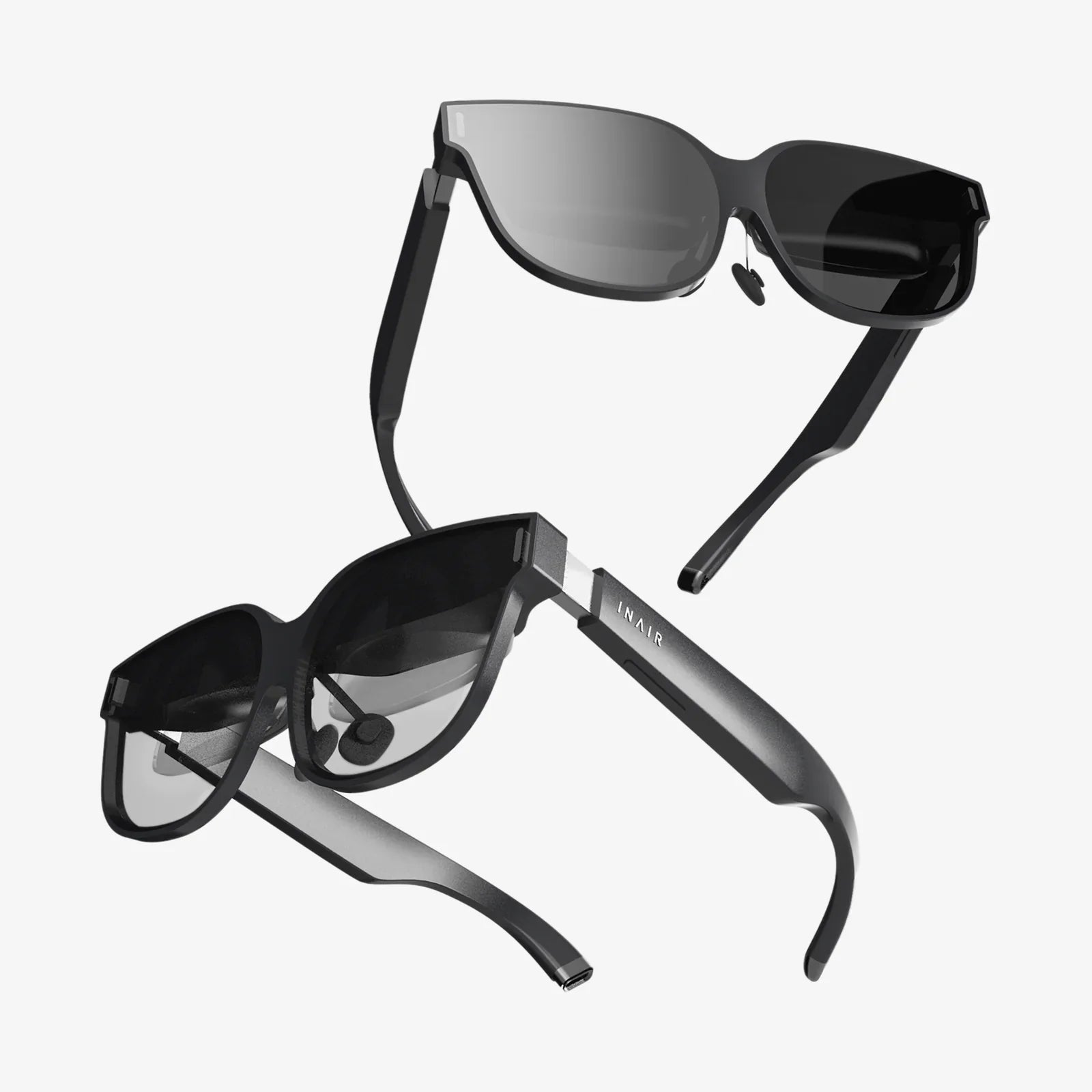
Imagine a world where your living room floor becomes a lava-filled moat, your coffee table transforms into a tactical command center, and digital characters peek out from behind your actual bookcase. This is no longer the stuff of science fiction; it is the imminent future of interactive entertainment, and it is being built today by pioneering game developers using augmented reality glasses. This nascent technology is poised to fundamentally reshape not just how we play games, but, more importantly, how they are conceived, designed, and brought to life. For developers, AR glasses represent a paradigm shift as significant as the move from 2D sprites to 3D polygons, offering a new canvas where the digital and physical worlds merge into a single, cohesive experience.
Beyond the Screen: Redefining the Developer's Canvas
The primary shift that AR glasses introduce to game development is the move away from a confined screen. Traditional game design operates within a fixed frame—a monitor, a television, a phone display. The entire universe of the game exists within that rectangle. AR glasses shatter that frame, projecting the game's assets and logic onto the real world. This forces developers to think in terms of unbounded, persistent spaces that coexist with reality.
This new canvas is defined by three core pillars:
- Spatial Mapping and Understanding: The device must perceive and understand the physical environment. This involves creating a real-time 3D mesh of the room, identifying surfaces (floors, walls, tables), and recognizing objects and their properties. For a developer, this means the game engine is no longer working with an empty void but is dynamically querying and interacting with a user's physical space.
- Persistent World Anchors: A crucial technical challenge is ensuring that a virtual object placed on a physical surface stays there, even if the user looks away and then returns. This persistence is key to selling the illusion. Developers must design systems that can reliably anchor digital content to the real world, creating a stable mixed-reality environment.
- Context-Aware Interaction: The game can now react to the context of the physical world. A horror game could use the time of day from the system clock to make its monsters more active at night. A strategy game could scale the size of its armies based on the physical space available in the player's room. The real world becomes a dynamic variable in the game's code.
The Prototyping Revolution: Designing in Augmented Space
One of the most immediate and powerful applications of AR glasses is in the prototyping and pre-visualization phase of development. Instead of looking at a character model on a 2D screen, a designer can don a pair of glasses and see a life-size version standing in the middle of the office. They can walk around it, inspect it from every angle, and get a true sense of scale and presence that a monitor cannot provide.
Level designers are experiencing a similar revolution. They can now block out levels directly in the space where they will be played. They can place virtual walls over real ones, designate a real hallway as a game corridor, and test sightlines and gameplay flow in real-time. This tactile, spatial design process drastically reduces iteration time and leads to levels that are inherently designed for physical movement and exploration, a core tenet of compelling AR experiences.
This hands-on approach extends to user interface (UI) design. Placing a HUD on a pair of glasses is vastly different from placing one on a screen. Developers must consider ergonomics, focal planes, and information density to avoid overwhelming the user. Prototyping UI elements directly in the AR view allows designers to test readability, comfort, and immersion simultaneously, ensuring the interface feels like a natural part of the user's perception rather than an obtrusive overlay.
New Gameplay Mechanics Born from Fusion
The fusion of digital and physical reality gives rise to entirely new genres and mechanics that are impossible on traditional platforms. Game developers are now exploring concepts like:
- Environmental Puzzles: Puzzles that require the player to manipulate both real-world objects and digital elements. For example, using a real mirror to reflect a hidden laser onto a virtual receptor, or arranging physical books on a shelf in a specific order to unlock a digital door.
- Persistent World Games: Games that continue to exist in a player's space even when the glasses are off. A virtual pet could be left sleeping on the sofa, or a city-building game could slowly develop on a tabletop over days and weeks, encouraging players to check in frequently.
- Asymmetric Multiplayer: One player wearing AR glasses can interact with a fully realized digital world, while others watching on a tablet or TV see a different view, allowing for unique cooperative or competitive dynamics. The AR user might be defusing a bomb visible only to them, while friends guide them using a schematic on a shared screen.
- Physical Stealth and Strategy: Using real-world furniture for cover or having enemy AI that navigates around physical obstacles creates a layer of tactical depth grounded in the player's own environment.
Technical Hurdles and Performance Constraints
Developing for AR glasses is not without its significant challenges. These devices are essentially wearable computers, which imposes strict limitations on processing power, battery life, and thermal output. Unlike developing for a console or high-end PC, AR developers must be hyper-efficient with their code and assets.
Key technical considerations include:
- Optimized Rendering: Rendering two high-resolution images (one for each eye) at a high frame rate (90Hz or more) is essential to prevent motion sickness and maintain immersion. This requires expert-level knowledge of optimization techniques, including efficient shaders, level of detail (LOD) systems, and aggressive culling.
- Latency is the Enemy: Any lag between the user's head movement and the updating display can break immersion and cause discomfort. The entire pipeline—from sensor input to photon emission—must be incredibly low-latency, a challenge that demands close-to-metal programming and a deep understanding of the hardware.
- World Tracking Robustness: The game's experience depends entirely on the stability of the headset's tracking. Developers must code for instances of "tracking loss" (e.g., in poorly lit or featureless rooms) and create graceful recovery systems to re-anchor the experience without pulling the user out of the fantasy.
- Battery-Conscious Design: Long play sessions are a staple of gaming, but AR glasses have limited battery capacity. Developers must design experiences that are mindful of power consumption, potentially by limiting computationally expensive effects or building in natural breaks.
The Evolving Toolchain and Development Ecosystem
Thankfully, developers are not building this future from scratch. Major game engines have invested heavily in robust AR development frameworks. These tools abstract away much of the low-level complexity of spatial mapping, plane detection, and world anchoring, allowing creators to focus on the gameplay.
These toolkits provide:
- Plugins and packages specifically for AR device SDKs.
- Simulators that allow developers to test AR experiences on a desktop screen, using a webcam feed to simulate the real world, which is invaluable for rapid iteration.
- Visual scripting systems that make spatial computing concepts accessible to designers and artists without requiring deep programming knowledge.
- Asset stores with pre-built packages for common AR interactions, such as dragging, rotating, and placing virtual objects on real surfaces.
This maturing ecosystem is lowering the barrier to entry, enabling indie developers and small studios to experiment and innovate in the AR space alongside larger companies.
A Fundamental Shift in User Experience (UX) Design
Perhaps the most profound change for game developers is the rethinking of user experience. The principles of UX for a screen-based game do not directly translate to an experience overlaid on reality.
- Comfort and Safety: Developers have a new responsibility for the user's physical well-being. Experiences must be designed to minimize motion sickness, avoid encouraging rapid movements that could lead to collisions with real objects, and include clear warnings about safe play areas.
- Information Placement: Critical information cannot be locked to the edge of a screen. UI elements must be placed in the user's field of view in a way that feels natural and doesn't require uncomfortable neck strain. "World-locked" UI that attaches to objects or locations, and "body-locked" UI that follows the user's gaze, are common paradigms.
- Gesture and Voice Input: While controllers are still an option, AR opens the door for more natural input methods. Precise hand-tracking allows for gesture-based controls, and voice commands can be a powerful and immersive way to issue commands, making the player feel like they are truly interacting with the world.
The Future is a Shared Reality
The long-term vision for AR glasses in gaming extends beyond solitary experiences. The true endgame is the creation of a shared, persistent AR layer over the world—a concept often called the "metaverse" or spatial computing. In this future, developers won't just be creating games for a single user in a single room; they will be building experiences and assets that exist as part of a larger, interconnected digital reality. Players in different physical locations could see and interact with the same virtual object placed in a real-world location, enabling unprecedented forms of social gaming and collaborative play that seamlessly blend our online and offline lives.
The development journey for AR games is more complex, demanding expertise in 3D graphics, computer vision, ergonomics, and physical space design. But for those willing to embrace these challenges, the reward is the opportunity to define the next era of play. They are not just coding games; they are crafting experiences that will spill out of the screen and dance in the spaces where we live, work, and connect. The tools are here, the technology is accelerating, and the canvas is infinite. The only limit is the creativity of the developers who dare to put on the glasses and start building the future, one immersive interaction at a time.
Share:
Advantages of AI Technology: A Deep Dive into the Intelligent Revolution Reshaping Our World
AI Basic Concepts: The Foundational Knowledge Everyone Needs in the Modern Age