


- by wangfred
AR Glasses for iPhone: Unlocking the Next Dimension of Mobile Computing
- by wangfred
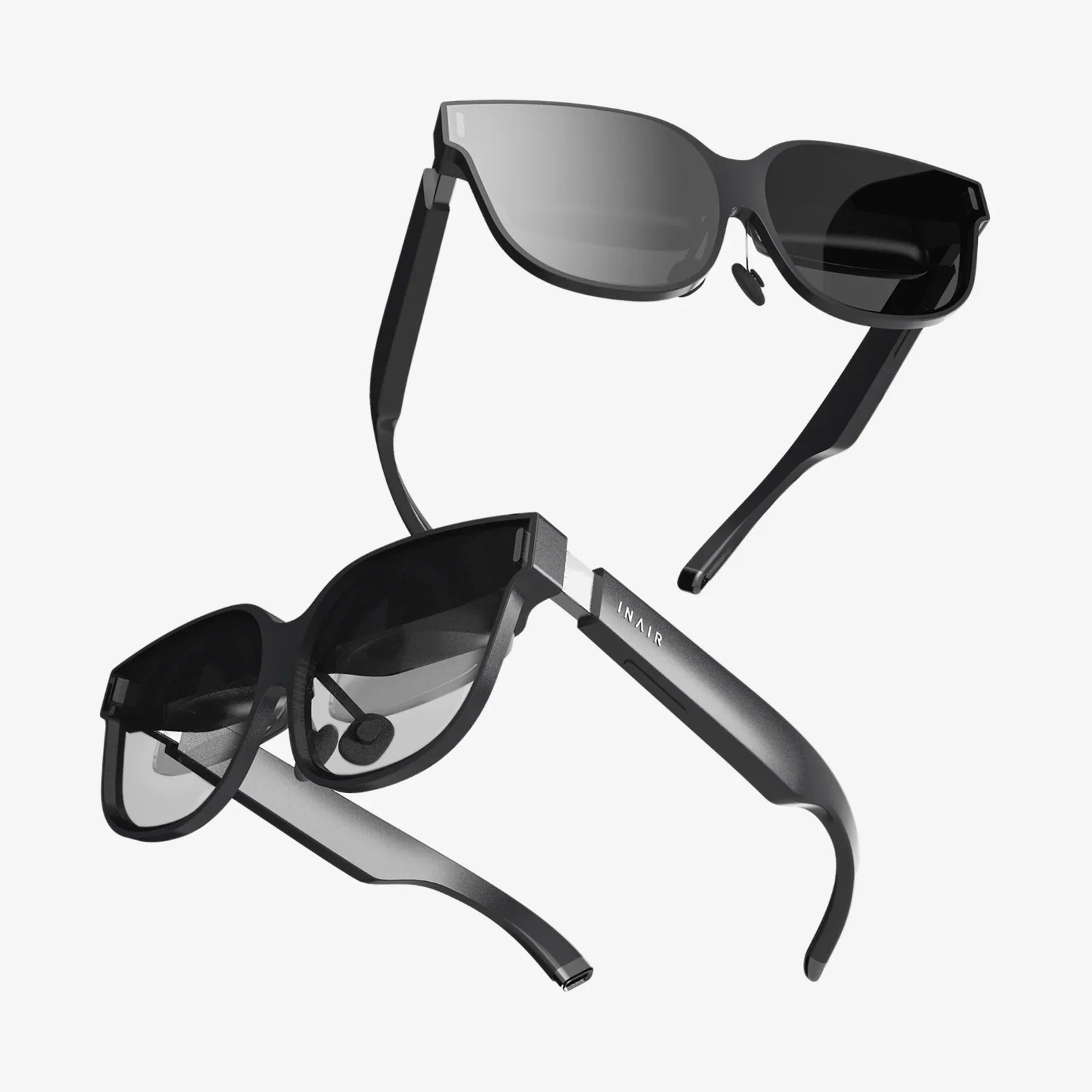
Imagine a world where your iPhone’s screen is no longer confined to a few inches of glass but expands into the very space around you. Information floats effortlessly in your periphery, digital creatures play on your coffee table, and your workspace is a boundless, multi-monitor dream. This is not a distant sci-fi fantasy; it is the promise being delivered today by AR glasses for iPhone. This nascent technology is poised to redefine our relationship with personal computing, and it all starts by tapping into the powerful ecosystem you already have in your pocket.
At first glance, pairing AR glasses with a smartphone might seem counterintuitive. Isn't the goal to be untethered? However, this partnership is one of brilliant pragmatism. The modern iPhone is a technological powerhouse, equipped with a sophisticated suite of sensors, a powerful processor, advanced machine learning capabilities, and a robust operating system. By leveraging the iPhone's hardware, AR glasses can be designed to be lighter, more affordable, and less power-hungry than standalone alternatives.
The iPhone acts as the brain, handling the intense computational workload of spatial tracking, rendering complex 3D graphics, and connecting to the internet. The glasses themselves become the elegant display and sensor interface, projecting imagery onto their lenses and often incorporating additional cameras to better understand the user's environment. This symbiosis means users can upgrade their AR experience simply by upgrading their phone, future-proofing the glasses in a way standalone devices struggle to match.
The magic of these devices lies in their ability to blend the digital and the physical. The process is a complex dance between hardware and software:
Everything begins with the phone. Its LiDAR scanner and advanced cameras perform simultaneous localization and mapping (SLAM). This means it creates a real-time, 3D map of your surroundings, understanding the dimensions of the room, the location of surfaces like floors and tables, and the position of objects. This spatial awareness is the foundational canvas upon which AR content is painted.
The glasses receive the visual data from the iPhone and project it onto their lenses. Two primary technologies dominate here:
The two devices are typically connected via a high-speed wired or wireless protocol, ensuring a low-latency transfer of data. A slight delay between your head moving and the image adjusting can cause discomfort, so this connection is critical for a smooth experience.
The true potential of AR glasses is realized in their applications. They move beyond being a cool gadget to becoming a genuinely useful tool that enhances daily life.
For the professional on the go, AR glasses can create a portable, massive workspace. Imagine having multiple large virtual screens available anywhere you go—on the train, in a coffee shop, or at a client's office. You can arrange documents, web browsers, and communication apps around you, turning any quiet corner into a productive command center. Virtual collaboration takes a leap forward, with remote colleagues appearing as life-like avatars in your space, able to interact with 3D models and data visualizations as if they were physically present.
This is where many users first experience the "wow" factor. Games escape the screen and inhabit your living room. You could be defending your home from an alien invasion, solving a puzzle that spans your entire house, or watching a movie on a virtual theater screen that feels 100 feet wide. The iPhone's processing power enables rich, detailed graphics that make these experiences compelling and fun.
Walking through a new city becomes an entirely new experience. Directional arrows can be superimposed onto the street in front of you, guiding your path without needing to look down at your phone. Points of interest can pop up with reviews and history as you glance at them. This concept of "contextual computing" means information is delivered precisely when and where you need it, making you more connected to your environment, not less.
While the technology is incredibly promising, it is still in its relative infancy. Potential buyers should be aware of the current landscape's challenges.
The classic hurdle for all wearable tech remains: how to make them look good. Early models can be bulky, have limited battery life, or have a design that draws unwanted attention. The industry is striving to create glasses that are indistinguishable from regular eyewear, but we are not quite there yet. Furthermore, the social etiquette of wearing AR glasses in public is still being defined. Questions about recording and privacy are paramount and need clear social and legal frameworks.
Despite the iPhone's power, rendering complex 3D graphics for long periods can drain the battery quickly. The field of view (how much of your vision is filled with the AR display) on many current models is still narrow, creating a "letterbox" effect that can break immersion. Achieving perfect visual comfort—where digital objects are in sharp focus and naturally integrated into the world—is the holy grail that engineers continue to pursue.
The hardware is only as good as the software it runs. While development tools have made creating AR experiences easier, a robust and diverse library of "killer apps" that consistently deliver value is still growing. The success of the platform depends heavily on attracting talented developers to build the experiences that will keep users engaged day after day.
The evolution of AR glasses for iPhone is on a thrilling trajectory. We can expect future iterations to become increasingly independent, with more onboard processing, sensors, and batteries built directly into the glasses frame. Advancements in micro-LED displays and photonics will enable wider fields of view and sleeker designs. The ultimate goal is a pair of glasses that you forget you're wearing, yet which seamlessly augment your reality with useful and delightful information.
Integration with other devices will deepen, creating a cohesive spatial computing environment where your glasses, phone, laptop, and smart home work in concert. Furthermore, the development of more sophisticated AI will allow these glasses to become truly proactive assistants, anticipating your needs and surfacing information before you even have to ask.
The journey into augmented reality is not about replacing the world we live in, but about enriching it. AR glasses for iPhone represent the most accessible and powerful entry point into this new paradigm. They are the key that unlocks the latent potential of the device in your pocket, transforming it from a portal you look into into a lens through which you see the world anew. The boundary between the digital and the physical is dissolving, and the result will be a reality that is more informative, more productive, and infinitely more magical.
Share:
What Do You Need for a VR Headset - The Ultimate Pre-Purchase Checklist
Best Budget VR Headset 2025: The Ultimate Buyer's Guide to Affordable Immersion