


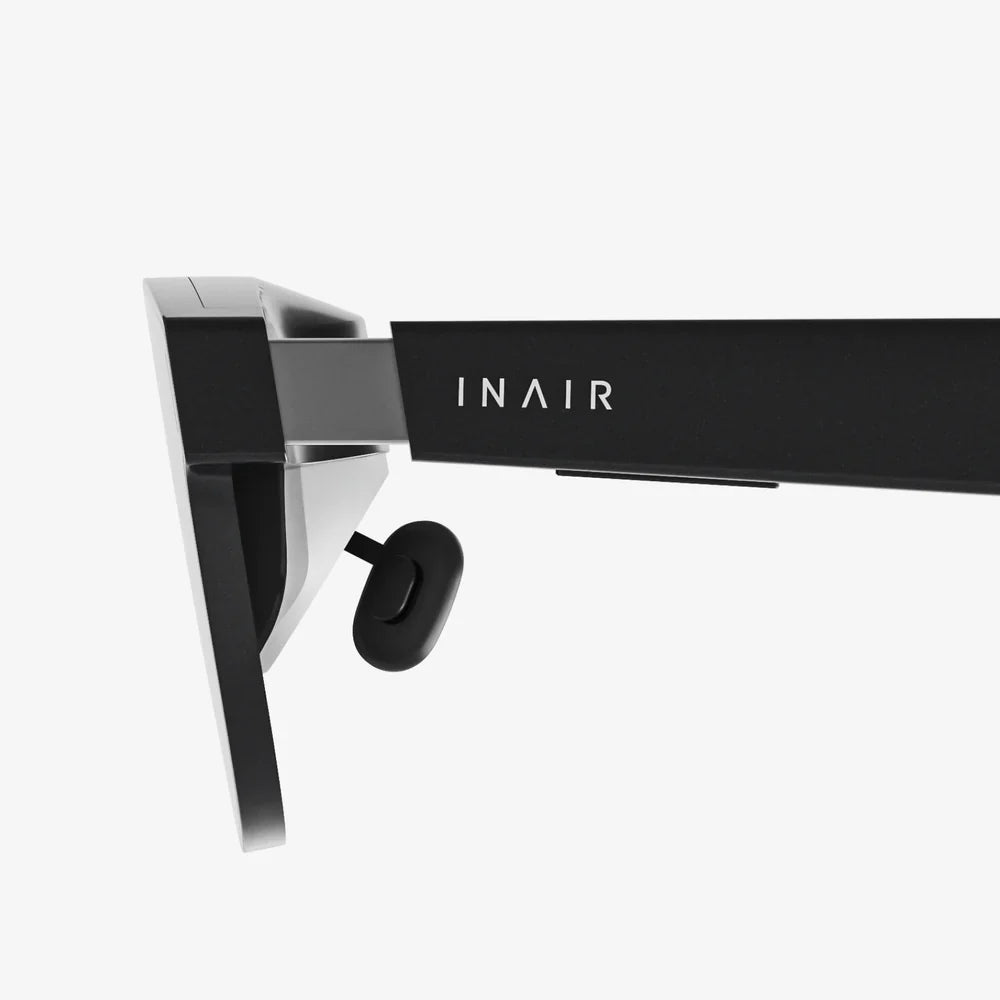
Imagine pulling a sleek, futuristic visor from your pocket, connecting it to the device you already own, and instantly overlaying the world around you with a dynamic layer of digital information, breathtaking virtual screens, and interactive experiences. This isn't a scene from a distant sci-fi movie; it's the reality being built today with AR glasses for phones, a revolutionary category of wearable technology that is turning the ubiquitous smartphone into the brain of a next-generation visual interface. This convergence promises to democratize augmented reality, making it more accessible, affordable, and integrated into our daily lives than ever before.
The Symbiotic Relationship: Your Phone as the Powerhouse
At the heart of this technological leap is a simple yet powerful idea: leverage the existing, sophisticated hardware in your pocket. Modern smartphones are computational marvels, equipped with powerful processors, high-resolution displays, advanced sensors (like GPS, accelerometers, and gyroscopes), and high-quality cameras. AR glasses for phones act as a specialized external display and sensor array, offloading the intense visual rendering while relying on the phone's brain for the heavy lifting.
This symbiotic relationship offers several distinct advantages. For consumers, it significantly lowers the barrier to entry. Instead of investing in a completely standalone, expensive, and computationally complex AR headset, users can enhance their current device for a fraction of the cost. For developers, it creates a larger, more unified ecosystem to build upon, as they can target the common platform of Android or iOS rather than fragmented, proprietary operating systems. This setup effectively future-proofs the glasses; as you upgrade your phone for better battery life, a faster chip, or improved cameras, your AR experience automatically gets a performance boost without needing new glasses.
How It Works: The Magic Behind the Lenses
The magic of these glasses unfolds through a precise dance between your phone and the wearable. The process typically follows these steps:
- Connection: The glasses connect to your phone via a physical cable (often USB-C for power and data) or a robust wireless protocol like a proprietary low-latency connection.
- Processing: The AR application runs on your phone. The phone's processor handles the core logic, tracking the environment through its own cameras and sensors (or sometimes additional sensors on the glasses themselves), and generates the stereoscopic 3D imagery required for the AR overlay.
- Display: The rendered video signal is sent to the glasses. Inside the glasses, tiny displays—often micro-OLED or advanced LCDs—project the image.
- Optics: This is where the real illusion is crafted. Sophisticated waveguide optics or free-form prism systems sit in front of your eyes. These transparent lenses bounce the light from the micro-displays into your pupils while allowing you to see the real world clearly behind them. This creates the seamless blend of digital and physical that defines augmented reality.
- Interaction: Users interact with the digital layer through various methods: touchpads or buttons on the glasses frame, voice commands processed by the phone's assistant, or even by using the phone's touchscreen as a remote control.
A World of Applications: Beyond Novelty
The true potential of phone-powered AR glasses is unlocked not in what they are, but in what they enable you to do. The applications span from practical productivity to immersive entertainment.
Productivity and Multitasking Reimagined
Imagine having multiple large, floating browser windows, your email client, a word processor, and a messaging app arrayed around your physical workspace. You can glance at a recipe while cooking without getting your phone screen dirty, follow a complex repair guide hands-free while fixing a bicycle, or participate in a video call while still having access to your notes. This transforms your phone into a portable, private IMAX theater or a multi-monitor workstation that fits in your backpack.
Gaming and Interactive Experiences
The playground becomes the entire world. Game characters can hide behind your sofa, virtual puzzles can be solved on your kitchen table, and immersive narratives can unfold in your local park. This style of gaming encourages movement and exploration, blending physical activity with digital adventure. Furthermore, interactive educational apps can bring historical figures to life in a museum or visualize complex molecular structures in a classroom, creating deeply engaging learning experiences.
Navigation and Contextual Information
Walking through a new city is transformed. Instead of constantly looking down at your phone, directional arrows and street names can be superimposed onto the pavement in front of you. Glancing at a restaurant could instantly display its reviews and menu highlights. This heads-up, context-aware information delivery is not only more convenient but also significantly safer, keeping your focus on your surroundings.
Navigating the Current Landscape: Challenges and Considerations
While the future is bright, the present technology is still maturing. Prospective users should be aware of the current limitations and trade-offs.
- Design and Comfort: Early models often face the classic tech dilemma of form versus function. Balancing battery life, processing power (in the phone), display quality, and a comfortable, socially acceptable design is a immense challenge. Some models can be bulky or have a limited field of view, which can break immersion.
- Battery Life: Running high-resolution AR experiences is incredibly taxing on your phone's battery. Intensive use can drain a battery in a couple of hours, meaning power banks may become an essential accessory for prolonged use.
- The Tethering Experience: Being physically connected to your phone with a cable can feel restrictive and inconvenient. While wireless solutions are emerging, they must overcome significant hurdles in latency, reliability, and battery efficiency to become the standard.
- Content Ecosystem: The hardware is only as good as the software it runs. The library of dedicated, high-quality AR apps, while growing, is still in its early stages compared to traditional mobile apps. Widespread developer adoption is key to long-term success.
The Road Ahead: Where Do We Go From Here?
The evolution of AR glasses for phones is on a clear trajectory. We can expect to see rapid advancements in several key areas. Display technology will improve, offering wider fields of view, higher resolution, and better brightness, all while becoming more energy-efficient. The form factor will inevitably shrink, moving from goggles to something that resembles standard eyeglasses, aided by more efficient optics and the continued miniaturization of components. Wireless connectivity will become seamless and robust, cutting the cord for good. Most importantly, the software will become smarter, with more intuitive interfaces and AI-driven contextual awareness that anticipates your needs without explicit commands.
This progression points toward a future where your phone remains your primary computing device, but its interface expands beyond the glass rectangle into the world around you. The glasses will become the window, and the phone, the engine. This isn't about replacing reality, but about enhancing it, providing a digital layer of utility, connection, and wonder that is always available, yet never obtrusive.
The true magic of AR glasses for your phone lies in their power to unlock a hidden layer of reality that's been waiting just beneath the surface. It’s about transforming your morning commute into a private cinema, your workspace into a command center, and your world into an interactive playground—all by simply connecting a pair of lenses to the powerful computer already in your hand. The portal to a blended future isn't in some distant lab; it's being built to work with the device in your pocket right now, waiting for you to take a look.
Share:
How to Get Infinite Screen Time: The Ultimate Guide to Digital Wellness and Focus
Smart Glass Projector Screen: The Ultimate Fusion of Form and Function