


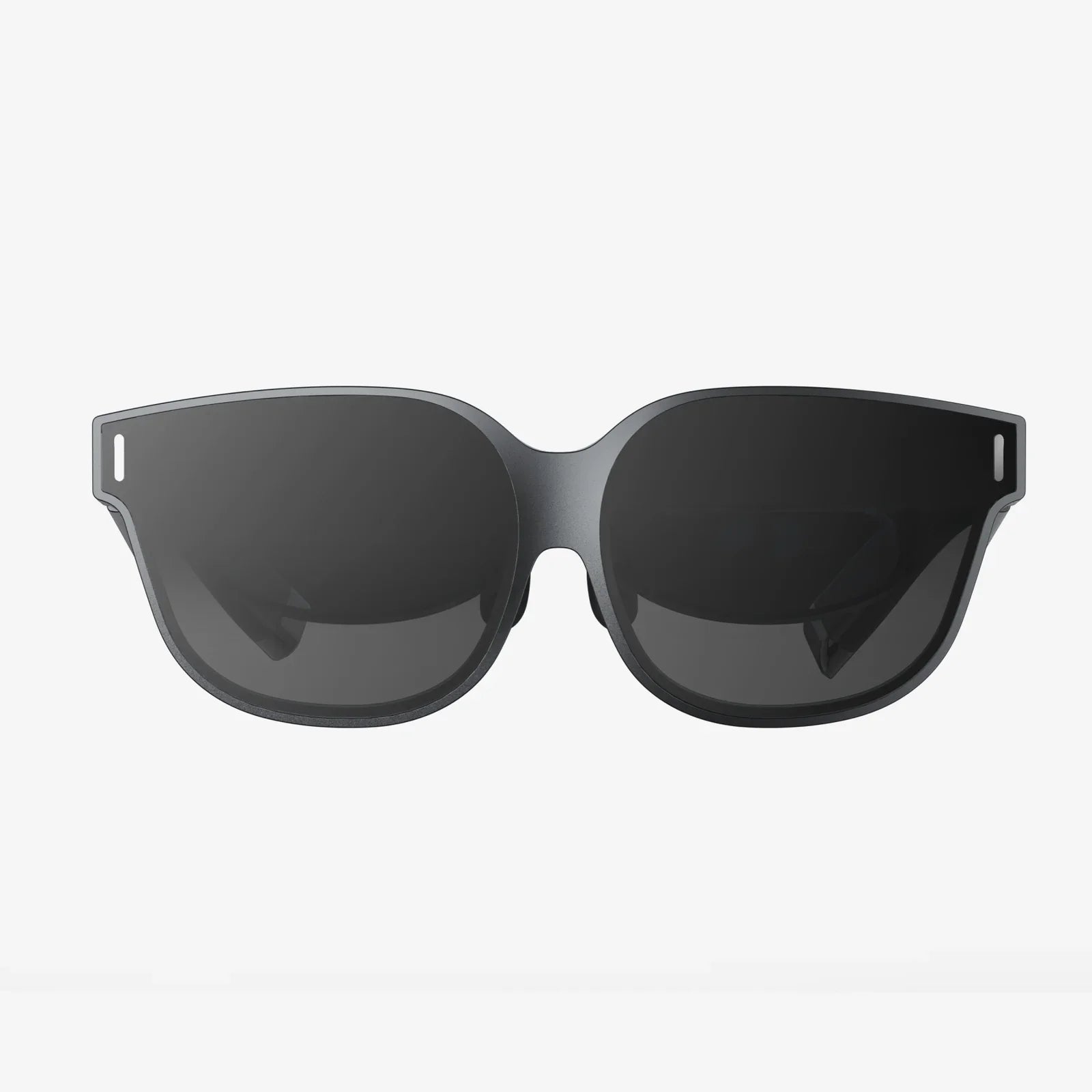
Imagine a world where your IDE isn't confined to the cold, static rectangle of a monitor but instead lives all around you, a dynamic tapestry of logic and creativity that you can touch, manipulate, and command with a glance. This is the future being unlocked by AR glasses for programming, a technological leap that promises to shatter the physical barriers of the traditional workstation and usher in a new era of spatial computing for developers. The potential is not just incremental; it's a fundamental reimagining of the developer's relationship with code, offering a glimpse into a workspace limited only by imagination.
Beyond the Monitor: The Inevitable Shift to Spatial Computing
For decades, the paradigm of programming has been tethered to a fundamental constraint: the screen. We have progressed from single, monochrome terminals to sprawling multi-monitor setups, but the core principle remains—we are peering into a digital world through a fixed, two-dimensional window. This setup creates a constant context-switching burden. To reference documentation, check a terminal output, or view a database schema, we must alt-tab, drag windows, or physically turn our heads. This fragmentation of attention is a known cognitive drain, a tax on productivity and flow state.
AR glasses propose a radical alternative: the monitor-less environment. Instead of looking at a device, developers look through a device into a hybrid reality where digital artifacts are seamlessly pinned to their physical surroundings. This isn't about replacing one screen with a virtual one; it's about dissolving the concept of a screen altogether, allowing code, data, and tools to exist as persistent, arranged entities in three-dimensional space.
Unlocking the Developer's Flow State: Key Use Cases and Benefits
The theoretical advantages of AR for programming are compelling, but they are best understood through practical, tangible applications that are either available today or on the immediate horizon.
The Infinite, Customizable Workspace
The most immediate benefit is real estate. With AR, your physical wall can become a sprawling, high-resolution display for your codebase. You are no longer limited by the bezels of physical monitors. You can have your primary IDE centered in your field of view, with ancillary panels for documentation, a live server preview, terminal outputs, and communication tools arrayed around it, all visible with a slight turn of the head. This setup drastically reduces the friction of context switching. Information is always in your periphery, waiting to be glanced at, not hidden behind another window.
Contextual Awareness and Information Layering
AR excels at presenting the right information at the right time, directly in the context of the task. Imagine:
- Debugging becomes a visual exercise. Instead of scanning through console logs, you could see runtime values and execution paths visually overlaid on the code itself.
- Reviewing a complex function? Glance at a specific module, and documentation, previous commit messages, and related test results could fade in gracefully beside it.
- Working on a full-stack feature? You could have your backend API code on one virtual screen and the frontend component that consumes it on another, visually linked to show the data flow.
This layered approach to information transforms coding from a linear, text-heavy process into a more holistic, spatially-aware activity.
Enhanced Collaboration and Remote Pair Programming
The future of remote work is spatial. AR glasses can enable a form of collaboration that feels profoundly more natural than a shared screen on a video call. A remote pair programming session could involve both developers sharing a virtual workspace. They could see each other's avatars, use virtual pointers to highlight specific lines of code, and collaboratively diagram architecture in mid-air. It creates a shared presence, a "virtual office" that replicates the best aspects of in-person collaboration without the geographical constraints.
Ubiquitous Development and Portability
The ultimate promise is a truly portable high-productivity setup. A powerful workstation could be running in the cloud, and a lightweight pair of AR glasses, connected to a phone or compact compute puck, could be your entire interface. Your perfect, personalized development environment would travel with you, instantly available on a train, in a coffee shop, or in a park—transforming any flat surface into your desk and any wall into your monitor.
The Hurdles on the Path to Adoption: Challenges to Overcome
For all its promise, the widespread adoption of AR glasses for programming faces significant technological and human factor challenges that must be addressed.
The Hardware Conundrum: Resolution, Field of View, and Comfort
Reading text is one of the most demanding tasks for a display. For AR glasses to be viable for staring at code for hours, they require incredibly high resolution and pixel density to render sharp, legible text without screen-door effects. The current generation of devices often struggles here. Furthermore, the field of view (FoV) must be wide enough to create a sense of immersion without feeling like you are looking through a narrow letterbox. Finally, the devices must be lightweight, comfortable for extended wear, and not cause visual fatigue or motion sickness. Battery life is another critical factor for true portability.
Input and Interaction Paradigms
How do you interact with a virtual workspace? While voice commands and hand-tracking gestures are impressive for certain tasks, they are inefficient and fatiguing for the precise, rapid-fire input required for coding. The humble keyboard remains the undisputed champion for text entry. The winning formula will likely be a hybrid approach: using a physical keyboard and trackpad for primary input, augmented by gaze, gestures, and voice for context switching, window management, and issuing high-level commands. Developing intuitive and efficient interaction models is a major unsolved problem.
Software Ecosystem and Integration
The hardware is useless without a robust software ecosystem. Integrated Development Environments (IDEs), text editors, and terminal emulators need to be rethought or extended for spatial operation. This doesn't necessarily mean a complete rewrite; it could involve middleware or plugins that allow existing tools to project their interfaces into 3D space. Companies and open-source communities will need to invest in building these spatial experiences, a process that is only just beginning.
A Glimpse into the Future: The Long-Term Vision
Looking beyond the immediate challenges, the long-term trajectory points toward a deeply integrated and intelligent development environment.
We are moving towards a future where AI and AR converge. Your AR assistant could be a constant companion, visualizing data structures in 3D as you code, predicting your next move and surfacing relevant code snippets, or identifying a potential bug and visually annotating the problematic logic directly on your code panel.
Furthermore, as the technology matures, we may see the emergence of entirely new programming paradigms designed from the ground up for spatial interaction. Instead of writing linear text, developers might manipulate visual, interconnected blocks of logic in three dimensions, creating programs in a way that more closely resembles how we architect complex systems in our minds.
The workspace of the future may not be a desk with monitors but a blank room—a holodeck for developers—where the entire environment is a collaborative, interactive, and infinitely malleable canvas for software creation.
The journey from our current monitor-bound reality to a world of seamless spatial computing will be iterative. Early adopters will pave the way, tolerating the limitations of first-generation hardware for the thrill of a glimpse into the future. The transition will be fueled by relentless improvements in display technology, processing power, and battery efficiency. But the destination is clear: a world where the barriers between the developer, the code, and the digital universe dissolve, creating an immersive symphony of thought and creation. The act of programming is on the verge of escaping the screen and becoming an integral part of the world we perceive.
Share:
Everysight Smart Glasses Are Redefining Reality and How We Interact With Information
How a Smart Board Works: The Ultimate Guide to Interactive Classroom Technology