


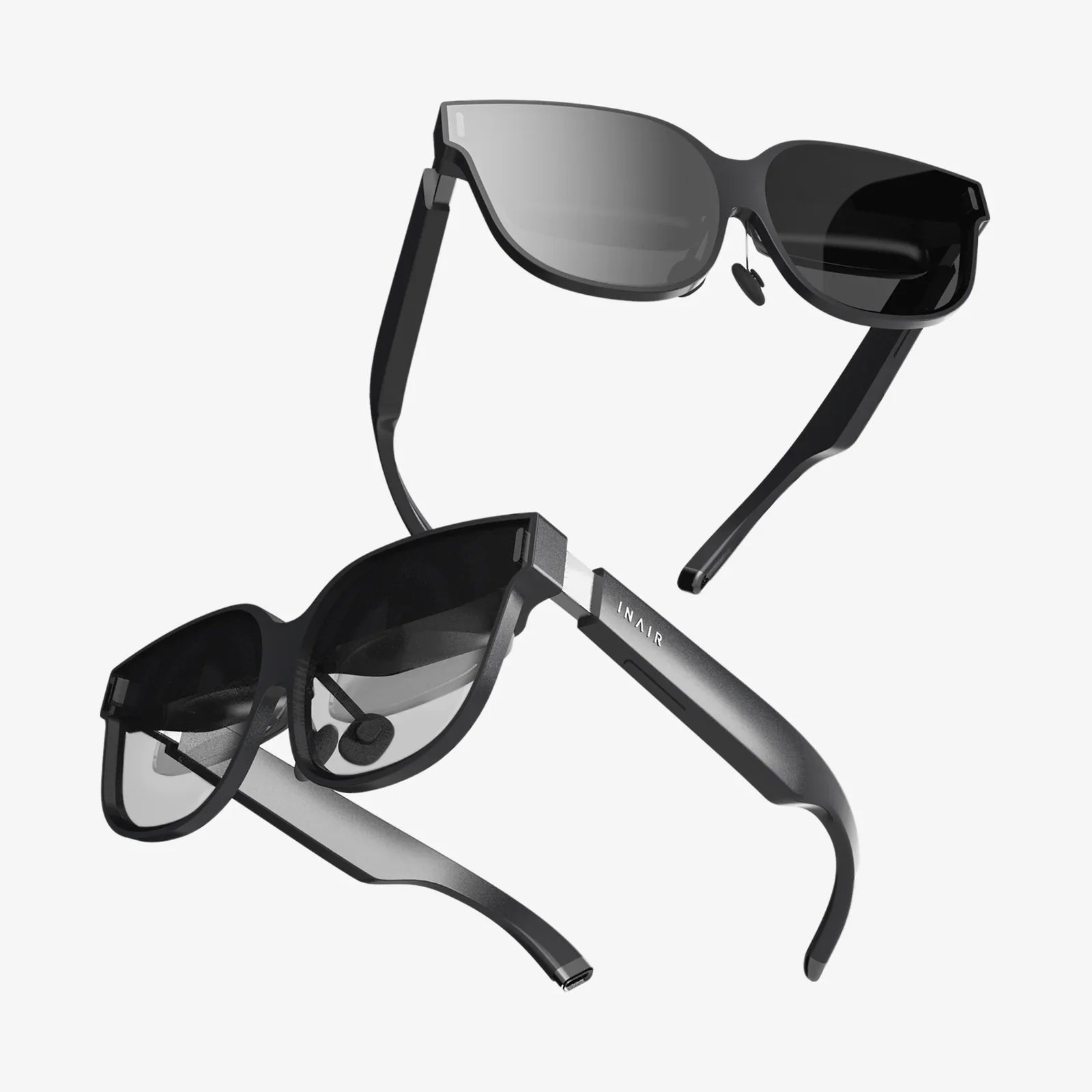
Imagine reaching out and grabbing a digital file, pinching a virtual sun to set it over a simulated horizon, or conducting a complex 3D model with the subtle flick of your wrist—all without ever touching a screen, controller, or mouse. This isn't a scene from a distant sci-fi future; it is the palpable reality being built today through the powerful synergy of augmented reality glasses and advanced hand tracking technology. This combination is poised to dismantle the very foundations of how we interact with machines, shifting us from a paradigm of indirect manipulation through peripherals to one of direct, intuitive, and embodied control. It promises an invisible interface, one that understands the language of our hands, the most natural tools we possess.
From Science Fiction to Scientific Fact: The Evolution of an Interface
The dream of controlling technology with a wave of the hand has captivated the human imagination for generations. For decades, cinematic visions from Minority Report to Iron Man have depicted fluid, gestural interfaces, making them seem both fantastical and inevitable. The journey from fiction to function, however, has been a complex one, requiring convergence across multiple technological disciplines.
Early attempts at gesture control were often clunky and limited, relying on depth-sensing cameras like Microsoft's Kinect or specialized wearable sensors. These were impressive first steps, but they were largely confined to specific gaming or research contexts, lacking the fidelity and portability for all-day, everyday use. They demonstrated potential but failed to achieve ubiquity.
The true catalyst for change has been the parallel advancement of two key technologies: the miniaturization of AR display systems into wearable glasses form factors and the development of sophisticated, AI-powered computer vision algorithms. Modern AR glasses integrate a suite of sensors—typically a combination of infrared cameras, RGB cameras, and sometimes LiDAR or time-of-flight sensors—that act as their digital eyes. These sensors continuously scan the environment and, crucially, the user's hands.
The real magic, however, happens in the onboard processors or connected devices running complex software. Machine learning models, trained on vast datasets of hand images and poses, analyze the sensor data in real-time. They don't just identify a hand as a blob; they reconstruct a precise skeletal model of it, accurately pinpointing the 3D position of 21 or more key joints—knuckles, fingertips, and the wrist. This digital skeleton becomes a real-time data stream, a high-fidelity representation of your hand's every subtle movement, rotation, and gesture, ready for the AR system to interpret.
How the Magic Works: Seeing and Understanding Your Hands
The process of hand tracking can be broken down into two primary technical challenges: perception and interpretation.
Perception: The Digital Eyes
AR glasses use their sensor arrays to perceive the world. For hand tracking, the primary work is done by cameras specifically tuned to detect and isolate hands from the background clutter. Infrared (IR) cameras are particularly effective because they provide consistent data regardless of ambient lighting conditions—your hand is visible to the system in a pitch-black room or in bright sunlight. These cameras project an invisible pattern of IR light or simply use ambient IR to see the precise contours and depth of your hands.
Interpretation: The Digital Brain
Once the raw sensor data is captured, the heavy lifting begins. This is where convolutional neural networks (CNNs) and other machine learning architectures come into play. The system runs the camera feed through these trained models to answer critical questions:
- Is there a hand in the frame?
- Which hand is it (left/right)?
- What is the 3D pose of each finger joint?
- What is the palm's position and orientation?
The output is a robust data model—a cloud of points in space connected by virtual bones. This model is then mapped to a predefined set of gestures and commands. A pinching motion between thumb and index finger might be a "click." A swipe in the air might scroll a list. A full-hand grab might select and move an object. The system is constantly translating the complex language of your hands into discrete, actionable digital commands.
Beyond the Novelty: The Unmatched Benefits of a Natural Interface
The shift to hand tracking is not merely a change in hardware; it is a fundamental improvement in the human-computer interaction loop. It offers a suite of benefits that traditional interfaces simply cannot match.
Intuitive and Low-Friction Interaction
Screens, mice, and keyboards are learned skills. We point and click because we were taught to. In contrast, we are born with an innate understanding of how to use our hands to manipulate objects. Reaching for, grabbing, pushing, and pulling are fundamental human behaviors. Hand tracking leverages this innate knowledge, creating an interface with a near-zero learning curve. The interaction is direct—you interact with the hologram itself, not an abstract representation of it.
Spatial Context and Embodiment
Traditional interfaces are confined to 2D planes. Hand tracking is inherently spatial. Your hands exist in the same 3D space as the digital content you are manipulating. This allows for incredibly nuanced control—rotating a virtual gemstone to inspect its facets, scaling a architectural model by physically pulling its corners apart, or painting in three dimensions. This embodiment—the feeling that your digital actions are directly tied to your physical movements—creates a profound sense of presence and immersion that flat screens cannot provide.
Liberation and Mobility
Hands-free is the ultimate goal of mobile computing. By eliminating the need for a physical controller, hand tracking truly unlocks the potential of AR. Users are free to move, to hold real-world objects, and to interact with their environment while simultaneously engaging with digital overlays. A mechanic can have a schematic overlaid on an engine and use gestures to flip through pages without putting down their wrench. A surgeon can view patient data and control imaging without breaking sterility. This seamless blending of physical and digital tasks is the core promise of AR, and hand tracking is the key that unlocks it.
Transforming Industries: The Practical Applications
The implications of this technology extend far beyond gaming and entertainment. It is already beginning to revolutionize professional workflows and create new paradigms for work and collaboration.
Design, Engineering, and Architecture
Professionals can step inside their 3D models and manipulate them at life-size scale. An automotive designer can adjust the curves of a car's bodywork with gestures. An architect can walk a client through a virtual building, moving walls and changing materials on the fly with intuitive hand commands. This tactile interaction with complex data dramatically accelerates the design iteration process and improves spatial understanding.
Healthcare and Medicine
In medicine, where sterility is paramount, hand tracking offers a touchless way to interact with crucial information. A radiologist can manipulate 3D MRI scans during surgery without touching a non-sterile screen. Medical students can practice procedures on detailed anatomical holograms, using their hands to "dissect" and explore. This technology enhances both training and practical clinical outcomes.
Remote Collaboration and Telepresence
Hand tracking enables a new form of remote collaboration where participants can not only see the same 3D hologram but also interact with it together. A expert in another country can literally reach into a shared virtual space, pointing to components and guiding a local technician's hands through a complex repair procedure, with both seeing the same annotations and models. This creates a powerful sense of shared presence and context that video calls cannot match.
Everyday Computing and Productivity
Imagine your workspace is no longer limited by physical monitors. With AR glasses, you can pin multiple virtual screens around you. Hand tracking allows you to resize, move, and interact with these windows naturally. You could drag a webpage from one screen to another or organize sticky notes in the air around your desk. This creates an infinitely customizable and scalable digital workspace that exists within your physical environment.
The Hurdles on the Path to Perfection
Despite its immense potential, hand tracking technology is not without its challenges. Developers and engineers are actively working to overcome these hurdles to create a flawless user experience.
- Latency and Precision: Any lag between a user's movement and the digital response can break immersion and cause frustration. Achieving millisecond-level latency with sub-millimeter precision is critical for convincing interactions, especially for delicate tasks.
- Occlusion: What happens when one finger blocks the view of another? Or when your hand moves out of the field of view of the glasses' cameras? Advanced prediction algorithms are needed to intelligently guess hand poses during brief moments of occlusion to maintain a seamless experience.
- Gesture Standardization and Fatigue: The industry has yet to settle on a universal "grammar" of gestures. Furthermore, holding your arms up to interact for extended periods can lead to "gorilla arm" fatigue. The best systems are evolving to use subtle, low-effort gestures and to allow for resting postures.
- Power Consumption: Continuous camera operation and complex AI processing are computationally intensive and can rapidly drain battery life on standalone devices. Optimizing this balance is a key focus for hardware manufacturers.
The Future is in Your Hands: What Lies Ahead
The current state of hand tracking is impressive, but it is merely the foundation for what is to come. The next frontier involves moving beyond just tracking to true understanding. Future systems will incorporate haptic feedback, using ultrasonic arrays or wearable devices to simulate the feeling of touching a virtual object, completing the illusion. They will employ contextual AI to predict user intent, understanding that a reaching motion toward a virtual button means "press" without requiring a precise gesture. They will also integrate eye tracking and voice commands to create a multimodal interface where the user can fluidly switch between different input methods based on context, comfort, and task.
We are standing at the precipice of a fundamental shift. The mouse and keyboard liberated computing from the command line. Touchscreens liberated it from the desk. Now, AR glasses with hand tracking are poised to liberate computing from the screen altogether, weaving it directly into the fabric of our physical reality. It’s a future where our world becomes the interface, and our hands, the ultimate tool we’ve always had, become the portal. The next time you look at your hands, remember: they are no longer just flesh and bone; they are becoming the controllers for a new layer of reality, waiting at your fingertips.
Share:
How to Make Your Own 3D Hologram Video: A Step-by-Step Creator's Guide
How to Make Your Own 3D Hologram Video: A Step-by-Step Creator's Guide