


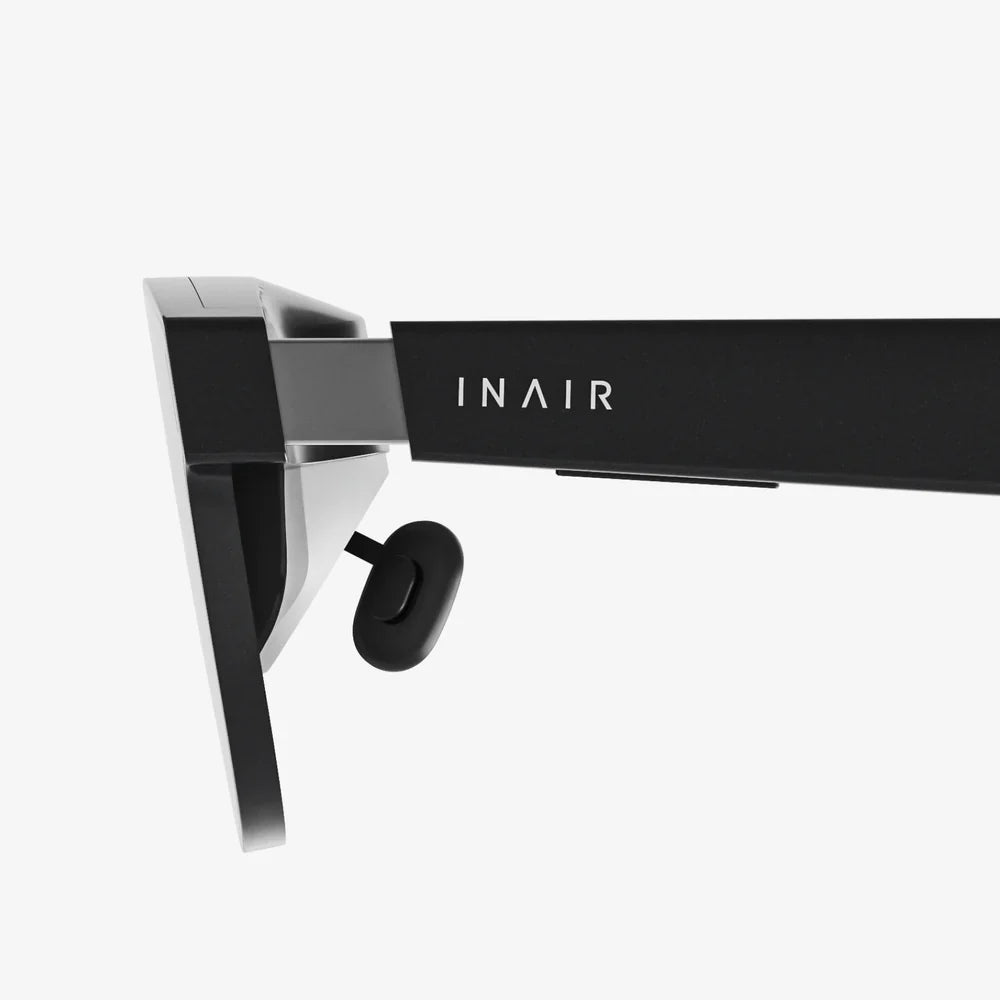
Imagine your entire digital workspace—every spreadsheet, browser tab, and communication app—floating crisply in the air before you, accessible with a mere glance, untethered from a desk and completely private. This isn't a scene from a science fiction movie; it's the imminent reality promised by adopting AR glasses instead of a monitor. The clunky, space-consuming physical screen, a cornerstone of computing for decades, is on the verge of becoming obsolete. We are standing at the precipice of a visual revolution, where the very concept of a 'display' is being unbounded from its physical constraints and reimagined for a mobile, immersive world. The question is no longer if this shift will happen, but how quickly we will adapt to a world where our field of view is the new desktop.
The Limitations of the Physical Monitor
For generations, our interaction with digital content has been framed by a rectangle of glass and plastic. The monitor, while constantly evolving in resolution and form factor, is fundamentally constrained.
- Physical Space and Immobility: Monitors demand dedicated real estate on a desk. Multi-monitor setups, the holy grail for productivity, compound this issue, creating a cable-ridden fortress that anchors the user to a single location. This setup is antithetical to the modern ethos of mobility and flexible work.
- Fixed Size and Resolution: You are limited by the physical dimensions of the panel you purchased. Want a larger screen? You must buy a new one. Want to temporarily expand your canvas for a specific task? You are out of luck without additional hardware.
- One-Size-Fits-All Ergonomics: Despite adjustable stands, achieving the perfect ergonomic position for prolonged use is a constant battle, often leading to neck and eye strain from fixed viewing angles and screen glare.
- Contextual Isolation: A monitor creates a visual barrier between you and your physical environment. To glance at someone entering the room or to reference a physical document, you must break your focus and look away from the screen.
These limitations are the cracks in the foundation of traditional computing, and AR glasses are poised to fill them with a new paradigm of visual immersion.
The AR Glasses Advantage: A Display Without Borders
Augmented Reality glasses replace the single, static monitor with a dynamic, personalized, and limitless display surface projected directly onto the user's retina or through transparent waveguides. This isn't just an incremental improvement; it's a fundamental redefinition of the user interface.
Unprecedented Screen Real Estate
The most immediate benefit is the ability to project multiple high-resolution virtual screens of any desired size. Instead of being constrained by a 27-inch or 32-inch panel, you can have a 100-inch virtual display for watching a movie, or three 40-inch screens for coding, research, and communication—all without taking up an inch of physical space. The virtual desktop can extend beyond your immediate field of view, allowing you to 'turn your head' to access less frequently used applications, much like having an infinite wraparound desk.
True Portability and Ubiquitous Computing
Your perfect ergonomic setup is no longer tied to your desk. With a powerful computing device in your pocket (like a smartphone or a compact computer) and a lightweight pair of AR glasses, your ideal multi-screen workstation travels with you. You can have the same immersive productivity environment on an airplane tray table, a coffee shop couch, or your kitchen counter. The boundary between 'workstation' and 'anywhere else' dissolves completely.
Seamless Contextual Integration
Unlike Virtual Reality, which replaces your world, AR augments it. This means your digital screens can coexist with and complement your physical environment. You can pin a recipe to a specific location on your kitchen cabinet, have a video call window hover next to a colleague in a real-world meeting room, or view a schematic overlaid on the machinery you are repairing. This blends the fidelity of digital information with the tangibility of the real world, reducing cognitive load and streamlining complex tasks.
Enhanced Privacy and Focus
Since the display is only visible to the wearer, sensitive information remains confidential, even in crowded open-plan offices or during travel. Furthermore, the ability to dim or completely opaque the physical world allows for deep focus modes, eliminating peripheral distractions and creating a personalized immersion pod on demand.
The Technology Making It Possible
The vision of high-fidelity AR glasses as a monitor replacement is being powered by rapid advancements in several key areas.
- Micro-OLED and Laser Beam Scanning (LBS) Displays: These technologies enable incredibly bright, high-resolution, and power-efficient micro-displays that are small enough to be embedded in the arms of glasses. They provide the sharp text and vibrant colors necessary for reading and professional work, a significant hurdle for earlier AR technologies.
- Waveguide Optics: These are transparent lenses that pipe light from the micro-displays on the temples into the user's eyes while allowing them to see the real world. Advances in manufacturing have improved their clarity, field of view, and reduced unwanted artifacts like rainbow effects.
- Inside-Out Tracking and Spatial Anchoring: Advanced cameras and sensors on the glasses continuously map the physical environment. This allows the system to understand surfaces, depth, and the user's position, enabling it to 'pin' virtual windows to walls or desks so they stay locked in place as the user moves their head.
- Powerful Mobile Processors and 5G: The computational demands of rendering multiple high-res screens and understanding the environment in real-time are immense. New specialized chipsets and the low-latency connectivity of 5G networks allow this processing to happen either on-device or be offloaded to the cloud seamlessly.
Transforming Industries and Use Cases
The implications of replacing monitors with AR glasses extend far beyond the generic knowledge worker. Entire professions are set to be transformed.
- Software Development & Data Science: Imagine a sprawling, multi-monitor IDE setup visible from anywhere. Code on one virtual screen, documentation on another, live server output on a third, and a communication hub on a fourth—all arranged in an optimal spatial layout that you designed.
- Creative Professionals: Graphic designers and video editors can have their tool palettes and preview windows floating in space, separate from their main canvas. 3D modelers can manipulate holographic models with their hands, viewing them from every angle as if they were physical objects on their desk.
- Remote Assistance and Field Services: A technician repairing complex equipment can have manuals, schematics, and a live video feed from a remote expert overlaid directly on the components they are working on, with the expert able to annotate the technician's real-world view.
- Entertainment and Gaming: The home theater experience is revolutionized. A massive, perfect-quality screen can be projected on any blank wall, or the user can be placed inside a 360-degree immersive video or game environment, all while lying in bed or sitting on a plane.
Challenges on the Horizon
Despite the exciting potential, the path to mainstream adoption is not without its obstacles.
- Form Factor and Comfort: For all-day use, the glasses must be as lightweight, comfortable, and socially acceptable as a standard pair of eyewear. Current technology often requires trade-offs between performance, battery life, and size, leading to devices that can still be too bulky for some.
- Visual Fidelity and Ergonomics: Challenges like achieving sufficient field of view, perfect focus across the entire virtual display, and mitigating vergence-accommodation conflict (where your eyes struggle to focus on virtual objects at different depths) are active areas of research. Text must be razor-sharp to prevent eye strain over long periods.
- Battery Life: Powering high-resolution displays and spatial computing is energy-intensive. Achieving a full 8-hour workday on a single charge with a comfortable form factor remains a key engineering challenge.
- Software Ecosystem and User Interface: New spatial operating systems and intuitive input methods (beyond hand gestures and voice, which can be inefficient or socially awkward) need to be developed. How do you best organize and interact with a dozen floating windows in 3D space?
These are significant hurdles, but the pace of innovation suggests they are solvable. We are moving from the 'proof of concept' phase into the 'refinement for mass market' phase.
The shift from a shared family computer to a personal device in every pocket seemed like a fantasy once, too. The transition from physical monitors to personal, augmented visual fields is the next logical step in the personal computing journey. It promises to untether us not just from cables, but from the very concept of a fixed screen, integrating our digital and physical lives in a way that is more natural, efficient, and powerful. The monitor had a great run, but its days as the primary gateway to our digital worlds are numbered. The future of computing is not on your desk; it's on your face, and it's a future of limitless possibility.
Share:
AR Glasses News: The Next Digital Revolution Is Happening Right Before Your Eyes
HMD Glasses: The Next Evolution in Personal Computing and Immersive Experience