


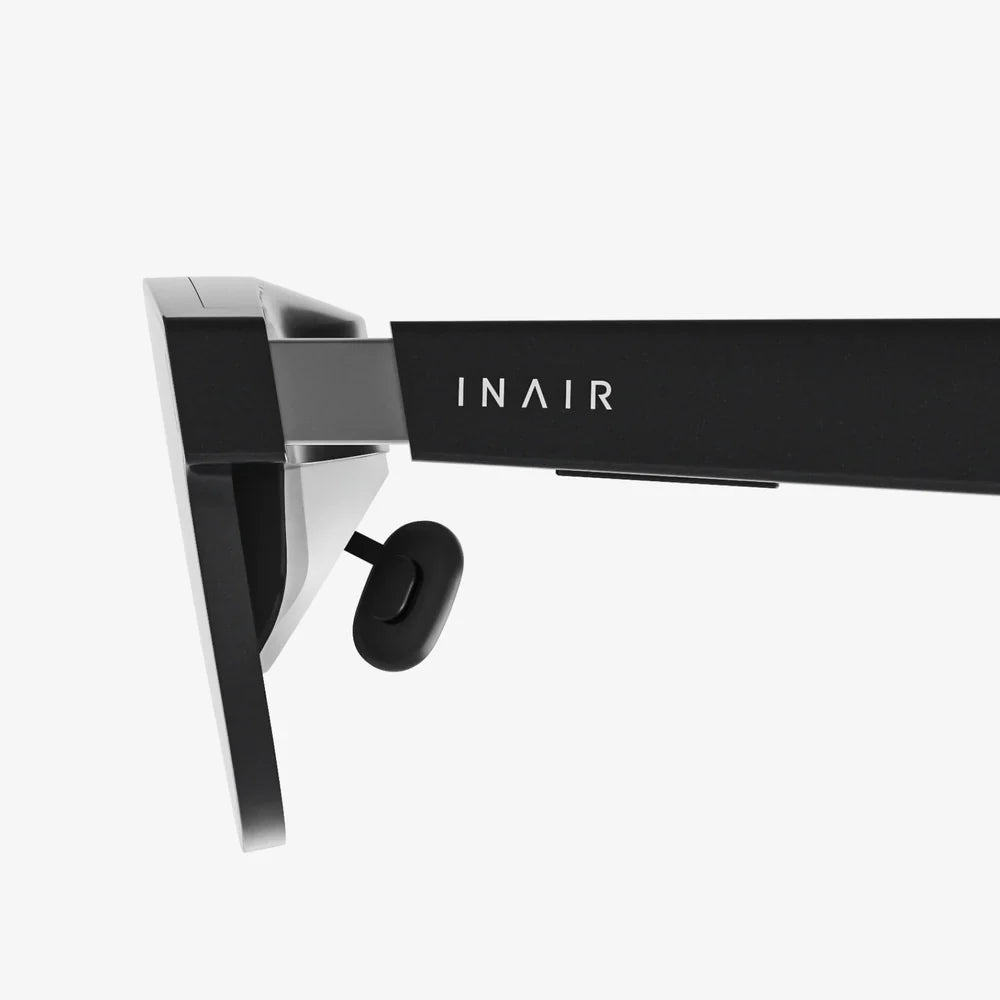
Imagine a world where digital information doesn’t live on a screen in your hand or on your desk, but is seamlessly woven into the very fabric of your reality. Directions float on the pavement ahead of you, the history of a landmark overlays your view as you pass it, and a colleague’s avatar is sitting across from you at the kitchen table for a meeting. This is the promise of augmented reality (AR) glasses, a technology that has perpetually been “five years away” for the last decade. But a surge of recent developments suggests that the future is finally arriving. The latest AR glasses news points to a sector moving beyond clunky prototypes and niche applications, accelerating toward a mainstream revolution that will fundamentally alter how we work, play, and connect.
Beyond the Hype: From Science Fiction to Tangible Reality
The concept of augmenting our vision with data is not new. For years, headlines have been dominated by ambitious promises and flashy concept videos that often failed to materialize into viable products. The journey has been one of intense technological challenge, requiring the miniaturization of powerful processors, the development of ultra-bright, efficient micro-displays, and the creation of battery solutions that don't require a heavy pack. Early devices were often bulky, expensive, and limited to specific industrial or enterprise use cases. However, the current wave of AR glasses news signifies a critical turning point. The foundational technologies have matured to a point where sleek, wearable form factors are no longer a fantasy but an engineering reality. This evolution is being driven by breakthroughs in several key areas.
The Technological Leaps Powering the New Wave
Understanding the current landscape requires a look under the hood at the components making the magic possible.
Display Technology: Waveguides and MicroLEDs
The core challenge of AR glasses is projecting a bright, clear digital image onto transparent lenses so it can overlay the real world. The dominant solution, and a frequent star of technical AR glasses news, is the optical waveguide. These are incredibly thin, transparent pieces of glass or plastic that use diffraction or reflection to pipe light from a micro-display on the temple of the glasses to the user's eye. Advancements in waveguide manufacturing have drastically improved their efficiency, field of view (FOV), and clarity, reducing visual artifacts like the “rainbow effect” seen in earlier models.
Feeding these waveguides are micro-displays, and here, MicroLED technology is a game-changer. These self-emissive pixels are incredibly small, bright, and power-efficient, allowing for vibrant images that are visible even in bright sunlight—a previous Achilles' heel for AR glasses. The race to perfect and mass-produce MicroLEDs is a central theme in manufacturing-focused AR glasses news.
Spatial Computing and The AI Brain
Hardware is only half the story. For AR glasses to be useful, they must understand the environment around them. This is the domain of spatial computing—a fusion of computer vision, sensor fusion, and artificial intelligence. Cameras and sensors continuously scan the surroundings, mapping surfaces, identifying objects, and tracking their position in space. Recent AR glasses news highlights the increasing sophistication of these systems.
Modern AI processors can perform this complex processing in real-time, enabling features like persistent anchor placement (where a digital object stays in a fixed real-world location) and precise hand-tracking for intuitive interaction. This shift from simple display to intelligent contextual computer is what separates the new generation of devices from their predecessors.
The Enterprise Arena: Where AR Glasses Are Already Thriving
While consumer adoption is the ultimate goal, the most compelling and proven use cases for AR glasses remain in the enterprise and industrial sectors. This is where the ROI is clear and immediate, making it a fertile ground for development and deployment, a constant stream of positive AR glasses news emerges from this space.
- Field Service and Repair: Technicians can access schematics, receive remote expert guidance (with annotations visible in their field of view), and follow step-by-step instructions hands-free, drastically reducing errors and downtime.
- Manufacturing and Logistics: Warehouse workers see optimized picking routes and inventory information overlaid on bins, while assembly line workers receive real-time data and instructions, improving efficiency and accuracy.
- Design and Prototyping: Architects and engineers can visualize and interact with 3D models at full scale, making collaborative design reviews more immersive and effective.
- Healthcare and Medicine: Surgeons can visualize patient data like MRI scans directly on the patient's body during procedures, and medical students can learn anatomy through detailed 3D holograms.
In these environments, the value proposition outweighs concerns about style and cost. The AR glasses news from enterprise showcases a technology that is already delivering tangible benefits, refining its capabilities, and building a robust ecosystem of software applications.
The Consumer Conundrum: The Quest for the “Killer App”
The holy grail for the industry is a pair of AR glasses that the average person will want to wear all day. The path to this goal is far trickier and is the source of much speculative AR glasses news. The barriers are significant:
- Form Factor: They must be as lightweight, comfortable, and socially acceptable as regular eyeglasses. Current technology often requires trade-offs between performance, battery life, and size.
- Battery Life: All-day computing and display projection are incredibly power-intensive. Achieving a full day of use without a bulky external battery is a major engineering hurdle.
- The “Killer Application”: Beyond novelty, what is the compelling, everyday use case that will drive mass adoption? Is it navigation, social media, immersive gaming, or something yet to be invented?
- Privacy and Social Acceptance: The idea of people wearing cameras on their faces raises legitimate privacy concerns. Establishing clear social norms and technological safeguards (like obvious recording indicators) is crucial.
Despite these challenges, recent AR glasses news indicates a multi-pronged approach. Some companies are focusing on more limited “companion” devices that tether to a smartphone for processing, offering a lighter form factor for specific tasks. Others are betting on audio-focused wearables as a stepping stone, gradually adding visual enhancements. The full vision of standalone, all-day AR glasses remains the end goal, but the journey there will be iterative.
On the Horizon: What the Next Generation Holds
The AR glasses news cycle is never static. Looking forward, several key trends are shaping the next chapter of development.
- The Role of Generative AI: The integration of powerful generative AI models could be transformative. Imagine glasses that not only show you information but can generate context-aware content on the fly—translating a menu in real-time with culturally relevant notes, or explaining how a complex machine works by dynamically creating 3D animations layered over it.
- Advanced Interaction Paradigms: While touchpads and voice commands are common today, the future lies in more seamless interaction. Expect improved hand and gesture tracking that feels natural, and eventually, interfaces controlled by neural inputs or subtle eye movements.
- The Metaverse Connection: AR glasses are poised to be the primary portal for bringing the metaverse into our physical world. Instead of escaping into a fully virtual world, the metaverse would become a layer of information, entertainment, and social connection enhancing our existing environment.
- Market Consolidation and Collaboration: The market is currently fragmented with many players. As the technology matures, expect partnerships between tech giants, component manufacturers, and eyewear companies to accelerate, combining expertise in software, hardware, and fashion.
The pace of innovation is breathtaking. Each week seems to bring new AR glasses news about a thinner waveguide, a more efficient chip, or a groundbreaking software development kit (SDK) that makes it easier for developers to build the apps of tomorrow.
The whispers from R&D labs and the steady drumbeat of patent filings suggest we are on the cusp of a new era. The pieces of the puzzle—display, processing, battery, and AI—are rapidly falling into place. The next major wave of AR glasses news won't be about a concept, but about a product that seamlessly integrates into daily life, offering a glimpse of a world where our digital and physical realities are no longer separate, but beautifully, usefully, and irresistibly combined. The device that finally cracks the code won't just be worn on the face; it will change the face of everything.
Share:
VR vs. AR: The Ultimate Showdown for the Future of Reality
AR Glasses Instead of Monitor: The Future of Personal Computing is on Your Face