


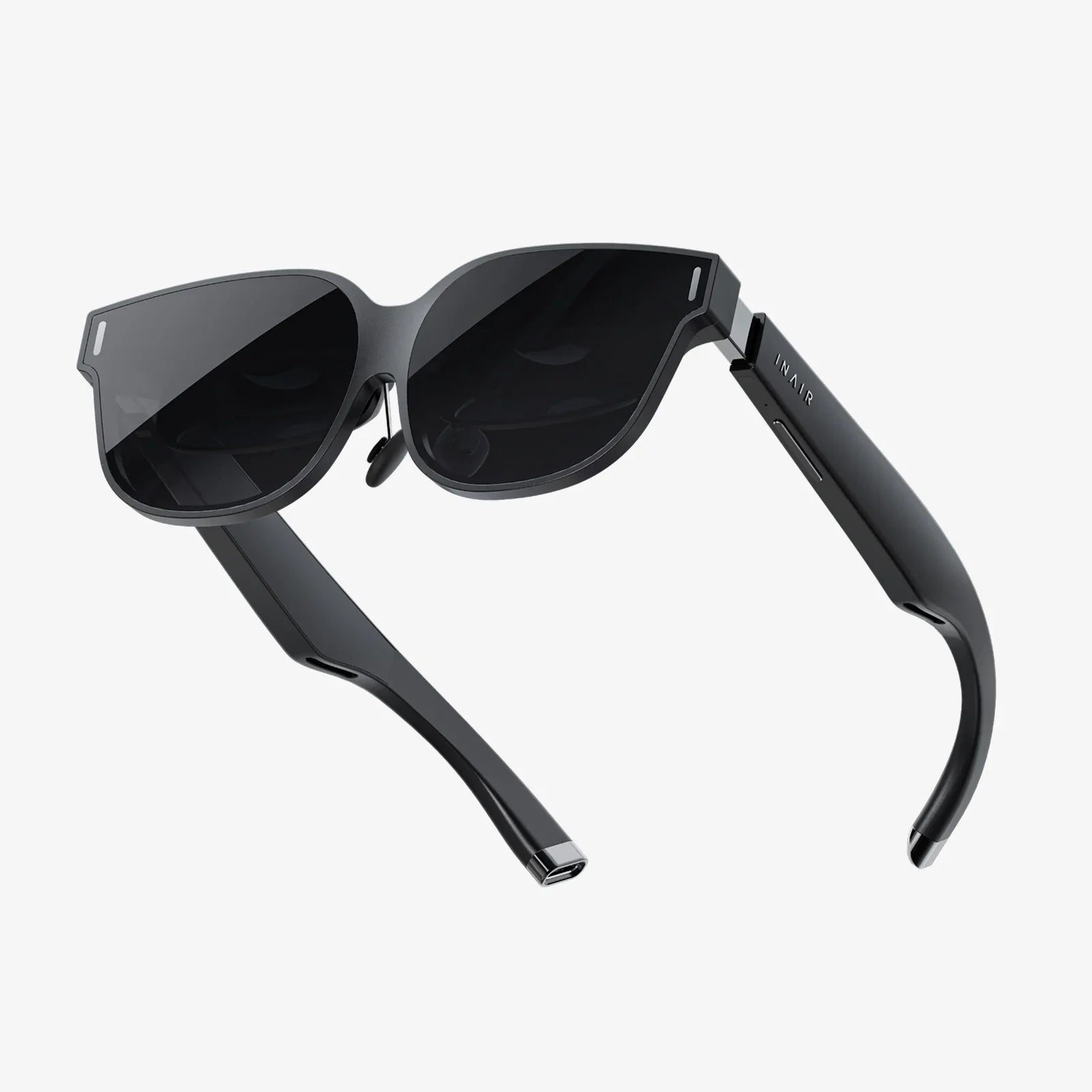
Imagine a world where the line between the digital and the physical not only blurs but shatters, where your living room can transform into a battlefield on Mars or your morning run is guided by fantastical creatures only you can see. This isn't science fiction; it's the burgeoning reality being shaped by two titans of immersive technology: Virtual Reality and Augmented Reality. The debate isn't about which is better, but rather a fascinating exploration of their distinct philosophies, their powerful applications, and their ultimate convergence into a new paradigm for human-computer interaction. Strap on your headset, or perhaps just keep your eyes open, as we dive deep into the ultimate technological showdown: VR vs. AR.
Defining the Realms: A Tale of Two Philosophies
At their core, VR and AR represent two fundamentally different approaches to blending the digital with the real. Understanding this philosophical divide is the first step to appreciating their unique strengths and limitations.
Virtual Reality: The Total Escape
Virtual Reality is the art of substitution. Its primary goal is to transport the user entirely to a computer-generated environment, effectively replacing their physical surroundings. By wearing a head-mounted display that completely encompasses their field of view, users are visually and audibly isolated from the real world. Advanced systems incorporate motion tracking, allowing users to move their virtual hands, head, and body within this digital space, creating a powerful and often profound sense of presence—the undeniable feeling of "being there."
This total immersion is both VR's greatest strength and its most significant barrier. It requires a conscious decision to disconnect from one's immediate environment, making it an activity rather than a constant companion. The hardware, while advancing rapidly, has traditionally been bulky and often requires a powerful external computer or console to run complex simulations, tethering the user to a specific location.
Augmented Reality: The Digital Overlay
Augmented Reality, in contrast, is the art of augmentation. Its philosophy is not to replace the real world but to enhance and annotate it with a layer of digital information. Through specialized glasses or, more commonly, the camera on a smartphone or tablet, users see their actual environment, but it is now populated with digital objects, data, and interfaces. A classic example is seeing navigation arrows painted onto the road through your car's windshield or a life-sized digital dinosaur stomping through your backyard.
AR's power lies in its contextuality and accessibility. It provides information and experiences that are directly relevant to your immediate surroundings and the task at hand. Because it doesn't require a full sensory blockade, it integrates more seamlessly into daily life, offering the potential for constant, hands-free assistance. The current challenge for true AR glasses is perfecting the technology—creating displays that are bright enough for outdoor use, socially acceptable to wear, and capable of understanding the complex geometry of the real world in real-time.
The Technological Arsenal: How They Create Illusion
While both technologies aim to alter perception, they employ different hardware and software strategies to achieve their goals.
The VR Toolkit: Building Worlds from Scratch
A high-end VR system is a feat of engineering focused on immersion and interaction.
- Head-Mounted Displays (HMDs): These use two high-resolution screens (one for each eye) placed behind precision lenses to create a stereoscopic 3D image. A high refresh rate (90Hz or higher) is critical to preventing motion sickness and maintaining the illusion of reality.
- Inside-Out Tracking: Modern headsets have outward-facing cameras that constantly scan the room, using the data to track the headset's position in space with incredible accuracy, all without external sensors.
- Controllers: These are not mere remotes; they are tracked instruments. Using a combination of inertial measurement units (IMUs) and the headset's cameras, they precisely map the user's hand and arm movements into the virtual world, allowing for natural grabbing, throwing, and pointing.
- Haptic Feedback: From simple vibrations in controllers to more advanced vests and gloves, haptics provide physical sensation, completing the feedback loop when a user touches a virtual object.
The AR Toolkit: Blending the Real and the Digital
AR technology is centered on perception and integration.
- Transparent Displays: True AR glasses use waveguides or other micro-optical systems to project digital images onto transparent lenses, allowing the user to see both the real world and the digital overlay simultaneously.
- Computer Vision: This is the magic behind AR. The device's cameras continuously feed data to powerful algorithms that perform simultaneous localization and mapping (SLAM). This process allows the device to understand the geometry of the environment, recognize surfaces like floors and tables, and precisely anchor digital objects to the real world so they don't drift or float.
- Spatial Anchoring: This ensures a digital poster stays on a real wall or a virtual chessboard remains centered on a real table, even if you walk away and come back.
- Environmental Understanding: Advanced systems can recognize objects (e.g., a television, a couch) and understand lighting conditions, allowing digital objects to cast realistic shadows and blend more convincingly.
The Arena of Application: Where Each Technology Reigns Supreme
The philosophical and technological differences naturally steer VR and AR toward different, though sometimes overlapping, use cases.
Virtual Reality's Dominions
VR excels in scenarios where complete control of the sensory environment is a benefit.
- Gaming and Entertainment: This is VR's flagship domain. From piloting giant mechs to solving intricate puzzles in mysterious worlds, VR gaming offers an unparalleled level of immersion. It's also revolutionizing media, allowing for 360-degree films and interactive storytelling where you are inside the narrative.
- Training and Simulation: The military uses VR to simulate combat and flight operations in perfectly safe, repeatable environments. Surgeons practice complex procedures on virtual patients. Companies train employees for dangerous jobs like high-voltage electrical work or offshore drilling, where mistakes in the real world are catastrophic.
- Virtual Tourism and Real Estate: Explore the pyramids of Giza or walk through a property on another continent without leaving your home. VR provides a sense of scale and presence that flat images and videos cannot match.
- Therapy and Rehabilitation: VR is proving highly effective in exposure therapy for phobias (fear of heights, flying, public speaking) and PTSD. It's also used in physical rehab, where gamified exercises motivate patients to complete repetitive movements.
Augmented Reality's Territories
AR thrives in applications that require contextual information layered onto the real world.
- Industrial Maintenance and Repair: A technician wearing AR glasses can see schematics, torque specifications, and step-by-step instructions overlaid directly onto the complex machinery they are fixing, freeing their hands and reducing errors.
- Healthcare: Surgeons can see vital signs and 3D scans of a patient's anatomy superimposed on their body during an operation. Nurses can find veins more easily with an AR projection showing blood vessels beneath the skin.
- Retail and Design: Visualize how a new sofa will look in your living room at full scale before you buy it. Try on glasses, makeup, or clothes digitally. Architects and clients can walk through a full-scale 3D model of a building before the foundation is even poured.
- Navigation and Information: Imagine walking through a foreign city and seeing historical information pop up about landmarks, or having translation subtitles appear on street signs in real-time. In logistics, warehouse workers can have the most efficient picking route displayed on the floor before them.
The Convergence: The Blurring Line and the Birth of Mixed Reality
The most exciting development is not the battle between VR and AR, but their merger. This hybrid is often called Mixed Reality (MR) or, sometimes, XR (Extended Reality).
Modern high-end VR headsets are now equipped with high-resolution color passthrough cameras. This allows them to function not just as VR devices, but as powerful AR devices as well. You can put on the headset and see a live video feed of your real surroundings, with digital objects anchored perfectly within it. This enables stunning MR experiences: you can have multiple large virtual screens arranged around your physical desk, play a digital piano that exists on your real table, or defend your real living room from a virtual alien invasion.
This technological convergence suggests a future where a single, sleek pair of glasses might be able to dynamically shift between fully immersive VR (by digitally occluding the real world) and contextual AR, based on the user's needs at any given moment. The ultimate device will be one that understands our intent and seamlessly provides the right blend of reality and virtuality.
Choosing Your Reality: Factors to Consider
For those looking to enter this space, the choice depends entirely on the desired experience.
- Choose VR if: You want complete escapism for gaming, storytelling, or focused training. You have a dedicated space to use it safely and value deep, uninterrupted immersion above all else.
- Choose AR if: You want technology to assist you in your daily tasks, from navigation to complex manual work. You value accessibility and context, and want digital information to enhance your existing world rather than replace it.
- Look to MR if: You want the best of both worlds and are interested in the cutting edge of where this technology is headed, blending immersive virtual content with your physical space for productivity and social connection.
The journey into these new realities is just beginning. The hardware will become lighter, the displays more lifelike, the haptics more nuanced, and the software more intelligent. The question is no longer if these technologies will become mainstream, but how they will fundamentally reshape every aspect of our lives, from the way we collaborate in offices to the way we conceive of entertainment itself. The frontier of human experience is being redrawn, pixel by pixel, in the space between what is real and what is possible.
So, which reality will you choose? The answer may soon be irrelevant, as the future belongs to those who can seamlessly move between them, harnessing the power of total immersion and contextual augmentation to unlock human potential in ways we are only starting to dream of. The next time you look around your room, just imagine what could be there, waiting to be seen.
Share:
Smarter Eyewear: The Invisible Revolution Reshaping How We See the World
AR Glasses News: The Next Digital Revolution Is Happening Right Before Your Eyes