


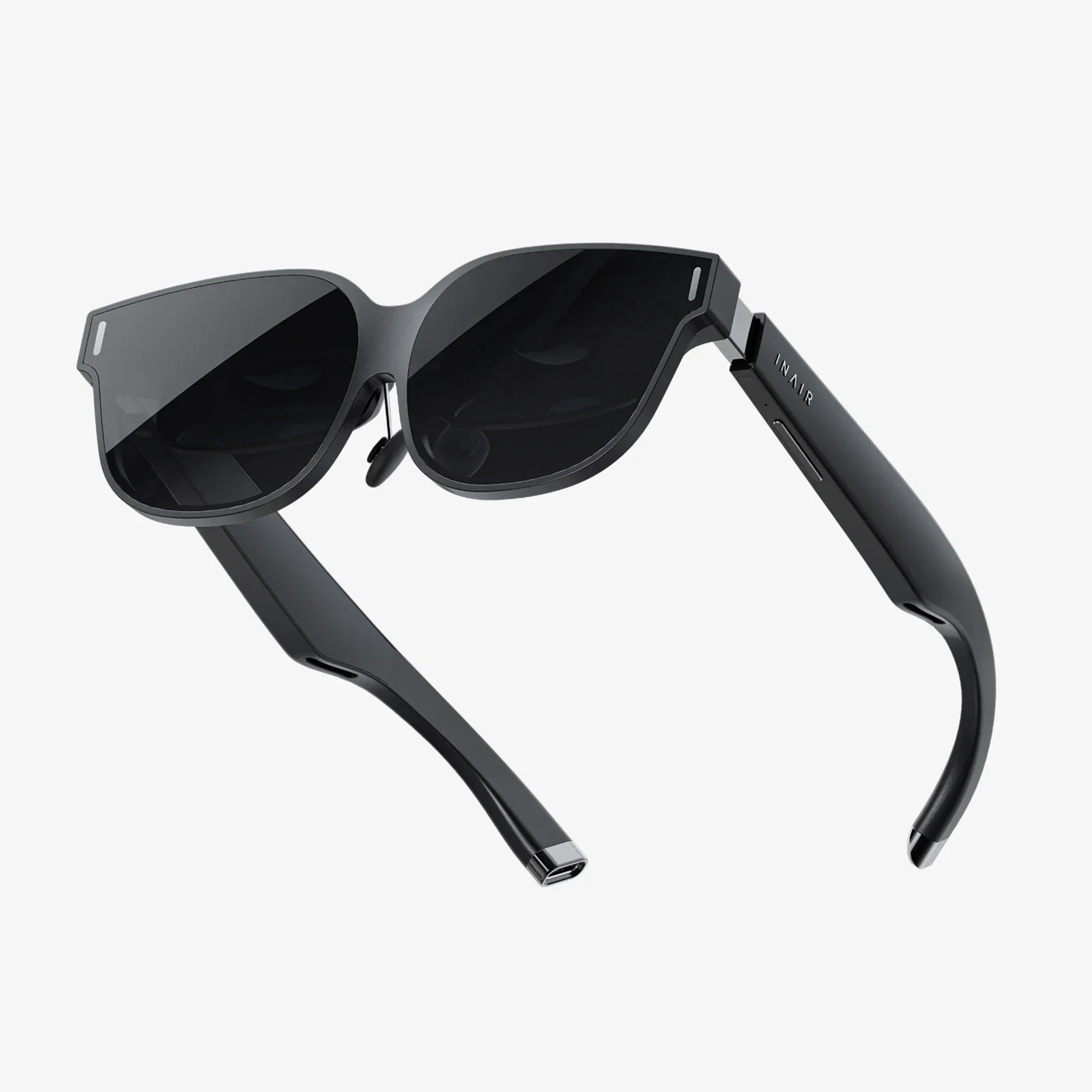
Imagine walking through the historic Asakusa district in Tokyo, where ancient temples coexist with towering skyscrapers. Now, imagine raising your gaze and seeing that coexistence become a conversation. Hovering above the serene Senso-ji temple, a majestic digital dragon from Edo-period folklore circles the five-story pagoda, its scales shimmering in the augmented sunlight. This isn't a scene from a distant future; it's the emerging reality being built today in Japan, a nation quietly positioning itself at the absolute forefront of the AR glasses revolution. The latest developments emerging from Japanese labs and corporate strategies aren't just about hardware; they are about weaving a new digital thread into the very fabric of society, culture, and human experience.
The Cultural Crucible: Why Japan is the Perfect Breeding Ground
To understand the rapid advancement and acceptance of AR glasses in Japan, one must first look beyond silicon and code to the cultural bedrock upon which this technology is being built. Japan possesses a unique set of social and cultural factors that make it an ideal incubator for augmented reality.
Firstly, there is the long-standing concept of kawaii (cuteness) and the pervasive presence of mascot culture. From prefectural ambassadors like Kumamon to corporate characters, Japan is a nation comfortable with animated entities occupying physical space. AR glasses simply provide a more integrated and persistent medium for these characters to "live" alongside us, making the technology feel less alien and more like a natural evolution of an existing cultural norm.
Secondly, Japan has a deep and complex relationship with both wa (harmony) and honne vs. tatemae (true feelings vs. public facade). AR glasses offer a fascinating tool for navigating this duality. They can provide real-time social cues, translation, or contextually relevant information in a discreet manner, helping to maintain social harmony and smooth interactions. For a culture that values non-confrontational communication and subtlety, the ability to receive private digital prompts in a public setting is incredibly powerful.
Finally, the Japanese aesthetic of ma (negative space) finds a new expression in AR. Rather than seeing digital overlays as clutter, the technology is being designed to enhance and complement the empty spaces in our environment, adding meaning and information without necessarily overwhelming the senses. This philosophical approach to design is leading to some of the most elegant and user-friendly AR interface concepts in the world.
Beyond Gaming: The Industrial and Enterprise Metaverse
While consumer applications capture the imagination, the most significant and immediate impact of AR glasses in Japan is occurring in the industrial and enterprise sectors. Major Japanese conglomerates are deploying this technology at scale to address pressing national challenges, such as a rapidly aging workforce and a steep decline in skilled laborers.
On factory floors, technicians wearing AR glasses can see schematics, torque specifications, and animated repair instructions overlaid directly onto the machinery they are servicing. This allows experienced veterans to remotely guide less-experienced workers through complex procedures, effectively allowing one expert to supervise multiple sites simultaneously. This "see-what-I-see" remote assistance is dramatically reducing downtime, minimizing errors, and preserving invaluable institutional knowledge.
The construction industry is undergoing a similar transformation. Architects and engineers can walk through a bare concrete shell and see the fully realized building—conduits, pipes, and structural elements—all mapped perfectly onto the physical space before a single wall is built. This enables clash detection and design validation in real-time, preventing costly rework. For an industry facing a critical labor shortage, this augmentation of human capability is not a luxury; it is a necessity for survival.
Furthermore, Japan's logistics giants are using AR glasses in massive distribution centers. Warehouse workers are guided by digital pathways projected onto their field of view, directing them to the most efficient route for picking items. Vital information about weight, destination, and handling instructions is displayed hands-free, accelerating package processing and reducing physical strain.
The Content Kingdom: Redefining Tourism and Storytelling
Japan's immense soft power, derived from its anime, manga, and video game industries, provides a vast and rich content library perfectly suited for AR. This is where the consumer potential truly ignites. The country's tourism boards and cultural institutions are pioneering new forms of experiential storytelling.
Imagine visiting the iconic Fushimi Inari Shrine in Kyoto. With AR glasses, the thousands of red torii gates could become a portal to different eras. Historical figures might explain the significance of the site, or mythical kitsune (fox) spirits could dart playfully between the gates, offering quests or revealing hidden histories. This transforms static tourism into dynamic, participatory narrative.
Museums are reimagining their exhibits. A static samurai helmet behind glass can, through AR glasses, be "worn" by a digital warrior who demonstrates its use in combat. A faded ukiyo-e woodblock print can spring to life, with the depicted scene animating in three dimensions. This technology doesn't replace the physical artifact; it deepens its context and emotional impact, making culture more accessible and engaging for all ages.
City navigation is also being revolutionized. The complex, often signage-less streets of Tokyo can be transformed into a personalized guidebook. Directions can be painted onto the sidewalk, restaurant reviews and menus can pop up as you glance at an establishment, and public transit schedules can be visualized directly on the train platform. For the millions of tourists who visit Japan annually, this seamless integration of information and environment could eliminate language barriers and transform the travel experience.
Technical Triumphs: The Hardware Race Heats Up
The software and content vision are being matched by formidable hardware innovation. Japanese companies and research institutes are leveraging their expertise in miniaturization, optics, and material science to overcome the classic hurdles of AR glasses: weight, battery life, field of view, and social acceptability.
Recent breakthroughs from leading research labs focus on ultra-lightweight, photopolymer-based waveguide optics that allow for sleek, eyeglasses-style form factors. These are not the bulky headsets of yesterday. The goal is to create devices that are socially unobtrusive and comfortable enough to wear all day. Furthermore, partnerships with renowned Japanese eyewear designers are ensuring that the products are not only functional but also fashionable.
Another area of intense development is power efficiency. Innovations in low-power micro-displays and sophisticated sensor fusion algorithms are extending battery life from hours to a full working day. Some prototypes are exploring novel solutions like solar charging via the frames or kinetic energy harvesting from movement.
Perhaps the most critical advancement is in spatial computing and environmental understanding. For AR to feel truly seamless, the digital objects must understand and interact with the physical world. Japanese companies are making strides in real-time SLAM (Simultaneous Localization and Mapping) technology, allowing AR glasses to create a detailed 3D map of their surroundings on the fly. This enables digital content to occlude correctly behind real objects, sit stably on real surfaces, and react to real-world lighting, achieving a level of immersion that was previously impossible.
Navigating the New Reality: Privacy and the Human Interface
With great technological power comes great social responsibility. The development of AR glasses in Japan is not happening in a vacuum; it is accompanied by a robust public discourse on the ethical implications. The always-on, always-sensing nature of these devices raises significant questions about data privacy, surveillance, and digital etiquette.
How does one negotiate consent in a public space when someone could be recording video or capturing data through their glasses? Japanese regulators and tech firms are actively working on frameworks that prioritize "privacy by design." This includes clear physical indicators like lights to show when recording is active, robust data anonymization protocols, and perhaps most importantly, a cultural push to establish new social norms around the use of such intimate technology.
The concept of the "human interface" is also paramount. The goal is to create technology that augments human intuition rather than overwhelming it. Japanese UI/UX designers are pioneering interfaces that use subtle gestures, gaze tracking, and ambient information display to keep the user engaged with the real world, not buried in a virtual one. The philosophy is one of assistance, not replacement—enhancing our natural abilities to see, learn, and connect.
The journey of AR glasses in Japan is a masterclass in technological integration. It demonstrates that true innovation is not just about building a powerful device, but about thoughtfully weaving it into the cultural, social, and industrial tapestry of a nation. From preserving ancient traditions to building the factories of the future, Japan is showing the world that the next great platform for human-computer interaction will be not in our pockets, but on our faces, and it will change everything we see.
This isn't just a new gadget; it's a new layer of reality itself, and the view from Japan suggests it will be more breathtaking, more practical, and more profoundly human than we ever dared to imagine—the next click will open your eyes to a world where every street, every object, and every moment has a hidden story waiting to be revealed.
Share:
How to Make a Virtual Reality Headset at Home: A Comprehensive DIY Guide
AR Glasses HDMI: The Ultimate Guide to Wired Immersive Computing