


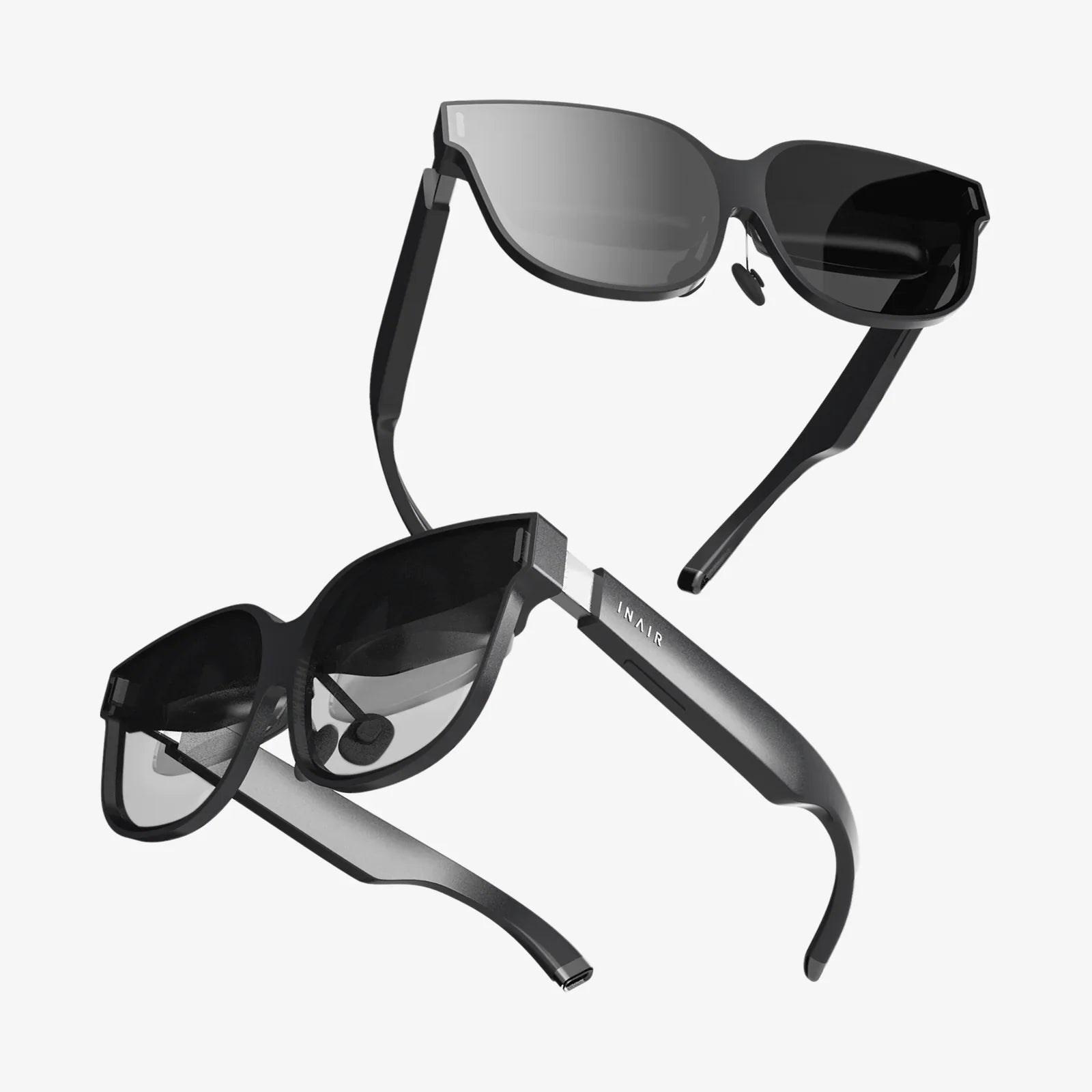
Imagine a world where digital information doesn't live on a screen in your hand but is seamlessly woven into the fabric of your physical reality. This is the transformative promise of augmented reality (AR) glasses, a technology poised to leap from science fiction into mainstream adoption, reshaping how we work, play, connect, and perceive the world around us. The global market for these devices is on the cusp of an explosive growth phase, driven by relentless innovation and burgeoning demand across countless sectors. Understanding the AR glasses market forecast is not just about tracking numbers; it's about glimpsing into a future where the line between the digital and the physical gracefully dissolves.
The Current Landscape: A Market in Its Infancy
The AR glasses market, while buzzing with potential, is currently characterized by a fascinating duality. On one hand, we see a vibrant ecosystem of enterprise-focused devices. These are robust, feature-rich headsets designed for specific industrial, medical, and professional applications. They are the workhorses of the AR world, already demonstrating immense value by improving efficiency, reducing errors, and enabling remote expertise. On the other hand, the consumer market remains nascent. Early attempts have often been hampered by technological limitations, resulting in devices that were too bulky, too expensive, or too limited in functionality to achieve widespread appeal. The current market forecast must be viewed through this lens: a strong enterprise foundation providing the revenue and use-case validation necessary to fund the R&D for the ultimate prize—the consumer mass market.
Key Drivers Fueling Exponential Growth
Several powerful forces are converging to propel the AR glasses market forward at a staggering pace. Analysts project a compound annual growth rate (CAGR) that consistently lands in the high double digits, pointing to a market worth tens of billions of dollars within the next five to seven years.
Technological Advancements
The single most important driver is the rapid pace of innovation. Key components are becoming smaller, more powerful, and more affordable.
- Waveguide and Display Technology: Innovations in holographic waveguides and microLED displays are crucial. They are solving the critical challenge of projecting bright, high-resolution images onto transparent lenses without obstructing the user's view, all while consuming minimal power.
- Processing Power and 5G: The miniaturization of processors and the rollout of high-speed, low-latency 5G networks are offloading complex computations. This enables sleek, untethered glasses that can leverage cloud processing for rendering intense AR experiences, preventing the devices from overheating and becoming uncomfortable.
- Sensor Fusion and AI: Advanced sensors (LiDAR, depth sensors, high-resolution cameras) combined with sophisticated artificial intelligence and computer vision algorithms allow AR glasses to understand and interact with the environment in real-time. This enables precise object tracking, spatial mapping, and intuitive gesture control.
Enterprise Adoption and ROI
Businesses are not waiting for the perfect consumer device. They are adopting AR glasses today because they provide a clear and demonstrable return on investment. In fields like manufacturing, workers use them for hands-free access to assembly instructions, schematics, and remote expert guidance, drastically reducing assembly time and error rates. In logistics and warehousing, AR glasses streamline order picking, navigation, and inventory management, boosting accuracy and fulfillment speed. In healthcare, surgeons can visualize patient data during procedures, and medical students can learn anatomy through immersive 3D models. This robust enterprise demand creates a stable revenue stream that fuels further market development.
The Metaverse and Digital Convergence
The burgeoning concept of the metaverse—a persistent network of interconnected 3D virtual worlds—is intrinsically linked to AR. While virtual reality (VR) headsets transport you to a digital world, AR glasses aim to bring elements of the digital world into ours. They are widely seen as the primary gateway to the metaverse for everyday life, allowing for persistent digital overlays on our cities, homes, and workplaces. This vision of a blended reality is a powerful long-term driver for consumer adoption.
Market Segmentation: Where Will Growth Be Concentrated?
A detailed market forecast requires breaking down the industry into its core segments.
By Product Type
- Standalone: These all-in-one devices have their own compute, battery, and sensors. The forecast predicts strong growth for standalone models as technology integration improves, making them the preferred choice for untethered mobility.
- Tethered: These glasses connect to a smartphone, computer, or processing pack. This segment currently offers higher performance for complex tasks but is expected to gradually cede market share to advanced standalone units over the forecast period.
By Application
- Enterprise & Industrial: This will remain the largest and most lucrative segment for the near term (next 5-7 years). Applications in training, remote assistance, design, and maintenance are vast.
- Consumer & Gaming: This is the segment with the highest growth potential in the long term. The success here hinges on the development of a compelling "killer app"—a use case so engaging it drives mass purchases, much like the smartphone app ecosystem.
- Healthcare, Retail, and Education: These vertical markets are all forecast to see significant adoption, each with unique use cases that demonstrate the versatile utility of AR technology.
By Region
North America and Asia-Pacific are expected to be the dominant regions throughout the forecast period. North America, with its strong tech industry and early enterprise adoption, will be a key revenue generator. The Asia-Pacific region, particularly countries like China, South Korea, and Japan, is forecast to be the fastest-growing market, driven by massive manufacturing bases, government support for tech innovation, and a large, tech-savvy consumer population.
Challenges and Hurdles on the Path to Adoption
Despite the optimistic forecast, the path to ubiquity is not without significant obstacles that must be overcome.
The Form Factor Conundrum
The ultimate goal is a device that looks and feels like a regular pair of glasses. Current technology often forces a trade-off between performance, battery life, and aesthetics. Achieving a socially acceptable, lightweight, and comfortable design that can still deliver a full-day battery and high-fidelity graphics remains the industry's holy grail.
Battery Life and Thermal Management
Powering high-resolution displays, multiple sensors, and powerful processors generates significant heat and drains batteries quickly. Breakthroughs in battery technology (e.g., solid-state) and ultra-low-power components are essential for all-day usability.
Content and Developer Ecosystem
Hardware is useless without software. Building a thriving ecosystem of developers who create engaging and useful applications is critical. The market's growth is dependent on moving beyond novelty apps to creating essential tools and experiences that become integrated into daily routines.
Privacy and Social Acceptance
Glasses with always-on cameras and sensors raise legitimate privacy concerns. Establishing clear social norms, ethical guidelines, and perhaps even technological solutions (like obvious recording indicators) will be necessary to ensure public trust and acceptance.
The Future Vision: Beyond the Forecast
Looking beyond the ten-year forecast, the evolution of AR glasses points toward something even more profound. We are moving toward contextual and ambient computing, where technology fades into the background. Your glasses will understand your context and provide information proactively but unobtrusively—translating a street sign in real-time, reminding you of a friend's name at a party, or highlighting the best path through a crowded airport. They could evolve into a primary health monitor, tracking vital signs like blood sugar or hydration levels through advanced non-invasive sensors. The eventual convergence of AR with neural interfaces could make the interaction completely seamless, controlled by thought and intention. The AR glasses market forecast is the story of the first step in a much longer journey toward a truly integrated human-technology future.
The journey from specialized tool to everyday essential is never smooth, but the direction is unmistakable. The next wave of computing is not confined to a desk or a pocket; it will be worn on our faces, offering a layer of intelligence and connection over our world. While hurdles remain, the convergence of necessity, innovation, and investment is creating an irreversible momentum. The forecast is clear: the market for AR glasses is set to explode, not as a niche for gamers or technicians, but as the next fundamental platform that will redefine reality itself for billions of people.
Share:
AR Glasses Definition: The Ultimate Guide to Augmented Reality Eyewear
Immersive 3D Viture: Redefining Reality Through Next-Generation Digital Experiences