


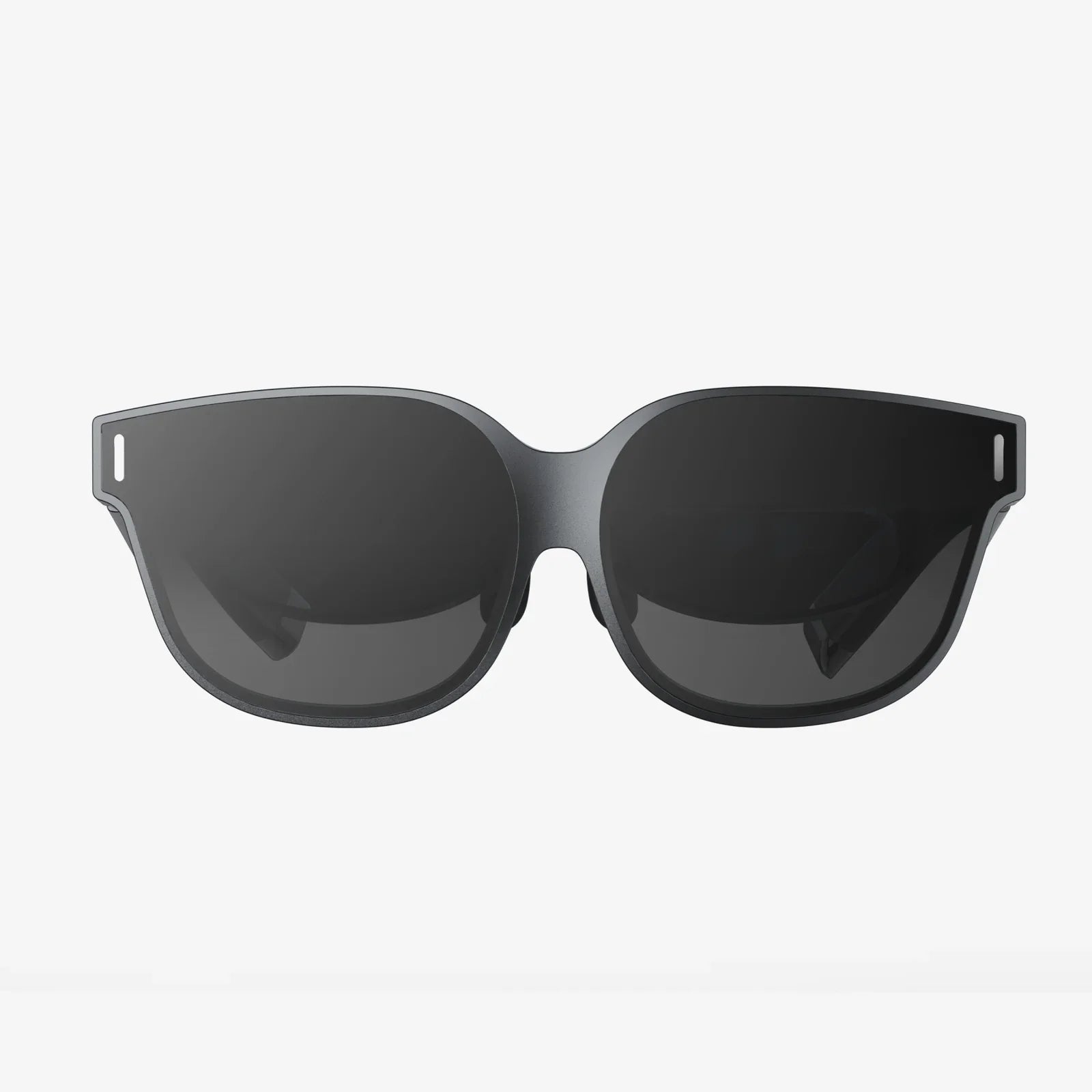
The digital and physical worlds are on a collision course, and the point of impact will be right before our eyes. By 2025, the landscape of personal computing and digital interaction is forecasted to be fundamentally reshaped by a single, sleek device: augmented reality (AR) glasses. The projections for the AR glasses market size in 2025 are not just numbers on a spreadsheet; they are a testament to a technological revolution that promises to redefine how we work, play, learn, and connect. This isn't science fiction anymore; it's a burgeoning economic reality backed by staggering investment and rapid innovation. The journey to 2025 is a story of convergence—of hardware, software, and connectivity—culminating in a market poised to explode from a niche curiosity into a mainstream powerhouse.
The Foundation: Defining the Market and Its Meteoric Trajectory
To understand the projections for 2025, one must first grasp the sheer scale of the anticipated growth. While estimates vary slightly between leading market research firms, the consensus is overwhelmingly bullish. The global AR glasses market, valued in the low single-digit billions just a few years ago, is projected to reach a multi-billion-dollar valuation by 2025. This represents a compound annual growth rate (CAGR) that is nothing short of phenomenal, often cited in the range of 70% to over 100%, dwarfing the growth rates of most other technology sectors.
This explosive expansion is not happening in a vacuum. It is the direct result of a perfect storm of technological maturation. The miniaturization of components like micro-displays and waveguides, the immense processing power offered by advanced chipsets, and the proliferation of high-speed, low-latency 5G networks are collectively solving the fundamental challenges that plagued earlier iterations of AR wearables. The clunky, underpowered, and tethered devices of the past are giving way to sleek, standalone, and genuinely useful glasses that consumers and enterprises are beginning to embrace.
The Engine of Growth: Enterprise Adoption Leads the Charge
While consumer applications often capture the public's imagination, the primary driver of the AR glasses market size in 2025 will be unequivocally enterprise-driven. Businesses across a multitude of industries are discovering that AR glasses offer a tangible return on investment by solving critical operational challenges.
- Manufacturing and Industrial Maintenance: Technicians can access digital work instructions, schematics, and remote expert guidance hands-free, overlayed directly onto the machinery they are repairing. This reduces errors, slashes training time, and minimizes downtime, leading to massive efficiency gains.
- Healthcare and Medicine: Surgeons can visualize patient data, such as MRI scans, directly in their field of view during procedures. Medical students can learn complex anatomy through immersive 3D models, and remote specialists can guide on-site personnel through complex processes.
- Logistics and Warehousing: AR glasses can display optimal picking routes, inventory information, and packing instructions, dramatically accelerating order fulfillment and reducing logistical errors in vast distribution centers.
- Field Service: Engineers working in remote locations, from wind turbines to telecom towers, can receive real-time data and visual support from centralized experts, enabling faster and more accurate repairs.
This enterprise-first adoption provides the stable revenue base necessary for manufacturers to scale production, refine their technology, and ultimately drive down costs, paving the way for the broader consumer market.
The Consumer Horizon: From Niche to Normalization
The path to mass consumer adoption is more complex but holds the key to the market's long-term, stratospheric potential. For consumers, AR glasses must transition from a novel gadget to an indispensable daily tool. The catalysts for this shift are emerging across several key areas:
- Navigation and Contextual Information: Imagine walking through a foreign city and seeing directional arrows painted onto the street or having historical facts and restaurant reviews pop up as you look at buildings. AR glasses promise to be the ultimate contextual computing interface.
- Social Interaction and Communication: The concept of the "metaverse" is intrinsically linked to AR. Glasses could enable avatars of friends to appear in your living room for a virtual movie night or allow for more expressive and immersive video calls that feel face-to-face.
- Entertainment and Gaming: Gaming will evolve from a screen-based activity to a full-world experience. Imagine digital characters dueling in your local park or interactive storylines unfolding within your own home environment.
- Fitness and Wellness: Personal trainers could appear beside you, real-time performance metrics could float in your vision during a run, and meditation guides could create calming augmented environments anywhere.
The success in the consumer realm hinges on achieving a critical trifecta: a compelling and affordable price point, a sleek and socially acceptable form factor that people actually want to wear, and a killer application that provides undeniable utility or delight.
Navigating the Challenges: Hurdles on the Road to 2025
The projected AR glasses market size for 2025, while impressive, is not a guaranteed outcome. Several significant hurdles remain that the industry must collectively overcome.
- Battery Life and Thermal Management: Powerful processing and bright displays are energy-intensive. Developing all-day battery life in a lightweight form factor without the glasses overheating is a paramount engineering challenge.
- User Interface and Interaction: How do you interact with a screen that doesn't physically exist? Perfecting intuitive voice commands, gesture controls, and eventually, neural interfaces is crucial for a seamless user experience.
- Content and Developer Ecosystem: Hardware is useless without software. Cultivating a robust ecosystem of developers to create the applications and experiences that will drive adoption is essential. This requires stable software development kits and clear monetization pathways.
- Privacy and Social Acceptance: The prospect of people wearing cameras on their faces raises legitimate privacy concerns. Establishing clear social norms, ethical guidelines, and potentially technological solutions (like obvious recording indicators) will be critical for public trust.
- Digital Divide: There is a risk that high initial costs could create a new digital divide, where access to augmented layers of information and productivity is limited to those who can afford the hardware.
Regional Dynamics: A Global Race for Dominance
The push to capture the value of the AR glasses market is a global competition. North America, particularly the United States, is expected to hold a significant share due to its concentration of leading technology companies, substantial venture capital funding, and strong enterprise tech adoption rates. The Asia-Pacific region, however, is predicted to exhibit the fastest growth. Countries like China, South Korea, and Japan have massive manufacturing bases, strong government support for technology R&D, and a consumer population that is notoriously quick to adopt new mobile technologies. Europe remains a key player as well, with strong advancements in optical technology and a robust industrial sector ripe for enterprise AR solutions.
This geographic distribution means that the market will not be monolithic. Different regions may see adoption patterns influenced by local manufacturing strengths, regulatory environments, and cultural acceptance of wearable technology.
Beyond the Numbers: The Societal Impact
The discussion about the AR glasses market size in 2025 transcends financial metrics. It is about the dawn of a new computing paradigm, often referred to as "spatial computing." This shift has profound implications.
AR glasses have the potential to democratize information and expertise, making expert-level knowledge accessible to anyone, anywhere. They could redefine remote work and collaboration, creating a sense of presence that video calls simply cannot match. They could revolutionize education, turning every classroom and museum into an interactive, immersive learning experience. However, this powerful technology also demands careful consideration. Society will need to grapple with new questions about data ownership, the nature of reality, and how we choose to enhance our lived experience with digital layers.
The figures pointing to a multi-billion-dollar AR glasses market by 2025 are more than a forecast; they are a beacon. They signal the arrival of a technology that will weave digital information into the very fabric of our daily lives, blurring the line between what is real and what is rendered. For investors, it represents a frontier of unparalleled opportunity. For developers, it is a blank canvas for the next generation of applications. And for everyone else, it is an invitation to imagine a world where our potential is augmented, our work is streamlined, and our reality is limited only by our imagination. The future is not just something we will read about; we will be looking directly through it.
Share:
Best AI Product Recommendation Tool: Your Ultimate Guide to Smarter Shopping
Smart Board for Work: Revolutionizing Collaboration and Productivity in the Modern Workplace