


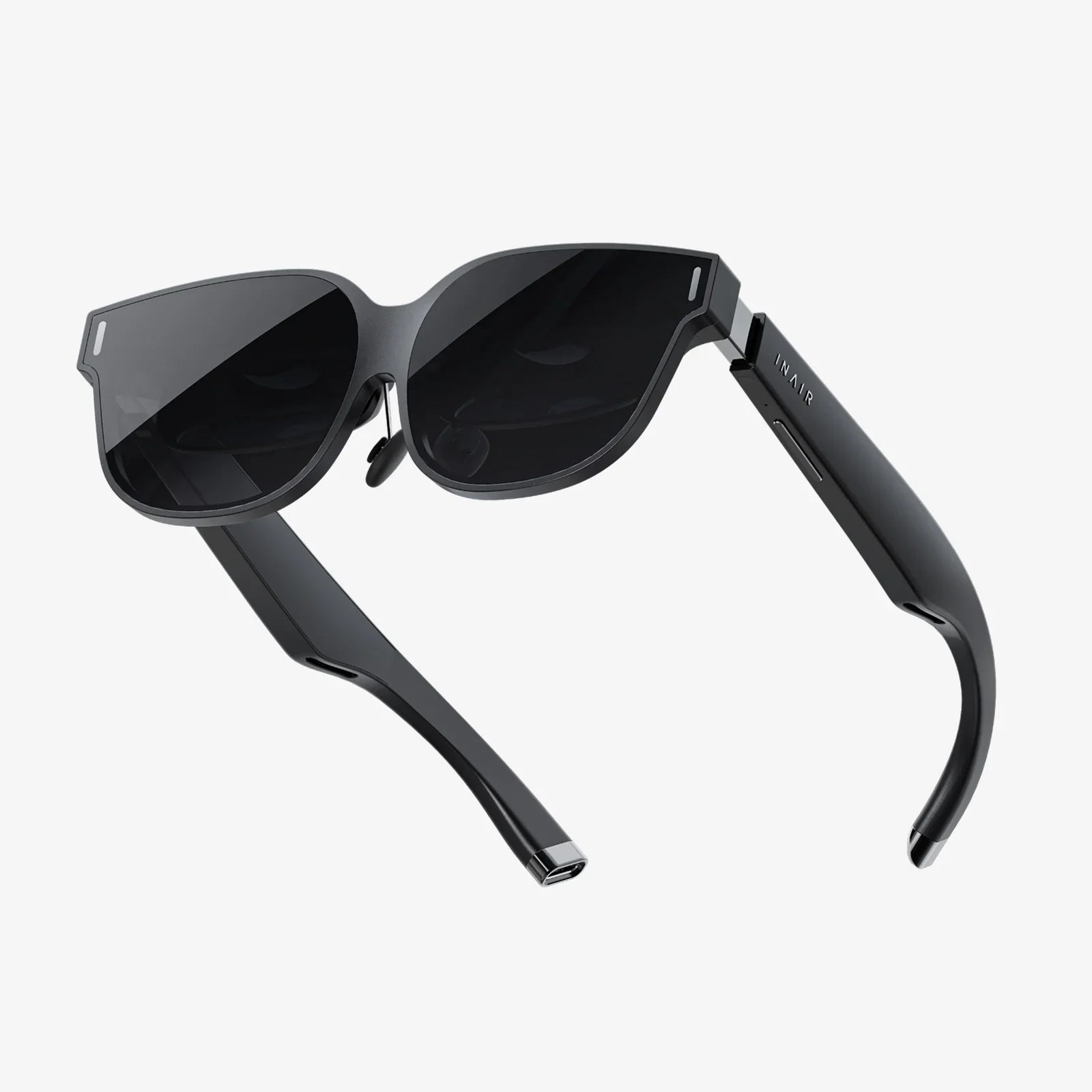
The world is on the cusp of a visual computing revolution, and the numbers behind the AR glasses market size are painting a picture of a future where digital and physical realities seamlessly merge. For years, the concept of augmented reality (AR) has been confined to science fiction, but today, it is rapidly becoming a tangible, commercial reality. The market for AR glasses, the primary hardware conduit for this technology, is not just growing; it is exploding. From niche industrial applications to the precipice of mainstream consumer adoption, the trajectory of this market is one of the most compelling narratives in modern technology. Understanding its size, the forces driving it, and the potential it holds is crucial for anyone looking to grasp the next decade of digital innovation.
The Current Landscape: A Market in Its Infancy Yet Booming
To understand the AR glasses market size, one must first appreciate its current state. While still considered an emerging market, its growth rate is nothing short of phenomenal. Recent market analyses consistently project a compound annual growth rate (CAGR) well above 30% for the foreseeable future. This signifies a market that is doubling in size every few years, moving from a valuation in the single-digit billions of dollars to projections that reach deep into the tens of billions before the end of the decade.
This initial valuation is primarily driven by enterprise and industrial adoption. Sectors such as manufacturing, logistics, healthcare, and field services have been early and enthusiastic adopters. In these environments, AR glasses provide immense value by overlaying crucial information, schematics, and instructions onto a worker's field of view, enabling hands-free operation, reducing errors, and significantly improving efficiency and training times. The return on investment (ROI) in these settings is clear and quantifiable, fueling substantial initial investment and adoption.
Key Drivers Fueling the Expansion
The explosive growth forecast for the AR glasses market is not happening in a vacuum. It is the result of several powerful, concurrent technological and economic trends converging.
Technological Advancements
The core technology inside AR glasses has seen revolutionary improvements. Early prototypes were bulky, had limited battery life, and suffered from poor display quality. Today, advancements in micro-displays (like MicroLED and Laser Beam Scanning), optical waveguides, and miniaturized sensors have enabled the development of sleeker, more comfortable, and more powerful devices. Furthermore, the integration of powerful, dedicated processing chips has unlocked more complex computer vision and spatial mapping capabilities, making the AR experience smoother and more immersive.
The 5G Infrastructure Rollout
The global deployment of high-speed, low-latency 5G networks is a critical enabler for AR glasses. It allows for complex processing to be offloaded to the cloud (a concept known as cloud rendering), reducing the need for heavy, expensive, and power-hungry processors within the glasses themselves. This enables thinner, lighter form factors and longer battery life, which are essential for widespread consumer acceptance.
Software and Ecosystem Development
Hardware is nothing without software. The maturation of AR software development kits (SDKs) and operating systems has made it significantly easier for developers to create compelling applications. From enterprise productivity tools and immersive training simulations to consumer games and social experiences, a rich and diverse ecosystem of apps is essential for driving hardware sales. The growth of this software library creates a powerful network effect, attracting more users and, in turn, more developers.
Growing Enterprise Digitization
Businesses across all sectors are undergoing rapid digital transformation. AR glasses are increasingly seen not as a novelty but as a vital tool for this transformation. They serve as a new interface for accessing the vast amounts of data generated by IoT sensors and enterprise software systems, allowing workers to interact with digital information in the context of their physical tasks. This drive for operational efficiency and innovation is a primary B2B driver for market growth.
Market Segmentation: Where is the Growth Coming From?
The overall AR glasses market size can be broken down into key segments, each with its own dynamics and growth potential.
By End-User: Enterprise vs. Consumer
Currently, the enterprise segment dominates the market in terms of revenue. The high cost of early-generation AR glasses is more easily justified by businesses that can demonstrate a clear ROI through increased productivity and reduced operational downtime. The consumer segment, while holding astronomically higher volume potential, has been slower to develop. This is primarily due to historical limitations in style, comfort, battery life, and a lack of must-have applications. However, this is poised to change dramatically as technology improves and prices fall, with the consumer segment expected to capture a much larger share of the market in the latter half of the decade.
By Product Type: Smart Glasses vs. Holographic Displays
The market can also be segmented by the type of display technology. Smart glasses typically offer a simpler, monochromatic display of information in the periphery of vision, ideal for notifications and basic data. Holographic or optical see-through displays aim for full-color, high-resolution, and wide field-of-view immersion, seamlessly blending digital objects with the real world. The latter represents the ultimate goal for AR but involves greater technical complexity and cost. The market size for both types is growing, but they cater to different use cases and price points.
Regional Analysis: A Global Phenomenon
The adoption of AR glasses is a global trend, but its pace varies by region. North America, with its strong technological infrastructure, high concentration of tech giants, and early-adopter enterprise culture, has been a dominant force in the market. Asia-Pacific, however, is predicted to be the fastest-growing region. Countries like China, South Korea, and Japan have massive manufacturing bases that are quickly adopting AR for industrial use, strong government support for technology development, and populations that are highly receptive to new consumer electronics. Europe also represents a significant and growing market, particularly in automotive, aerospace, and medical applications.
Challenges and Constraints on the Horizon
Despite the rosy projections, the path to a multi-billion dollar AR glasses market is not without its obstacles. Several significant challenges must be overcome to achieve the forecasted market size.
Form Factor and User Experience: For mass consumer adoption, AR glasses must become as socially acceptable and comfortable to wear as regular eyewear. This requires unprecedented levels of miniaturization and power efficiency. No one wants to wear bulky, awkward-looking hardware for extended periods.
Battery Life: High-resolution displays and spatial processing are incredibly power-intensive. Delivering all-day battery life in a small form factor remains a major engineering hurdle that directly impacts user satisfaction.
Content and Killer Apps: The classic "chicken and egg" problem persists. Developers need a large installed base to justify building expensive, high-quality apps, but consumers need compelling apps to justify purchasing the hardware. The market needs its equivalent of the smartphone’s "killer app" to truly ignite the consumer segment.
Privacy and Security: Glasses with always-on cameras and microphones raise legitimate societal concerns about privacy and data security. Establishing clear ethical guidelines and robust security protocols will be essential for building public trust.
The Future Projection: Beyond the Numbers
Looking beyond the raw market size valuations, the future of AR glasses points toward a fundamental shift in how we interact with computing. The goal is to move away from devices we look at (like phones and monitors) and toward technology we look through. The eventual aspiration is for a ubiquitous, context-aware, and invisible computing interface that enhances our perception of the world around us.
In the future, we may not talk about the “AR glasses market” as a distinct category. Instead, AR functionality may become a standard feature integrated into prescription eyewear, sunglasses, and other wearables, becoming an invisible part of our daily lives, much like the smartphone is today. The market size, in that context, becomes almost synonymous with the entire eyewear and personal computing market—a truly staggering potential.
The staggering figures associated with the AR glasses market size are more than just a forecast of revenue; they are a proxy for the magnitude of a coming paradigm shift. This isn't merely about a new gadget; it's about redefining the interface between humanity and information. As the technological hurdles of design, battery, and processing power are steadily overcome, we are moving toward a world where digital enhancement is woven seamlessly into our physical perception. The market's explosive growth is a direct reflection of this inevitable convergence, promising to unlock unprecedented levels of productivity, creativity, and connection, ultimately changing not just industries, but the very fabric of everyday life.
Share:
Digital Products World: Navigating the Ecosystem That Defines Our Era
Adjustable Sliding Window Screens: The Ultimate Guide to Versatile Home Ventilation and Pest Control