


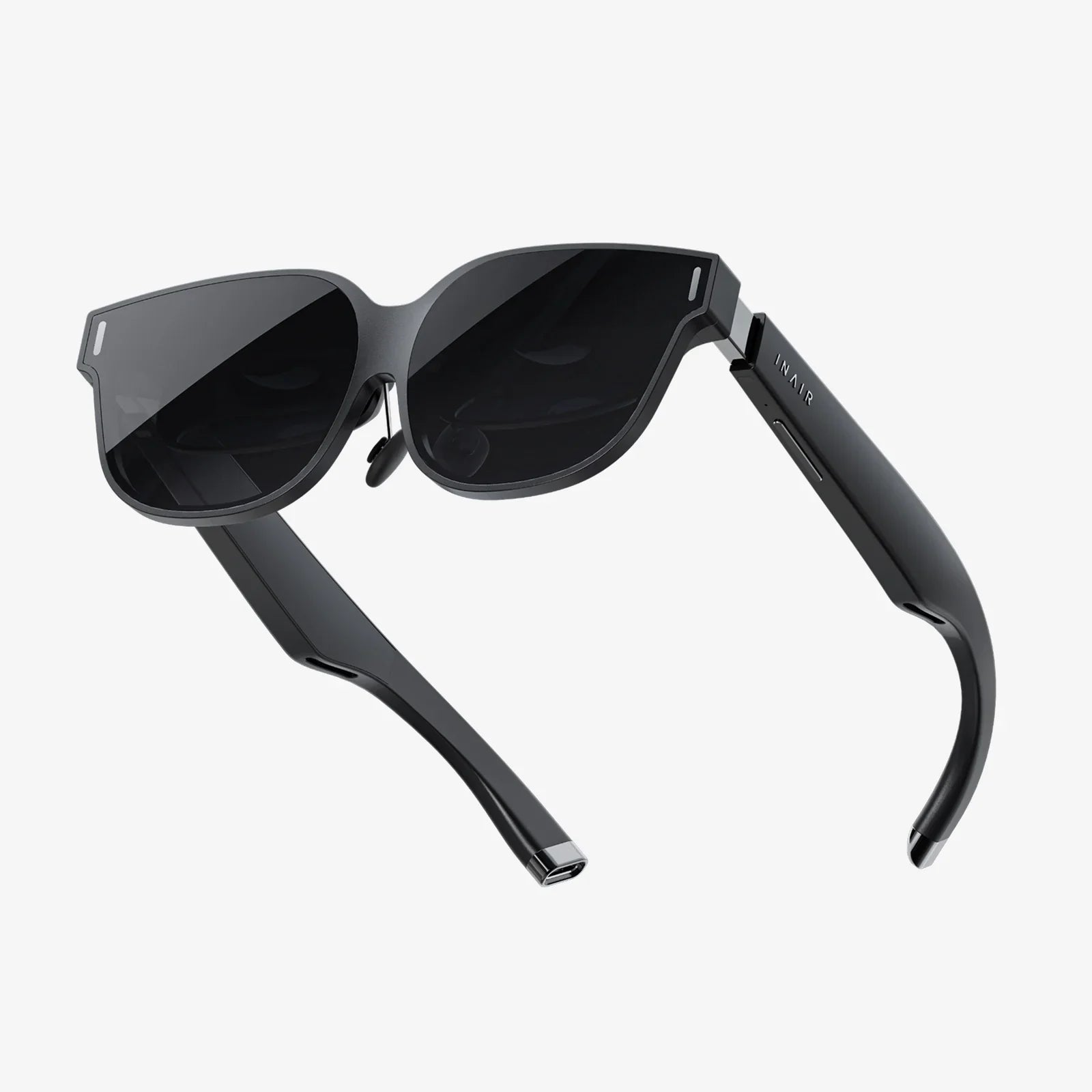
Imagine a world where information floats effortlessly before your eyes, where digital assistants appear as holographic companions, and the very fabric of your environment can be enhanced, annotated, and transformed with a simple voice command or gesture. This isn't a distant science fiction fantasy; it is the imminent future being built today in research labs and design studios, all focused on one singular goal: perfecting the next generation of augmented reality glasses. This new wave of wearable technology promises to be the most significant leap in personal computing since the smartphone, moving us from devices we carry to intelligence we wear, fundamentally altering our perception of reality itself.
The Evolutionary Leap: From Clunky Prototypes to Invisible Companions
The journey to next-gen AR glasses has been a long one, marked by ambitious promises and technological hurdles. Early iterations were often bulky, tethered, and offered a limited field of view, confining them to enterprise and developer circles. The next generation represents a paradigm shift, addressing these core limitations through a convergence of breakthroughs across multiple disciplines.
The most immediately noticeable difference will be in form factor and social acceptance. The goal is no longer just function, but form and subtlety. Next-gen AR glasses are being designed to resemble fashionable eyewear—lightweight, comfortable, and indistinguishable from traditional glasses at a casual glance. This is made possible by advancements in micro-optics, waveguide technology, and ultra-compact microLED displays that project images directly onto the lenses without the need for large, protruding components. The dream of all-day wearability is finally within reach, moving the technology from your pocket to your face as a seamless part of your daily attire.
The Technological Pillars Powering the Revolution
This dramatic evolution is underpinned by several key technological pillars, each solving a critical piece of the AR puzzle.
Advanced Display and Waveguide Systems
At the heart of any AR experience is the display. Next-gen devices are moving away from reflective birdbath optics to sophisticated holographic and diffractive waveguide systems. These act like magical conduits, piping light from tiny projectors at the temple into the lens, where it is then directed into the user's eye. The result is bright, high-resolution graphics that appear to float in the real world. The race is on to achieve a wider field of view (approaching the human natural FoV), higher contrast, and vibrant color reproduction, all while maintaining a sleek profile and allowing the user to still see the real world clearly.
Spatial Computing and Environmental Understanding
For digital objects to feel truly anchored in reality, the glasses must understand the environment as well as a human does. This is the domain of spatial computing. A suite of sensors, including high-resolution RGB cameras, depth sensors (LiDAR, time-of-flight), and inertial measurement units (IMUs), continuously scans the surroundings. On-device processors, powered by specialized neural engines, fuse this data in real-time to create a precise 3D map of the space. This allows the glasses to understand surfaces, recognize objects, occlude digital content behind real-world furniture, and enable interactions that feel natural and intuitive. Your desk becomes a virtual workstation; your wall becomes a high-definition display; a coffee mug on your table can become a game character.
Revolutionary Input Modalities: Beyond the Touchpad
Interacting with a floating interface requires a new language of input. Next-gen AR glasses will likely abandon handheld controllers in favor of more seamless methods. Voice assistants, powered by natural language processing, will be the primary command interface. Hand and gesture tracking, using inward-facing cameras to read finger movements, will allow users to pinch, select, and drag virtual elements as if they were physical objects. Some prototypes are even exploring neural interfaces—non-invasive sensors that can detect faint electrical signals from the brain to execute simple commands, offering the ultimate hands-free, silent control. This multimodal approach ensures interaction is always contextually appropriate, whether you're in a quiet office or a noisy street.
On-Device AI and Connectivity
The intelligence of these glasses will be a hybrid of cloud and on-device processing. While the cloud offers immense computational power, edge AI is critical for low-latency, private interactions. Dedicated AI chips will handle tasks like object recognition, scene reconstruction, and translating speech without a constant internet connection, ensuring responsiveness and preserving battery life. Furthermore, these devices will act as a hub for your digital ecosystem, seamlessly connecting to your phone, laptop, and smart home devices, orchestrating your technology rather than adding another siloed screen to your life.
Transforming Industries and Redefining Human Experience
The applications for this technology extend far beyond novelty filters and gaming. Next-gen AR glasses are poised to become indispensable tools across every facet of society.
The Future of Work and Remote Collaboration
The concept of the office will be radically transformed. Imagine a remote engineer being able to see a holographic schematic overlaid onto a malfunctioning machine, guided by an expert on the other side of the world who can draw annotations directly into their field of view. Architects could walk through full-scale holographic models of their designs before a single brick is laid. This "overlaid workforce" will dissolve geographical barriers, enabling a level of collaboration and knowledge sharing that is impossible with today's 2D video calls.
Enhanced Navigation and Contextual Information
Walking through a new city will become an immersive learning experience. Directional arrows can be painted onto the sidewalk, historical buildings can have their stories visually narrated, and restaurant reviews and menus can pop up as you glance at them. This layer of contextual information will turn the entire world into an interactive interface, reducing cognitive load and providing just-in-time knowledge exactly where and when it's needed.
Healthcare and Assisted Living
In healthcare, the potential is profound. Surgeons could have vital signs and 3D imaging data visualized directly over a patient during an operation. Medical students could practice procedures on holographic patients. For the elderly or those with visual impairments, AR glasses could highlight obstacles, recognize faces, and magnify text in the real world, dramatically increasing independence and quality of life.
The Challenges on the Horizon
Despite the exciting progress, significant challenges remain before next-gen AR glasses become a ubiquitous consumer product. Battery life is a primary constraint; powering high-resolution displays, numerous sensors, and powerful processors on a small form factor is immensely difficult. Innovations in low-power chipsets and perhaps alternative energy harvesting methods are required.
Privacy and social etiquette present a monumental societal challenge. Always-on cameras and microphones raise legitimate concerns about surveillance and data collection. Clear visual indicators for when recording is active and robust, transparent privacy frameworks will be non-negotiable for public adoption.
Finally, there is the question of the killer app. While enterprise use cases are clear, the consumer market needs a compelling, must-have application that transcends novelty—the AR equivalent of the mobile web or the app store—to drive mass adoption.
The next generation of AR glasses is not merely an incremental update; it is the foundational step towards a new platform for human-computer interaction. It's a shift from looking at a device to looking through a window into an augmented world. The companies and innovators that solve these final challenges will not just be selling a product; they will be defining the next layer of human experience, weaving the digital and physical into a single, seamless tapestry of reality. The race to build this future on your face is already underway, and its winner will hold the key to the next decade of technological evolution.
Share:
AR Glasses News Past 48 Hours: A Flurry of Announcements Reshapes the Future of Wearable Tech
Virtual Mobile Workspaces: The Future of Productivity Is in Your Pocket