


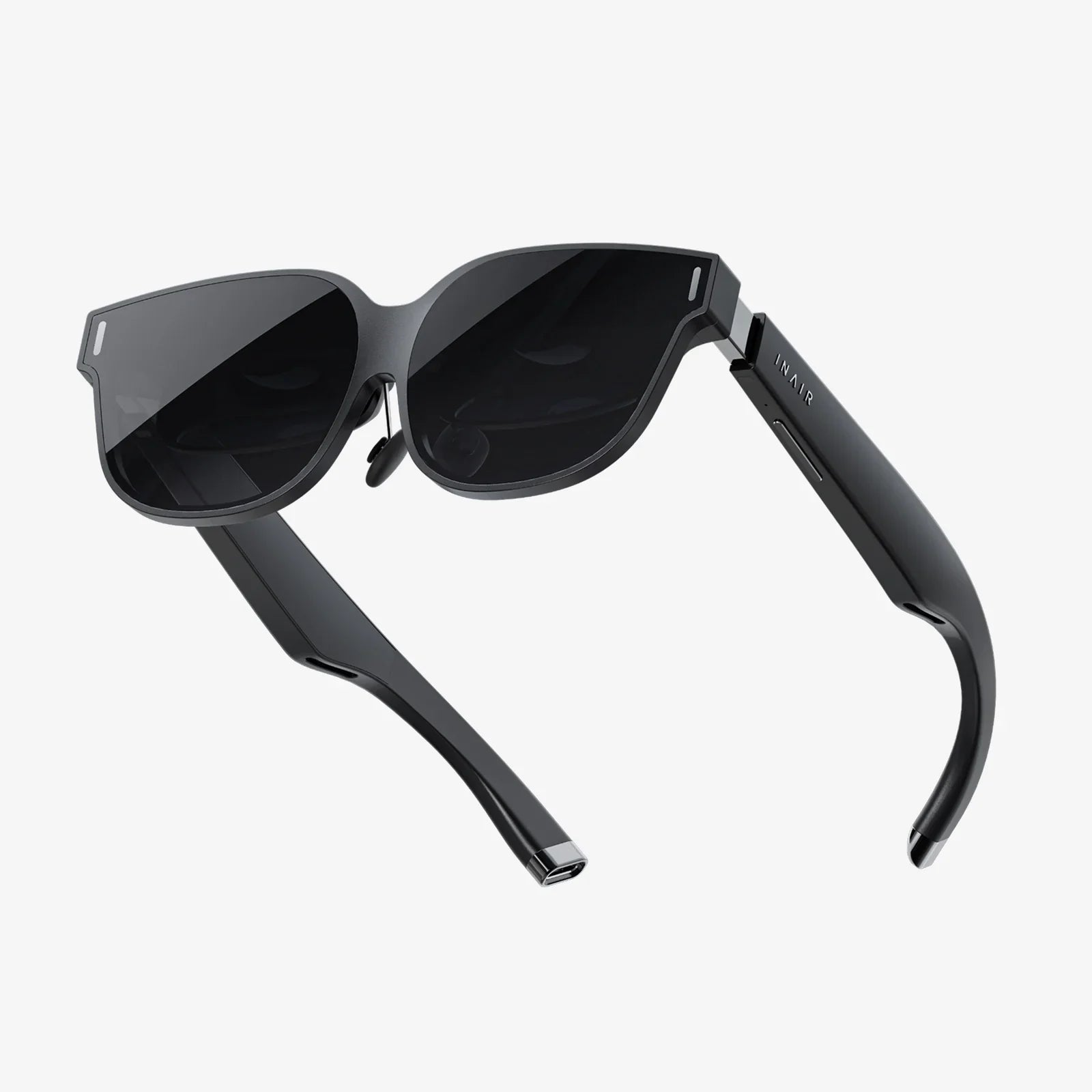
AR glasses novel research is quietly rewriting the rules of how humans see, learn, work, and connect, and the next few years may feel less like a simple tech upgrade and more like stepping into a new layer of reality woven over the world you already know. As laboratories, startups, and research institutes race to miniaturize hardware and supercharge software, a new generation of augmented reality eyewear is emerging that promises to move far beyond gimmicky overlays and into deeply integrated, context-aware experiences that could redefine daily life.
What makes this moment different from earlier waves of hype is that multiple lines of innovation are converging at once: advances in optical engines, microdisplays, eye tracking, spatial mapping, low‑power processors, and generative AI are all maturing together. The result is a research landscape where AR glasses are no longer just a futuristic concept, but a serious platform candidate for communication, work, entertainment, and even medical care. Understanding this landscape now will help you anticipate the opportunities and disruptions that are coming next.
The New Wave of AR Glasses Research
AR glasses research has moved beyond proof‑of‑concept prototypes into a phase focused on real‑world usability, comfort, and long‑term wear. Early head‑mounted displays were bulky, power‑hungry, and socially awkward; today’s research aims for devices that look and feel like ordinary eyewear while still delivering rich, stable digital overlays.
Novel research directions can be broadly grouped into several pillars:
- Optical systems that are thinner, brighter, and more natural to look through.
- Perception and tracking that accurately understand the user, their gaze, and their environment.
- Interaction paradigms that move away from handheld controllers toward hands‑free, intuitive input.
- Context-aware intelligence that turns raw sensor data into meaningful assistance.
- Human factors and ethics ensuring safety, privacy, and social acceptability.
Each of these pillars is being transformed by breakthroughs in materials science, computer vision, machine learning, and human‑computer interaction. The interplay between them is where the most exciting progress is happening.
Optics and Display: Shrinking the Window to a New World
The heart of any AR glasses system is its optical engine: the combination of display, waveguides or mirrors, and lenses that inject digital imagery into the user’s view of the real world. Novel research is pushing this core component toward three goals: compactness, clarity, and comfort.
Waveguides and Light Engines
Traditional AR headsets relied on bulky combiner optics that sat in front of the eyes. Modern research focuses on waveguide-based displays, where light from a microdisplay is injected into a transparent plate and guided to the user’s eyes through carefully engineered structures.
Key directions include:
- Diffractive waveguides that use micro‑structured gratings to steer light with high efficiency.
- Reflective waveguides that rely on embedded mirrors or prisms to route light.
- Holographic waveguides that promise thinner optics and potentially wider fields of view.
Researchers are optimizing these waveguides to reduce color distortions, increase brightness in outdoor conditions, and widen the field of view without making the lenses thicker or heavier.
Microdisplays and Visual Fidelity
At the source of the light engine is the microdisplay, where novel research explores technologies that balance resolution, brightness, power consumption, and cost. Current work spans:
- Micro‑LED displays, prized for high brightness and efficiency, critical for sunlight readability.
- LCOS (liquid crystal on silicon) and DLP approaches, offering high resolution in compact modules.
- OLED on silicon for deep contrast and vivid color, though brightness remains a challenge outdoors.
Researchers are also investigating foveated rendering, where only the region of the display corresponding to the user’s gaze is rendered at full resolution. This technique, combined with eye tracking, can dramatically reduce processing and power demands while maintaining visual quality where it matters most.
Vergence-Accommodation and Eye Comfort
One of the trickiest problems in AR optics is the vergence-accommodation conflict. In the real world, your eyes converge and focus on the same distance. In many AR systems, your eyes converge on a virtual object that appears near or far, but physically focus on a fixed plane where the display actually sits. Over time, this mismatch can cause eye strain and fatigue.
Novel research is exploring:
- Multifocal displays that can present virtual content at multiple depth planes.
- Varifocal systems that dynamically adjust focal distance using tunable lenses or moving optics.
- Light field displays that recreate more natural depth cues by emitting light that varies across angles.
These approaches aim to make long‑term AR use as comfortable as wearing prescription glasses, unlocking scenarios where users might wear AR devices for hours at a time.
Tracking, Mapping, and Understanding the World
To convincingly anchor digital objects in the real world, AR glasses must precisely track the user’s position, orientation, and gaze while simultaneously building a detailed model of the environment. This is the domain of simultaneous localization and mapping (SLAM) and related perception technologies.
Inside-Out Tracking and SLAM
Most AR glasses rely on inside‑out tracking, using built‑in cameras and inertial sensors to estimate motion. Novel research improves SLAM algorithms to be:
- More robust in low‑texture or low‑light environments.
- More efficient so they can run on low‑power processors without overheating.
- More semantically aware, recognizing not just surfaces but objects and their affordances.
For example, instead of simply mapping a flat plane, advanced systems can identify it as a table, a wall, or a floor, and can reason about how virtual content should behave in relation to it, such as resting on the surface or avoiding occlusion errors.
Eye Tracking and Foveated Interaction
Eye tracking is becoming a cornerstone of novel AR glasses research. Tiny infrared emitters and cameras monitor the user’s gaze direction, enabling:
- Foveated rendering to prioritize visual fidelity where the user is looking.
- Gaze-based interaction, turning eye movements into input signals.
- Adaptive interfaces that rearrange content based on where the user naturally looks.
Researchers are also using eye tracking data to study cognitive load and attention. For instance, if a user repeatedly glances at a particular object or interface element without acting, the system might infer confusion and proactively offer guidance or simplify the display.
Scene Understanding and Semantic Mapping
Beyond geometry, modern AR research aims for semantic scene understanding. Using computer vision and machine learning, AR glasses can recognize objects, people, text, and even complex scenes.
Applications of this capability include:
- Real‑time translation of text in the environment, such as signs or documents.
- Object labeling for education or accessibility, identifying everyday items.
- Task guidance, where the system recognizes tools and components and overlays instructions.
Semantic understanding also enables more natural interactions, such as placing virtual objects on specific real‑world surfaces or having digital characters navigate around physical obstacles.
Interaction: Beyond Screens and Controllers
One of the most exciting aspects of AR glasses novel research is the rethinking of how users interact with digital content when their hands are free and their eyes are the primary interface. The goal is to create interactions that feel as effortless as reaching for a physical object or speaking to another person.
Hand and Gesture Tracking
Many research projects focus on markerless hand tracking, where cameras and AI models detect and interpret the position and shape of the user’s hands without gloves or external sensors.
This enables:
- Direct manipulation of virtual objects, such as grabbing, rotating, and resizing with natural motions.
- Gesture shortcuts, like pinches, swipes, or air taps to trigger commands.
- Collaborative gestures, where multiple users can interact with the same virtual content simultaneously.
Researchers are working to improve robustness under varying lighting conditions, minimize latency, and distinguish intentional gestures from natural hand movement.
Voice, Context, and Multimodal Input
Voice commands are another core input channel, especially when hands are occupied. Novel research explores multimodal interfaces that combine voice, gaze, gestures, and context.
For example, a user might:
- Look at a machine component, say “show me the manual,” and see instructions appear directly over the part.
- Glance at a colleague, say “share this view,” and instantly synchronize AR content between devices.
- Use a subtle hand gesture to confirm an action suggested by the system.
These interactions depend on robust speech recognition, natural language understanding, and contextual reasoning, all active areas of research in their own right.
Brain-Computer Interfaces and Subtle Input
At the frontier, some teams are experimenting with non‑invasive brain‑computer interfaces (BCIs) and electromyography (EMG) sensors to detect tiny muscle signals or neural activity. In an AR context, this could provide extremely low‑effort input, such as triggering commands with minimal finger movement or even imagined actions.
While still early, this line of research hints at future AR glasses that respond to intent with almost no visible motion, potentially transforming accessibility for users with limited mobility and opening new forms of silent, discreet interaction.
AI as the Invisible Engine Behind AR Glasses
Artificial intelligence is increasingly the engine that turns raw sensor data and display capabilities into meaningful experiences. AR glasses novel research leans heavily on advances in machine learning, particularly in computer vision, natural language processing, and generative models.
Computer Vision and Recognition
Computer vision models embedded in AR glasses can recognize objects, faces, poses, and scenes in real time. Research focuses on:
- On‑device inference to preserve privacy and reduce latency.
- Model compression and quantization to run complex networks on low‑power hardware.
- Continual learning so the system can adapt to new environments and objects over time.
Combined with semantic mapping, these capabilities allow AR glasses to act as intelligent companions, offering contextually relevant information without constant manual input.
Natural Language and Conversational Interfaces
Natural language understanding allows users to interact with AR systems conversationally. Instead of navigating menus, users can simply ask for what they need. Novel research integrates:
- Voice-based assistants that are aware of what the user sees.
- Dialogue systems that can clarify ambiguous requests and ask follow‑up questions.
- Multilingual support for translation and cross‑language collaboration.
When combined with visual context, language models can provide highly specific assistance, such as explaining a part the user is looking at or summarizing text that appears in their field of view.
Generative AI and Dynamic Content
Generative AI models introduce the possibility of on‑demand content creation inside AR environments. This includes:
- Generating 3D objects from text prompts, which can be placed and manipulated in the real world.
- Creating personalized instruction sequences based on a user’s skill level and past performance.
- Adapting visual styles to match user preferences or situational needs.
Research here focuses on making generative models fast and efficient enough for real‑time or near‑real‑time use on AR hardware, as well as ensuring that generated content is reliable, safe, and aligned with user expectations.
Novel Applications in Healthcare
Healthcare is one of the most active domains for AR glasses novel research, with efforts spanning surgical assistance, remote care, rehabilitation, and patient education.
Surgical Guidance and Visualization
In operating rooms, AR glasses can overlay anatomical models, imaging data, and instrument trajectories directly onto the patient. Researchers are exploring:
- Registration techniques to precisely align virtual overlays with the patient’s body.
- Real‑time updates that adjust visualizations as tissues move or are manipulated.
- Team collaboration, enabling multiple clinicians to share synchronized AR views.
These systems aim to improve accuracy, reduce procedure times, and enhance training for less experienced surgeons.
Remote Care and Telepresence
AR glasses also enable new forms of remote care. A clinician wearing AR glasses can consult with a remote specialist who sees the same view and can annotate the environment with virtual markers. Novel research investigates:
- Low‑latency streaming and compression techniques for high‑quality video.
- Shared AR workspaces where both local and remote participants can interact with virtual content.
- Security protocols to protect sensitive medical data in mixed‑reality sessions.
This approach can extend expert care to underserved regions and support on‑site medical staff with real‑time guidance.
Rehabilitation and Assistive Technologies
For rehabilitation, AR glasses can provide real‑time feedback during exercises, gamify physical therapy, and track progress. In assistive contexts, they can enhance vision for users with certain impairments by:
- Highlighting edges and contrast to make objects more visible.
- Reading text aloud while also displaying simplified overlays.
- Offering navigation cues indoors and outdoors.
Novel research evaluates the effectiveness of these interventions and optimizes interfaces for different user needs, including those with cognitive or sensory differences.
Education, Training, and Skill Acquisition
Education and training are fertile ground for AR glasses, where the ability to augment real‑world tasks with just‑in‑time information can accelerate learning and retention.
Immersive Learning Environments
In classrooms and laboratories, AR glasses can bring abstract concepts into tangible form. Research examples include:
- Visualizing molecular structures in 3D over a desk, manipulable by students.
- Overlaying historical reconstructions on archaeological sites or museum exhibits.
- Providing interactive diagrams that respond to questions and gestures.
Studies examine how these experiences affect engagement, understanding, and long‑term recall compared to traditional teaching methods.
Industrial and Vocational Training
In manufacturing, maintenance, and logistics, AR glasses can guide workers step‑by‑step through complex procedures. Novel research explores:
- Adaptive instructions that adjust based on user performance and errors.
- Safety overlays that highlight hazards and enforce protocols.
- Performance analytics that help managers optimize training programs.
These systems aim to reduce training time, minimize errors, and support continuous upskilling in rapidly evolving industries.
Entertainment, Creativity, and Social Experiences
Beyond productivity and healthcare, AR glasses open new frontiers for entertainment and creative expression, blending digital storytelling with the physical world.
Location-Based Experiences and Gaming
AR games and experiences that respond to the user’s surroundings are a major focus of novel research. Unlike mobile AR on phones, glasses free the user’s hands and provide a more immersive field of view.
Researchers are building:
- Persistent AR worlds that remain anchored to real locations over time.
- Multi‑user experiences where friends see and interact with the same virtual objects.
- Context‑sensitive narratives that adapt storylines based on where the user goes.
These projects explore how to balance immersion with safety, ensuring users remain aware of their physical environment while engaged in digital experiences.
Creative Tools and Co-Creation
For artists, designers, and makers, AR glasses can become powerful creative tools. Novel research investigates interfaces for:
- 3D sketching in mid‑air, allowing creators to draw and sculpt around them.
- Spatial sound design, placing audio sources in physical space.
- Collaborative creation, where multiple users build and edit shared AR scenes.
These tools blur the boundaries between digital and physical prototyping, making it easier to iterate on designs in the context where they will ultimately live.
Privacy, Ethics, and Social Acceptance
As AR glasses become more capable and ubiquitous, ethical and social questions move from theoretical to urgent. Novel research is not only about what AR can do, but what it should do and how it should behave around others.
Privacy by Design
AR glasses often include cameras, microphones, and location tracking, raising concerns about surveillance and consent. Researchers are exploring:
- Visible indicators that show when recording or analysis is active.
- On‑device processing to minimize data sent to external servers.
- Selective blurring or redaction of bystanders and sensitive information.
Policy and technical work intersect here, as regulations and standards evolve to govern how AR devices collect, store, and share data.
Attention and Cognitive Load
Because AR overlays information directly into a user’s field of view, it can amplify both focus and distraction. Novel research studies:
- Attention‑aware interfaces that avoid overloading users with notifications.
- Task‑sensitive modes that limit content during high‑risk activities like driving.
- Long‑term cognitive effects of frequent AR use, particularly for younger users.
The challenge is to design AR experiences that enhance human capabilities without fragmenting attention or undermining well‑being.
Social Norms and Design
Social acceptance is as critical as technical capability. AR glasses that look too conspicuous or behave unpredictably may be rejected regardless of their features. Research in human‑computer interaction explores:
- Form factors that resemble conventional eyewear while hiding advanced components.
- Social cues, such as subtle light patterns, indicating when the device is active.
- Etiquette guidelines for public spaces, workplaces, and private gatherings.
Understanding how people feel about being around AR wearers—and how wearers feel about being seen—is key to large‑scale adoption.
Hardware Constraints and Power Innovation
All of these capabilities must fit into a device small and light enough to wear comfortably for hours. Novel research tackles the hardware challenges that come with this constraint.
Power Management and Batteries
Battery life remains a limiting factor. Researchers are working on:
- Ultra‑low‑power processors optimized for AR workloads.
- Dynamic power allocation that scales performance based on current tasks.
- Novel battery chemistries and form factors that integrate into frames and temples.
Some prototypes explore offloading computation to nearby devices or edge servers, balancing latency and energy use while maintaining responsiveness.
Thermal Management and Comfort
Heat is a major concern for any head‑worn device. Research focuses on:
- Efficient heat dissipation through materials and internal layout.
- Thermal‑aware scheduling to avoid prolonged high‑load states.
- User comfort studies to determine acceptable temperature thresholds.
Comfort also includes weight distribution, nose bridge pressure, and compatibility with prescription lenses, all active areas of ergonomic research.
Standards, Interoperability, and Ecosystems
For AR glasses to become a mainstream computing platform, they must integrate into broader ecosystems. Novel research and industry efforts are working toward:
- Common data formats for spatial mapping and anchoring.
- Cross‑device experiences where phones, tablets, and AR glasses share context.
- Development frameworks that make it easier to build cross‑platform AR applications.
Interoperability will be crucial for ensuring that digital content created in one AR environment can be experienced in another, preventing fragmentation and encouraging innovation.
Where AR Glasses Novel Research Is Heading Next
The trajectory of AR glasses novel research points toward devices that are lighter, smarter, and more seamlessly woven into everyday life. On the horizon are glasses that can learn your habits, anticipate your needs, and quietly enhance your perception without demanding constant attention.
In the near term, expect breakthroughs in comfort, battery life, and visual quality that make all‑day wear feasible for more people. In parallel, software advances will bring richer, more personalized experiences in healthcare, education, work, and entertainment, with AI acting as a constant but unobtrusive collaborator.
Further out, AR glasses may evolve into a primary computing interface, gradually displacing some roles of phones and laptops. As this happens, debates over privacy, ethics, and social norms will intensify, and the choices made by researchers, designers, and policymakers now will shape how humane and empowering this augmented future becomes.
If you want to stay ahead of that curve, watching AR glasses novel research is one of the most revealing lenses you can use. It offers a preview not just of new gadgets, but of new ways of thinking, working, and relating to the world—a world that is about to gain a digital dimension layered invisibly over everything you see.
Share:
glass ar lower: The Hidden Revolution Reshaping Digital Reality
glass ar lower: The Hidden Revolution Reshaping Digital Reality