


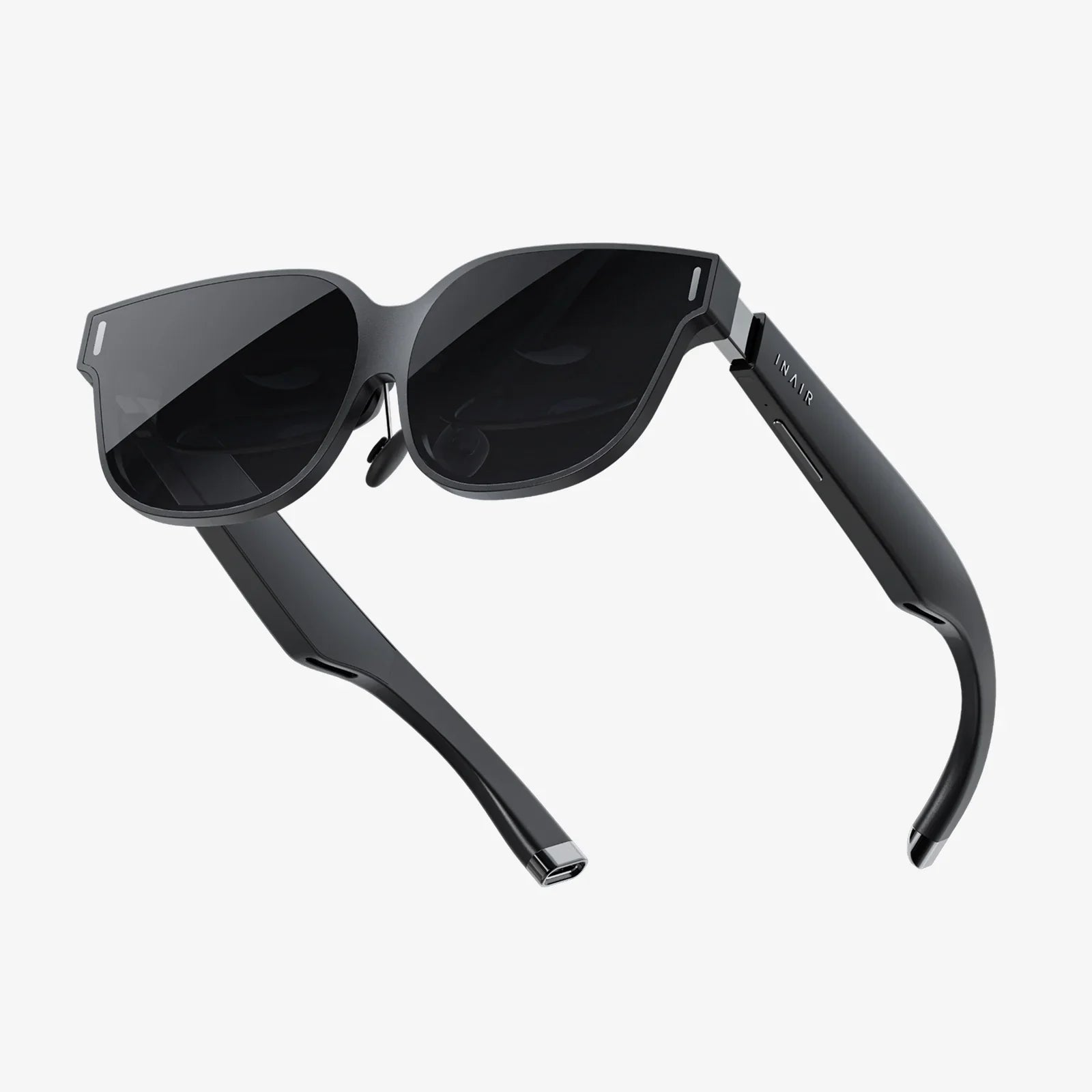
The dream of overlaying digital information onto the real world, once the stuff of science fiction, is now a tangible reality, and for Indian consumers and businesses, the burning question is no longer just ‘if’ but ‘how much’? The landscape of augmented reality (AR) glasses in India is a fascinating tapestry of cutting-edge innovation, complex import dynamics, and a rapidly evolving market appetite. Understanding the price of AR glasses in India requires peeling back multiple layers, from the technology packed inside to the duties levied at the border. This deep dive will navigate the complete cost ecosystem, helping you decipher what you’re really paying for and how to find the right device for your budget and needs.
The Spectrum of AR: From Basic to Brilliant
Not all AR glasses are created equal, and this is the single biggest factor influencing their price. The term “AR glasses” encompasses a wide range of devices, broadly categorized by their capabilities.
Smart Glasses (Entry-Level/Basic AR)
These are often the most affordable point of entry. They typically feature a small monochrome or basic color display in the corner of the lens, primarily offering notifications, basic navigation, and the ability to control music or take photos. Their processing power is limited, often relying on a tethered connection to a smartphone for heavier tasks. Prices for these types of glasses in India can start from as low as ₹8,000 and can go up to ₹25,000, depending on the brand and features like build quality and battery life.
Standalone AR Glasses
This category represents a significant step up. These are self-contained computers you wear on your face. They feature more powerful processors, higher-resolution displays that can project richer images and information across a larger portion of your field of view, built-in cameras for spatial tracking, and advanced sensors. They are designed for more immersive experiences, from interactive training modules to complex 3D visualizations. This advanced technology commands a premium, with prices in India typically ranging from ₹65,000 to well over ₹2,00,000 for the most advanced consumer and prosumer models.
Enterprise-Grade AR Headsets
At the pinnacle of AR technology are devices built for industrial and professional use. These are engineered for durability, precision, and mission-critical applications in fields like manufacturing, healthcare, logistics, and field service. They feature industrial-grade sensors, the highest resolution displays, extensive field of view, and specialized software for tasks like remote expert assistance or complex assembly guidance. The price for these powerhouses reflects their specialized nature, often starting from ₹3,00,000 and can easily exceed ₹8,00,000 per unit in the Indian market.
Deconstructing the Price Tag: What Are You Actually Paying For?
The final price of a pair of AR glasses is the sum of its parts, both physical and intangible.
The Core Components
- Optical Engine and Waveguides: This is the heart of the AR experience. The technology used to project images onto the lenses (like micro-LED, LCoS, or Laser Beam Scanning) and the waveguides that channel the light to your eyes are incredibly complex and expensive to research and manufacture. Higher-quality optics mean a sharper, brighter, and more immersive image—and a higher cost.
- Processing Power: A powerful CPU and GPU are essential for rendering digital objects in real-time, tracking the user’s movement and environment, and running complex applications. This is essentially a full computer miniaturized to fit on your face.
- Sensor Suite: A sophisticated array of sensors including cameras, depth sensors, IMUs (Inertial Measurement Units), and sometimes LiDAR scanners are required for the glasses to understand the world around you. The quality and quantity of these sensors directly impact the price.
- Battery Technology: Powering all these components requires a high-capacity, compact battery. Delivering all-day battery life without adding significant weight is a major engineering challenge that adds to the cost.
The Invisible Costs
- Research & Development (R&D): The years of pioneering research and countless iterations that go into creating a functional and comfortable pair of AR glasses represent a massive investment that is recouped over the product’s life cycle.
- Software and Ecosystem: You’re not just buying hardware; you’re buying into a platform. The value is in the operating system, the developer tools, and the applications available. A robust ecosystem is expensive to build and maintain.
- Import Duties and Taxes: This is a critical factor for the Indian market. Since most high-end AR glasses are not manufactured locally, they are subject to import duties, GST (Goods and Service Tax), and other levies. This can add a significant percentage (often 20% or more) to the final retail price compared to markets like the US or Europe.
- Distribution and Warranty: Costs associated with marketing, shipping, storing, and providing after-sales service and warranty support within India also contribute to the final price.
The Indian Market Context: A Price-Sensitive Arena
The adoption of AR glasses in India is heavily influenced by price sensitivity. While there is immense curiosity and a growing tech-savvy audience, the value proposition must be crystal clear for consumers to invest.
For individual consumers, the current high prices of standalone glasses place them firmly in the “early adopter” or “luxury gadget” category. The use cases—gaming, media consumption, and novel apps—are often seen as entertainment rather than necessity, making the high cost a significant barrier to mass adoption.
The situation is different for businesses. For enterprise and industrial applications, the ROI calculation is more straightforward. A pair of AR glasses that can reduce assembly errors by 50%, cut down training time for new employees, or allow a single expert to guide multiple field technicians remotely can pay for itself very quickly. This is why the enterprise segment is currently the primary driver for high-end AR adoption in India.
Finding the Right Pair for Your Budget
Navigating the AR glasses market in India requires a clear understanding of your needs.
- For the Curious Explorer (<₹25,000): Look towards basic smart glasses. They offer a taste of AR functionality without a massive financial commitment. Focus on comfort, battery life, and smartphone compatibility.
- For the Tech Enthusiast and Developer (₹65,000 - ₹2,00,000): This is the range for standalone AR glasses. Prioritize display quality, field of view, and the available software development kit (SDK) if you intend to create experiences. Check for official Indian distributors or importers who can provide local warranty support.
- For Businesses Seeking Transformation (>₹3,00,000): Enterprise solutions are rarely an off-the-shelf purchase. Engage directly with vendors or their certified partners in India. They will offer tailored demos, proof-of-concept projects, and robust enterprise-grade support, security, and management tools. The focus here is on total cost of ownership and demonstrable business outcomes, not just the sticker price.
The Future of AR Glasses Pricing in India
The trajectory of AR glasses prices is pointing downwards, but it will be a gradual process. As component costs decrease, manufacturing processes improve, and economies of scale kick in, prices will become more accessible. Increased competition, potentially including offerings from Indian tech giants, could also drive innovation and lower prices.
Furthermore, if the Indian government introduces production-linked incentive (PLI) schemes to encourage local assembly or manufacturing of electronic components, it could significantly reduce the burden of import duties, making these devices more affordable for the Indian market. The future is bright, and the high cost of today’s most advanced AR glasses is merely the entrance fee to a revolution that will soon become accessible to all.
Imagine a world where your field of vision is your new desktop, where instructions for repairing a machine appear right on the machinery itself, and where learning about history happens while walking through a monument. This is the promise held within those sleek frames, and as the technology matures and the intricate dance of global supply chains and local economics continues to evolve, the price of admission into this augmented world is set to drop, bringing a transformative layer of digital intelligence within reach for millions across India.
Share:
HCI Programs: Your Gateway to Designing the Future of Human-Technology Interaction
HCI Programs: Your Gateway to Designing the Future of Human-Technology Interaction