


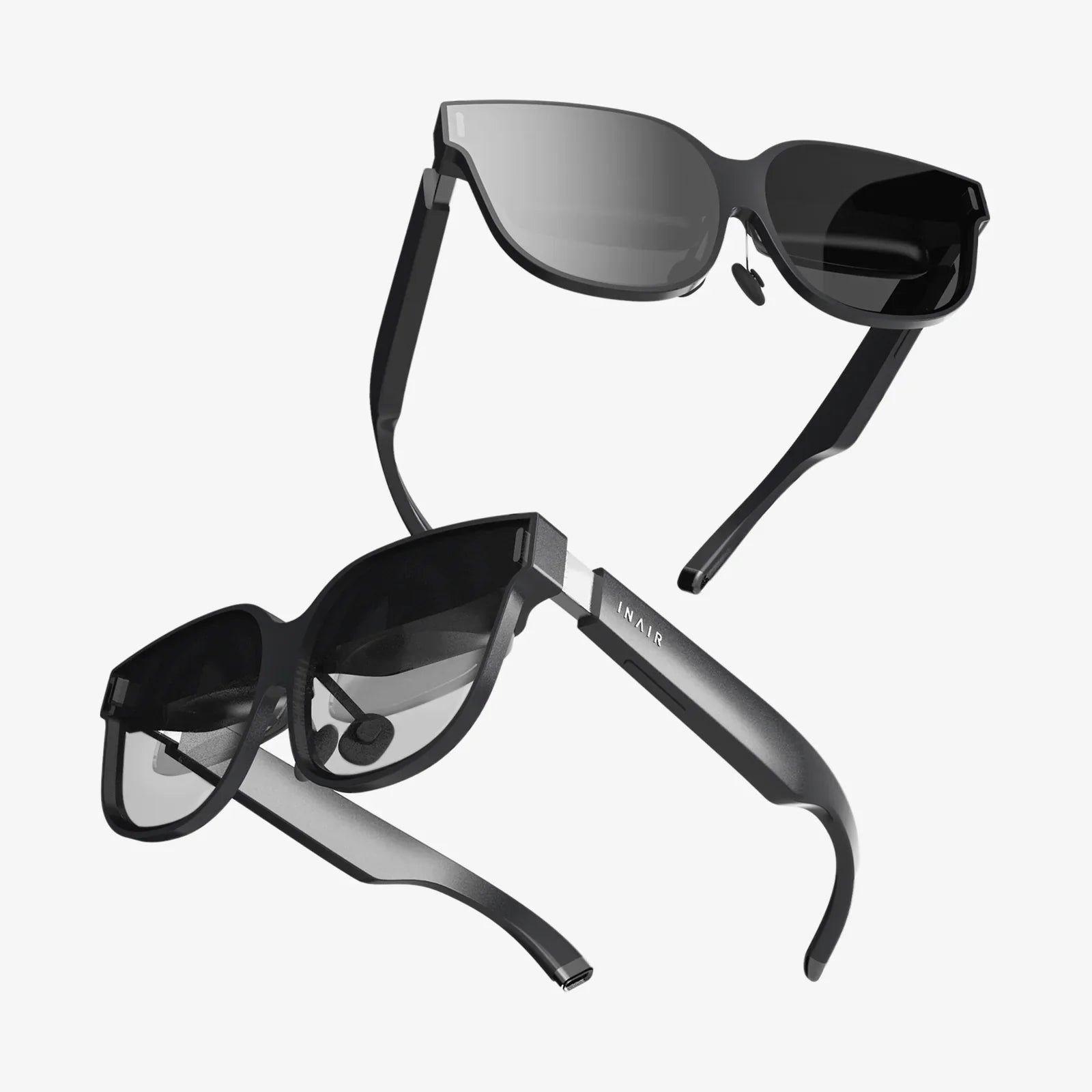
Imagine a world where information doesn't live on a screen in your pocket but is painted onto the canvas of reality itself. Where directions appear as a glowing path on the sidewalk, a colleague's avatar can point to a malfunctioning engine part from across the globe, and your evening recipe hovers effortlessly above the ingredients on your kitchen counter. This isn't a distant sci-fi fantasy; it's the imminent future being unlocked by a new class of advanced wearable technology known as AR Glasses Pro. These devices are poised to do more than just augment our reality; they are set to redefine our relationship with technology, information, and each other, creating an invisible revolution that will fundamentally reshape how we work, learn, and play.
Beyond the Hype: Defining the "Pro" in AR Glasses
The consumer market has seen its share of augmented reality viewers, but AR Glasses Pro are a different breed entirely. The "Pro" designation isn't merely a marketing term; it signifies a quantum leap in capability, performance, and intended use. While consumer-grade AR might focus on entertainment and simple notifications, the Pro category is engineered for precision, productivity, and professional-grade applications.
At their core, these devices are defined by several critical technological pillars. First is spatial computing. Unlike virtual reality, which creates a fully immersive digital world, AR Glasses Pro understand and interact with the physical space around you. Through a sophisticated array of sensors, cameras, and LiDAR scanners, they construct a real-time, three-dimensional map of your environment. This digital twin allows virtual objects to not just appear in your field of view but to interact with the real world—occluding behind a physical desk, resting on a real table, or bouncing off a wall with realistic physics.
Second is the advancement in display technology. The dreaded "holographic swim" or jittery images of past devices are being solved through cutting-edge waveguide optics and micro-LED projectors. These systems beam light directly into the eye, creating crisp, bright, and stable digital overlays that can range from subtle data readouts to full-color, high-fidelity 3D models. The field of view is significantly expanded, moving beyond a small postage stamp of AR to a more immersive and useful canvas. Furthermore, solutions for the vergence-accommodation conflict—the eye strain caused when your eyes focus on a virtual object at one distance but must physically focus on the screen on the glasses—are being actively addressed with varifocal and light field technologies, making prolonged use comfortable and natural.
Finally, the "Pro" is powered by immense onboard processing. This isn't just a dumb display for a smartphone. These glasses often contain dedicated processing units for computer vision, AI inference, and complex graphical rendering. This allows for real-time object recognition, spatial anchoring of content, and seamless interaction without the latency that would induce nausea or break the sense of immersion. The combination of these technologies transforms the glasses from a novelty into a robust tool, a true successor to the desktop computer and the smartphone.
The Engine of Industry: Professional Applications Today
While the consumer future is bright, the most immediate and transformative impact of AR Glasses Pro is happening in enterprise and industrial settings. Here, the return on investment is clear, measurable, and revolutionary.
Revolutionizing Manufacturing and Field Service
On the factory floor, AR Glasses Pro are becoming indispensable. A technician performing a complex repair on an aircraft engine no longer needs to constantly look down at a physical manual or a tablet. With AR guidance, digital arrows and annotations point directly to the specific bolts that need removal. A torque specification can hover next to a wrench. A remote expert, seeing exactly what the on-site technician sees through a live feed, can draw circles and instructions directly into their field of view, drastically reducing errors, training time, and downtime. This application alone is saving corporations millions and increasing operational safety.
Transforming Healthcare and Medicine
In medicine, the stakes are even higher. Surgeons are using AR overlays to visualize a patient's anatomy—such as CT scans or tumor margins—superimposed directly onto their body during procedures. This provides a kind of "X-ray vision," enhancing precision and improving outcomes. Medical students can practice complex procedures on detailed, interactive holograms. For nurses, important patient vitals and allergy information can be displayed discreetly upon entering a room, ensuring critical data is always at hand without disrupting the human connection of care.
Reimagining Architecture and Design
Architects and interior designers are walking through full-scale holographic models of their buildings long before a single foundation is poured. They can adjust the placement of a wall with a gesture, change the lighting in real-time, and experience the spatial flow of a design in a way blueprints and computer monitors could never allow. Clients can be immersed in their future homes, making informed decisions and providing feedback, creating a collaborative and transparent design process.
The Societal Shift: Implications for Connection and Content
The proliferation of AR Glasses Pro will ripple far beyond the workplace, triggering profound shifts in how we socialize and consume media.
The Future of Social Interaction
Social media will evolve from a feed on a phone to a shared layer on the world. Imagine meeting a friend for coffee and both seeing the same interactive digital art on the cafe wall, or playing a collaborative board game that materializes on the table between you. Remote presence will take a giant leap forward; instead of staring at a grid of faces on a video call, a photorealistic avatar of your colleague could sit on the couch in your living room for a meeting, making distance feel increasingly irrelevant. This "spatial web" will require new social etiquette and redefine our concepts of personal space and shared experience.
A New Canvas for Storytelling
The entertainment industry is poised for its biggest disruption since the invention of film. Narratives won't be confined to a rectangular screen. A mystery story could unfold in your own home, with clues hidden on your bookshelf. A historical documentary could place ancient Romans marching through your local park. Gaming will become a truly physical and pervasive activity, blending exercise, exploration, and fantasy in ways previously unimaginable. Directors and artists will become experience architects, crafting stories that are unique to the player's or viewer's environment and choices.
Navigating the Invisible: Challenges on the Horizon
This future is not without its significant challenges. The path to widespread adoption is paved with technical, social, and ethical hurdles that must be thoughtfully addressed.
Battery Life and Form Factor: For all-day wear, these devices must become as lightweight, comfortable, and socially acceptable as a standard pair of eyeglasses. The battery technology must support intensive computing without requiring a bulky external pack, pushing the limits of current power density innovations.
The Privacy Paradox: A device that sees everything you see and hears everything you hear is a privacy advocate's nightmare. Robust, transparent, and user-controlled data policies are non-negotiable. Questions about continuous recording, facial recognition, and data ownership must be settled before these devices become mainstream. The very concept of public and private space may need to be legally re-evaluated.
The Digital Divide: As with any powerful technology, there is a risk of creating a new societal schism between those who have access to this augmented layer of reality and those who do not. Ensuring that the benefits of AR are equitable and accessible will be a critical task for policymakers and developers alike.
Psychological and Social Health: Will constant digital stimulation lead to further distraction and an inability to be present in the un-augmented moment? The potential for new forms of advertising spam in our visual field is a concerning prospect. Society will need to develop new norms to ensure this technology enhances our humanity rather than detracts from it.
The Dawning of a Contextual Era
We are moving from the era of personal computing to the era of contextual computing. The smartphone asked us to look down and disconnect from our surroundings to access information. AR Glasses Pro promise the opposite: to keep our heads up and our hands free, weaving information contextually into the fabric of our lives. They represent a more intuitive and human-centric way of interacting with the digital realm, where technology understands our environment and responds to our needs without a click, tap, or spoken command.
This is not merely an incremental update. It is a fundamental shift in the paradigm of human-machine interaction. The potential to amplify human intelligence, skill, and creativity is staggering. From the surgeon saving a life with enhanced vision to the mechanic fixing a complex machine with remote guidance, from the artist creating immersive worlds to the family sharing a holographic memory, the applications are as limitless as our imagination. The revolution won't be televised; it will be projected onto the world around us, and it starts the moment you decide to look through a new lens.
Share:
AR Glasses with Diopter Adjustment: The Ultimate Guide to Personalized Augmented Reality
Smart Work Digital: The Future-Proof Strategy for Modern Productivity