


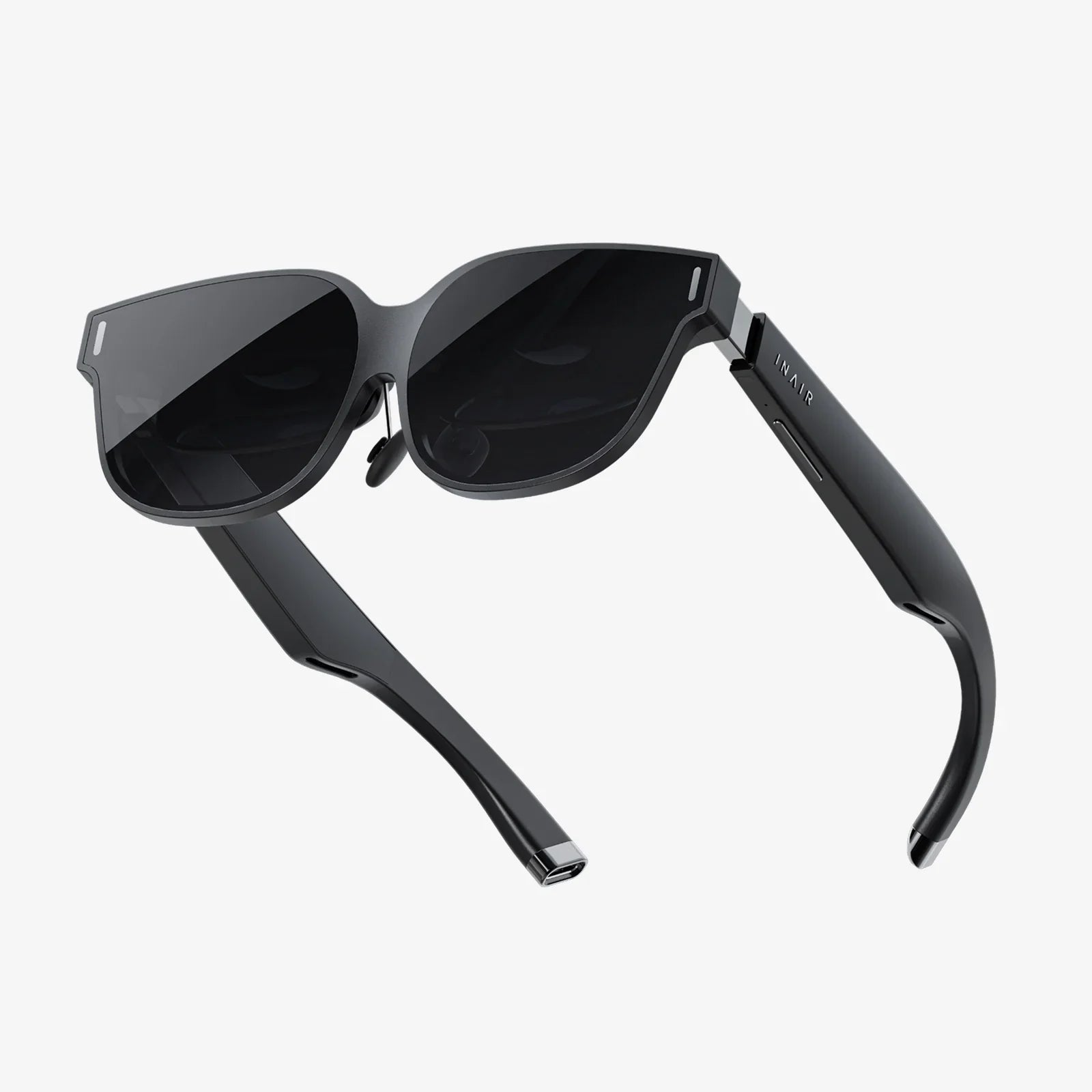
For decades, the promise of augmented reality (AR) has been tethered to a visual aesthetic of bulky headsets and awkward face computers, more akin to welding gear than a personal accessory. The dream was always a seamless one: digital information and experiences layered effortlessly onto our physical reality, accessible not through a chunky visor but through a pair of elegant, everyday glasses. That dream, long deferred by the constraints of technology, is now a reality. The arrival of AR glasses that look like normal glasses isn't just an incremental upgrade; it's the fundamental key that unlocks the true, ubiquitous potential of augmented reality, moving it from a niche gadget to a transformative tool for living, working, and connecting.
The Long Road to Invisibility: From Prototype to Polished
The journey to this point has been anything but straightforward. Early AR devices were engineering marvels, but they prioritized function over form in the most extreme ways. They were heavy, suffered from limited battery life, and generated significant heat. Most notably, they required complex optical systems like birdbath optics or waveguides that were difficult to miniaturize without compromising field of view or brightness. The result was hardware that felt experimental and looked alienating, confining AR use to specific industrial, gaming, or development contexts.
The breakthrough lies not in a single invention, but in a confluence of technological advancements across multiple domains. The miniaturization of micro-LED and laser projection systems has been paramount, allowing for incredibly small yet powerful light engines. Similarly, advances in nanotechnology and holographic film have created vastly more efficient waveguide combiners that can pipe light to the eye with minimal bulk. On the processing front, the rise of powerful, ultra-low-power chipsets and edge computing means less computation needs to happen on the device itself; tasks can be offloaded to a companion device or the cloud, drastically reducing size, heat, and power requirements. Finally, improvements in battery technology, particularly solid-state and custom-shaped cells, allow for power to be discreetly integrated into the temples of the glasses without adding noticeable weight or thickness. It is this symphony of innovation that has finally composed the form factor we were always promised.
Beyond the Aesthetic: Why Looking Normal is Revolutionary
Dismissing the importance of a normal appearance as mere vanity would be a profound mistake. The social acceptability of a technology is arguably just as critical as its technical capabilities. Humans are social creatures, and we are inherently sensitive to social cues and norms. Wearing a large, obvious device on your face during a conversation can be perceived as rude, distracting, or simply strange. It creates a barrier between the user and those around them, signaling that the wearer is partially elsewhere, engaged with a digital world inaccessible to others.
AR glasses that look like normal glasses shatter this barrier. They enable what technologists call "calm computing." The technology fades into the background, becoming a subtle tool rather than a dominant interface. You can maintain eye contact in a meeting while discreetly viewing your talking points. You can get walking directions in a new city without ever looking down at your phone, appearing as just another person enjoying the scenery. You can see contextual information about a piece of art in a museum without holding up a device to block others' views. This shift from obtrusive to unobtrusive is what allows AR to weave itself into the fabric of daily life, enhancing moments rather than interrupting them. It transforms the technology from something you use to something you wear and, eventually, something you forget you're wearing.
A World Augmented: Practical Applications Unleashed
With the form factor constraint solved, the true potential of AR can be explored across nearly every aspect of modern life. The applications extend far beyond flashy games and filters, delving into profound utilities.
Professional and Productivity Powerhouse
Imagine a technician repairing a complex piece of machinery with a schematic overlay identifying every part and the exact torque specifications for each bolt, hands-free. An architect walking through a construction site can see the digital BIM model perfectly aligned with the physical space, identifying potential clashes before they become costly errors. A surgeon could have vital signs, 3D scans, or procedural guides visible in their periphery without turning away from the patient. For the knowledge worker, virtual monitors can extend a laptop workspace anywhere, turning a coffee shop table into a multi-screen command center. All of this is achieved without the isolation of a VR headset or the constant need to glance down at a separate screen.
Redefining Social Connection and Accessibility
For individuals who are hard of hearing, real-time speech-to-text transcription can be displayed like subtitles for the world, making conversations fluid and effortless. Language barriers dissolve with live translation subtitles appearing under a speaking person. Navigation becomes intrinsically intuitive, with arrows and markers painted onto the sidewalk itself, guiding you turn-by-turn without ever needing to decipher a map. Meeting someone new? If permissions are granted, you could see their name and a brief, professional bio, helping you recall connections and context in a crowded networking event.
Seamless Consumer and Lifestyle Integration
The consumer applications are equally compelling. Shopping for furniture? See how that new sofa would look in your living room, scaled to perfection, before you buy. Following a recipe in the kitchen? The instructions hover just above your mixing bowl, progressing as you complete each step, all while your hands remain covered in flour. At a concert, setlists and artist information could appear subtly to your side. This is the promise of contextual computing: the right information, at the right time, in the right place, without you ever having to ask for it.
The Inevitable Challenges: Privacy, Etiquette, and the Future
Of course, such a powerful and personal technology does not arrive without significant questions. The most pressing concern is privacy. A device that sits on your face and sees the world through cameras is inherently capable of recording. Robust, unambiguous indicators that recording is active—both for the wearer and those around them—are non-negotiable. Data security must be paramount, with on-device processing for sensitive tasks becoming the gold standard to prevent personal visual data from being streamed to the cloud. Clear social norms and potentially new laws will need to evolve around when and where it is appropriate to use such devices, much like the societal negotiations that occurred with the advent of smartphones and their cameras.
The path forward will involve navigating these challenges carefully. The goal is not a world of digital isolation, but one of enhanced reality. The technology must be designed with privacy and social consent as foundational principles, not afterthoughts. As the hardware becomes truly invisible, the focus will shift entirely to the software and the experiences it enables. The next great platform for developers is not a screen in your pocket, but the world itself.
We stand at the precipice of a new era of human-computer interaction. The final piece of the puzzle, a design that respects both our faces and our social spaces, has clicked into place. The age of whispering data directly into our line of sight, of enhancing our perception without obstructing our view, is no longer science fiction. The gateway to a seamlessly augmented life is now open, and it looks exactly like the glasses you might already be wearing.
Share:
ai technologie And The Future Of Human Potential
ai technologie And The Future Of Human Potential