


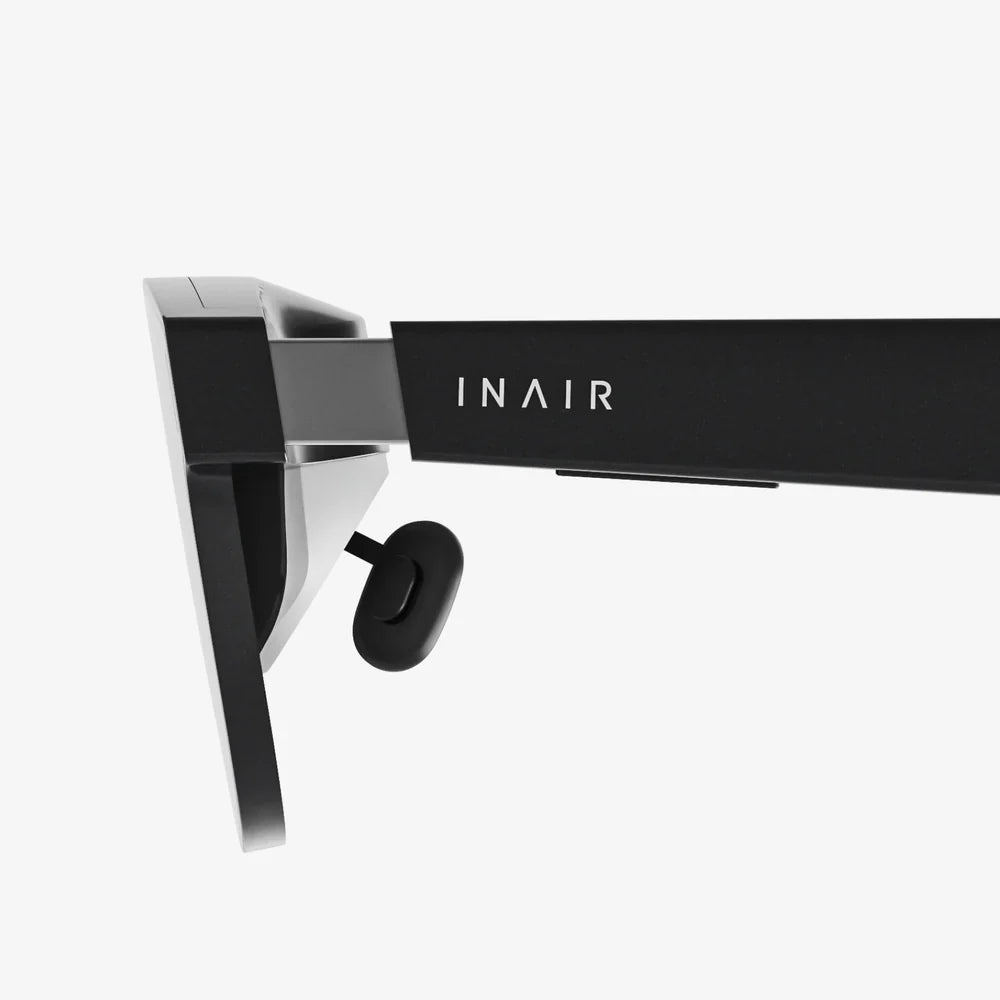
Imagine walking down the street, your vision subtly enhanced with digital information—directions floating over the sidewalk, the name of the song playing in a café displayed in the corner of your eye, a translation of a foreign street sign seamlessly overlaid onto reality—all while wearing a pair of spectacles that are indistinguishable from the classic frames you’ve always worn. This is not a distant sci-fi fantasy; it is the imminent future promised by the latest generation of augmented reality eyewear. The race to create AR glasses that look like regular glasses represents the most significant hurdle and, ultimately, the most profound evolution in wearable technology, moving us from clunky prototypes to a truly integrated, socially acceptable form factor. This is the story of the invisible revolution that will redefine our perception of reality itself.
The Long Road from Novelty to Normality
The concept of augmented reality has captivated technologists for decades. Early iterations, however, were anything but discreet. Bulky headsets, often requiring tethers to powerful computers, were the domain of specialized industrial applications, research labs, and dedicated gaming enthusiasts. They were functional marvels but social pariahs, impossible to wear for extended periods and guaranteed to draw stares in any public setting. The fundamental challenge was clear: for AR to become a ubiquitous, all-day technology that enhances rather than interrupts our lives, the hardware had to disappear. It had to become as ordinary, comfortable, and socially unremarkable as a pair of prescription eyeglasses or sunglasses. This necessity birthed the relentless pursuit of a singular goal: crafting AR glasses that look like regular glasses.
This pursuit is not merely an aesthetic one; it is a deeply technical and psychological endeavor. The success of any consumer technology hinges on its ability to integrate seamlessly into the human experience. We adorn ourselves with watches, jewelry, and eyewear as expressions of identity. A piece of technology that clashes with this expression, that screams "techie" in a context that calls for subtlety, is doomed to remain a niche product. The true breakthrough, therefore, lies in achieving technological sophistication without sacrificing the universal language of style and normalcy.
Deconstructing the Magic: The Technology Behind the Frames
Creating a powerful computer that fits into the form factor of standard eyeglasses is a feat of miniaturization that borders on alchemy. It requires rethinking and reinventing nearly every component from the ground up.
The Optical Heart: Waveguides and Microdisplays
At the core of any AR system is the method by which digital images are projected into the user’s eye. Traditional projectors and screens are far too large. The solution lies in sophisticated nano-optics. Most modern, sleek AR glasses utilize waveguide technology. Think of a waveguide as a flat, transparent piece of glass or plastic etched with infinitesimally small patterns (a diffraction grating). Light from a tiny micro-display, often an LCoS (Liquid Crystal on Silicon) or MicroLED array mounted in the temple of the glasses, is injected into the waveguide. This light bounces along inside the glass through total internal reflection until it hits a second set of gratings that direct it outwards and into the user’s eye. The result is a bright, sharp digital image that appears to float in the world ahead, all while allowing the user to see their natural environment clearly through the transparent lens.
The Power Within: Batteries and Processing
Rendering complex graphics and running sophisticated computer vision algorithms requires significant computational power. However, stuffing a powerful processor and a large battery into a thin temple arm is perhaps the greatest engineering challenge. Designers employ a multi-faceted approach. Some processing can be handled by a compact, highly efficient System-on-a-Chip (SoC) within the glasses themselves for basic tasks. For more demanding applications, the glasses can act as a sophisticated display terminal, wirelessly leveraging the processing power of a companion device in your pocket, such as a smartphone or a dedicated compute puck. Battery technology is equally critical. Designers must squeeze the highest possible energy density into the smallest possible space, often distributing battery cells throughout the frame and hinges to balance weight and maximize capacity, aiming for all-day usability.
The Invisible Interface: Interaction and Tracking
How do you interact with a interface that has no physical buttons? Advanced AR glasses employ a suite of sensors to create an intuitive, hands-free experience. Tiny outward-facing cameras perform simultaneous localization and mapping (SLAM), understanding the geometry of your environment to anchor digital objects persistently in the real world. Inward-facing cameras track eye movement and pupil dilation, enabling gaze-based selection and providing insights into user attention and focus. Built-in microphones allow for voice control through advanced digital assistants, while miniature speakers nestled in the temples deliver spatial audio that sounds like it’s coming from the environment around you, not from your head. Some prototypes even experiment with subvocal recognition, detecting the tiny neuromuscular signals generated when you talk to yourself without making a sound.
Beyond Novelty: The Transformative Applications
The true value of this technology is realized not in its specs, but in its applications. When AR becomes an invisible part of our daily view, it ceases to be a device we use and starts to be a sense we possess.
Revolutionizing Accessibility and Learning
Imagine a world where visual impairments are compensated for in real-time. AR glasses could enhance contrast for those with low vision, highlight obstacles for those with limited peripheral sight, or even translate spoken word into real-time subtitles for the hearing impaired, displayed effortlessly within the user's field of view. For students and lifelong learners, complex concepts could be visualized in 3D right on their desk—a holographic heart beating before a medical student, or the orbits of planets circling around a teacher’s head for an astronomy class. Language learners would see the world annotated with vocabulary, turning every street into an interactive classroom.
Redefining Professional and Industrial Workflows
The implications for professionals are staggering. A surgeon could have vital signs and procedural guides overlayed directly onto their view of the operating field without looking away. An engineer could see schematics and diagnostics superimposed on malfunctioning machinery. A architect could walk through a full-scale, holographic model of their building design while it’s still in the blueprint phase. For field technicians, remote experts could literally "draw" instructions onto their real-world view, guiding them through complex repairs with AR annotations. This "see-what-I-see" remote assistance boosts efficiency and reduces errors dramatically.
Enhancing Social Connection and Navigation
Socially, this technology promises to make us more present, not less. Instead of constantly looking down at a phone screen to get directions, the path can be drawn onto the sidewalk ahead of you. Instead of fumbling for a translated menu, the text could appear in your native language the moment you look at it. In social settings, discreet reminders of a person’s name and how you know them could appear as you greet them, easing introductions and strengthening connections. The constant distraction of a smartphone could be replaced by contextual, glanceable information that appears only when and where it is needed, allowing us to re-engage with the people and places right in front of us.
The Inevitable Challenges: Privacy, Security, and the Social Contract
With this transformative power comes profound responsibility. A technology that blends so seamlessly into life and is always sensing the world raises critical questions that society must address.
The presence of always-on cameras and microphones, even if designed for user benefit, creates a potential for surveillance that is unprecedented. The concept of consent in public spaces becomes blurred. If someone is recording their AR experience, are the people around them being recorded without their knowledge? Robust, transparent, and user-centric privacy frameworks will be non-negotiable. Features like physical camera shutters, clear recording indicator lights, and ethical data handling policies must be industry standard.
Furthermore, the potential for digital vandalism—leaving offensive or malicious AR graffiti in public places—is a real concern. The security of these systems is paramount; a hacked pair of AR glasses could feed users dangerously incorrect information, from wrong directions to altered safety instructions. Establishing a trusted digital layer over our physical reality requires a level of security and authentication that we are only beginning to conceive.
The Future is Clear: A World Gently Augmented
The development of AR glasses that look like regular glasses is more than an incremental product update; it is the key that unlocks the next era of human-computer interaction. It represents a shift from pulling a device out of our pocket to having contextually relevant information gently surface within our perception. It’s a move away from immersive virtual worlds that replace reality and towards an augmented reality that enhances and enriches our existing world.
We are standing on the precipice of this change. The technology is coalescing, the designs are shrinking, and the first truly consumer-ready products are emerging. The journey from conspicuous headset to indistinguishable eyewear is the final, crucial step in making augmented reality not just a technology we admire, but one we effortlessly live with. It promises a future where the boundary between the digital and the physical dissolves, not with a bang, but with a whisper—a future where the most powerful technology is the kind you barely even notice you’re wearing.
The day is fast approaching when glancing at your smartwatch will feel archaic. The next wave of connectivity won't be in your hand or on your wrist, but directly in your line of sight, woven so discreetly into your everyday look that its power remains your secret—until the moment you need to see the world not just as it is, but as it could be.
Share:
Adjust Content On Window Size For Seamless Responsive Experiences
Interactive Window Touch Screen Technology: Transforming Glass into a Digital Gateway