


- by wangfred
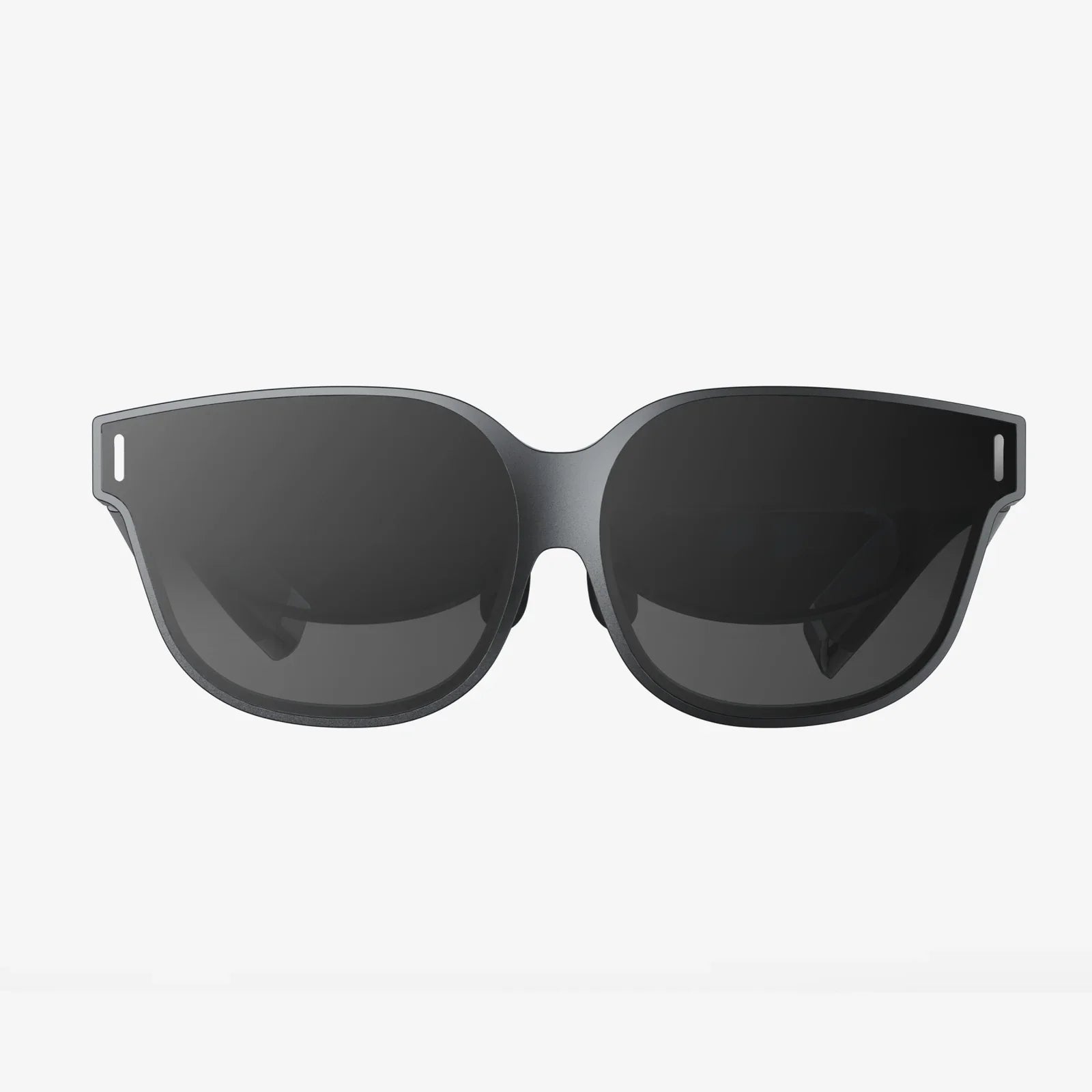
AR Glasses That Look Normal - The Invisible Revolution in Wearable Tech
- by wangfred
Imagine walking down the street, your world subtly enhanced with digital information—directions floating over the sidewalk, the name of the song playing in a café appearing in the corner of your vision, a notification from a friend gently pulsing—all without a single person giving your eyewear a second glance. This isn't a distant sci-fi fantasy; it's the imminent future promised by a new generation of augmented reality glasses that look, for all intents and purposes, completely normal. The era of bulky, geeky, and socially awkward headgear is receding into the past, making way for a revolution so discreet you might just miss it.
For over a decade, the concept of augmented reality has been tantalizingly out of reach for the average consumer. Early prototypes and market entries were plagued by a fundamental flaw: they were too obvious. They screamed "tech enthusiast" from a mile away, with thick frames, dark tinted lenses, and bizarre protrusions housing cameras and sensors. This design language created a significant social barrier to adoption. No one wanted to be the person in a business meeting or a social gathering wearing a computer on their face that drew more attention than the conversation itself. The dream was always a pair of glasses—something you'd forget you were wearing until you needed its power. The journey to this point has been a masterclass in miniaturization, material science, and optical engineering, solving a complex puzzle where fashion and function had to merge seamlessly.
Creating AR glasses that look normal is a monumental technical challenge. It requires squeezing cutting-edge technology into a form factor that has remained relatively unchanged for a century. The breakthroughs happen in several key areas.
The most critical component is the display system. Traditional setups used bulky prisms or mirrors to project images directly into the eye, necessitating a large forward-facing apparatus. The modern solution lies in waveguide technology. These are incredibly thin, transparent pieces of glass or plastic that use diffraction gratings to pipe light from a tiny projector at the temple into the eye. This allows the digital imagery to be overlaid onto the real world without requiring deep, opaque lenses. Coupled with ultra-bright, minuscule Micro-LED displays, the entire projection system can be shrunk down to fit within the thickness of a standard eyeglass arm.
For AR to be contextually aware, it needs to see the world. This requires cameras, depth sensors, and LiDAR scanners. The genius of new designs is how these components are hidden. Cameras are now smaller than a pinhead and integrated seamlessly into the bridge or the frame's front. Inward-facing eye-tracking cameras are concealed within the inner rim of the frames, completely invisible to an outside observer. Spatial audio speakers are another marvel, often using bone conduction or tiny transducers that turn the entire frame into a speaker, delivering sound directly to the wearer's ear without any visible drivers, preserving both aesthetics and awareness of ambient noise.
Perhaps the biggest hurdle has been power. High-performance computing and bright displays are power-hungry. The solution is a multi-tiered approach. Some processing is handled on the device itself by chipsets so small they fit in the hinges. However, the heavy lifting is often offloaded to a companion device, like a smartphone in your pocket, connected via a low-energy wireless protocol. The battery itself has seen radical innovation. Instead of a clumsy external pack, power cells are now distributed throughout the frame—in the thicker arms and the front—using flexible, thin-cell battery technology. For all-day wear, a sleek, pocketable charging case provides top-ups throughout the day, much like wireless earbuds.
Technology is only half the battle. For these devices to be truly adopted, they must be desirable. Leading companies have pivoted to embrace the principles of high fashion and classic eyewear design.
The goal is to offer a style for every face and personality. This means producing frames in a wide array of shapes: classic round and oval frames for a timeless intellectual look, wayfarer styles for a touch of retro cool, and modern rectangular and aviator designs. The materials, too, have evolved. Lightweight beta-titanium alloys, stainless steel, and even plant-based acetates are used to ensure durability, comfort, and a premium feel. The days of uniform black plastic are over.
The true test of "normal" is the coffee shop scenario. If you can sit down with a latte, work on your laptop, and have a conversation without the person across from you noticing anything unusual about your glasses, the designers have succeeded. The indicators of technology must be virtually nonexistent: no glowing lights, no whirring fans, and no awkward blind spots in the lenses. The interaction should be subtle—perhaps a gentle haptic tap from a tiny actuator in the arm to notify you of an important alert, or a small LED on the inside of the frame, visible only to you, indicating battery status.
When the hardware fades into the background, the software and experiences take center stage. Normal-looking AR glasses unlock applications that feel less like using a tool and more like having a superpower.
Walking through a new city becomes an immersive history lesson. Glances at buildings could reveal their architectural style and year of construction. Restaurant reviews and ratings could hover near their entrances. Turn-by-turn navigation would appear as a faint line on the sidewalk, guiding you effortlessly without the need to constantly look down at a phone screen, disconnecting you from your environment.
In professional settings, imagine meeting a client and having their name, company, and last point of contact discreetly displayed as you shake their hand. During a presentation, your speaking notes could be visible only to you. For remote collaboration, a colleague's 3D model could be projected onto your physical workbench, and you could both manipulate it in real time as if they were standing right beside you.
The potential for accessibility is profound. Real-time captioning of conversations for the hearing impaired could be displayed beneath the speaker. For those with low vision, text could be magnified and contrast enhanced. Object recognition could help individuals identify items or navigate spaces more easily. This technology has the power to create a more inclusive world by augmenting reality to compensate for perceptual limitations.
With great power comes great responsibility. The very invisibility of this technology raises critical questions. The ability to record video or take pictures surreptitiously is a legitimate privacy concern for those around the wearer. Manufacturers are addressing this with clear physical indicators—like a small green LED that lights up when the camera is active—ensuring the act of recording is never secret. Social etiquette will also need to evolve. The societal norms around when it is appropriate to be immersed in a digital overlay, and how to interact with people who are, will be forged in real time as adoption grows. The goal is augmentation, not replacement, of our real-world connections.
We are standing at the precipice of a new computing paradigm. The shift from computers we carry to computers we wear represents a fundamental change in our relationship with technology. The success of this transition hinges on the technology's ability to integrate into our lives without being a disruptive force. The development of AR glasses that look normal is the critical key that unlocks the door. It removes the final barrier to entry, allowing the technology to be judged not on its appearance, but on its utility and the value it adds to our daily experiences.
The true mark of this technology's success won't be a flashy launch event; it will be the day you notice three people on your morning commute wearing stylish glasses and realize you have no idea if they're seeing the world as it is, or as it could be. The revolution won't be televised; it will be barely noticeable, happening right before our eyes, hidden in plain sight.
Share:
Types of 3D Video Formats: A Deep Dive into Stereoscopic Cinema and Beyond
Types of 3D Video Formats: A Deep Dive into Stereoscopic Cinema and Beyond