


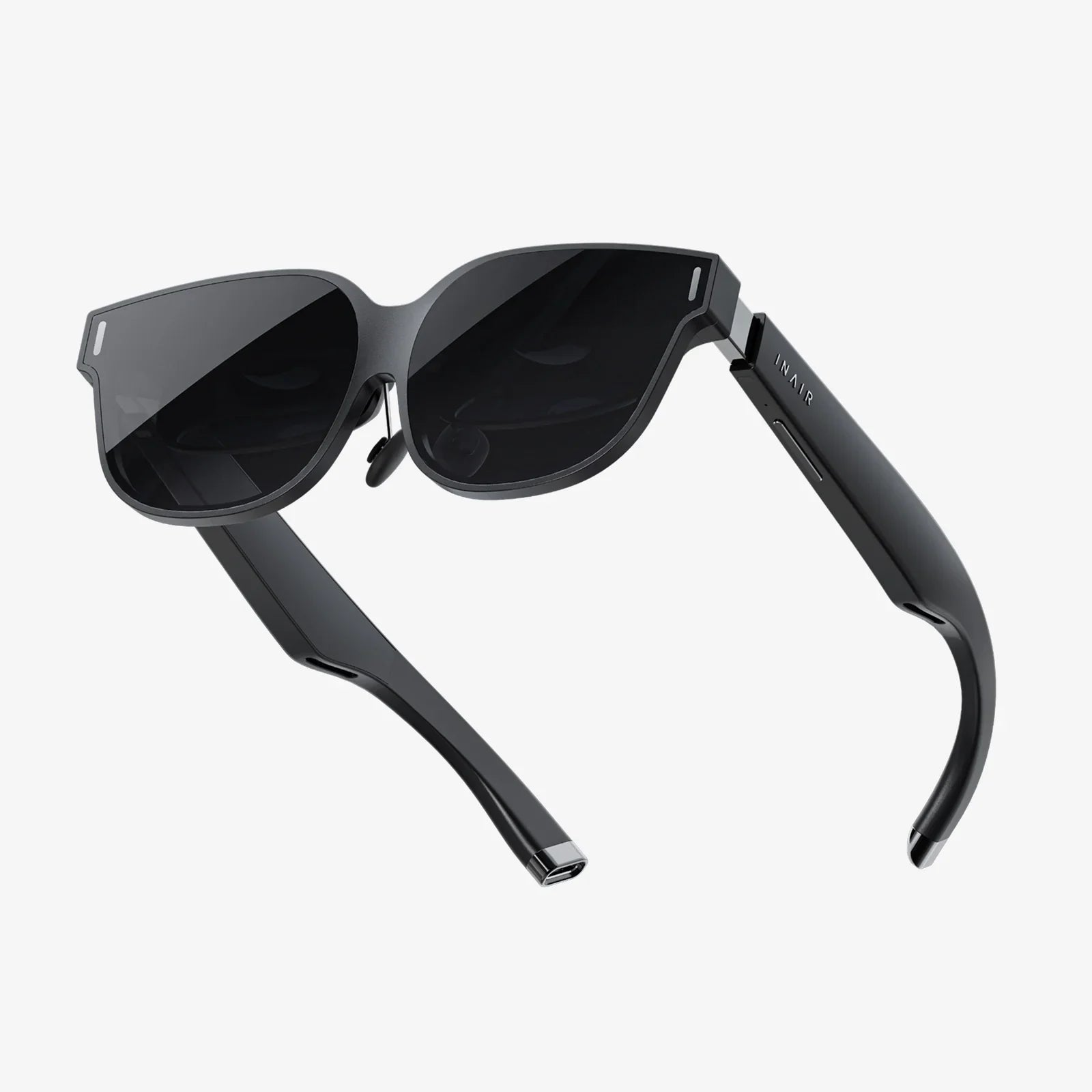
Imagine a world where digital information doesn't confine you to a screen but instead, seamlessly overlays your physical reality, enhancing every walk down the street, every task at work, and every moment of learning. This is no longer the stuff of science fiction; it's the burgeoning reality of Augmented Reality glasses, and the United States is at the epicenter of this technological revolution. The journey of AR glasses in the USA is a fascinating tale of innovation, ambition, and the relentless pursuit of a more connected and intelligent future, promising to fundamentally reshape how Americans live, work, and play.
The Genesis: From Concept to Cutting-Edge
The story of AR glasses in America didn't begin with a consumer product; it was born in the halls of research institutions and the demanding environments of military and industrial applications. The foundational technology, often traced back to Ivan Sutherland's "Sword of Damocles" in the 1960s, was a clunky, head-mounted display system that was more concept than practicality. For decades, AR remained a niche field, its progress hampered by limitations in processing power, display technology, and miniaturization.
The true catalyst for the modern era of AR glasses was the smartphone revolution. The mass production of high-resolution micro-displays, miniature cameras, inertial measurement units (IMUs), and powerful mobile processors—all driven by smartphone demand—provided the essential building blocks. American tech giants and ambitious startups suddenly had access to the components needed to shrink AR systems from room-sized setups to a wearable form factor. This convergence of enabling technologies marked the beginning of a new chapter, moving AR out of the laboratory and into the realm of commercial possibility.
Defining the Experience: Types of AR Glasses in the US Market
Not all AR glasses are created equal, and the US market is rapidly evolving to offer a spectrum of devices tailored for different experiences and use cases. Understanding these categories is key to grasping the current landscape.
Smart Glasses for Enterprise and Industry
This category represents the most mature and successful application of AR glasses technology in the USA today. These devices are designed for durability, functionality, and hands-free operation in demanding environments. Workers on factory floors, technicians repairing complex machinery, and surgeons performing delicate procedures use these glasses to view schematics, receive remote expert guidance, and access real-time data without looking away from their task. The value proposition here is clear: increased efficiency, reduced errors, and enhanced training, leading to a strong return on investment for businesses.
Consumer-Focused Smart Viewer Glasses
This newer category is designed primarily as a personal, portable display. Rather than creating complex 3D overlays on the real world, these glasses often function as a wearable monitor for media consumption, gaming, and basic computing. Users can project a massive virtual screen in front of them to watch movies, browse the web, or use apps, all while maintaining some awareness of their surroundings. This approach offers a more accessible and affordable entry point into wearable computing for the average American consumer.
True AR Glasses (The Future)
This is the holy grail: sleek, lightweight glasses that offer full-color, high-fidelity digital overlays that convincingly interact with the real world. This requires advanced waveguides, precise spatial mapping, and immense computing power, either onboard or streamed via a high-bandwidth connection. While several American companies have demonstrated impressive prototypes and developer kits, this category is still in its relative infancy for the mass market. The technical challenges of balancing performance, form factor, battery life, and cost remain significant, but intense research and development efforts across the country are steadily overcoming these hurdles.
The American Ecosystem: Innovation, Investment, and Competition
The development of AR glasses is not happening in a vacuum. It is being propelled by a powerful and unique ecosystem within the United States.
- Tech Giants: Some of the world's most valuable companies are betting big on AR. Their vast resources allow for long-term R&D, strategic acquisitions of smaller startups with key patents, and the development of entire software platforms and app stores designed for the "metaverse" or "spatial computing." This creates a powerful pull for developers and content creators.
- A Vibrant Startup Culture: From Silicon Valley to Boston and Austin, countless startups are innovating on specific components like display engines, waveguide technology, and AR-specific chipsets. This entrepreneurial spirit fosters rapid iteration and niche breakthroughs that larger companies can later integrate or acquire.
- World-Class Universities and Research Hubs: Institutions like MIT, Stanford, and Carnegie Mellon are powerhouses of fundamental research in computer vision, optics, and human-computer interaction. They act as a talent pipeline, feeding brilliant engineers and groundbreaking ideas into the commercial sector.
- Venture Capital: Billions of dollars in venture funding have flowed into the AR space, fueling the growth of both hardware manufacturers and software developers creating the essential applications for these new platforms.
Transforming the American Workforce
The impact of AR glasses is already being felt profoundly across various US industries, revolutionizing traditional workflows and creating new paradigms for productivity.
In manufacturing and logistics, technicians equipped with AR glasses can see digital arrows overlaid on a complex engine, guiding them through a repair procedure step-by-step. Warehouse workers can have the most efficient picking route displayed in their field of view, instantly increasing fulfillment speed and accuracy. The ability to have a remote expert see what a field technician sees and provide visual annotations directly into their line of sight drastically reduces travel costs and downtime.
In healthcare, the potential is staggering. Medical students can practice procedures on virtual patients. Surgeons can have vital signs, ultrasound data, or 3D anatomical models superimposed onto their patient during an operation, providing a level of insight never before possible. This technology is not about replacing human skill but about augmenting it with superhuman knowledge and context.
For architecture, engineering, and construction (AEC), AR glasses allow designers and clients to walk through a full-scale, virtual model of a building before a single foundation is poured. They can visualize where walls will stand, how sunlight will filter through windows, and how systems like electrical and plumbing will run within the structure, enabling better planning and collaboration.
The Consumer Horizon: Entertainment, Social, and Everyday Life
While enterprise leads, the consumer future is where the imagination truly runs wild. The promise is a world where your digital life is woven into the fabric of your physical world.
- Navigation: Imagine walking through a new city with directional arrows painted onto the sidewalk, and the names of restaurants and their ratings floating above their doors.
- Social Connection: Friends living across the country could appear as realistic avatars sitting on your couch, watching a movie with you as if they were physically present.
- Gaming: Games will escape the TV and phone screen, transforming your local park into an alien battlefield or your living room into a puzzle-filled ancient tomb.
- Everyday Information: Glances at a product on a store shelf could reveal reviews and price comparisons. Conversations with new people could subtly display their name and how you know them, pulled from your digital contacts.
The path to this always-on, augmented life is fraught with challenges, primarily around social acceptance, privacy, and design. The glasses must become something people genuinely want to wear—fashionable, comfortable, and socially unobtrusive.
Navigating the Challenges: Privacy, Safety, and the Social Contract
The rise of always-on, camera-equipped wearable computers naturally raises critical questions for American society. The potential for intrusive data collection is immense. Will conversations be recorded? How will facial recognition be regulated? What does consent look like when someone wearing AR glasses can record and analyze everything they see?
These are not merely technical questions but legal and ethical ones that the US will need to address through a combination of corporate responsibility, public discourse, and thoughtful regulation. Establishing a clear social contract around the use of this technology is paramount to its successful and positive integration into daily life. Furthermore, issues of digital distraction and physical safety in public spaces must be carefully considered and mitigated through design.
The Road Ahead: What's Next for AR Glasses in the USA?
The next five to ten years will be defined by a relentless march toward better, smaller, and more powerful devices. Key areas of advancement will include:
- Display Technology: Developments in microLEDs and holographic optics will lead to brighter, sharper, and more energy-efficient images.
- Form Factor: The goal is to achieve a look that is indistinguishable from traditional eyewear, a necessity for mass consumer adoption.
- Battery Life and Processing: Advances in chip design (e.g., specialized AR/VR processors) and low-power displays will extend usage time, while some processing will be offloaded to powerful companion devices or the cloud via robust 5G/6G networks.
- Spatial Intelligence: Cameras and sensors will become even better at understanding the geometry of the world, allowing digital objects to interact with the physical environment in believable ways—occluding behind real objects and responding to lighting conditions.
The journey of AR glasses in the USA is a testament to the nation's spirit of innovation, blending technological prowess with a bold vision for the future. From revolutionizing how we fix machines and heal bodies to redefining how we connect with information and each other, this technology holds the key to unlocking new layers of human potential and experience. The bridge between our digital and physical worlds is being built right before our eyes, and it’s a spectacle you won’t want to look away from.
Share:
Cheap Virtual Offices: The Ultimate Guide to a Prestigious Business Address on a Budget
Cheap Virtual Offices: The Ultimate Guide to a Prestigious Business Address on a Budget