


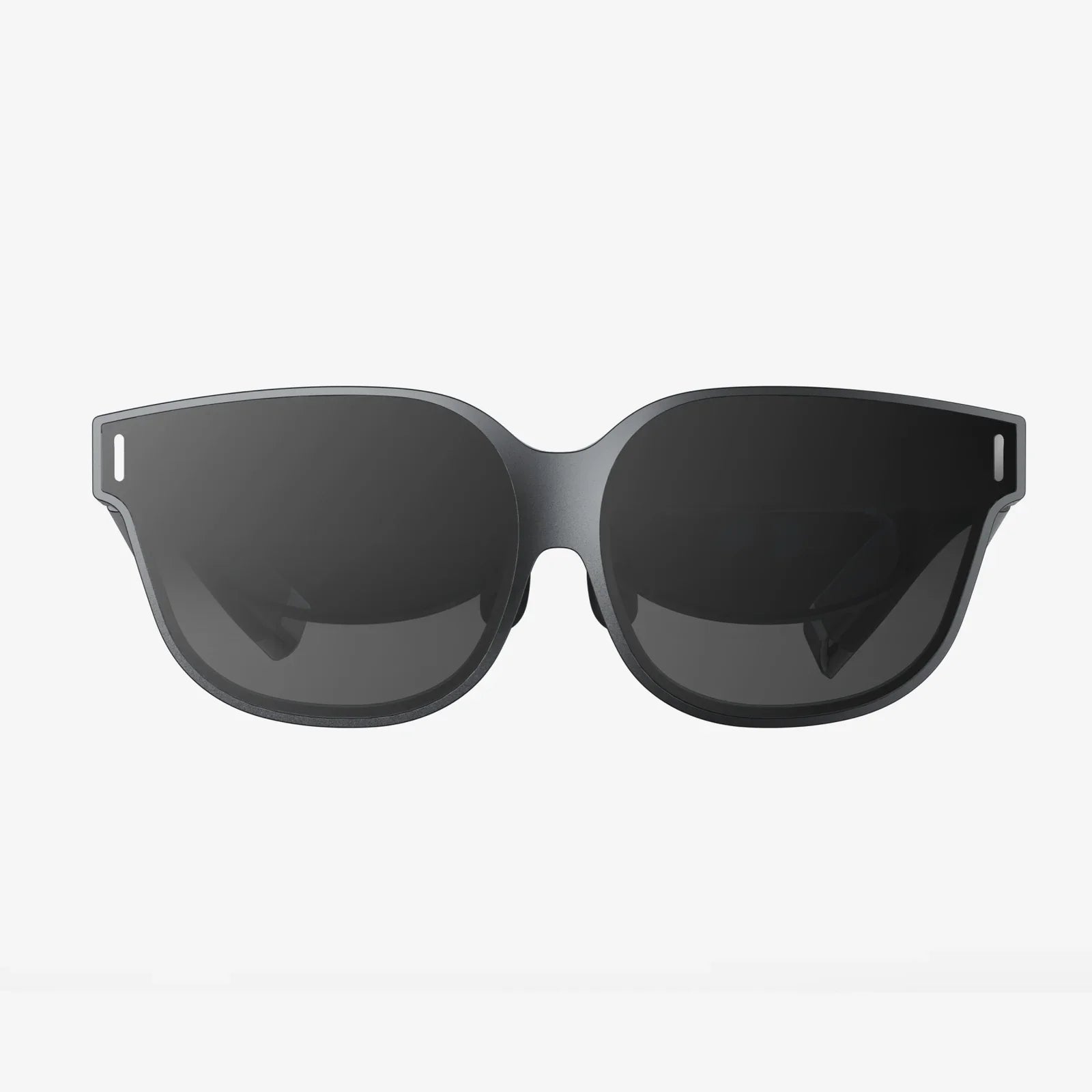
- by wangfred
AR Glasses Uses: Transforming Industries and Redefining Reality
- by wangfred
Imagine a world where digital information doesn’t just live on a screen in your hand or on your desk, but is seamlessly woven into the very fabric of your physical reality. This is the promise of augmented reality glasses, a technology poised to fundamentally alter how we work, learn, play, and interact with our environment. The potential uses for AR glasses are not just incremental improvements; they represent a paradigm shift in human-computer interaction, offering a glimpse into a future where the line between the digital and the physical is beautifully blurred.
Before diving into the myriad of applications, it's crucial to understand the core technologies that enable AR glasses to function. Unlike Virtual Reality (VR), which immerses the user in a completely digital environment, AR overlays digital content—images, data, 3D models—onto the user's view of the real world. This is achieved through a sophisticated combination of hardware and software.
The typical pair of advanced AR glasses includes micro-displays that project imagery, waveguides or other optical systems that layer this imagery onto the user's field of view, a suite of sensors (including cameras, accelerometers, gyroscopes, and depth sensors), and a powerful processor. These components work in concert to perform several critical tasks:
This technological foundation is what unlocks the vast spectrum of AR glasses uses, transforming them from a novelty into a potent utility.
The most immediate and impactful AR glasses uses are found in industrial and enterprise settings, where they are already delivering significant returns on investment by enhancing productivity, improving safety, and reducing errors.
On the factory floor, AR glasses are a game-changer. Technicians performing complex assembly or repair tasks can have digital work instructions, schematic diagrams, and 3D models overlaid directly onto the machinery they are working on. This hands-free access to information eliminates the need to constantly consult paper manuals or look away at a stationary monitor, drastically reducing errors and speeding up task completion. A remote expert can see what the on-site technician sees through a live feed and can annotate the technician's real-world view with arrows, circles, and notes, guiding them through a procedure without having to travel to the location. This use case not only saves time and travel costs but also helps preserve and transfer the knowledge of seasoned experts.
In massive distribution centers, AR glasses are streamlining the entire order fulfillment process. Warehouse workers, or pickers, are guided by visual cues—digital arrows on the floor, flashing indicators on specific shelf locations—that lead them on the most efficient route to collect items. The glasses can display vital information like item quantities and order details, confirming the correct product is selected without the picker ever needing to scan a barcode manually. This leads to a dramatic increase in picking speed and accuracy, reducing operational costs and improving customer satisfaction.
Engineers and designers are using AR glasses to visualize and interact with 3D prototypes at full scale before any physical materials are used. An automotive designer can project a life-size model of a new car into an empty space, walk around it, inspect details, and even make virtual modifications in real-time. Architects can place a 3D model of a new building onto a physical construction site, allowing stakeholders to experience the scale, design, and sightlines within the actual environment. This capability identifies potential design flaws early, saves enormous amounts of money on physical prototypes, and enhances collaborative decision-making.
The healthcare sector stands to benefit enormously from AR technology, with applications that enhance both patient care and medical training.
One of the most promising AR glasses uses in medicine is in the operating room. Surgeons can wear glasses that overlay critical patient data—such as heart rate, blood pressure, and oxygen levels—directly into their field of view, allowing them to monitor vitals without looking away from the surgical site. More advanced applications can project 3D reconstructions of a patient's anatomy from CT or MRI scans directly onto the patient's body, acting as an X-ray vision tool. This helps surgeons precisely locate tumors, blood vessels, and other critical structures, improving surgical accuracy and potentially reducing operation times.
Medical students can use AR glasses to explore detailed, interactive 3D models of the human body. Instead of dissecting a cadaver or studying a 2D textbook, they can manipulate a holographic heart, peel back layers of musculature, and observe systems in motion. This immersive, interactive learning leads to a deeper understanding of complex anatomical relationships. Furthermore, AR can simulate emergency scenarios for training first responders, providing a safe yet highly realistic environment to practice life-saving procedures.
AR glasses are also making waves in physical and cognitive therapy. For a patient recovering from a stroke, AR can turn repetitive exercises into engaging games, projecting virtual objects they need to reach for or catch. This gamification of therapy increases patient motivation and adherence to treatment plans. For individuals with phobias or PTSD, therapists can use controlled, AR-based exposure therapy in a safe and manageable way.
While enterprise leads the way, the consumer market holds a future filled with AR glasses uses that will seamlessly integrate into our everyday routines.
Imagine walking through a foreign city with turn-by-turn directions painted onto the sidewalk in front of you. AR glasses can overlay arrows and pathways directly onto the real world, making navigation incredibly intuitive. Look at a restaurant, and its ratings, menu, and daily specials could appear next to its sign. Glance at a historic landmark, and a brief history and significance materialize. This context-aware layer of information turns the entire world into an interactive, informative experience.
The success of mobile AR games has given us a taste of what's possible, but AR glasses will unleash its full potential. Games will no longer be confined to a phone screen but will transform your entire living room, local park, or city block into a digital playground. You could defend your home from virtual aliens crawling on your walls or solve puzzles that are integrated into your physical furniture. This creates a deeply immersive and physically active form of entertainment.
AR glasses have the potential to redefine telepresence. Instead of a grid of faces on a video call, a remote colleague could appear as a realistic hologram in your room, able to gesture and interact with shared 3D models. Families separated by distance could feel closer by sharing experiences—watching a movie together on a virtual big screen or playing a board game with digital pieces on a real table. This adds a spatial and shared presence that is missing from current flat-screen communication.
Beyond these broad categories, AR glasses are finding unique and powerful uses in specialized fields.
Despite the incredible potential, the widespread adoption of AR glasses faces several hurdles. The technology must become more socially acceptable, with designs that are lightweight, comfortable, and aesthetically pleasing—more like everyday eyewear. Battery life remains a significant constraint for all-day use. There are also serious concerns regarding privacy, data security, and the potential for digital distraction in the real world. Furthermore, creating a robust and intuitive ecosystem of apps and content is essential for mainstream consumer adoption.
However, the trajectory is clear. As the technology matures, becoming smaller, more powerful, and more affordable, AR glasses will evolve from a specialized tool into a universal companion. We are moving towards a future where putting on a pair of glasses will not just help us see the world more clearly, but will allow us to see it anew, enriched with a dynamic layer of intelligence and possibility. The true power of AR glasses uses lies not in replacing our reality, but in augmenting our human experience within it.
The next time you glance at a screen for information, consider a future where that information comes to you, contextually and seamlessly integrated into your world. From guiding a surgeon's hand to helping a student understand the cosmos, the transformative power of AR glasses is already beginning to reshape our reality, offering a glimpse into a more connected, efficient, and astonishingly augmented tomorrow.