


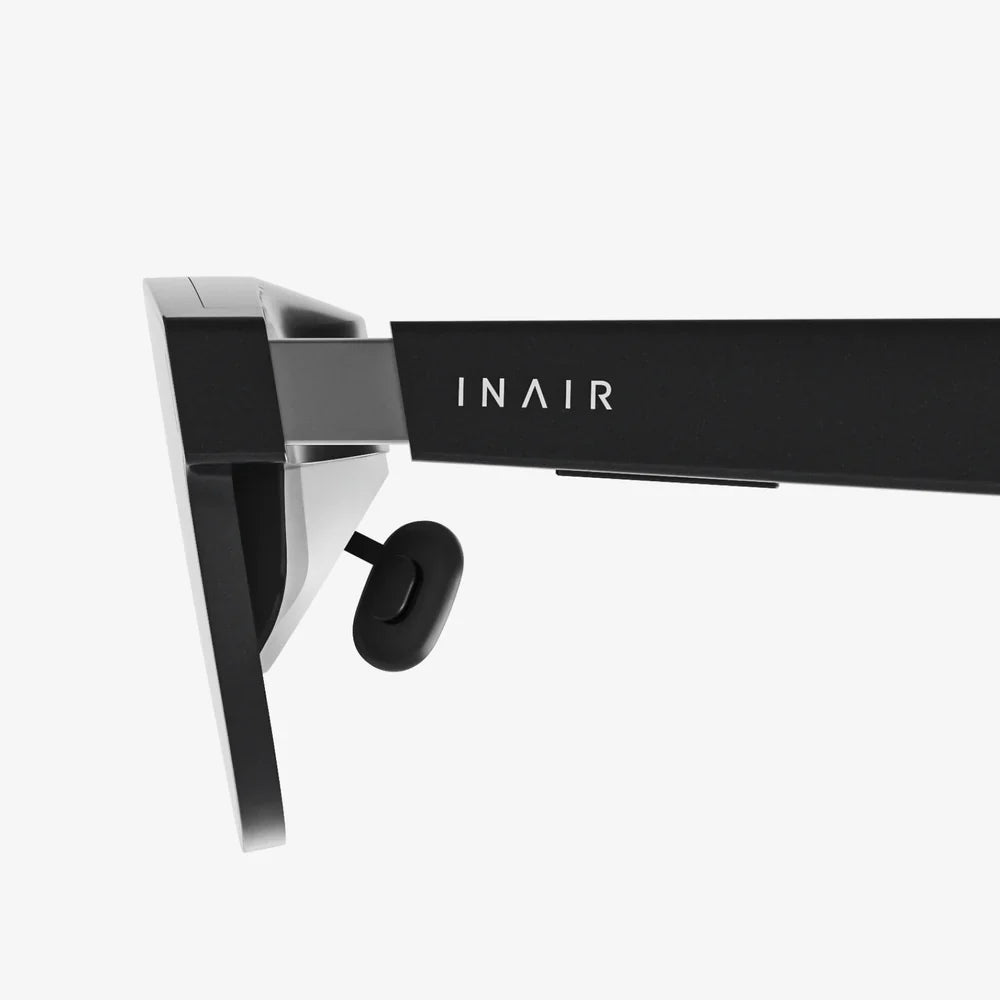
Imagine a world where information floats effortlessly in your field of vision, where digital creatures play in your living room, and where the line between the physical and the digital begins to beautifully, magically blur. This is not a distant sci-fi fantasy; it is the burgeoning reality promised by advanced augmented reality glasses. The question on everyone's mind, from early adopters to curious skeptics, is simple yet profound: AR glasses, what do you see? The answer is far more complex and revolutionary than you might think. It’s a portal to a new layer of existence, a silent digital companion that aims to enhance, rather than replace, the world in front of you.
The Core Technology: Painting the World with Data
To understand what you see through these sophisticated lenses, one must first appreciate the intricate technology working behind the scenes. AR glasses are a symphony of hardware and software, a feat of miniaturization and computational power.
The Hardware Orchestra
At their heart, AR glasses are equipped with a suite of sensors that act as their eyes and ears. Cameras, depth sensors, LiDAR scanners, and microphones constantly scan the environment. This data is processed in real-time to understand the geometry of your space, the objects within it, and even sounds like your voice or a door opening. This spatial mapping is the foundational canvas upon which the digital world is painted.
The Display: Windows to the Augmented World
The most critical component, and the one that defines the user's visual experience, is the display technology. Unlike virtual reality, which blocks out the real world, AR displays must seamlessly overlay digital content onto your clear view of reality. Several methods achieve this:
- Waveguide Displays: Light from a micro-projector is channeled through a transparent glass or plastic substrate using diffraction gratings. This is a common method for sleek, consumer-friendly designs, projecting images directly into the user's eye.
- Birdbath Optics: A compact design where light from a micro-display is reflected into a curved combiner mirror and then into the user's eye, all while allowing real-world light to pass through.
- Retinal Projection: A more experimental approach that scans low-power laser light directly onto the retina, creating a vast, high-contrast image that appears to float in space.
These systems work together to create digital images that appear locked in place in the real world, whether it's a navigation arrow on the road or a virtual screen on your wall.
The User Experience: A World Transformed
So, with the technology humming away, what does the actual user see? The experience can be broken down into several key layers of perception.
Contextual Information, Effortlessly Integrated
This is the most practical and immediately beneficial layer. Imagine looking at a complex piece of machinery and seeing animated repair instructions overlaid on the specific parts. Or walking through a foreign city where street signs automatically translate, and historical facts pop up as you gaze at a monument. You see your real-world environment, but it is annotated with a dynamic, helpful data layer that is contextually aware of what you are looking at and what you might need to know.
Spatial Computing and Persistent Digital Objects
Beyond floating information, you see persistent digital objects that coexist with physical reality. You could place a virtual television on your real wall, and it would stay there, appearing the same every time you put the glasses on. A digital sculpture could become a permanent fixture on your desk. Colleagues from across the globe could appear as life-like avatars sitting in your actual meeting room for a collaborative design session. You are not just seeing data; you are seeing a fusion of atoms and bits, a hybrid space where digital creations have real presence.
Enhanced Perception and Creative Filters
AR glasses can also alter your perception of reality for utility or creativity. You could apply a filter that highlights electrical wiring inside a wall during a renovation project. An artist could see their canvas come alive with guiding lines and dynamic brushes. Or, more whimsically, you could see the world rendered in the style of a famous painter, with your backyard transformed into a Van Gogh masterpiece. What you see is limited only by software and imagination.
Beyond Novelty: Real-World Applications Today
The vision is grand, but the technology is already delivering tangible value in specific fields, moving beyond gaming and entertainment into core professional and industrial uses.
Revolutionizing Enterprise and Manufacturing
On factory floors and in warehouses, workers are seeing digital pick-lists, assembly instructions, and safety warnings directly in their line of sight, allowing them to work hands-free and with drastically reduced error rates. Remote experts can see what a field technician sees and annotate the real world with arrows and notes to guide complex repairs, saving time and travel costs. What these professionals see is increased efficiency, safety, and capability.
Transforming Healthcare and Medicine
Surgeons can see critical patient vitals, ultrasound data, or 3D anatomical models superimposed onto their field of view during procedures, eliminating the need to look away at monitors. Medical students can practice surgeries on detailed holographic patients. What medical professionals see is a path to better outcomes, enhanced training, and more precise care.
Redefining Design and Architecture
Architects and interior designers can walk through full-scale, holographic models of their creations long before ground is broken. They can see how a new building will affect sightlines and sunlight at a real location. Car designers can evaluate a full-scale hologram of a new vehicle prototype, examining curves and details from every angle. What they see is the future, made tangible in the present.
The Challenges: What We Don't See Yet
For all the promise, the current view through AR glasses is not perfect. Significant hurdles remain that prevent the technology from becoming ubiquitous.
- Field of View (FoV): Often, the digital images are confined to a relatively small rectangle in the center of your vision, like a floating post-it note, rather than filling your entire view. Expanding the FoV without making the hardware bulky is a major engineering challenge.
- Visual Fidelity and Latency: For the illusion to be perfect, digital objects must be high-resolution and remain rock-solid in space without jittering or drifting. They must also render with near-zero latency as you move your head; any lag breaks immersion and can cause nausea.
- Battery Life and Form Factor: The dream is a pair of glasses indistinguishable from regular eyewear. Today's devices often require a separate processing unit or have limited battery life, compromising on style and convenience.
- The Social Contract: Perhaps the biggest hurdle is social acceptance. Walking around with a camera on your face raises legitimate privacy concerns for others. Figuring out the etiquette of this new technology is a societal challenge as much as a technical one.
The Future Vision: The Ultimate Interface
Looking ahead, the trajectory is clear. The goal is a device so seamless, so intuitive, and so powerful that it becomes the primary way we interact with computing, eventually replacing the smartphone. In this future, what you see will be a world deeply enriched by an invisible digital layer.
You might see AI assistants as persistent companions, offering advice and information only when needed. Your entire digital workspace—emails, browsers, creative tools—could exist on virtual screens in any coffee shop or park. Communication could become truly spatial, with friends and family appearing as if they are physically present for conversations. The internet, instead of being a place you go, will become a layer on the world you inhabit.
This evolution will require breakthroughs in battery technology, display optics, and AI. It will force us to renegotiate our concepts of privacy and reality. But the destination is a human-computer interaction paradigm that is more natural, more contextual, and more powerful than anything that has come before.
The journey through the looking glass has already begun. With every iteration, the view gets clearer, the digital objects more persistent, and the fusion more seamless. The question is no longer if this future will arrive, but how quickly we will adapt to a world where our reality is permanently, and wonderfully, upgraded. The next time you see someone gazing intently at seemingly nothing, they might not be disconnected from the world around them—they might be seeing a deeper, richer version of it than you can possibly imagine.
Share:
Wireless Spatial Stream: Unlocking the True Potential of Modern Wi-Fi
Virtual Reality: Stepping Through the Digital Looking Glass and Into the Future