


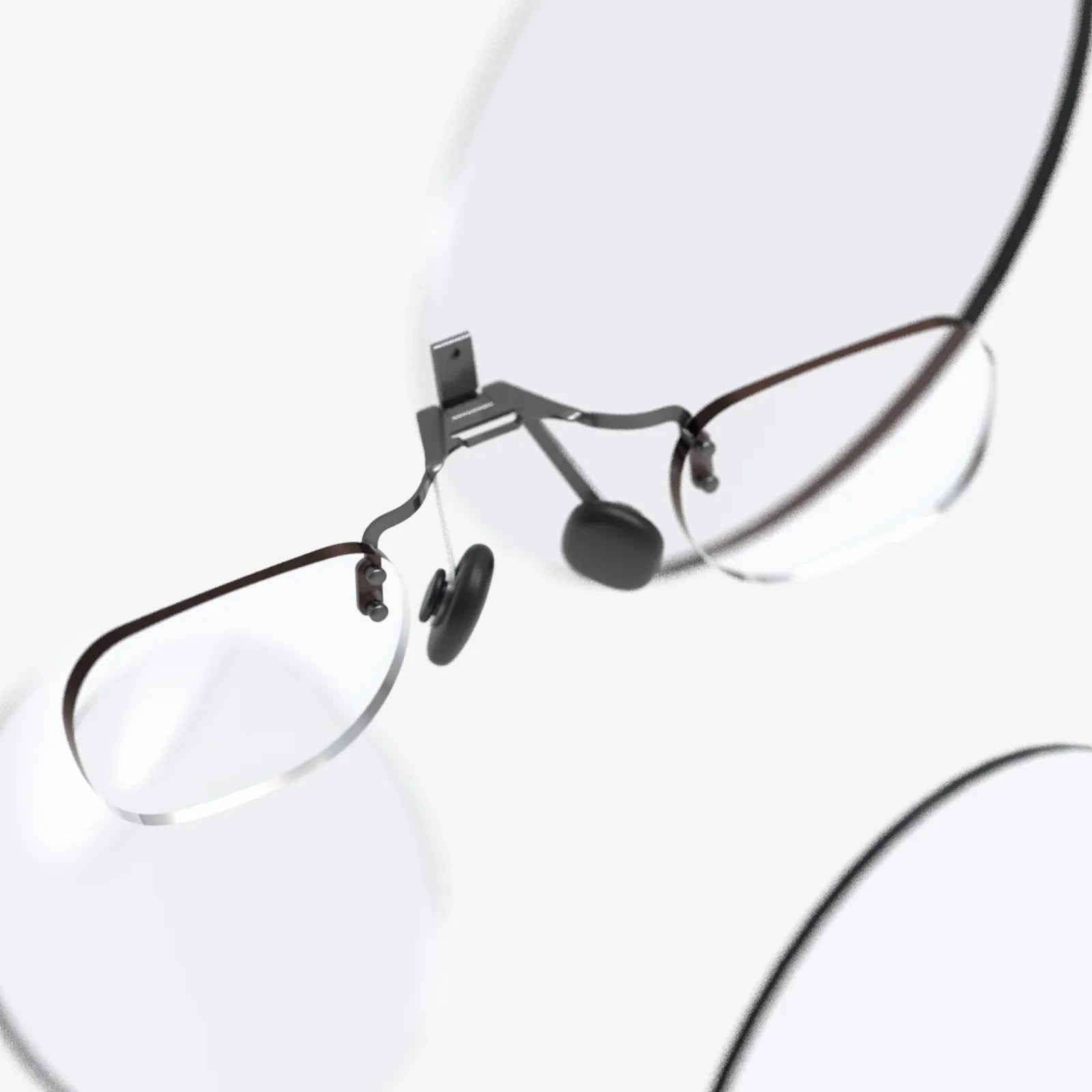
Imagine carrying a 200-inch high-definition screen in your pocket, ready to unfold a immersive, private viewing experience anywhere, anytime, with any device you own. This isn't a glimpse into a distant future; it's the reality made possible today by a pivotal feature in a growing class of wearable displays: AR glasses with HDMI input. This singular, often overlooked port is the key that unlocks a universe of untethered, universal compatibility, finally delivering on the promise of truly personal and portable big-screen immersion.
The Gateway to a Universal Display: Understanding HDMI Input
At its core, the inclusion of a standard HDMI (High-Definition Multimedia Interface) input is a declaration of independence. Unlike AR systems locked into specific brand ecosystems, requiring proprietary software, wireless protocols, or specific smartphones, glasses with an HDMI input adopt a radically simple and powerful philosophy: if a device can output a video signal, it can be your display.
This functionality transforms the glasses into a direct monitor replacement. The internal micro-displays, typically based on advanced technologies like OLED or Micro-OLED, receive a pure, uncompressed video signal directly from the source via a physical cable. This direct connection is crucial. It eliminates the latency, compression artifacts, and potential connectivity issues associated with wireless streaming methods like Miracast or proprietary AirPlay-like protocols. For fast-paced gaming, precise design work, or simply enjoying a movie without visual hiccups, a wired HDMI connection provides a level of fidelity and reliability that wireless can rarely match.
The practical implication is staggering. Your video source is no longer limited to a cutting-edge phone or a specific computer. It can be a legacy laptop, a Nintendo Switch, a DSLR camera, a drone with live feed, an in-flight entertainment system, or even a classic DVD player. The glasses do not process the content; they simply display it with breathtaking scale and clarity, acting as the most personal monitor you will ever own.
Beyond the Hype: Tangible Use Cases and Real-World Applications
The power of universal HDMI compatibility is best understood not through technical specifications, but through the transformative experiences it enables across various facets of life.
The Ultimate Portable Entertainment System
For the avid traveler, commuter, or anyone seeking a personal escape, these glasses are a revelation. Plug them into a handheld gaming console, and your game world expands to a cinematic scale, free from the prying eyes of fellow passengers. Connect them to a compact media player or even a smartphone with a USB-C to HDMI adapter, and you have a private theater capable of displaying films in stunning high definition. The immersive nature of the display, often featuring simulated surround sound through built-in speakers or audio passthrough, pulls you into the narrative in a way a tablet or laptop screen simply cannot. You are no longer just watching a movie; you are in it.
A Revolution in Remote and Mobile Work
The productivity applications are equally compelling. For the digital nomad, a pair of HDMI AR glasses and a compact laptop can replace a cumbersome multi-monitor setup. Instead of squinting at a single 13-inch screen in a coffee shop, you can have your code, design canvas, or spreadsheet projected onto a vast, virtual canvas, boosting efficiency and reducing neck strain. Technicians in the field can view schematics or repair manuals hands-free while working on complex equipment, with the image始终保持清晰 before their eyes. The ability to create a massive, private workspace anywhere there is a power outlet and a video signal fundamentally changes the meaning of "mobile office."
Niche Professional and Creative Applications
Beyond general productivity, specific professions stand to gain immensely. Photographers and videographers can use the glasses as an ultra-high-resolution external monitor for their cameras, allowing for critical focus checking and composition without being tethered to a large, sun-washed LCD screen on their device. DJs could potentially use them to view their mixing software interface without having to look down at a laptop, keeping their focus on the crowd and the physical decks. The common thread is the need for a large, high-quality, and private visual feed from a specialized device, a need perfectly met by this technology.
Key Considerations When Choosing Your HDMI AR Glasses
Not all glasses with an HDMI port are created equal. Several factors critically impact the quality of the experience.
Display Resolution and Field of View (FOV)
This is arguably the most important specification. The perceived quality of your giant screen is a function of both resolution and FOV. A 1080p (1920x1080) image stretched across a very wide FOV will appear pixelated, a phenomenon often described as the "screen door effect," where you can discern the gaps between pixels. For a truly immersive experience, look for displays that offer a high pixel-per-degree (PPD) ratio. This often means micro-displays with resolutions of 1920x1080 per eye or, ideally, 2560x1440 or higher. A higher PPD means a sharper, more believable image, allowing you to enjoy the scale without sacrificing clarity.
Form Factor and Comfort
You will be wearing these glasses for extended periods, so comfort is non-negotiable. Consider weight distribution, the type of nose pads, and the pressure on the temples. Some models resemble standard eyeglasses, while others are bulkier. If you wear prescription lenses, investigate the available solutions, which may include magnetic clip-ins or custom lenses. The goal is to forget you are wearing them and become lost in the content.
Audio Solutions
How do you hear the audio from your source? Some glasses feature built-in speakers that direct sound toward your ears. This preserves situational awareness, which is good for commuting but may lack bass and privacy. Others offer a 3.5mm audio jack for wired headphones or support low-latency Bluetooth audio for wireless buds. The best solution depends on your environment and whether you need complete privacy or need to remain aware of your surroundings.
The Cable Itself
The HDMI connection is a wire, and its length and type matter. A short, stiff cable can be annoying and may tug on the glasses. A longer, more flexible cable offers freedom of movement but can be a tripping hazard. Some models use a proprietary cable that splits into power and HDMI, while others use a single USB-C cable that carries both power, video, and data (using DisplayPort Alt Mode), offering a cleaner setup if your source supports it. Understanding the cabling is key to a frustration-free experience.
The Delicate Balance: Immersion vs. Awareness
A unique aspect of using see-through AR glasses in monitor mode is the balance between digital immersion and real-world awareness. Most models allow you to adjust the virtual screen's size, distance, and transparency. You can choose to have a massive, opaque screen that dominates your view for a movie or shrink it down to a semi-transparent floating window for keeping an eye on a video call while working on your physical computer. This fluidity is a superpower. You remain present in your environment—able to see your keyboard, take a sip of coffee, or notice someone approaching—while simultaneously interacting with a vast digital workspace. It’s a form of augmented reality that is practical and available right now, enhancing reality without replacing it.
A Glimpse into the Future: The Road Ahead
The current implementation of HDMI input is brilliantly effective, but it is also a stepping stone. It represents the "dumb terminal" phase of AR wearables—incredibly versatile displays that are agnostic to the intelligence of the source device. The next evolutionary step will see the integration of these universal display capabilities with on-board processing, cameras, and sensors. Imagine glasses that can still function as a simple HDMI monitor for anything but also have their own integrated compute unit to run AR applications, track your hands, and understand your environment, all without being tethered to another device. The HDMI input will remain, serving as a crucial bridge between the standalone AR future and the vast library of existing technology, ensuring your investment is future-proof.
The true magic of AR glasses with an HDMI input lies in their elegant simplicity. They solve a complex problem—the desire for large-scale, portable visual computing—with a universally understood solution: a cable. They democratize immersive technology, making it accessible and instantly useful to anyone with a video output, bypassing the walled gardens of specific operating systems and brand loyalties. They are not just a novel gadget; they are a fundamental shift in how we interact with digital content, offering a silent, stunning, and profoundly personal window into any world we choose, from the depths of a game universe to the sprawling canvas of our work.
Share:
Best Value AR Glasses - A Guide to High-Impact, Affordable Augmented Reality
Best Value AR Glasses - A Guide to High-Impact, Affordable Augmented Reality