


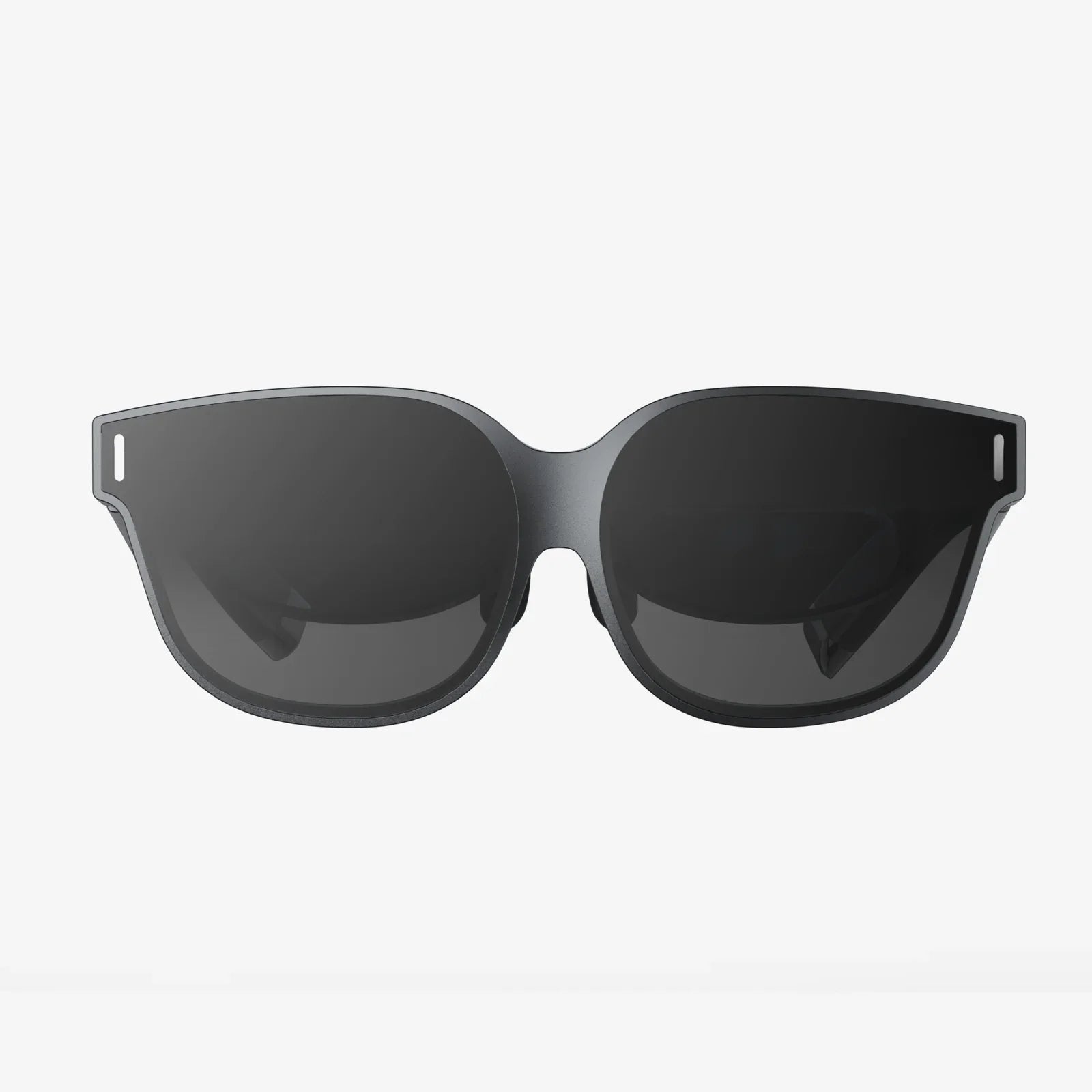
Imagine slipping on a pair of sleek, lightweight glasses and instantly transforming your world. Your living room becomes a multi-monitor command center, your morning jog is guided by floating performance metrics, and the history of the building you're passing comes alive before your eyes. This is the promise of augmented reality, a future once confined to science fiction that is now, tantalizingly, within our grasp. But for many, the question isn't about the technology's potential—it's about its price. The hunt is on not for the most powerful or the most expensive, but for the pair that delivers the most immersive experience for your hard-earned dollar. This is the quest for the best value AR glasses.
Defining "Value" in the Augmented Realm
Before we dive into the specifics, it's crucial to define what "best value" truly means in the context of AR eyewear. Value is not synonymous with "cheap." A low price tag on a device that is uncomfortable, has a tiny field of view, or lacks a meaningful software ecosystem represents poor value. Conversely, value isn't about finding a discount on the most technologically advanced, enterprise-grade hardware packed with features you will never use.
True value is found at the sweet spot where performance, comfort, software, and price intersect. It's about a device that:
- Solves a real problem or enhances an activity you already do, whether that's productivity, entertainment, fitness, or learning.
- Feels intuitive and effortless to use, with a design you can wear for extended periods without fatigue.
- Offers a visually compelling experience with a clear, bright display and a wide enough field of view to feel immersive.
- Is supported by a robust platform with a growing library of apps and content, ensuring the device doesn't become obsolete.
- Comes at a price point that makes the technology accessible without requiring a significant financial leap of faith.
The Pillars of a High-Value AR Experience
To identify a standout product, you need to understand the core components that define the user experience. These are the pillars you must evaluate when assessing any pair of AR glasses for their value proposition.
Optical Engine: See-Through and Display Clarity
The heart of any AR glasses is its optical system. This complex assembly of waveguides, lenses, and micro-displays is responsible for projecting digital images onto the real world you see through the glasses. Key factors here include:
- Display Technology: Different technologies like MicroOLED and LCoS offer varying levels of brightness, color saturation, and power efficiency. A high-value pair will typically feature a bright, full-color MicroOLED display that remains visible even in well-lit environments.
- Waveguide Technology: This is the method used to pipe light from the micro-displays to your eyes. It directly impacts the device's field of view (FOV). A larger FOV means a more immersive experience where digital objects feel more integrated into your space, rather than confined to a small, postage-stamp window.
- Resolution and Pixels-Per-Degree (PPD): Simply having a high-resolution display isn't enough. The sharpness of the image is measured in PPD, which accounts for how that resolution is spread across your FOV. A value of 45-50 PPD is often considered the "retina" benchmark for AR, where the human eye can no longer distinguish individual pixels.
Form Factor: The Art of Forgetting You're Wearing Them
The most technologically advanced glasses are worthless if they are too heavy, too hot, or too awkward to wear. The form factor is arguably just as important as the optical engine. The ideal is a device that approaches the weight, look, and feel of regular eyewear.
- Weight and Balance: Weight should be distributed evenly across the head and nose to avoid pressure points. Glasses weighing under 100 grams are generally considered very comfortable for long sessions.
- Ergonomics and Fit: Adjustable nose pads, flexible temples, and optional prescription lens inserts are hallmarks of a user-focused design that prioritizes a custom fit for a wide range of face shapes.
- Aesthetics: While subjective, a design that doesn't scream "futuristic cyborg" has higher value for everyday use. Low-profile, minimalist styles in neutral colors are more likely to be adopted in public and social settings.
Connectivity and Processing: The Brain of the Operation
How do AR glasses compute and render their experiences? There are two primary models, each with value implications:
- Tethered/Smartphone-Dependent: These glasses act as a dumb display, relying on a wired or wireless connection to a smartphone, computer, or a dedicated processing puck. This keeps the glasses themselves lightweight, affordable, and power-efficient, as they leverage the computing power you already own. This model often represents the pinnacle of value for most consumers.
- Standalone: These have all the computing power, battery, and sensors built directly into the frame. This offers maximum freedom of movement but comes with significant trade-offs: increased weight, bulk, heat generation, cost, and shorter battery life. While incredibly powerful, standalone devices often cater to a professional market where the premium price is justified by specific enterprise use cases.
Software and Ecosystem: The World Beyond the Hardware
Hardware is nothing without software. A pair of glasses with perfect specs is a paperweight if it can't run compelling applications. The ecosystem is a critical, yet often overlooked, component of value.
- App Library: Is there a curated store with a growing selection of apps for productivity, gaming, streaming, and web browsing? A healthy ecosystem signals long-term support.
- Platform Compatibility: Do the glasses work seamlessly with your existing devices? Broad compatibility with iOS, Android, Windows, and macOS drastically increases their utility and value.
- Developer Support: An active community of developers creating new experiences ensures the platform continues to evolve and improve long after purchase.
The Value Proposition: Use Cases That Justify the Investment
Value is realized through utility. The best value AR glasses excel in specific, practical applications that enhance your daily life. Here’s where they truly shine:
The Ultimate Portable Productivity Monitor
For remote workers, digital nomads, or anyone who craves a large-screen experience on the go, AR glasses offer a revolutionary solution. Instead of hunching over a small laptop screen, you can project a virtual 100-inch desktop into your field of view. This allows for multiple floating windows for email, documents, and video calls, all while maintaining a low-profile setup in a coffee shop, airport, or library. The value here is immense: increased productivity, improved ergonomics, and a decluttered, portable workspace.
Immersive Big-Screen Entertainment, Anywhere
Why watch a movie on a tablet when you can experience it on a personal, virtual imax screen? High-value AR glasses can connect to your game console, media streaming stick, or smartphone, transforming any chair into a prime theater seat. This is perfect for travelers wanting to enjoy content on a long flight without disturbing others, partners who want to watch different shows in the same room, or anyone living in a small space where a large physical television isn't practical. The value is in creating a premium, private viewing experience without the premium hardware cost or physical footprint.
A New Dimension in Gaming and Interactive Content
While virtual reality places you entirely in a digital world, augmented reality gaming layers game elements onto your physical environment. Imagine strategy games played on your kitchen table, puzzle games that use your walls and furniture, or fitness games that turn your park into an obstacle course. The value is a unique and physically active form of entertainment that blends the real and digital in ways a traditional console cannot.
Navigating the Market: A Buyer's Compass
Armed with this knowledge, how do you actually find these high-value gems? Here is a practical framework for your evaluation:
Prioritize Your Primary Use Case
Are you a developer, a movie buff, or a productivity power user? Your main goal will dictate your needs. A developer might prioritize FOV and standalone capability, a movie buff will want high contrast and resolution, and a productivity user will need crisp text clarity and multi-window support. Let your use case guide your spec sheet, not the other way around.
Decode the Spec Sheet Like a Pro
Look beyond marketing buzzwords. Focus on these concrete metrics:
- Field of View (FOV): Measured diagonally, look for a minimum of 40 degrees for a comfortable viewing experience. Larger is generally better for immersion.
- Peak Brightness (nits): Essential for use in well-lit rooms or outdoors. A rating of over 1,000 nits is excellent for combating ambient light.
- PPD (Pixels-Per-Degree): Aim for 45 or higher for text that is sharp and easy to read.
- Weight: Under 100 grams is ideal for all-day comfort.
Seek Out Real-World Reviews
Specs on paper tell only half the story. Seek out detailed video and written reviews from trusted sources that test the glasses in everyday scenarios. Pay close attention to their comments on:
- Comfort during 1-2 hour sessions. >li>Text clarity and readability.
- Ease of setup and connectivity.
- Real-world battery life of the glasses or their connected compute unit.
Consider the Total Cost of Ownership
The sticker price is only part of the equation. Factor in the potential need for prescription lens inserts if you wear glasses, a protective carrying case, or any subscription services that might be required for certain software features. A slightly more expensive pair that includes these extras might offer better overall value than a bare-bones option.
The Future is Clear and Affordable
The trajectory of AR technology is one of rapid improvement and democratization. The features that are premium today will become standard tomorrow, and the definition of "best value" will continuously evolve. We are moving towards a future where spatial computing is seamless, intuitive, and, most importantly, accessible to everyone. The current generation of high-value AR glasses is the first crucial step on this journey, breaking down the barriers of cost and complexity to let a wider audience experience the magic of augmented reality.
Your window into a digitally augmented world doesn't require a king's ransom—it simply requires a keen eye for the perfect balance of innovation, practicality, and price. The right pair can unlock new ways of working, playing, and connecting, transforming not just your screen, but your entire perception of what's possible. The future is putting on a pair of glasses, and that future is more affordable than you think.
Share:
AR Glasses with HDMI Input: The Ultimate Portable Big Screen Experience
AR Glasses with HDMI Input: The Ultimate Portable Big Screen Experience