


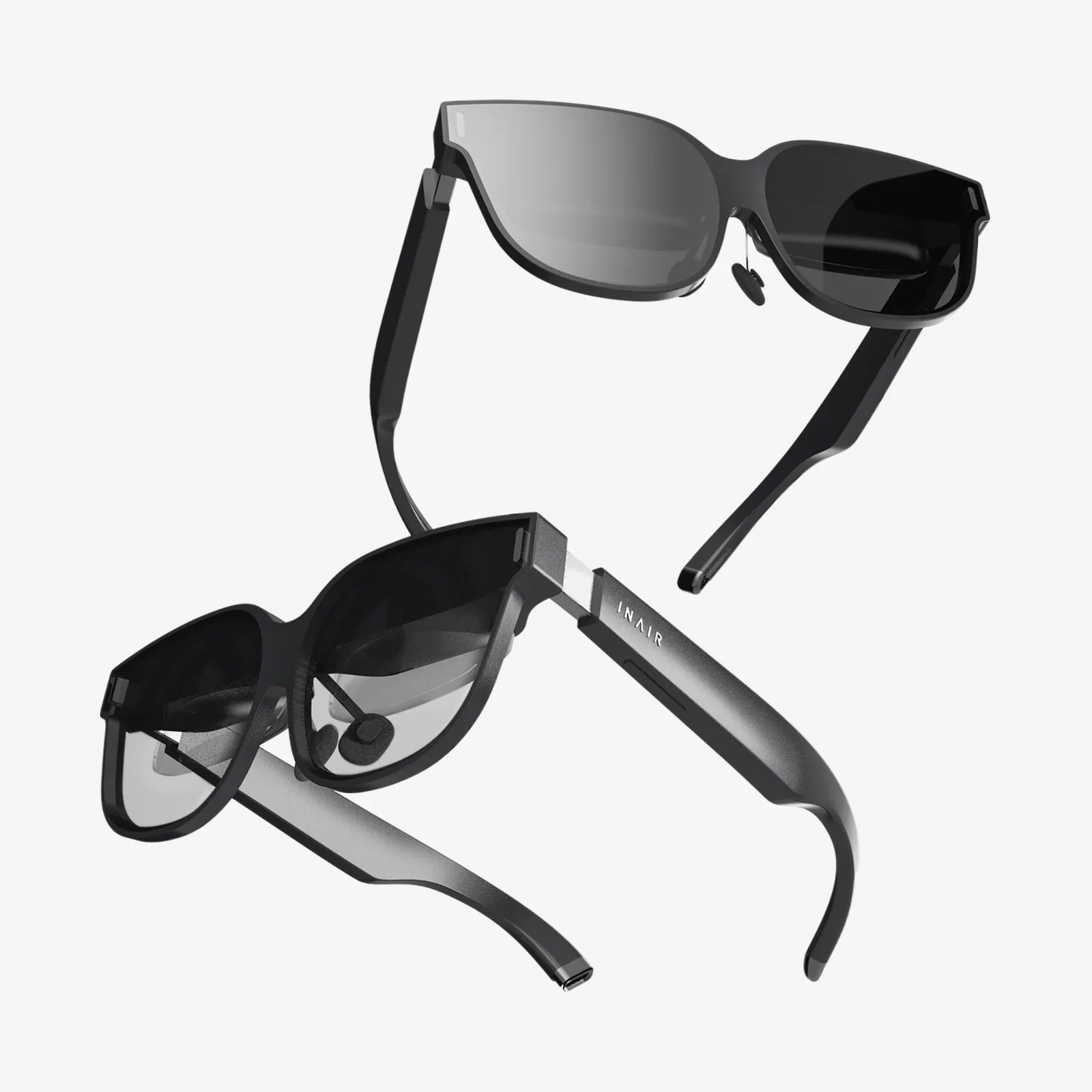
Imagine a world where the digital and physical realms don't just coexist on a screen you hold, but are beautifully, seamlessly integrated into your very field of vision. A world where information, entertainment, and connection are overlaid onto your reality, accessible without ever needing to look down or away. This is the promise of augmented reality, and for the millions who rely on prescription eyewear, this futuristic vision has often felt just out of reach. But what if the key to unlocking this immersive experience wasn't a bulky, uncomfortable headset, but a sleek, stylish pair of glasses that also corrects your vision? The era of AR glasses with prescription lenses options is here, and it’s poised to fundamentally change how we see everything.
Beyond a Niche Novelty: The Mainstream Appeal of Prescription AR
For years, advanced wearable technology seemed to cater to a specific demographic: those with 20/20 vision or a high tolerance for awkward solutions. The early adopters were forced to choose between clear vision and digital immersion, often resorting to clumsy adaptations like wearing contact lenses underneath headsets or struggling with ill-fitting inserts. This created a significant barrier to entry, limiting the technology's potential and keeping it in the realm of gaming and niche industrial applications.
The integration of prescription lenses directly into AR glasses shatters this barrier. It signals a pivotal shift from a developer-focused gadget to a consumer-ready product designed for all-day, everyday wear. This isn't just about adding a feature; it's about redefining the product category entirely. These devices are no longer merely 'smart glasses' or 'AR headsets'—they are becoming your primary eyewear, your constant companion for navigating both the physical and digital worlds. This move towards inclusivity and practicality is what will ultimately drive mass adoption, transforming how we work, learn, socialize, and play.
How It Works: The Technical Magic Behind Customized AR
The marriage of complex optical engineering with personalized vision correction is no small feat. It requires a harmonious blend of several advanced technologies, all packaged into a form factor that is both lightweight and aesthetically pleasing.
The Optical Engine: Waveguides and Micro-LEDs
At the heart of most modern AR glasses is a technology known as waveguide displays. Imagine a tiny, powerful micro-LED projector located in the arm of the glasses. This projector shoots light containing the digital image into a transparent, wafer-thin piece of glass or plastic (the waveguide) embedded within the lens. This waveguide uses a combination of diffraction gratings or other optical structures to "pipe" this light across the lens and then direct it precisely into the user's eye. The result is a bright, sharp digital image that appears to float in the real world, superimposed over your natural view.
Integrating the Prescription
This is where the true innovation lies. There are generally two primary methods for incorporating prescription lenses:
- Custom Lenses: The most seamless and high-quality approach involves creating the entire ophthalmic lens itself with the waveguide technology built-in. This means the curved surface that corrects your specific myopia, astigmatism, or presbyopia is also the surface that delivers the augmented reality imagery. This requires sophisticated manufacturing to ensure the optical prescription and the AR projections are perfectly aligned without distortion.
- Magnetic Inserts: Another popular method involves the AR glasses having a primary lens that contains the waveguide display. Users then receive a separate, custom-made prescription lens insert that magnetically or mechanically clips onto the inside of the primary lens. This offers great flexibility, as the inserts can be swapped if a prescription changes, and it simplifies the manufacturing process. The trade-off can be a slight reduction in field of view or a feeling of added bulk.
In both cases, the process typically involves the user providing a copy of their prescription from an eye care professional, which is then used to fabricate the custom lenses with incredible precision.
A World Augmented: Transformative Use Cases
The practical applications of always-available, hands-free AR are virtually limitless. With the vision barrier removed, these use cases become accessible to a vastly larger audience.
Revolutionizing Professional Workflows
For professionals in fields like medicine, engineering, and logistics, prescription AR glasses are a game-changer. A surgeon could have a patient's vital stats and historical imaging data visually anchored to their body during a procedure. A field engineer could see schematics and instruction manuals overlaid on the complex machinery they are repairing, with their hands free to work. Warehouse workers could have optimized picking routes and inventory data displayed directly in their line of sight, dramatically improving efficiency and accuracy.
Redefining Social Connection and Entertainment
Imagine watching a movie on a virtual 100-inch screen projected onto your living room wall, with perfect clarity, all while wearing your everyday glasses. Or having a video call with a friend whose life-size avatar appears to be sitting on your couch. Navigation becomes intuitive, with arrows painted onto the road itself guiding you to your destination. At a live event, you could see stats and player information floating above the action. This seamless blending of content and reality creates profoundly immersive experiences that a phone screen can never replicate.
Enhancing Daily Life and Accessibility
The benefits extend into the most mundane tasks. Following a recipe? The instructions hover just above your mixing bowl. Struggling with a foreign language? Real-time translations can be superimposed onto street signs and menus. For individuals with certain disabilities, AR can provide crucial contextual information and cues about their environment. With prescription options, these powerful assistive tools become a natural, wearable part of life for those who need them most.
Navigating the Decision: Key Considerations for Buyers
As this market matures, potential users should evaluate several critical factors beyond just the prescription option itself.
- Field of View (FoV): This determines the size of the digital "window" through which you see AR content. A larger FoV is more immersive but can be more technically challenging and expensive to achieve.
- Battery Life and Performance: All-day wear demands all-day battery. Consider where the processing power resides—is it on the glasses themselves, or do they offload computation to a companion device like a phone?
- Style and Comfort: Since these are designed to be worn like regular glasses, their weight, design, and fit are paramount. Nobody wants to wear a uncomfortable, geeky-looking device all day.
- Software Ecosystem: The hardware is only as good as the software it runs. Investigate the available apps and platforms to ensure they support the tasks you want to accomplish.
- Privacy and Data Security: Glasses with cameras and sensors raise important questions about data collection and usage. It's essential to understand a company's privacy policy before making a purchase.
The Future is Clear: What's Next for Prescription AR?
The current generation of AR glasses with prescription options is impressive, but it is merely the foundation for what is to come. The trajectory points towards even more seamless integration. We can anticipate advancements like dynamic focus, where the lenses can electronically adjust to help you see both near and far digital content clearly, potentially even replacing progressive lenses. Holographic display technologies will create more realistic and solid-looking digital objects. As the form factor continues to shrink, the distinction between "smart glasses" and regular glasses will eventually vanish altogether.
We are standing at the precipice of a new sensory paradigm. The ability to customize our vision—both to correct it and to augment it—is one of the most significant technological developments of the decade. It promises to dissolve the final barriers between ourselves and the digital universe, making information and experience contextually available in a way that feels natural, intuitive, and, most importantly, clear. The future isn't just bright; it's in high-definition, perfectly focused, and available for everyone to see.
Share:
Professional Hologram Projector: The Ultimate Guide to Next-Generation Visual Communication
Human Computer Interaction AI: The Invisible Hand Reshaping Our Digital Lives