


- by wangfred
AR Goggles for Work: The Dawn of a New Industrial Revolution
- by wangfred
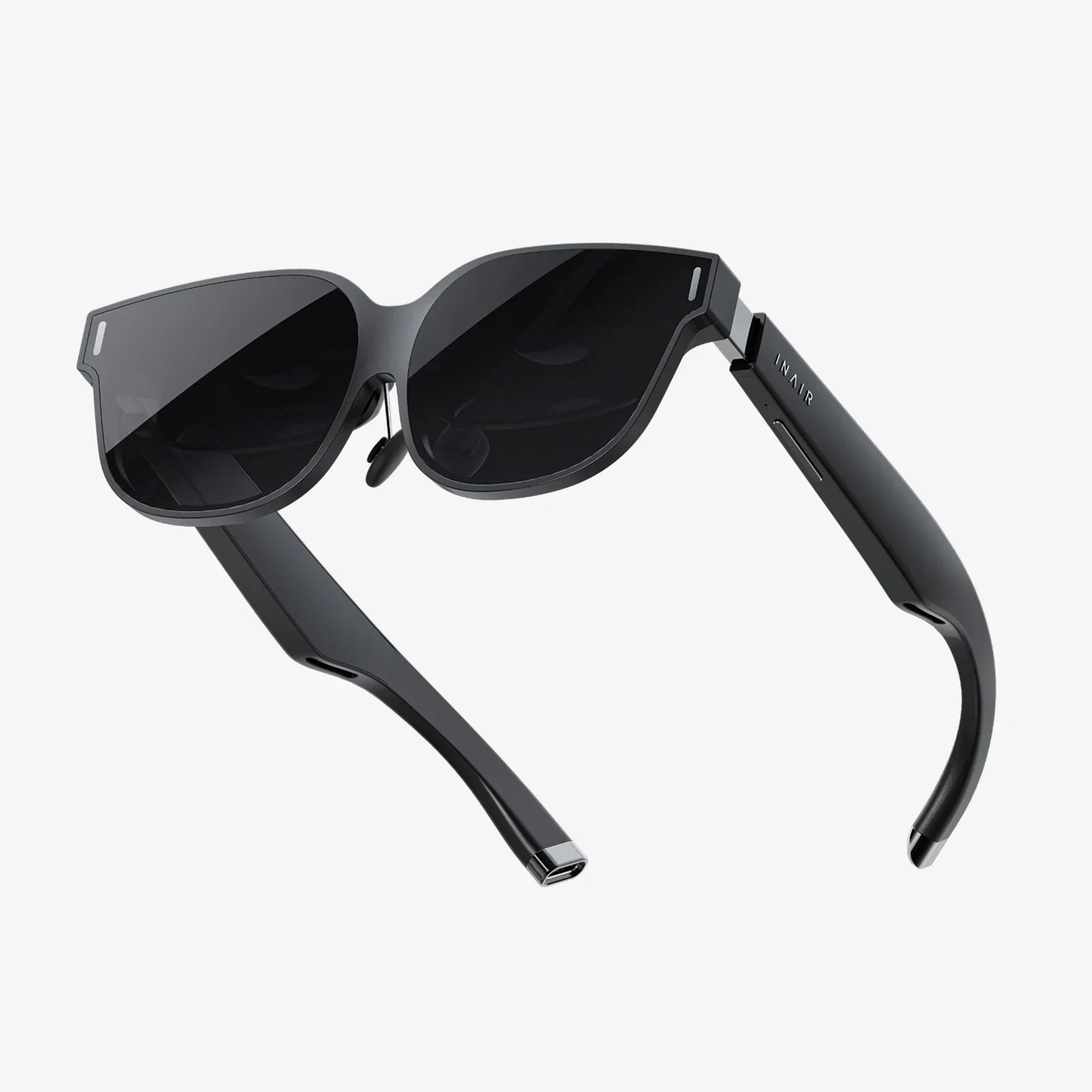
Imagine a world where the digital and physical seamlessly intertwine at your workplace. Where complex schematics float in mid-air before your eyes, a remote expert can guide your hands with virtual annotations directly onto a faulty machine, and every piece of data you need is instantly accessible, hands-free. This isn't a scene from a science fiction blockbuster; it's the rapidly emerging reality powered by a new class of wearable technology: AR goggles for work. This transformative gear is poised to redefine the very nature of labor, expertise, and collaboration, ushering in an unprecedented era of efficiency and capability.
To understand the impact of AR goggles, one must first move beyond the perception of them as merely a screen on your face. They represent a paradigm shift in human-computer interaction. For decades, we have been tethered to desks, interacting with the digital world through the constrained portals of monitors, keyboards, and mice. Information was siloed away from the context in which it was needed. AR goggles shatter this paradigm. They liberate data from two-dimensional screens and embed it into the three-dimensional world, overlaying critical information directly onto the user's field of view and the tasks they are performing. This context-aware computing is the core of their revolutionary potential, transforming any environment—a factory floor, a warehouse aisle, a surgical theater, a construction site—into a dynamic, intelligent workspace.
The adoption of AR goggles is not uniform; it is being driven by specific sectors where the return on investment is immediately clear and profoundly impactful.
In manufacturing, precision and efficiency are paramount. AR goggles are becoming an indispensable tool on the assembly line. Workers can see digital work instructions superimposed directly onto the physical components they are handling. Animated arrows can show the exact sequence of assembly, torque settings can be displayed next to bolts, and quality control checklists can be verified without ever looking away from the product. This drastically reduces errors, slashes training time for new employees, and accelerates production cycles. For complex machinery assembly, technicians can view exploded-view diagrams and see internal parts that are otherwise hidden, guiding them through intricate procedures with confidence.
This is perhaps one of the most compelling use cases. A field service engineer arriving at a remote wind turbine or a malfunctioning industrial printer is no longer alone. Wearing AR goggles, they can stream their first-person view to a senior expert located thousands of miles away. That expert can then see exactly what the field technician sees and provide guidance by drawing digital arrows, circles, or annotations that appear directly in the technician's field of view, pinpointing exactly which component to check or which wire to test. This "see-what-I-see" capability enables remote assistance, reduces the need for costly expert travel, minimizes equipment downtime, and empowers less experienced technicians to resolve complex issues.
In the fast-paced world of logistics, seconds count. AR goggles can revolutionize order picking and inventory management. Instead of juggling a handheld scanner and a paper list, a warehouse worker sees the most efficient route through the aisles displayed before them. The exact shelf location and quantity of items to be picked are highlighted, and items can be confirmed via voice command or a simple glance. This hands-free operation leads to dramatic gains in picking speed and accuracy, reduces walking time, and lowers training overhead. Furthermore, for inventory audits, goggles can automatically identify and count items, updating the central database in real-time.
The design process is being ripped from the confines of computer screens and brought into the real world. Architects and engineers can project full-scale 3D models of their designs onto a physical empty space. They can walk through a digital building before a single brick is laid, assessing spatial relationships, lighting, and structural elements in a way that is impossible with traditional renders. Product designers can examine a virtual prototype from every angle, manipulating it with gestures to make real-time adjustments. This immersive design review process catches errors early, fosters better collaboration, and allows clients to truly experience and understand a proposal.
AR goggles offer a powerful medium for immersive, on-the-job training. Instead of learning from a manual or a video, a trainee can be guided through a procedure with interactive digital information overlaid on the actual equipment. This experiential learning accelerates skill acquisition and enhances knowledge retention. For dangerous or rare procedures, trainees can practice in a safe, simulated environment overlaid onto physical mock-ups, building muscle memory and confidence without risk to themselves or expensive machinery.
The adoption of AR technology is not just about cool gadgets; it's about delivering concrete business outcomes.
Despite the immense potential, the path to widespread enterprise adoption is not without its hurdles.
The evolution of AR goggles for work is accelerating. We are moving towards devices that are lighter, more powerful, and more socially acceptable. We can expect to see the integration of Artificial Intelligence (AI) to make these systems truly intelligent. AI could analyze a worker's actions in real-time to predict the next steps, automatically highlight potential mistakes before they happen, or translate foreign language manuals on the fly. The line between the physical and digital worlds will continue to blur, giving rise to the concept of the "digital twin"—a live, virtual replica of a physical asset or system that can be interacted with and analyzed through AR goggles. This will enable predictive maintenance, ultra-realistic simulation, and a level of operational insight previously unimaginable.
The office of the future may not have a desk, and the factory of the future may not have a clipboard. The most essential tool for a vast swath of the workforce is evolving from a computer to a pair of goggles that seamlessly merges their reality with a layer of intelligent, actionable data. This isn't about replacing humans with technology; it's about augmenting human potential with superpowers—the power to see the invisible, to know the unknown, and to connect with expertise across the globe in an instant. The revolution is not coming; it is already being tried on for size, and it fits perfectly.
Share:
360 Split Screen VR: The Ultimate Guide to Immersive Experiences
360 Split Screen VR: The Ultimate Guide to Immersive Experiences