


- by wangfred
AR Goggles News: The Next Evolution in Seeing and Interacting with Reality
- by wangfred
Imagine a world where your field of vision becomes an infinite canvas, where digital information and breathtaking experiences are painted directly onto the fabric of reality itself. This isn't a distant sci-fi fantasy; it's the imminent future being built today, and the latest AR goggles news suggests the revolution is arriving faster than anyone anticipated. The buzz isn't just about incremental updates; it's about a fundamental shift in how we will compute, communicate, and comprehend our environment. The next generation of eyewear is poised to break free from the confines of our pockets and screens, offering a glimpse into a seamlessly augmented existence.
The most compelling AR goggles news revolves around the dramatic evolution in core architecture. Early iterations often suffered from a triad of shortcomings: limited field of view (FOV), bulky and socially awkward designs, and short battery life. Today, breakthroughs across multiple domains are converging to solve these historic challenges.
Waveguide technology, the method by which light is projected into the user's eyes, is seeing remarkable innovation. Newer, more efficient designs are enabling a significantly wider FOV, moving from a postage-stamp-like window to an immersive, panoramic display. This is critical for achieving true immersion, making digital objects feel present and persistent in the user's space rather than floating in a small, disconnected window.
Simultaneously, advancements in micro-LED and laser beam scanning are creating displays that are not only brighter and more vibrant but also incredibly power-efficient. This addresses two issues at once: visibility in various lighting conditions (especially bright sunlight) and the thermal and battery drain that high-intensity displays traditionally cause. Furthermore, the integration of specialized processing units dedicated solely to spatial computing tasks—like simultaneous localization and mapping (SLAM)—means these devices can understand and interact with their environment in real-time without overburdening the main processor or destroying battery life.
Hardware is only half the story. The most exciting AR goggles news often focuses on the software and ecosystem developments that will give these devices purpose. The concept of the "spatial web" is gaining tangible traction. This is a vision of the internet not as a series of pages on a screen, but as a layer of context and information anchored to people, places, and things in the physical world.
Developers are now building applications on robust platforms designed specifically for spatial computing. These platforms provide the tools to create experiences that understand depth, scale, occlusion (where digital objects can be hidden behind physical ones), and persistent spatial anchors. Imagine walking through a city and seeing historical facts hover over landmarks, navigation arrows painted directly onto the sidewalk, or a virtual art gallery temporarily installed in a public park—all visible only to you through your goggles. This requires a sophisticated fusion of visual data, cloud computing, and 5G/6G connectivity, all of which are rapidly maturing.
While consumer applications capture the imagination, the most immediate and impactful AR goggles news is emerging from enterprise and industrial sectors. Here, the value proposition is clear, quantifiable, and revolutionizing workflows.
In these fields, AR goggles are not a novelty; they are a powerful tool for augmenting human capability, reducing cognitive load, and bridging the gap between digital data and physical action.
The future of communication is moving beyond flat video calls. AR goggles promise to introduce a profound sense of presence and shared space. The latest developments point toward hyper-realistic avatars driven by real-time facial and eye tracking, allowing for nuanced, non-verbal communication in virtual meetings.
Collaborative design reviews, virtual family gatherings where participants feel like they are sitting in the same room, or interactive remote learning sessions where 3D models can be manipulated by teacher and student alike—these are the social paradigms set to be disrupted. The goal is to make digital interaction feel less like staring at a screen and more like being together, fostering a deeper human connection across vast distances.
This transformative path is not without significant hurdles. Persistent AR goggles news coverage rightly highlights concerns that must be addressed for widespread adoption.
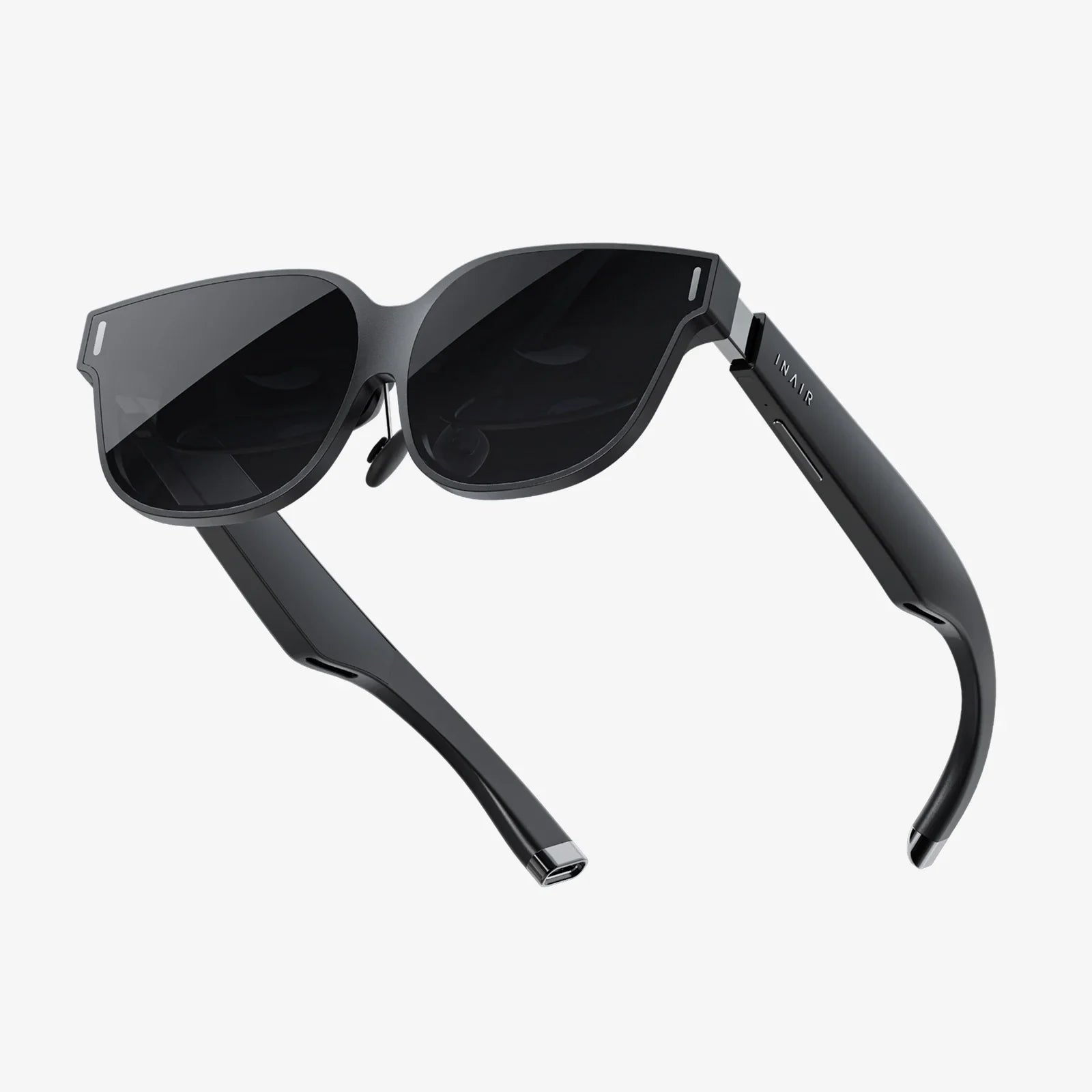
The trajectory of AR goggles news indicates a move away from the concept of a closed, tethered headset and towards a future of more open, socially aware, and multi-device integration. The ideal form factor is often described as resembling a pair of stylish eyeglasses—lightweight, all-day comfortable, and socially unobtrusive.
We are moving toward a hybrid model where your AR glasses act as your primary interface, but you can still dive into a fully immersive virtual reality experience for entertainment or specialized work by swapping lenses or using a companion device. The lines between AR and VR will blur, creating a spectrum of mixed reality (MR) experiences. The ultimate goal is contextual computing: technology that understands what you need, when you need it, and presents it intuitively within your environment without requiring you to look down at a device.
The constant stream of innovation confirms that the age of ambient computing is dawning. The device in your pocket has been a gateway, but the next platform will be your entire world. The latest headlines are not just about a new product; they are about the next chapter in human-computer interaction, promising a future where our digital and physical lives are not separate realities, but one beautifully integrated experience. The view through these new lenses will forever change what it means to see, to know, and to connect.
Share:
Disadvantages of Using Virtual Office: The Hidden Costs of a Digital Workspace
How to Create Virtual Office Hours: A Complete Guide for Engagement