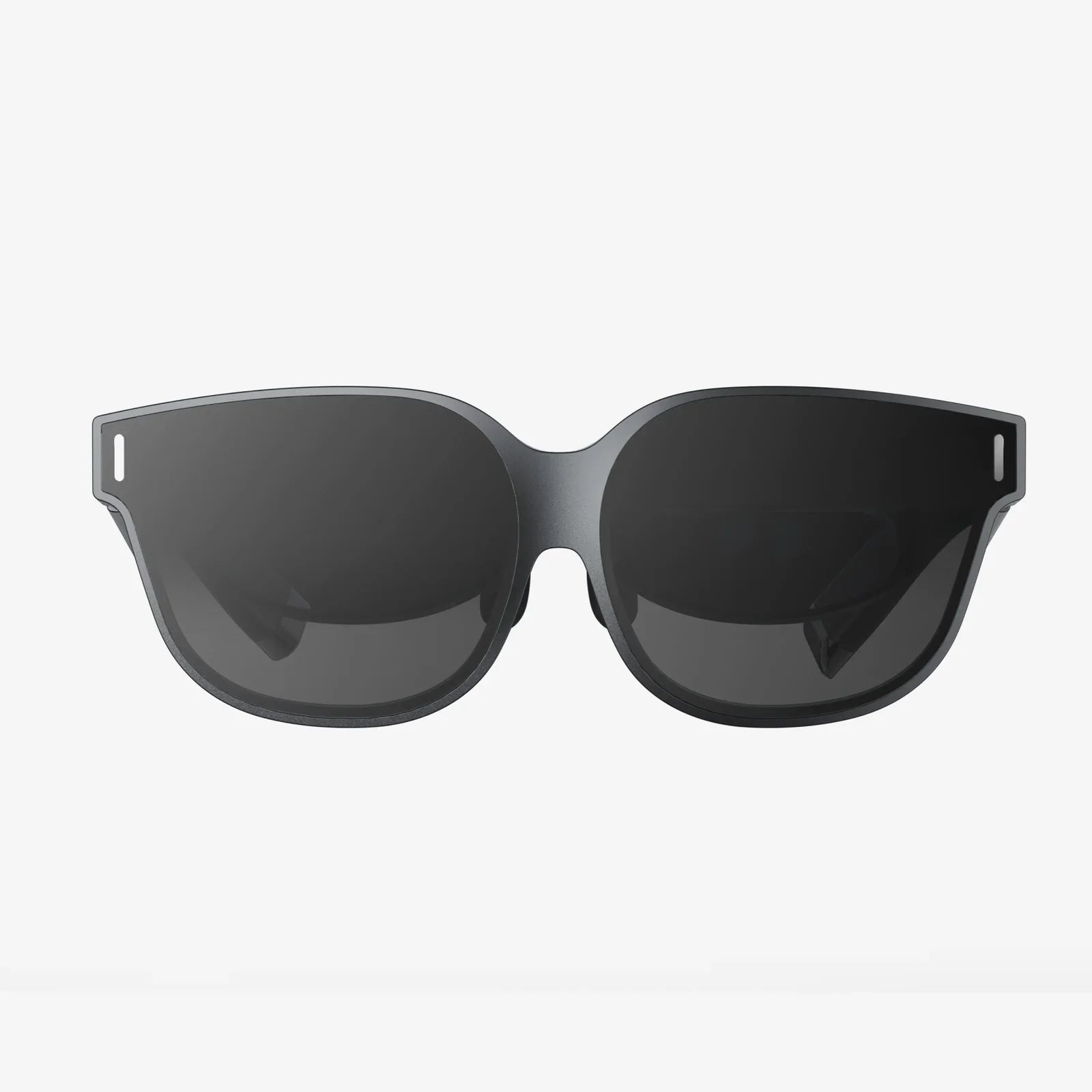
Imagine looking through your car's windshield and seeing your speed, navigation arrows painted directly onto the road, and alerts for potential hazards—all without ever taking your eyes off your surroundings. Envision a surgeon peering at a patient and seeing vital signs and critical anatomical guides overlaid directly on their field of view. Picture a field technician, armed with nothing but a pair of smart glasses, receiving real-time schematics and instructions superimposed onto the complex machinery they are repairing. This is not a glimpse into a distant science fiction future; this is the imminent reality being forged by the rapid advancement of Augmented Reality Heads-Up Display scopes, a technology set to fundamentally alter our perceptual and interactive relationship with the world.
The Genesis of a New Visual Paradigm
The conceptual roots of the AR heads-up display scope stretch back further than most realize. The term "heads-up display" itself originated in the world of military aviation during the mid-20th century. Early fighter pilots faced a critical dilemma: they needed to constantly monitor crucial flight data like airspeed, altitude, and targeting information, but glancing down at their instrument panels could mean the difference between life and death in a high-speed dogfight. The solution was a revolutionary piece of technology that projected this vital information onto a small, transparent screen between the pilot and the cockpit canopy. This allowed them to keep their "head up" and eyes focused on the threat outside, seamlessly integrating data with their real-world view. These early systems were monochromatic, used simple cathode ray tubes, and displayed only a limited set of symbols (a "reticle"), but they established the core principle that still defines the technology today: the contextual overlay of information onto the user's natural field of vision.
The journey from those clunky, analog aviation systems to the sleek, digital AR scopes of today has been propelled by several technological revolutions. The miniaturization of computing power, the development of bright, efficient micro-displays (like LCD, LCoS, and eventually OLED and MicroLED), and breakthroughs in waveguide optics have all been critical. However, the true transformative leap, the one that elevates a simple HUD to an AR HUD scope, is the integration of a sophisticated sensor suite and powerful spatial computing. Modern AR scopes are equipped with cameras, depth sensors, gyroscopes, and accelerometers. They don't just project a static image; they understand the environment. They can map the world in 3D, track the user's head and eye movements with incredible precision, and anchor digital objects persistently in real space. This shift from a fixed display to a dynamic, context-aware visual interface is what separates a basic HUD from a true augmented reality experience.
Deconstructing the Magic: How AR HUD Scopes Work
At its heart, an AR heads-up display scope is a complex ballet of optics, photonics, and data processing. The process can be broken down into three fundamental stages: perception, processing, and projection.
1. Perception: The Digital Nervous System
Before any information can be displayed, the system must first understand the world it is looking at. This is the job of the sensor array. A typical AR scope will include:
-
Cameras: Standard RGB cameras capture the visible light scene, while often infrared cameras or dedicated depth sensors (like time-of-flight sensors) map the distance and contours of objects in the environment, creating a 3D point cloud.
-
Inertial Measurement Unit (IMU): This combination of accelerometers and gyroscopes tracks the precise orientation, rotation, and movement of the scope itself in real-time.
-
Eye-Tracking Sensors: Advanced systems use infrared LEDs and cameras to track the user's gaze, determining exactly where they are looking. This is crucial for focus, depth cues, and intuitive interaction.
This constant stream of data forms a real-time digital twin of the user's immediate surroundings and their perspective within it.
2. Processing: The Brain Behind the Eyes
The raw sensor data is meaningless without interpretation. This is where the onboard processor, often aided by machine learning algorithms, performs its magic. It fuses the data from all sensors to answer critical questions: Where am I? What am I looking at? Where is the user looking? This involves complex tasks like:
-
Simultaneous Localization and Mapping (SLAM): The processor builds a map of the unknown environment while simultaneously keeping track of the device's location within it. This allows digital objects to be "locked" to a physical location.
-
Object Recognition and Classification: Using computer vision, the system can identify objects—a person, a car, a specific tool, a historical landmark—and understand their properties and context.
-
Rendering and Alignment: The processor generates the graphical elements that will be overlaid and calculates their correct perspective, size, and occlusion based on the user's precise viewpoint. It ensures a virtual arrow appears to be on the road, not floating in front of it.
3. Projection: Painting Light onto Reality
This is the final, most visible stage—the act of creating the illusion. There are several optical architectures, but the goal is the same: to combine computer-generated imagery with the user's view of the real world. The two most common methods for AR scopes are:
-
Waveguide Optics: This is the technology favored in most modern wearable glasses. A micro-display projector (e.g., a tiny LCD or laser projector) shoots an image into the edge of a thin, transparent piece of glass or plastic (the waveguide). This light is then "piped" through the material using a process of total internal reflection until it hits an optical grating or surface that diffracts it outwards, directly into the user's eye. This method allows for incredibly thin and light form factors.
-
Free-Form Optics: More common in automotive HUDs, this system uses a complex, curved combiner (often the windshield itself) and a set of mirrors to reflect the image from a projector unit buried in the dashboard. The optics are meticulously designed to create a virtual image that appears to be floating several meters in front of the car, perfectly aligned with the road.
The result of this entire pipeline is the seamless marriage of the physical and digital realms, creating an enhanced, interactive, and information-rich reality.
Beyond the Dashboard: The Expansive Universe of Applications
While the automotive industry is a primary driver of HUD technology, the potential applications for true AR scopes extend far beyond the driver's seat, permeating nearly every professional and recreational field.
Transforming Professional Landscapes
-
Healthcare and Surgery: Surgeons can view patient vitals, ultrasound data, or pre-operative plans directly over their surgical field, eliminating the need to look away at monitors. Medical students can learn anatomy on interactive, 3D holographic models.
-
Manufacturing and Field Service: A technician repairing a wind turbine can see torque specifications, step-by-step instructions, and animated guides overlaid on the components they are handling. This reduces errors, speeds up training, and allows experts to provide remote guidance by literally "seeing what they see."
-
Architecture and Construction: An architect can walk through a physical building site and see their digital BIM model perfectly aligned with the unfinished structure, identifying clashes and verifying designs in real-time. Workers can see where hidden wiring or pipes are located behind a wall.
-
Logistics and Warehousing: Order pickers in massive warehouses can have the most efficient route and the exact item locations highlighted in their vision, dramatically increasing picking speed and accuracy.
Redefining Consumer Experiences
-
Navigation and Tourism: Imagine walking through a foreign city with historical information, restaurant reviews, and translated street signs appearing contextually as you look around. Your world becomes a living, informative guidebook.
-
Gaming and Entertainment: AR gaming transforms your entire living room or local park into a digital playground, with characters and events interacting with your physical environment. Watching sports could include real-time player stats and visualizations overlaid on the live action.
-
Personal Productivity and Communication: Virtual screens replace physical monitors, allowing you to work from anywhere. Video calls could feel like the person is sitting in the room with you, able to interact with shared 3D models.
Navigating the Hurdles: Challenges on the Path to Ubiquity
Despite its immense promise, the path to perfect, ubiquitous AR heads-up display scopes is fraught with significant technological and societal challenges that must be overcome.
Technical Hurdles:
-
Field of View (FoV): Many current systems offer a limited "postage stamp" view of the digital world. A truly immersive AR experience requires a wide FoV that fills a significant portion of the user's vision, which is extraordinarily difficult to achieve without bulky optics.
-
Resolution and Brightness: The digital imagery must be high-resolution enough to be readable and realistic, and bright enough to be visible in all lighting conditions, including direct sunlight. This demands incredibly powerful and efficient micro-displays.
-
Form Factor and Social Acceptance: For wearable devices, the goal is to look and feel like a normal pair of glasses. Current technology often requires trade-offs, resulting in devices that are too heavy, too expensive, or too odd-looking for mass adoption.
-
Battery Life: The immense processing power and bright displays required are a significant drain on batteries, limiting usage time.
Human and Societal Considerations:
-
User Safety: In critical applications like driving, the design of the interface is paramount. Information must be presented without causing distraction or cognitive overload. Misplaced or poorly timed alerts could be dangerous.
-
Privacy and Security: AR scopes, with their always-on cameras and sensors, collect vast amounts of data about the user and their environment. Who owns this data? How is it stored and used? The potential for surveillance and data breaches is a serious concern.
-
The Digital Divide and Reality Filtering: There is a risk that access to this powerful technology could become a new societal divider. Furthermore, the ability for companies or individuals to filter reality—showing or hiding certain elements—raises profound questions about perception, truth, and shared experience.
The Invisible Interface: What the Future Holds
The ultimate trajectory of AR heads-up display technology is not towards a device we look at, but towards an invisible interface we look through. The end goal is a pair of sleek, unassuming glasses that we wear all day, seamlessly connecting us to a digital layer of reality that is contextually relevant, personally meaningful, and instantly accessible. We are moving towards a world where information is not sought, but presented; where the line between the physical and digital will not just be blurred, but erased. The scope is no longer just a tool for viewing a target; it is becoming the very lens through which we will perceive, understand, and shape our future reality. The world is about to get a major, and utterly transparent, upgrade.
This isn't just about getting directions without glancing at your phone; it's about fundamentally rewiring our relationship with knowledge and our environment, placing a universe of context and connection directly in our line of sight, forever changing what it means to see.