


Imagine a world where digital information doesn't just live on a screen in your hand, but is woven seamlessly into the fabric of your reality. A world where instructions for a complex repair float effortlessly over the machinery, historical figures narrate the ruins you're exploring, and a virtual colleague can point to a specific part of a 3D model as if they were standing right beside you. This is the promise that has hovered on the horizon for over a decade, but it has always remained just out of reach, a tantalizing glimpse of the future held back by clunky hardware, limited field-of-view, and underwhelming processing power. That era is ending. The whispers are growing into a roar: a new breed of AR headset is coming next, and it is arriving not with incremental updates, but with genuine, paradigm-shifting power. This isn't just another iteration; it's the long-awaited convergence of technology that will finally unlock the true potential of augmented reality.
The Legacy of Potential: From Science Fiction to Prototype
The concept of augmenting our reality is not new. From the illuminated visors of science fiction to the early, room-sized virtual reality systems of the 1960s, the dream has always been to blend the digital and the physical. The first modern attempts at consumer AR were often disappointing. They suffered from what became known as the "holographic prison"—a tiny, postage-stamp-sized window into the digital world that constantly reminded you of the technology's limitations rather than enabling immersion. The processing was frequently offloaded to a connected smartphone, creating latency, draining batteries, and limiting complexity. These devices were powerful in concept, but anemic in execution. They were proof-of-concepts that proved the demand was there, but also highlighted the immense technical hurdles that remained. They showed us what could be, while constantly reminding us of what was not yet possible.
The Pillars of Power: What Makes the Next Generation Different
The power promised by the next wave of AR headsets is not a single feature, but a symphony of technological advancements working in concert. It’s this holistic upgrade that will separate them from their predecessors.
Computational Prowess: The Brain Behind the Eyes
At the heart of this revolution is raw processing power. We are moving beyond mobile chipsets repurposed for a more demanding task. The next generation of headsets will feature custom silicon, systems-on-a-chip (SoCs) designed from the ground up for the unique challenges of AR. This means dedicated processing cores for:
- Computer Vision: Real-time understanding of the environment. The headset must constantly map the room, identify surfaces, track objects, and understand depth with incredible speed and accuracy.
- Machine Learning: Instantaneous object recognition, gesture tracking, and predictive spatial audio. The headset will not just see the world; it will comprehend it.
- Rendering: Generating high-fidelity, photorealistic 3D graphics that blend perfectly with the real world, without any perceptible lag or jitter.
This dedicated processing ensures that interactions are instantaneous and intuitive. There will be no more lag when turning your head, no misaligned digital objects, and a significant reduction in the motion sickness that plagued earlier devices.
Visual Fidelity: The Window to a New World
Power is meaningless if the display can't do it justice. The next wave of headsets will solve the two biggest display challenges: resolution and field-of-view.
- Micro-OLED and Laser Beam Scanning: These technologies allow for incredibly high-resolution displays that are compact and energy-efficient. The "screen door effect"—seeing the gaps between pixels—will become a relic of the past. Text will be sharp and readable, and virtual objects will possess intricate detail.
- Expansive Field-of-View (FoV): Perhaps the most crucial advancement. Instead of a small floating window, these new headsets aim for a FoV that approaches our natural peripheral vision. This is essential for immersion, making the digital elements feel truly present in your space rather than overlayed on top of it.
- Variable Focus and Eye-Tracking: This is a quantum leap in visual comfort. Current VR/AR headsets fix the focal plane, causing a conflict between vergence (where your eyes point) and accommodation (where your eyes focus), leading to strain. Next-gen headsets will use eye-tracking to determine exactly where you are looking and adjust the focal plane on the fly. If you look at a virtual object six feet away, your eyes focus at six feet. Look at your virtual watch on your wrist, and they focus at one foot. This mimics natural vision and allows for comfortable, all-day use.
Seamless Interaction: Beyond the Controller
True power lies in intuitive control. While handheld controllers will have their place for gaming and specific applications, the goal is to interact with the digital world as naturally as we do with the physical one.
- Precision Hand Tracking: Using onboard cameras and AI, headsets will track all 26 degrees of freedom of your hands, recognizing not just gestures but subtle finger movements. You'll pinch, grab, push, and type on virtual interfaces with your bare hands.
- Voice Assistant Integration: Powerful, context-aware voice AI will be a primary interface. You'll simply ask the headset to pull up information, send a message, or control your smart environment without ever lifting a finger.
- Neural Inputs (The True Frontier): Longer-term, research into electromyography (EMG)—reading the electrical signals from your forearm muscles—could allow for even more subtle and effortless control. Imagine just twitching a finger slightly to scroll or select an item.
All-Day Form Factor: The Invisible Computer
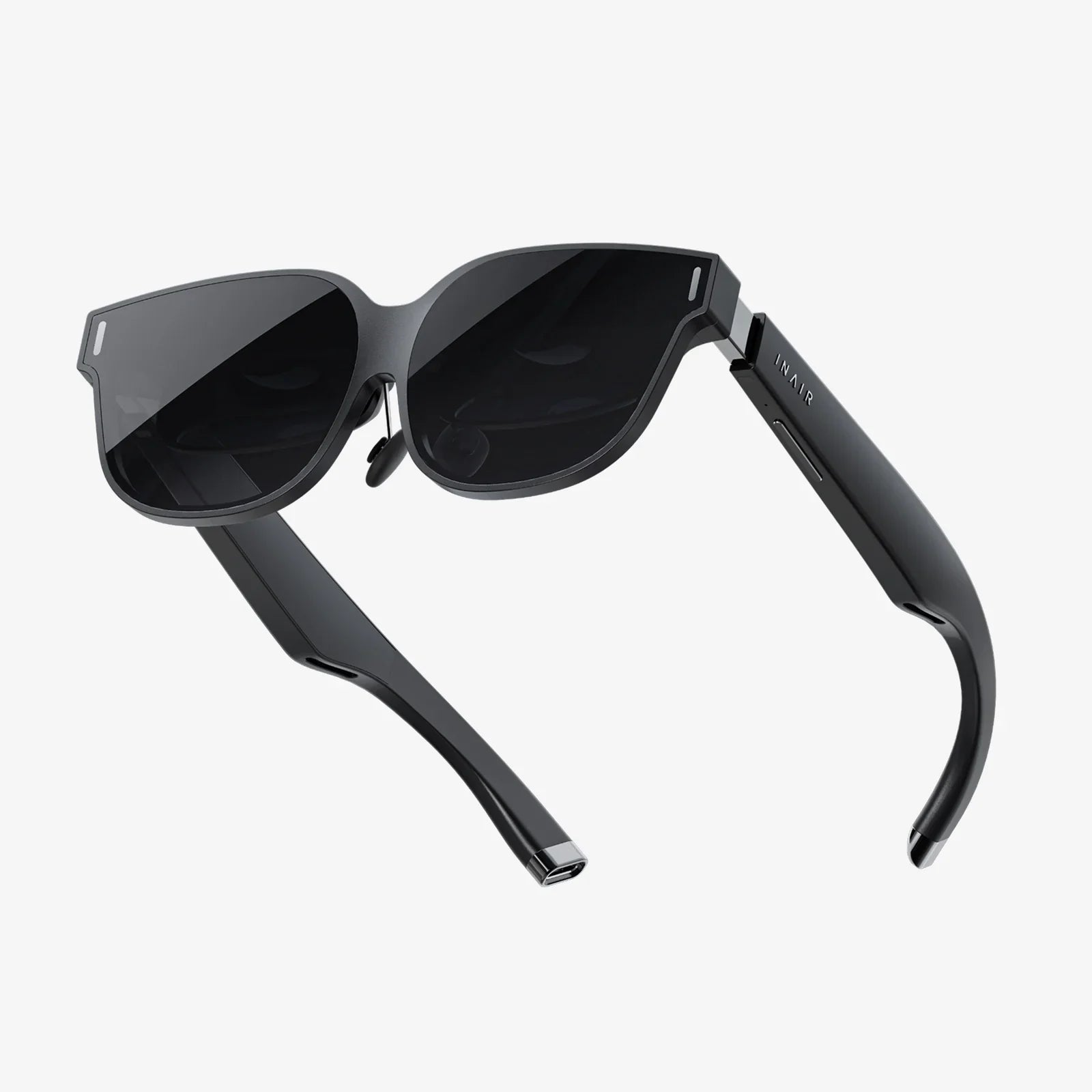
Power must be wearable. The archetype of a bulky, face-consuming headset is fading. The next generation is trending towards a form factor that resembles sleek, oversized sunglasses. This is made possible by:
- Advanced Optics: Using techniques like holographic waveguides to pipe light to the eyes, allowing for a much slimmer profile.
- Distributed Computing: While the headset will have immense on-board processing, some tasks may be offloaded to a companion device—not a phone, but a dedicated, pocketable compute unit that provides additional battery life and raw power without weighing down the headset itself.
- Thermal Management: New materials and passive cooling systems will manage the heat generated by powerful processors, ensuring comfort during prolonged use.
The Ripple Effect: Transforming Industries and Redefining Work
This isn't just about playing games or watching immersive movies. The power of these devices will fundamentally reshape how we work, learn, and connect.
- Remote Collaboration & The Spatial Web: Imagine "beaming" into a meeting as a full 3D avatar, able to collaborate on a virtual whiteboard or 3D model with colleagues from around the world as if you were in the same room. This is the promise of the "metaverse"—not as a place to escape to, but as a layer over our reality for enhanced communication.
- Precision Medicine and Surgery: Surgeons could overlay real-time MRI data and surgical plans directly onto their field of view during an operation. Medical students could practice procedures on hyper-realistic virtual patients.
- Industrial Design and Manufacturing: Engineers and designers will sculpt and manipulate 3D models in mid-air, seeing how new parts fit into existing physical assemblies before a single physical prototype is ever built.
- Navigation and Field Service: A technician repairing a complex piece of equipment could have step-by-step instructions and diagrams overlaid directly onto the machinery, highlighting exactly which wire to check or which bolt to tighten.
The Human Dimension: Challenges on the Horizon
With great power comes great responsibility. The arrival of such potent technology is not without its significant challenges.
- Privacy and the Ethics of Surveillance: A headset that is always watching and analyzing the world raises profound privacy questions. How is the visual data it captures stored and used? Will we be constantly recording everyone around us without their consent? Robust ethical frameworks and clear regulations will be needed from the outset.
- The Digital Divide: This level of technology will be expensive. There is a real risk of creating a new class divide between those who can afford to augment their reality and those who cannot, potentially exacerbating existing inequalities in education and opportunity.
- Digital Addiction and Reality Blurring: If the digital layer becomes more engaging, convenient, and stimulating than the physical world, what are the psychological effects? Will we become disconnected from our immediate, un-augmented surroundings?
We are standing at the precipice of a new era, not of virtual escape, but of augmented human capability. The AR headset coming next is not a mere gadget; it is a platform, a companion, and a portal. Its power lies not in its transistors or its pixels, but in its potential to amplify our own intellect, creativity, and connection to the world around us. The barriers are finally breaking down. The future is no longer something we will watch on a screen—it's something we are about to step into and shape with our own hands.
Share:
Things to Watch on VR Headset: Your Ultimate Guide to Immersive Entertainment
VR Headset Buyers Guide: Everything You Need to Know Before You Dive In