


- by wangfred
AR Headset Coming Year with Power: The Dawn of a New Reality
- by wangfred
Imagine a world where digital information doesn’t just live on a screen but is seamlessly woven into the fabric of your reality. Directions appear as glowing arrows on the pavement, a recipe’s instructions hover over your mixing bowl, and a colleague from across the globe stands in your living room, pointing to a holographic model you’re both designing. This is the long-promised dream of augmented reality. For years, we’ve been tantalized by glimpses of this future, but the hardware has always been a bottleneck—too bulky, too expensive, or simply not powerful enough to make the experience truly magical. That barrier is about to shatter. The AR headset coming in the year with power is not just another product launch; it is the key that will finally unlock the door to a new dimension of human-computer interaction.
At the heart of this revolution is a seismic shift in processing capability. The term "power" in this context transcends mere megahertz and gigaflops. It encompasses a holistic architectural leap designed specifically for the unique demands of spatial computing.
Previous generations of AR wearables often relied on a combination of underpowered onboard processors and a tether—either physical or wireless—to a secondary device like a phone or a computer to handle the heavy computational lifting. This created latency, the dreaded delay between your movement and the digital world's response, which is a primary culprit for user discomfort and the failure of immersion.
The new wave of processors are system-on-a-chip (SoC) designs built from the ground up for AR. They integrate several specialized cores working in parallel:
This heterogeneous computing approach means each task is handled by the most efficient unit, resulting in breathtaking visual fidelity, instantaneous response, and all-day usability—all untethered from any other device.
Power is meaningless without perception. A headset's ability to understand and augment the world is entirely dependent on its sensor suite. The next generation is moving beyond basic monochrome cameras for positional tracking.
We are entering the era of high-resolution color passthrough, facilitated by an array of sensors including LiDAR (Light Detection and Ranging), depth sensors, and ultra-wide cameras. This setup constructs a millisecond-accurate, photorealistic 3D map of your environment. The powerful ISP and NPU then fuse these data streams into a single, coherent, and real-time digital twin of your surroundings.
The result is a visor that can switch from a primarily opaque display for full immersion to a crystal-clear, augmented view of the real world. This high-fidelity passthrough is the foundation for everything else. It allows digital objects to occlude and be occluded by real-world furniture, interact with real-world lighting and shadows, and feel physically present in your space. The jittery, low-resolution ghosts of the past are replaced by rock-solid, believable holograms.
This fusion of immense processing power and sophisticated sensing will catalyze a renaissance of practical applications, moving AR firmly out of the realm of gaming and simple filters.
The concept of the office will be fundamentally redefined. Imagine architects and engineers walking clients through life-sized, interactive 3D models of unbuilt structures, making changes on the fly with a gesture. Surgeons could have vital signs, ultrasound data, or procedural checklists overlayed directly onto their field of view during an operation, keeping their focus entirely on the patient. Remote assistance will become truly immersive, with an expert able to see what a field technician sees and draw annotations directly into their reality, guiding them through a complex repair.
The productivity implications are staggering. Instead of being confined to a 27-inch monitor, knowledge workers could have infinite, virtual screens arrayed around them in their physical space. Research documents, communication windows, and data visualizations could be pinned to walls, creating a bespoke, distraction-free digital workspace that travels with them anywhere.
Social media will evolve from a feed on a phone to a shared experience in space. Instead of video calls, you could share a virtual couch with friends across the world to watch a movie on a virtual big screen, your avatars expressing real-time emotion through advanced face and eye tracking. Live concerts and sporting events could be experienced from the best seat in the house, or even from the perspective of a player on the field, all from your living room.
Gaming will become an entirely physical and social endeavor. Games will no longer be played on a TV but will transform your entire home into a dungeon, a racetrack, or a puzzle room. The power of these headsets will enable persistent AR experiences where digital elements remain anchored in a location, allowing you to build a game or story over days and weeks, with friends collaborating or competing in the same hybrid reality.
The utility will extend into the most mundane tasks. Navigation will become intuitive, with arrows and street names painted onto the world itself. Shopping for furniture will involve placing true-to-scale 3D models in your room to see how they fit and look. Learning a new language could involve labels appearing over real-world objects. Cooking a complex recipe could have each step demonstrated by a holographic chef right on your countertop. This ambient, contextual computing will make technology feel less like a tool and more like a helpful companion.
This powerful future is not without its significant hurdles. The immense computational power required generates heat, and managing thermal output in a device worn on the face is a profound engineering challenge. Battery life remains the eternal constraint of mobile devices; powering these miniature supercomputers for extended periods will require innovations in both battery density and software optimization.
Furthermore, this level of immersion and data collection raises critical questions about privacy and safety. Headsets with always-on cameras and microphones that map our most private spaces—our homes—will necessitate a new framework of data ethics. Who has access to this environmental data? How is it stored and used? Establishing clear, user-centric policies and robust security will be paramount for widespread adoption.
Finally, there is the human factor. Designing user interfaces and experiences for a three-dimensional, gesture and voice-controlled world is a nascent field. Avoiding sensory overload, creating intuitive interactions, and ensuring these devices are accessible to everyone, including those with disabilities, is a challenge that must be met with creativity and empathy.
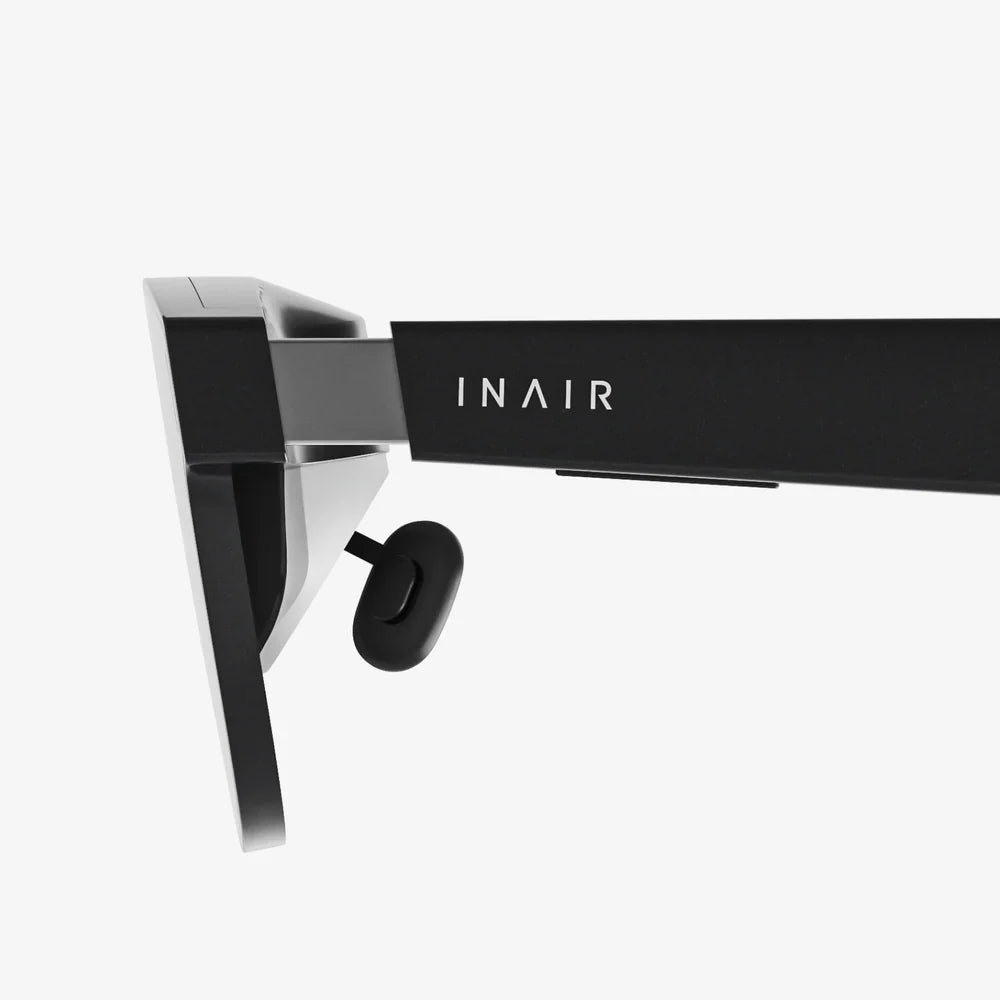
The popular image of an AR headset is often a bulky, face-encasing visor. While this form factor will persist for high-end, professional, and gaming applications, the increase in processing power per watt is also enabling a push towards normality. The ultimate goal remains a pair of stylish glasses that offer full AR capabilities.
We are not quite there yet, but the coming year's devices will make significant strides. Advances in micro-OLED displays, waveguide optics, and the miniaturization of sensor packages are allowing for slimmer, lighter, and more socially acceptable designs. This is crucial. For AR to become a all-day, every-day platform, it must be something people want to wear, not just something they tolerate using for a specific task.
This evolution in form factor will be accompanied by a broader range of price points. While the most powerful devices will command a premium, increased competition and economies of scale will begin to bring capable AR experiences to a wider audience, setting the stage for the eventual ubiquity of spatial computing.
The stage is set for a battle of ecosystems, not just devices. The real value will lie in the operating systems, developer tools, and app stores that emerge to support this new medium. The company that can create the most compelling and intuitive spatial OS and attract the most innovative developers will ultimately dictate the direction of this next computing revolution.
We are standing at the precipice of a change as profound as the introduction of the smartphone or the personal computer. The AR headset coming in the year with power represents the critical inflection point where technology finally catches up to ambition. It’s the device that will stop asking us to look down at a screen and start helping us look up and engage with the world in a richer, more informed, and more magical way. The future is about to step out of your screen and into your world—are you ready to see it?
Share:
What Phones Are Compatible With VR Headset - Your Ultimate Guide to Mobile VR
Best VR Headset Best Buy: The Ultimate Guide to Your Next Virtual Purchase