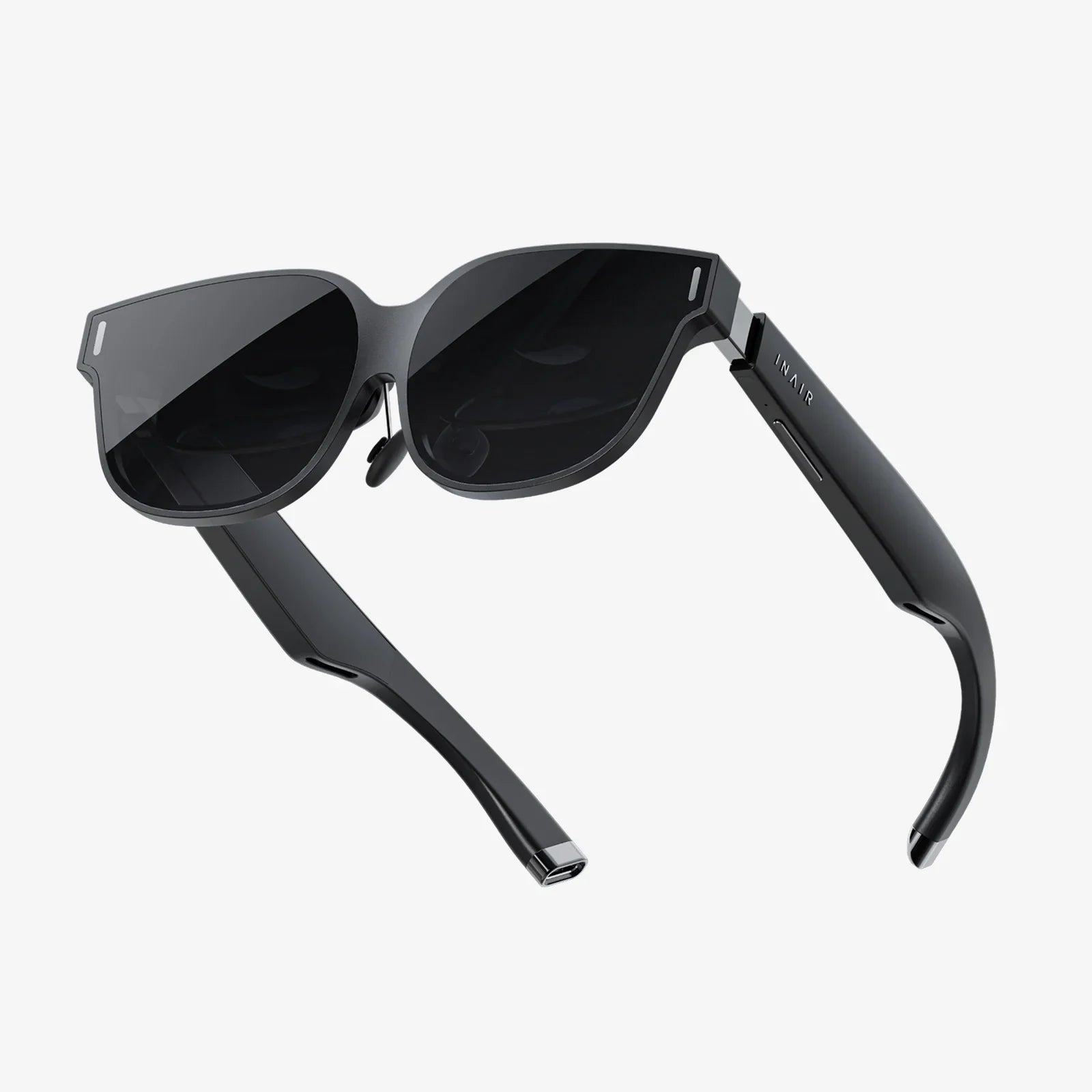
Imagine reaching out and manipulating a complex 3D model as if it were sitting on your desk, seeing strategic data overlaid on your real-world surroundings during a high-stakes game, or having a life-sized digital tutor demonstrate a repair procedure right in your own garage. This isn't a glimpse into a distant sci-fi future; it's the tangible, available reality offered by a modern AR headset for PC. This technology is poised to fundamentally reshape our relationship with computers, breaking them out of their rectangular screens and weaving them directly into the fabric of our daily lives. The fusion of powerful PC processing with immersive augmented reality is unlocking possibilities that were once pure fantasy, and it’s happening right now.
Beyond the Screen: Defining the PC-Centric AR Experience
At its core, an AR headset for a PC is a peripheral device, much like a monitor or a mouse, but infinitely more capable. Unlike standalone AR glasses often designed for mobility and limited processing, these headsets are tethered—either physically or via a high-bandwidth wireless connection—to a personal computer. This connection is their superpower. It allows them to offload the immense computational workload required for high-fidelity augmented reality to a powerful desktop or laptop GPU and CPU.
This symbiotic relationship defines the experience:
-
Unmatched Graphical Fidelity: By leveraging a dedicated graphics card, PC-powered AR can render incredibly detailed, complex, and realistic 3D models and environments. The visual leap is comparable to the difference between a mobile game and a top-tier PC title.
-
Expanded Processing Power: Complex simulations, real-time data processing, and advanced AI algorithms run seamlessly on the PC, enabling experiences that are simply impossible on a standalone mobile chip.
-
Low-Latency Performance: A direct, high-speed connection ensures that digital objects remain locked in place in the real world without perceptible lag, which is critical for both immersion and practical application.
The headset itself acts as a sophisticated window into this merged reality. It typically consists of:
-
Transparent Lenses or Passthrough Cameras: Some devices use transparent waveguides to project light onto the lenses, allowing you to see the real world directly. Others use high-resolution cameras to capture the environment and display it on internal screens, digitally blending the real and virtual.
-
Advanced Tracking Systems: A combination of internal (inside-out) and external (outside-in) sensors, including cameras, accelerometers, and gyroscopes, meticulously track the movement of your head and, often, your hands and controllers in real-time.
-
Spatial Audio: Integrated speakers or headphones provide 3D spatial sound, making a digital object's audio appear to emanate from its specific location in your room.
A New Dimension of Play: Revolutionizing PC Gaming
The gaming industry is often the first to push hardware to its limits, and AR is no exception. An AR headset for PC doesn't just create new games; it fundamentally transforms existing genres and invent entirely new ones.
-
The Living Room Battlefield: Imagine playing a real-time strategy game not on a flat monitor, but on your actual dining table. Your entire room becomes the map. You can walk around the battlefield, crouch down to get a unit's-eye view, and command your armies by physically pointing and gesturing. Tower defense games become a tangible tabletop experience, and god games become truly divine.
-
Environmental Horror and Puzzle Games: Horror reaches a new level of intensity when the monster isn't confined to a screen but is hiding behind your actual couch. Puzzle games can use your entire physical space, requiring you to find clues hidden on real-world objects or align digital mechanisms that appear to be built into your walls.
-
Enhanced Traditional Gaming: AR can also augment monitor-based games. Imagine a racing game where your real steering wheel and pedals are integrated, and a holographic dashboard and track are projected around you. Or an MMORPG where your social menus, inventory, and chat windows are pinned to the walls of your room, leaving your primary monitor completely unobstructed for the core gameplay.
The key advantage of PC-tethered AR for gaming is power. The rich, detailed worlds and complex physics that gamers expect from their high-end rigs can now be projected into their living space without compromise.
The Professional Paradigm Shift: From CAD to Remote Assistance
While gaming offers thrilling possibilities, the professional and creative applications of a PC-connected AR headset are where the technology promises to deliver profound productivity revolutions.
Design and Engineering
Computer-Aided Design (CAD) has long been stuck on a 2D screen. AR liberates it. Designers and engineers can interact with their creations at a 1:1 scale before a single physical prototype is ever built.
- An architect can walk a client through a full-scale model of a building, making changes to the structure or materials in real-time based on feedback.
- An automotive engineer can examine the engine block of a new car, peeling away layers to see internal components and simulate airflow and heat dissipation.
- A product designer can hold a new consumer gadget in their hand, evaluating its ergonomics and aesthetics from every angle.
Education and Training
AR transforms learning from a passive to an active experience. Medical students can practice complex surgical procedures on detailed anatomical models superimposed on a training mannequin. Mechanics-in-training can see step-by-step repair instructions overlaid directly on the machinery they are working on. History students can witness historical events unfold around them in their classroom.
Remote Collaboration and Assistance
This is one of the most immediate and valuable use cases. A remote expert, seeing exactly what a field technician sees through their headset, can annotate the real world with arrows, notes, and diagrams to guide them through a complex repair. Design teams spread across the globe can collaborate on the same 3D model as if they were all standing in the same room, drastically reducing travel costs and streamlining the iteration process.
Under the Hood: The Technology That Makes It Work
The magic of a seamless AR experience is powered by a suite of complex technologies working in perfect harmony.
-
Simultaneous Localization and Mapping (SLAM): This is the foundational technology. SLAM algorithms use the headset's sensors to constantly map the physical environment (identifying floors, walls, furniture) while simultaneously tracking the headset's precise location within that map. This is what allows digital objects to stay pinned to the real world.
-
Inside-Out vs. Outside-In Tracking: Inside-out tracking uses cameras and sensors on the headset itself to observe the environment, offering greater freedom and easier setup. Outside-in tracking uses external sensors or lighthouses placed in the room for potentially higher precision, especially for controller tracking.
-
Depth Sensing: Dedicated depth sensors (like time-of-flight cameras) project infrared light to accurately measure the distance to every surface in the environment. This creates a precise 3D mesh of the room, allowing digital objects to realistically occlude behind real-world objects and interact with the geometry of the space.
-
Gesture and Controller Recognition: Advanced computer vision algorithms track the user's hands and fingers, enabling natural interaction through pinches, grabs, and swipes. For more precise input, dedicated motion-tracked controllers are often used.
Choosing Your Portal: What to Consider
Selecting the right AR headset for your PC setup involves balancing several key factors.
-
Display Resolution and Field of View (FOV): Higher resolution displays reduce the "screen door effect" and make text and details crisp. A wider FOV increases immersion by reducing the binocular-like view, but it demands more rendering power.
-
Tracking Methodology: Do you prefer the convenience of inside-out tracking or the pinpoint accuracy of an external lighthouse system? Consider your physical play space and tolerance for setup.
-
Comfort and Ergonomics: These devices are worn on your head. Weight distribution, padding, and adjustability are critical for extended sessions, whether for work or play.
-
PC Hardware Requirements: This is the most important consideration. AR is demanding. You will need a powerful modern GPU, a capable CPU, and ample RAM. Check the specific recommended specifications for any headset you consider, as they are often significantly higher than for standard monitor gaming.
-
Software and Content Ecosystem: The hardware is a gateway; the software is the destination. Investigate the available applications, games, and professional tools that are compatible with the platform.
The Road Ahead: The Future of PC-Connected AR
The current generation of AR headsets for PC is impressive, but it is merely the first step. The future holds even more transformative potential.
-
Varifocal and Light Field Displays: Future displays will solve the vergence-accommodation conflict—the eye strain caused by your eyes focusing on a fixed screen while trying to converge on objects at different virtual distances. This will make long-term AR use far more comfortable and realistic.
-
Advanced Haptics and Feedback: gloves and controllers will provide tactile feedback, allowing you to feel the shape, texture, and even weight of digital objects.
-
AI Integration: On-device and cloud-based AI will work in tandem to better understand the context of your environment. Your headset could proactively offer information, translate signs in real-time, or identify objects and their functions automatically.
-
The Fading of the Tether: While the PC will remain a processing hub for the foreseeable future, advancements in wireless technology (like Wi-Fi 6E and 7) will make the physical tether obsolete, offering full fidelity without the cable, further enhancing freedom of movement.
We are standing at the precipice of a new computing revolution. The AR headset for PC is not just another peripheral; it is the key to unlocking a new layer of reality. It promises a future where our digital and physical lives are not separate, but synergistically combined, enhancing our creativity, productivity, and play in ways we are only beginning to imagine. The door to this merged reality is now open, and the experiences waiting on the other side are limited only by our imagination.