


Imagine a world where digital information doesn't live on a screen in your hand or on your desk, but is seamlessly woven into the very fabric of your reality. This is the promise of augmented reality, and if the latest wave of AR headset news today is any indication, that future is no longer a distant sci-fi fantasy—it’s knocking on our door. The pace of innovation has shifted from a steady march to a full-blown sprint, with developments emerging at a breathtaking clip that promises to fundamentally alter how we work, play, connect, and perceive the world around us.
The Hardware Revolution: Beyond Clunky Prototypes
For years, the primary barrier to widespread AR adoption has been the hardware itself. Early devices were often bulky, suffered from limited field-of-view, and had battery lives that couldn't sustain a full day of use. However, recent announcements and leaks suggest we are on the cusp of a hardware renaissance.
One of the most significant areas of progress is in waveguide and holographic optics. These advanced optical systems are crucial for projecting bright, high-resolution digital images onto transparent lenses without obscuring the user's view of the real world. New manufacturing techniques are enabling wider fields of view, eliminating the frustrating "looking through a mail slot" effect that plagued earlier generations. This creates a far more immersive and practical experience, making the digital overlay feel like a natural part of the environment.
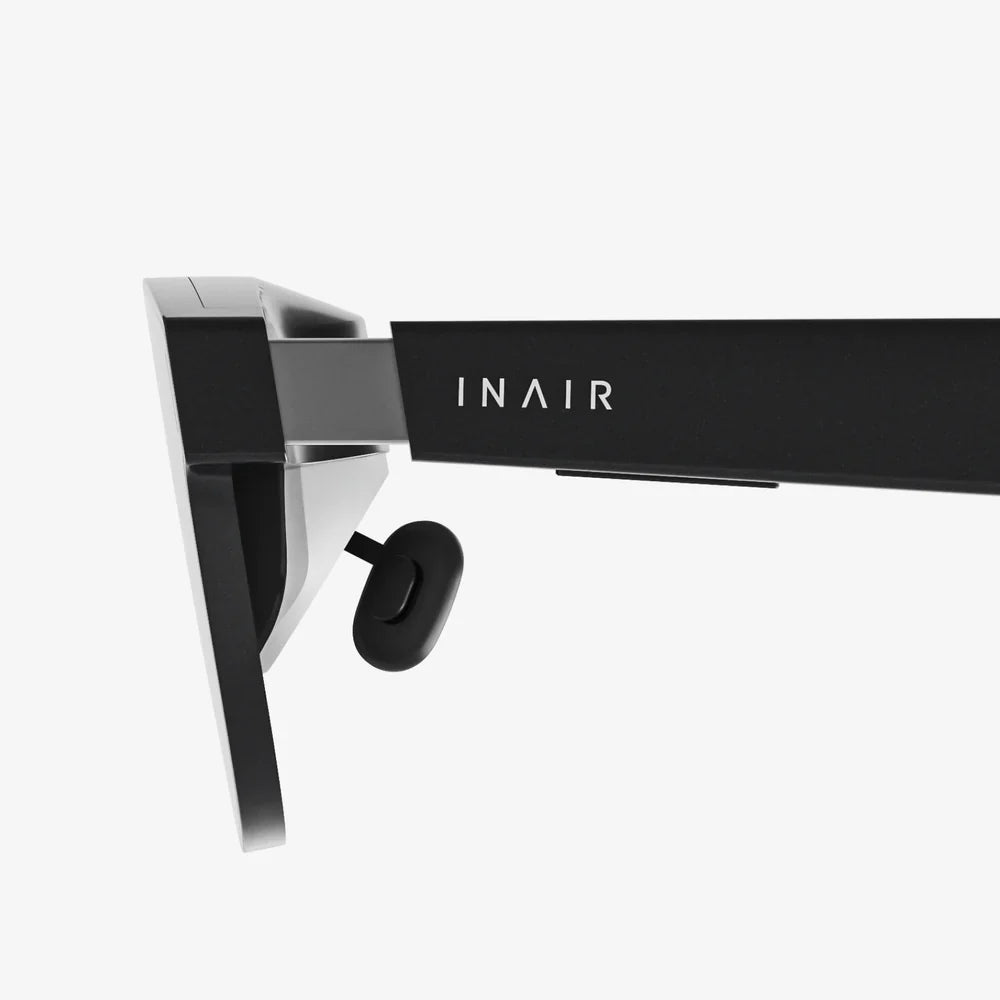
Furthermore, the miniaturization of components is a recurring theme in recent AR headset news. Lighter, more powerful micro-LED displays and increasingly efficient spatial audio systems are being packed into ever-sleeker form factors. The industry is moving decisively away from the goggle-like designs of the past towards frames that more closely resemble conventional eyeglasses. This focus on wearability and social acceptance is critical for transitioning AR from a niche developer tool to a mainstream consumer device that people will feel comfortable wearing in public.
The AI Brain: Powering Contextual and Intelligent AR
Powerful hardware is nothing without intelligent software. This is where artificial intelligence becomes the true engine of the AR revolution. Modern AR headsets are being designed as AI-powered companions that understand their environment and the user's needs in real-time.
Through a combination of computer vision, machine learning, and neural processing units (NPUs) embedded directly into the headsets, these devices can now perform incredible feats. They can map a room in 3D, identifying surfaces, objects, and even people with startling accuracy. This allows digital content to interact physically with the real world—a virtual character can hide behind your actual sofa, or a digital instruction manual can be pinned to the exact piece of machinery it references.
Perhaps the most exciting application of AI in recent AR headset news is the development of real-time translation and transcription. Imagine looking at a restaurant menu in a foreign language and seeing it instantly overlaid with translations. Or attending a conference where spoken words are captioned directly into your field of view, with the ability to recall specific points later. This technology is rapidly moving from prototype to product, breaking down language and accessibility barriers in profound ways.
The Enterprise Arena: Where AR is Already Thriving
While consumer applications often grab headlines, some of the most impactful and mature uses for AR are happening in enterprise and industrial settings. The return on investment here is clear and immediate, driving widespread adoption.
- Remote Assistance and Collaboration: A field technician facing a complex repair can don a headset and stream their point-of-view to a senior expert thousands of miles away. The expert can then annotate the technician's real-world view with arrows, diagrams, and notes, guiding them through the process hands-free. This drastically reduces downtime, travel costs, and error rates.
- Design and Prototyping: Architects and engineers are using AR to visualize 3D models of their designs overlaid onto physical spaces. This allows for incredibly intuitive design iterations and client presentations, where changes can be visualized at scale and in context before a single physical resource is expended.
- Logistics and Warehousing: In massive distribution centers, AR headsets can guide warehouse workers along the most efficient routes, visually highlight the exact items to be picked, and verify orders, leading to dramatic improvements in accuracy and speed.
The steady stream of case studies and partnerships emerging in enterprise-focused AR headset news today underscores that this is not a technology of tomorrow; it is providing tangible value right now.
The Spatial Web: Weaving the Digital and Physical Together
Beyond single-use applications, the grand vision for AR is the creation of a spatial web—a layer of persistent digital information anchored to locations and objects in the real world. Think of it as the internet, but instead of websites living on servers, digital experiences live in places.
Recent developments are laying the groundwork for this vision. Advancements in cloud anchoring and 5G connectivity are enabling shared, persistent AR experiences. This means that one person could leave a virtual note or artwork pinned to a specific location, and another person, using a different headset, could see it exactly as it was left days or weeks later. This creates the potential for a new kind of shared reality and collaborative storytelling.
This evolution will require new standards and protocols, a topic frequently discussed in developer-focused AR headset news. How do we ensure that digital content from different creators can coexist and interact seamlessly in the same physical space? How do we manage digital privacy in a world where data is attached to our surroundings? These are the complex challenges that researchers and engineers are actively working to solve.
Challenges on the Horizon: The Road to Ubiquity
Despite the exhilarating progress, the path to a world where AR headsets are as common as smartphones is not without its obstacles. Several significant challenges remain.
Battery Life and Thermal Management: Processing high-fidelity graphics and complex AI algorithms is computationally intensive and power-hungry. Pushing for all-day battery life in a slim form factor is a monumental engineering challenge that often involves a trade-off between performance, size, and cost.
Social Acceptance and Digital Etiquette: As devices become less obtrusive, the social barrier will lower, but it remains a factor. Establishing new social norms around when and where it is appropriate to use such devices will be a gradual process. Furthermore, the potential for distraction in public spaces or the unease of not knowing if someone is recording you present real societal questions that need to be addressed.
The Killer App: While enterprise has found its "killer apps," the consumer market is still searching for the undeniable, must-have application that will drive every household to want a headset. Whether it's a revolutionary new social platform, a transformative gaming experience, or an entirely new form of media consumption, that defining application is still in its infancy.
A Glimpse into the Immediate Future
So, what can we expect to see in the next wave of AR headset news today and in the coming months? The trends point towards a few key areas:
- Greater Focus on Accessibility: Efforts will intensify to make these technologies usable for people with a wider range of visual and auditory abilities, including features like real-time scene description for the visually impaired.
- Refined Input Modalities: While hand-tracking has improved dramatically, we will see further innovation in voice control, gesture recognition, and even emerging technologies like neural interfaces for more intuitive control.
- Content Ecosystem Growth: As developer tools become more powerful and accessible, we will witness an explosion of creative AR content, from interactive educational tools to breathtaking artistic installations.
The stream of AR headset news today is more than just a list of product updates; it is a live chronicle of a paradigm shift in computing. We are moving from a world of isolated devices to one of contextual, ambient intelligence. The boundaries between the digital and the physical are blurring, creating a new canvas for human creativity and connection. The devices themselves are becoming quieter, smarter, and more integrated into our lives, promising a future where technology enhances our reality without isolating us from it. The next time you look up from your phone, the world itself might just have something new to show you.
Share:
Extended Reality Technology Examples: A Deep Dive into the Virtual, Augmented, and Mixed Realities Shaping Our Future
South America Extended Reality Market: Navigating the New Frontier of Digital Immersion