


Imagine a world where digital information doesn't live on a screen in your hand, but is seamlessly woven into the very fabric of your reality. Where directions float on the sidewalk before you, historical figures reenact events on the very ground they occurred, and a mechanic in Omaha can see through the eyes of a colleague in Osaka to guide a complex repair. This is not a distant science fiction fantasy; it is the imminent future being charted today by the rapidly evolving projections for AR headsets. The next decade promises a fundamental shift in our relationship with technology, moving from devices we look at to experiences we look through, and the roadmaps laid out by industry analysts and tech visionaries paint a picture of a transformation as profound as the advent of the smartphone.
The Foundation: Understanding the Current AR Landscape
Before gazing into the crystal ball, it's crucial to understand the present. Today's AR headsets exist on a spectrum, from simple smartphone-based experiences to more sophisticated, yet often cumbersome, standalone devices. The core technology hinges on a complex dance of components: sensors like cameras and LiDAR to map the physical environment, processors powerful enough to understand that environment in real-time, and display systems—often waveguides or micro-LEDs—to project convincing digital imagery onto the user's field of view.
The primary challenge has been the "holy trinity" of AR design: achieving a compelling blend of high visual fidelity, all-day comfort and battery life, and a price point accessible to consumers. Early devices often force a trade-off, excelling in one area at the expense of others. However, relentless innovation is steadily eroding these barriers, setting the stage for the projections that suggest widespread adoption is not a matter of "if," but "when."
Technical Projections: The Shrinking Giant
The most immediate and tangible projections for AR headsets concern their physical form and technical capabilities. The trajectory is clear: the technology will get smaller, smarter, and more powerful.
Form Factor Evolution: From Goggles to Glasses
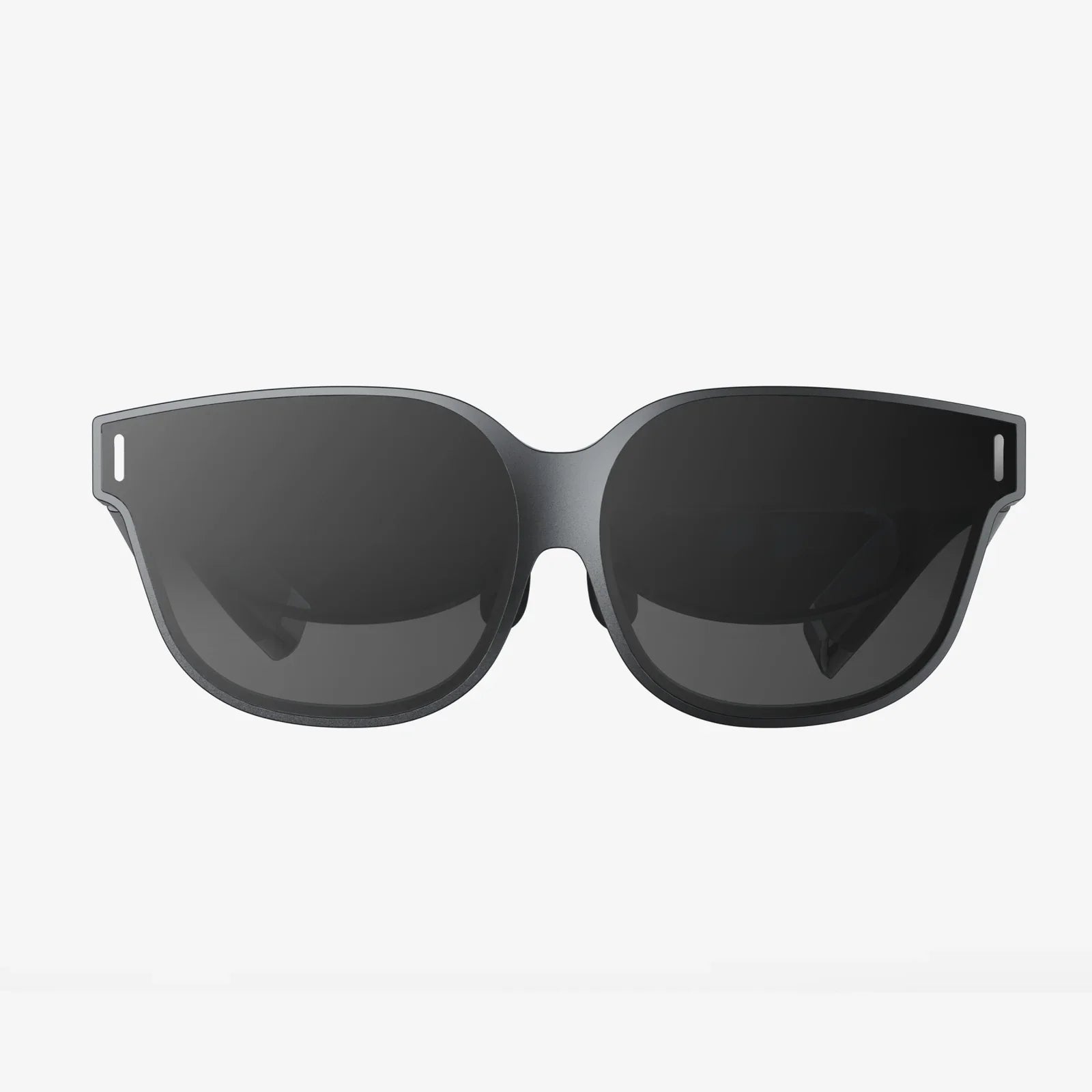
Current projections indicate a rapid evolution away from the bulky, helmet-like designs of early prototypes. The end goal is a pair of glasses that are socially acceptable, comfortable to wear for extended periods, and visually indistinguishable from standard eyewear. Advances in micro-optics, holographic film, and nanofabrication are key to this miniaturization. We can expect to see:
- Thinner Waveguides: The transparent lenses that project light into the eyes will become significantly thinner and more efficient, reducing the overall bulk of the frames.
- Distributed Computing: Instead of housing all processing power in the frames, headsets will increasingly leverage companion devices or cloud computing via ultra-fast, low-latency networks, offloading intensive tasks and saving precious space and battery life.
- Battery Innovation: New energy-dense battery chemistries and innovative power management will extend usage from hours to a full day, with wireless charging solutions becoming ubiquitous.
Sensory and Display Enhancements: A More Believable World
Visual realism is paramount for immersion. Future AR headsets will move beyond simple holograms floating in space to digital objects that convincingly interact with the physical world.
- Resolution and Field of View (FoV): Displays will approach retinal resolution, making pixels indistinguishable to the human eye. The FoV will expand dramatically, moving from a small, postage-stamp window to encompassing a significant portion of the user's natural vision.
- Dynamic Occlusion: This critical technology allows digital objects to be realistically hidden behind physical ones. A virtual character will be able to walk behind a real table, disappearing and reappearing correctly, grounding them firmly in our reality.
- Eye Tracking and Foveated Rendering: Built-in eye-tracking will not only enable intuitive UI control (selecting items just by looking) but will also power foveated rendering. This technique renders the exact spot where the user's eye is focused in high detail while subtly reducing detail in the periphery, drastically reducing the processing power required.
- Haptic Feedback and Spatial Audio: Interaction will become multi-sensory. Ultrasonic emitters or wearable haptic bands could provide a sense of touch, allowing users to feel the texture of a virtual control or the click of a digital button. Immersive 3D spatial audio will complete the illusion, making a notification sound like it's coming from your left, or a virtual assistant speak from a specific point in the room.
Market and Adoption Projections: The Enterprise Springboard
Analyst firms consistently project staggering growth for the AR market, with estimates valuing it in the hundreds of billions within the next five to ten years. This growth will not follow a straight line but will be catalyzed by specific sectors acting as early adopters.
The enterprise and industrial sectors are already proving to be the primary engine for initial adoption. The return on investment (ROI) is clear and measurable here. Projections show massive growth in:
- Manufacturing and Field Service: Technicians using AR headsets can overlay schematics, receive remote expert guidance with annotations directly in their view, and access digital work instructions hands-free, reducing errors and drastically improving repair times.
- Healthcare: Surgeons could visualize patient anatomy, such as MRI data, projected directly onto the surgical site. Medical students could practice procedures on hyper-realistic virtual patients, and nurses could streamline complex medication preparation processes.
- Design and Architecture: Architects and clients can walk through full-scale, interactive holographic models of unbuilt structures, experimenting with materials and lighting in real-time.
- Logistics and Warehousing: AR can optimize picking and packing routes by overlaying directions and item information onto warehouse shelves, dramatically increasing efficiency.
This enterprise-first adoption does two crucial things: it provides the funding for continued R&D to solve the core technical challenges, and it acclimates a generation of workers to using AR in their daily lives. This paves the way for a smoother transition to the consumer market, which is projected to explode once the form factor and price points hit critical mass. Consumer applications will initially focus on gaming and social experiences before expanding into everyday navigation, contextual information, and personal productivity.
Societal and Ethical Projections: Navigating the New Reality
As AR headsets become more pervasive, their impact will extend far beyond convenience and entertainment, raising profound societal and ethical questions that we must begin addressing now.
The Transformation of Human Interaction
AR will redefine social dynamics. Will conversations be enhanced by seeing shared digital whiteboards or real-time translations? Or will they be hindered by constant digital distractions vying for our attention? The concept of "presence" will be challenged. If you are in a meeting with someone wearing AR glasses, are you truly engaging with them, or are they simultaneously watching a live stream, checking their messages, or reviewing data you cannot see? New social contracts and etiquette will need to be established to govern these interactions.
The Privacy Paradox
An AR headset is, by its very nature, a sensor-rich device constantly scanning and interpreting the world around you. This creates an unprecedented privacy dilemma. The data collected—detailed 3D maps of your home, your office, public streets, and the faces of people within them—is incredibly sensitive. Projections indicate a fierce battle over:
- Data Ownership: Who owns the digital scan of a public park? The user who captured it? The company whose device processed it? The city that owns the land?
- Surveillance Capitalism: The potential for targeted advertising becomes unnervingly precise. Walk past a coffee shop, and a coupon materializes in your vision. Admire a friend's new shoes, and a link to buy them instantly appears. The line between helpful assistant and intrusive monitor will be razor-thin.
- Consent and Bystander Privacy: If I am wearing AR glasses in public, am I ethically obligated to inform those around me that they might be recorded and analyzed by my device? Legal frameworks are utterly unprepared for this reality.
The Digital Divide and Accessibility
There is a significant risk that AR technology could exacerbate existing social inequalities. If crucial information, navigation, and communication tools are primarily accessed through premium AR headsets, a new form of digital divide could emerge between those who can afford this augmented layer of reality and those who cannot. Conversely, AR also holds immense promise for accessibility, offering new interfaces for people with disabilities—from real-time captioning for the hearing impaired to enhanced navigation for the visually impaired. The path it takes will depend heavily on conscious, inclusive design and policy decisions made today.
The Future of Content and the Spatial Web
The ultimate success of AR headsets hinges on the development of a rich ecosystem of content and applications, often referred to as the "Spatial Web." This is a projected evolution of the internet from pages on a flat screen to a vast, interactive tapestry of information and experiences anchored in the physical world.
Content creation will shift from 2D graphic design to 3D spatial design. New authoring tools will allow creators to design experiences that are context-aware, understanding the geometry, lighting, and purpose of a physical space. We will see the rise of persistent digital content—a virtual art gallery attached to a specific building, a historical marker that only appears at a certain location, or a collaborative design project that lives permanently in a company's conference room, viewable and editable by anyone wearing an AR headset.
This creates a world where every physical location has a digital history, a layer of stories, data, and functionality waiting to be unlocked. The way we learn about history, explore cities, and even shop for furniture will be fundamentally transformed by this deep interweaving of the digital and the physical.
The projections for AR headsets outline a future brimming with both breathtaking potential and complex challenges. We are standing on the precipice of a new computing paradigm, one that promises to enhance human capability and reshape our daily experiences in ways we are only beginning to comprehend. The path forward requires not just technological innovation, but thoughtful collaboration between engineers, designers, ethicists, and policymakers to ensure that this powerful technology builds a future that is not only more efficient and entertaining but also more equitable, humane, and truly augmented for the better. The next era of human-digital symbiosis is being written now, and it will be projected directly before our eyes.
Share:
AR Gesture Interaction Mobile: The Future of Touchless Control is Here
Best Wearable Device for Smartphone: Your Ultimate Guide to Connected Tech